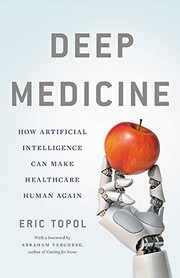
Deep Medicine
How artificial intelligence could give doctors back time for their patients.
Summary
Topol, a physician, argues that artificial intelligence can relieve doctors overloaded with demands on their time and give them back time for patients. Natural-language processing can record doctors' notes, make sense of medical histories and read the scientific literature more deeply than any person. Deep-learning algorithms applied to wearable sensors, genomic data, blood work, scans and other medical data can produce individual treatment plans, and virtual medical assistants can coach people on health and diet and help prevent illness.
His central claim is that the main value of AI in medicine lies in freeing physicians from tasks that get in the way of human connection, restoring the care in healthcare. The book was published in 2019. The source read in this pass, the publisher's description, gives the argument and examples but not the chapter structure.
Key takeaways 4
- AI can take over documentation and data analysis that consume doctors' time.
- Combining sensor, genomic and imaging data with deep learning allows treatment tailored to each patient.
- Topol's main case for AI is that it gives doctors time back for patients.
- Virtual assistants could support prevention and diet between doctor visits.
Who should read it
Clinicians, health investors and technologists who want a physician's case for how AI should change medicine.
Who recommended it 1
Similar books 6
Chosen by shared topics, the entries that hold them, and the people who recommended both.
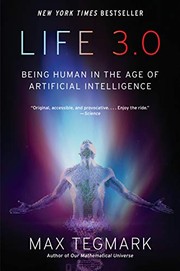
How AI could change crime, war, justice, jobs and what it means to be human.
“A deep, bold, and visionary dive into Artificial Intelligence and its many implications. One of the most interesting books I've ever read. If you haven't read much of AI yet, start with “Surviving AI” as an intro, then read this as a deep-dive. His perspective is amazingly thorough. Defining terminology was a great way to start. For example life is a “process that can retain its complexity and replicate”. Intelligence is the “ability to accomplish complex goals”. That keeps it broad enough to define future technology as alive and intelligent.” — Derek Sivers
Source: Derek Sivers book notes (primary, rated list) · Rating: 7/10
Recommended by: Andrew Wilkinson, Derek Sivers, Bill Gates and 3 others
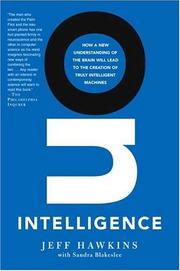
How the brain produces intelligence, and what that means for intelligent machines.
Recommended by: Keith Rabois, Patrick Collison, Ev Williams
The theory that the neocortex works through thousands of models of the world.
Recommended by: Bill Gates
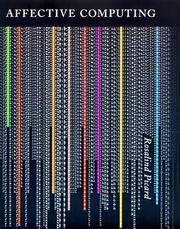
Why computers must recognise and express emotion to be intelligent.
“And so I was looking for a thesis topic and my fiance at the time went on Amazon and he said, "Oh, there's this really interesting book by this MIT professor called Rosalind Picard called Affective Computing.” — Rana el Kaliouby
Recommended by: Rana el Kaliouby
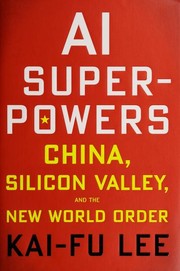
Why China may match the US in AI now that applying it matters more than research.
“Kai-Fu Lee, AI Superpowers: China, Silicon Valley, and the New World Order (Boston: Houghton Mifflin Harcourt Publishing, 2018), 22-26” — Michael Mauboussin
Source: One Job: Expectations and the Role of Intangible Investments, page 21
Recommended by: Balaji S. Srinivasan, Michael Mauboussin and 3 others
AI research from Dartmouth in 1956 to the funding cuts, told by the field's leaders.