Updates

  1. Person pages list letters, writing, profiles and links as sortable tables with filters, and show each person's companies as links; Fund letters show each letter's description in its own column.
  2. Experts show a checked job title and a short description of each person; 30 more people have photographs.
  3. Every company, fund, university and publication the experts work for has a page listing the people there.
  4. Fund letters show each letter's thesis and filter by it; 225 person pages list the essays, columns and newsletter issues the person wrote.
  5. Person pages list every essay and newsletter issue a person wrote, and their own books as a table in List view.
  6. Recommends shows the five largest kinds of book and the rest under More; browse pictures load sooner.
  7. Podcasts and talks link the original episode, filter by Audio and video or Press, and list each publisher once.
  8. Pages are wider, Recommends has List and Grid, and a filter clicked again turns off.
  9. Book cards sit in a ruled grid with Open Library and Goodreads links and each book's one-line note.
  10. Funds is now Investors; each investor's styles are buttons that filter the table.
  11. Podcasts and talks on a person's page filter by year and publisher and show as a list or a grid of pictures.
  12. Quotes show only people's own words: 472 summaries written by list sites are gone.
  13. Country pages open from Browse again, and every link on the shelf lands on a page.
  14. Subject and person pages show their sections as tabs, and each book appears once on a person's page.
  15. Book cards show the quote, who said it and the source; grids show five cards to a row.
  16. On a phone, a menu holds the sections, search, Updates, Feedback and dark mode.
  17. Feedback takes a screenshot of the page with no browser prompt, opens a screenshot full size when you click it, and clears itself once sent.
  18. Book cards are centred, search names the topic each book sits in, and any text cut short shows whole on hover.
  19. Search groups its results by kind: people, companies, geographies, subjects, topics, books, funds, fund letters and papers.
  20. The Books table lists who recommended each book by name, and the browser tab names the section you are in.
  21. Feedback can take a screenshot of the page, or one you paste or choose, and opens in the corner beside Updates.
  22. Each rail button reopens its section where you left it, and Browse, Table and People show on every book and subject page.
  23. Filters grey out choices that hold nothing instead of hiding them, and Books › People filters by authors or recommenders.
  24. Feedback takes a subject line and up to three screenshots.
  25. Biographies are grouped by the person they are about: 41 new pages, from Abraham Lincoln to Lee Kuan Yew.
  26. Sport splits into 23 sports, and Religion into one topic per faith.
  27. Book lists show as cards: the cover, one recommendation quote and every recommender by name.
  28. Seventeen subjects that had two or three pages under different names now have one page each.
  29. Every page lists its Experts as authors and recommenders, with a link to them on the Experts tab.
  30. Economics, Financial history, Financial panics and Accounting are subjects of their own, with one page per financial crisis.
  31. Book, person and subject pages open inside the app, so the tabs stay in view.
  32. 996 more book covers, and photographs or logos for 227 more people and companies.
  33. Books › Browse shows every subject as cards, and the rail holds Fund letters, Papers, Experts, Books and Funds.
  34. Every topic over 150 books splits into narrower topics, each with a page of its own.

Send feedback

What is it?
Screenshots, up to 3 (optional)
or paste one with Ctrl+V

We use your email only to reply to you.

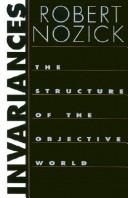
Invariances

Invariances

Robert Nozick
2001
T3 432 pages · about 7h 12m to read Open Librarygoodreads

Nozick on objectivity and what stays invariant across perspectives

Summary

Nozick's last book is a work of philosophy examining objective truth, necessity, consciousness and ethics, and asking what makes something objective rather than a matter of perspective.

His central proposal is that objectivity consists in invariance under transformations. Something is objective to the extent that it remains the same across changes in the observer's position, across different ways of accessing it, and across different conditions of observation. He develops this into an account of objective truth, arguing that truths are invariances rather than correspondences to a mind-independent reality in the traditional sense, and applies the framework to physics, where invariance under transformation is already the criterion physicists use.

He then applies the framework to necessity, arguing that necessary truths may be local to our universe rather than absolute, and to consciousness, where he offers an evolutionary account of why subjective awareness would develop and what function it serves.

The ethics section proposes a layered structure with four levels: coordination to mutual benefit, which is the core and is evolutionarily grounded; respect for others as ends; caring; and light, meaning a fuller form of ethical response. He argues the first layer is mandatory in a way the later ones are not.

The book is demanding and Nozick writes tentatively, proposing rather than asserting, which some readers find honest and others frustrating. It is a work of academic philosophy and its relevance to investors is limited to the invariance criterion, which is a genuinely useful test for whether an observed regularity is real.

Key takeaways 7

  1. Objectivity consists in invariance under transformations, meaning something remains the same across changes in observer position and conditions of access.
  2. A truth is objective to the degree that it survives different ways of arriving at it, which is the criterion physics already applies.
  3. Necessary truths may be local to our universe rather than absolute, which makes necessity a contingent feature rather than a foundation.
  4. Consciousness can be given an evolutionary account in terms of the function subjective awareness serves rather than being treated as inexplicable.
  5. Ethics has a layered structure whose innermost layer, coordination to mutual benefit, is evolutionarily grounded and mandatory in a way the outer layers are not.
  6. The requirement to be ethical extends further outward as the relationship becomes closer, which explains why obligations differ across relationships.
  7. An observed regularity that does not survive changes in how it is measured or observed is an artefact of the observation rather than a fact about the world.

Who should read it

Philosophically inclined readers, with the invariance criterion transferable as a test for whether an observed regularity is real.

Who recommended it 1

Similar books 6

Chosen by shared topics, the entries that hold them, and the people who recommended both.
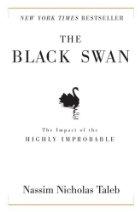
Nassim Nicholas Taleb · 2007

Rare, unforeseen, high-impact events drive history, explained only after the fact.

“The message of The Black Swan is how important it is to realize that the things everyone rules out can still come to pass.” — Howard Marks

Source: Oaktree memo 'The Limits to Negativism'

Recommended by: Howard Marks, Marc Andreessen, Nat Eliason and 18 others
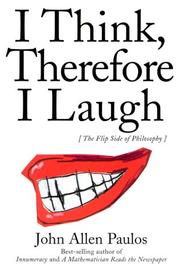
John Allen Paulos · 1985

Analytic philosophy and logic presented through humour

Umberto Eco · 1997

Eco on how we categorise the world and where categories fail

Recommended by: Nassim Nicholas Taleb
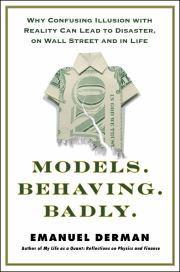
Emanuel Derman · 2011

A quant on confusing models with reality, in finance and life

Recommended by: Nassim Nicholas Taleb

Karl Popper · 1963

Knowledge grows by bold guesses that we then try to refute, not by proof.

Recommended by: Patrick Collison
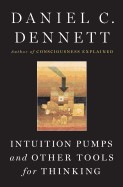
Daniel C. Dennett · 2013

Thought experiments and other tools a philosopher uses to reason carefully.

Where it sits in the reference 2

Mental models
Mental models

Topics

PhilosophyPhilosophy of science and mind