Radical Uncertainty
Why economics misapplies probability to problems where the future is unknowable.
The case against forcing non-probabilistic problems into probability.
Summary
John Kay and Mervyn King, an economist and a former Bank of England governor, argue that economics and finance have systematically misapplied probability to situations where it does not belong. Their distinction is between resolvable uncertainty, where the possible outcomes are known and probabilities can be attached, and radical uncertainty, where the future contains possibilities nobody has enumerated.
Their historical argument is that Frank Knight and John Maynard Keynes both understood this distinction in the 1920s, and that the profession lost it when Savage's subjective expected utility framework made it possible to attach probabilities to anything. Once every uncertainty could be treated as a probability distribution, the distinction disappeared from economics, and models built on it were applied to questions they could not answer. They treat the risk models used before 2008 as the clearest case: value at risk calculations produced precise numbers about events whose distributions were unknown and unknowable.
Their alternative is narrative reasoning. They argue that people facing radical uncertainty use reference narratives, meaning coherent accounts of what is going on and what is likely to follow, and that the right question is not what is the probability but what is going on here. They defend heuristics and rules of thumb as rational responses to non-stationary environments rather than as biases, which puts them at odds with the behavioural economics tradition. Critics respond that they conflate different targets, that they underrate what probabilistic models achieve within their proper scope, and that reference narratives are not a method anyone can apply consistently. The critique is stronger than the alternative.
Key takeaways 7
- Resolvable uncertainty permits probability while radical uncertainty does not, and treating the second as the first produces false precision.
- Knight and Keynes both drew this distinction, and the profession abandoned it when subjective probability made every uncertainty appear tractable.
- Financial risk models produced precise numbers about distributions that were unknown, which made them worse than no numbers at all.
- The useful question facing an unfamiliar situation is what is going on here, not what is the probability of each outcome.
- People reason through reference narratives, meaning coherent accounts of a situation, rather than through probability distributions.
- Heuristics are rational adaptations to non-stationary environments rather than departures from a correct probabilistic standard.
- Kay and King argue that resilience, meaning the capacity to survive outcomes nobody forecast, should replace optimisation under uncertainty.
Who should read it
Investors and executives who make decisions under genuine uncertainty and want the case against treating every unknown as a probability distribution.
Similar books 6
Chosen by shared topics, the entries that hold them, and the people who recommended both.
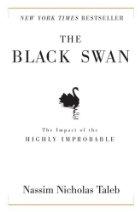
Rare, unforeseen, high-impact events drive history, explained only after the fact.
“The Black Swan U The best-known bird around today is The Black Swan, the second book from Nassim Nicolas Taleb.” — Howard Marks
Source: The Complete Collection, page 530
Recommended by: David Perell, Howard Marks, Marc Andreessen and 20 others
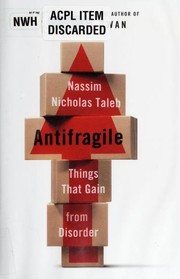
Why some things gain from volatility and disorder, and how to build them.
“Antifragile. Loved the first 1/3 and last 1/3 of this book.” — Andrew Chen
Source: Books I’m reading (2013)
Recommended by: Ana Fabrega, Andrew Chen, Derek Sivers and 24 others
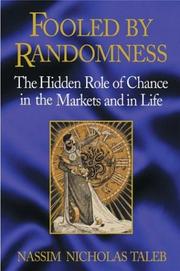
Why people mistake luck for skill, above all in markets.
“Fooled By Randomness was unquestionably the best non-fiction book I read in 2005.” — Brad Feld
Source: Book Review: Fooled By Randomness — Feld Thoughts
Recommended by: Barton Biggs, Brad Feld, Derek Sivers and 15 others

Experiments showing most cheating is many people cheating a little.
Recommended by: Mohnish Pabrai
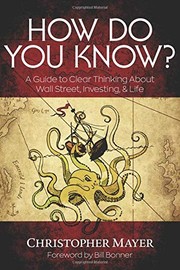
Korzybski's general semantics applied to investing and clear thinking.
Thought experiments and other tools a philosopher uses to reason carefully.
Recommended by: Patrick Collison, Shane Parrish