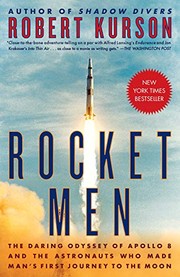
Rocket Men
Apollo 8, the first crewed flight to reach the Moon and return.
Summary
Robert Kurson recounts NASA's Apollo 8 mission of December 1968, the first crewed spacecraft to reach the Moon and return safely to Earth. The 2018 book, his fourth, debuted on the New York Times bestseller list.
In early 1968 the Apollo programme was on shaky footing: President Kennedy's deadline to land a man on the Moon by the end of the decade was in doubt and the Soviets threatened to pull ahead. By August NASA abandoned its usual step-by-step approach and decided, with four months to prepare, a fraction of the normal time, to send the first men to the Moon. Kurson sets the mission in a year of violence and discord, with the Tet offensive, the assassinations of Martin Luther King and Robert Kennedy and the riots at the Democratic convention in Chicago, and treats it as the boldest test of what America could do. He focuses on the astronauts Frank Borman, Jim Lovell and Bill Anders and on their wives and children, and explains the political reasons for risking their lives to save the programme.
Key takeaways 4
- NASA sent Apollo 8 to the Moon with only four months of preparation.
- Fear of Soviet success drove the decision to take the risk.
- The mission came in one of the most violent years in modern American history.
- Kurson tells the story through the three astronauts and their families.
Who should read it
Readers of space history and stories of risk under pressure.
Who recommended it 2
Similar books 6
Chosen by shared topics, the entries that hold them, and the people who recommended both.

How the Bell Labs team of Shockley, Bardeen and Brattain invented the transistor.
Recommended by: Patrick Collison
Innovation is gradual, collective and bottom-up, not the work of lone inventors.
“Matt Ridley, How Innovation Works: And Why It Flourishes in Freedom (New York: Harper, 2020)” — Michael Mauboussin
Source: Increasing Returns: Identifying Forms of Increasing Returns and What Drives Them, page 17
Recommended by: Balaji S. Srinivasan, Michael Mauboussin and 1 other
A history of human invention, and a corrective to the hype around innovation.
Recommended by: Bill Gates
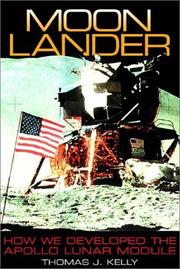
The chief engineer on designing, building, testing and flying the lunar module.
Recommended by: Patrick Collison

A popular history of the battery, from a twitching frog's leg to modern devices.
Recommended by: Mohnish Pabrai