Updates

  1. Person pages list letters, writing, profiles and links as sortable tables with filters, and show each person's companies as links; Fund letters show each letter's description in its own column.
  2. Experts show a checked job title and a short description of each person; 30 more people have photographs.
  3. Every company, fund, university and publication the experts work for has a page listing the people there.
  4. Fund letters show each letter's thesis and filter by it; 225 person pages list the essays, columns and newsletter issues the person wrote.
  5. Person pages list every essay and newsletter issue a person wrote, and their own books as a table in List view.
  6. Recommends shows the five largest kinds of book and the rest under More; browse pictures load sooner.
  7. Podcasts and talks link the original episode, filter by Audio and video or Press, and list each publisher once.
  8. Pages are wider, Recommends has List and Grid, and a filter clicked again turns off.
  9. Book cards sit in a ruled grid with Open Library and Goodreads links and each book's one-line note.
  10. Funds is now Investors; each investor's styles are buttons that filter the table.
  11. Podcasts and talks on a person's page filter by year and publisher and show as a list or a grid of pictures.
  12. Quotes show only people's own words: 472 summaries written by list sites are gone.
  13. Country pages open from Browse again, and every link on the shelf lands on a page.
  14. Subject and person pages show their sections as tabs, and each book appears once on a person's page.
  15. Book cards show the quote, who said it and the source; grids show five cards to a row.
  16. On a phone, a menu holds the sections, search, Updates, Feedback and dark mode.
  17. Feedback takes a screenshot of the page with no browser prompt, opens a screenshot full size when you click it, and clears itself once sent.
  18. Book cards are centred, search names the topic each book sits in, and any text cut short shows whole on hover.
  19. Search groups its results by kind: people, companies, geographies, subjects, topics, books, funds, fund letters and papers.
  20. The Books table lists who recommended each book by name, and the browser tab names the section you are in.
  21. Feedback can take a screenshot of the page, or one you paste or choose, and opens in the corner beside Updates.
  22. Each rail button reopens its section where you left it, and Browse, Table and People show on every book and subject page.
  23. Filters grey out choices that hold nothing instead of hiding them, and Books › People filters by authors or recommenders.
  24. Feedback takes a subject line and up to three screenshots.
  25. Biographies are grouped by the person they are about: 41 new pages, from Abraham Lincoln to Lee Kuan Yew.
  26. Sport splits into 23 sports, and Religion into one topic per faith.
  27. Book lists show as cards: the cover, one recommendation quote and every recommender by name.
  28. Seventeen subjects that had two or three pages under different names now have one page each.
  29. Every page lists its Experts as authors and recommenders, with a link to them on the Experts tab.
  30. Economics, Financial history, Financial panics and Accounting are subjects of their own, with one page per financial crisis.
  31. Book, person and subject pages open inside the app, so the tabs stay in view.
  32. 996 more book covers, and photographs or logos for 227 more people and companies.
  33. Books › Browse shows every subject as cards, and the rail holds Fund letters, Papers, Experts, Books and Funds.
  34. Every topic over 150 books splits into narrower topics, each with a page of its own.

Send feedback

What is it?
Screenshots, up to 3 (optional)
or paste one with Ctrl+V

We use your email only to reply to you.

Ryanair: How a Small Irish Airline Conquered

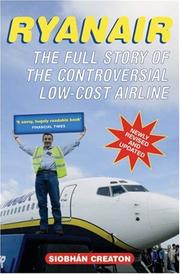
Ryanair: How a Small Irish Airline Conquered Europe

Siobhán Creaton
2004
T3 272 pages · about 4h 32m to read Open Librarygoodreads

The purest European study of stripping cost out of a service business.

Summary

Creaton, an Irish financial journalist, wrote a history of Ryanair from its 1985 founding through the early 2000s, covering the Ryan family's original operation, the near-failure, the adoption of the Southwest model, and the growth under Michael O'Leary.

The operating model is the substance and it is Southwest's, applied harder. A single aircraft type, secondary airports with low or negative charges since Ryanair negotiated subsidies from regional authorities seeking traffic, twenty-five-minute turnarounds, no assigned seating, no free food, no interlining, no travel agent commissions after the shift to direct online booking, and every ancillary service charged separately. Creaton documents how far O'Leary pushed each element, including charging for services competitors provided free and generating publicity through deliberate provocation.

The airport subsidy element is the one that distinguishes Ryanair from Southwest. O'Leary negotiated payments from regional airports and local authorities for bringing traffic, which meant that on some routes the airport paid the airline rather than the reverse. The European Commission later ruled some of these arrangements were illegal state aid.

Creaton also covers O'Leary's deliberate use of confrontation with unions, regulators, airports and journalists as a marketing instrument, on the reasoning that publicity is cheaper than advertising.

The book is from 2004 and predates Ryanair's growth to its current scale, the pilot disputes and the later changes to the customer proposition. The reference has not verified its specific figures.

Key takeaways 7

  1. Ryanair negotiated payments from regional airports and local authorities for bringing traffic, so on some routes the airport paid the airline.
  2. Charging separately for every service that competitors bundled converted costs into revenue lines and allowed a lower headline fare.
  3. Twenty-five-minute turnarounds generated more flights per aircraft per day, which produced more revenue from the same capital.
  4. Deliberate public confrontation with unions, regulators and journalists generated publicity that cost less than advertising would have.
  5. Moving to direct online booking eliminated travel agent commissions, which was a large cost line the legacy carriers still carried.
  6. European Commission rulings later found some airport subsidy arrangements to be illegal state aid, which put part of the cost model at risk.
  7. The reference has not verified the specific figures in this account.

Who should read it

Operators studying low-cost operating models and the use of confrontation as a marketing instrument.

Who recommended it 1 · 1 direct

Similar books 6

Chosen by shared topics, the entries that hold them, and the people who recommended both.

Sam Walton, John Huey · 1992

How Walmart grew from one Arkansas store by cutting costs and prices.

Dieter Brandes · 2004

Aldi's hard-discount method: radical simplicity as the way to keep costs low.
Joe Coulombe · 2021

Founder's account of a private-label, limited-SKU, high-turn grocery model.
Kevin Freiberg, Jackie Freiberg · 1996

How Southwest Airlines built its low-cost model and its culture under Herb Kelleher.
Marc Levinson · 2011

How A&P became the world's largest retailer and the political fight it set off.

Recommended by: Patrick Collison
Ellen Ruppel Shell · 2009

The economic, political and personal costs of making and buying everything cheaply.

Where it sits in the reference 2

Companies
Business models

Topics

Company Histories