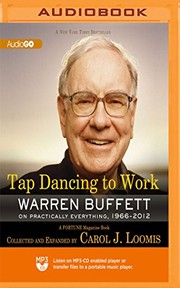
Tap Dancing to Work: Warren Buffett on Practically Everything, 1966-2012
Fortune coverage by Buffett's longtime editor and friend.
Summary
Loomis was a Fortune journalist and Buffett's friend and editor of his shareholder letters for decades. She collected articles about Buffett and by Buffett from Fortune between 1966 and 2012, arranged chronologically with her own commentary connecting them.
The value of the format is that it captures what was said at the time rather than in retrospect. The 1966 piece describes a young money manager most readers had never heard of. The 1977 article on inflation and equities, which Buffett wrote himself, is one of his clearest pieces of analysis and explains why inflation damages businesses that require heavy reinvestment. The 1999 Sun Valley speech, reported by Loomis, argued that market returns over the following seventeen years would be far lower than the preceding period, which was published near the technology peak and proved accurate.
Other material covers his 2003 warning about derivatives, the 2008 opinion piece announcing that he was buying American equities, the Salomon Brothers episode, his views on executive compensation and on accounting, and the philanthropic pledge. Loomis' commentary provides context and she is candid about her friendship, which readers should weigh since it is not an independent account.
The collection overlaps with the shareholder letters and with other Buffett compilations. Its distinctive contribution is the contemporaneous journalism showing how Buffett was regarded before the record was established, and the pieces he wrote for a general audience rather than for shareholders, which are more expository than the letters.
Key takeaways 8
- Buffett's 1977 analysis explained that inflation damages businesses requiring heavy reinvestment far more than those that do not, which remains the clearest statement of the mechanism.
- His 1999 argument that subsequent market returns would be far below the preceding period was made near the technology peak and proved accurate.
- He warned publicly about derivatives in 2003, describing the counterparty exposures that materialised in 2008.
- He announced publicly in October 2008 that he was buying American equities, which he framed as a rule about being greedy when others are fearful.
- Contemporaneous journalism shows he was regarded as an obscure money manager for years before the record produced attention.
- His criticism of executive compensation practices and of accounting conventions was consistent across four decades rather than adopted late.
- Reading predictions made before their outcomes were known is the only way to evaluate a forecasting record, which this chronological format permits.
- Loomis was Buffett's friend and edited his letters, which means the collection is curated rather than independent.
Who should read it
Investors who want Buffett's contemporaneous public writing and journalism about him, checkable against what subsequently happened.
Who recommended it 5 · 5 direct
“I hope many people, even those who think they know Warren well, will read it cover to cover.”
“Carol Loomis, who has been invaluable to me in editing this letter since 1977, has recently authored Tap Dancing to Work”
Similar books 6
Chosen by shared topics, the entries that hold them, and the people who recommended both.
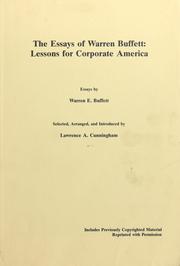
Berkshire's shareholder letters arranged by topic: governance, valuation, mergers.
“The resource is as valuable as Larry Cunningham's The Essays of Warren Buffett, which similarly organizes by subject matter” — Christopher Bloomstran
Source: Semper Augustus 2024 Letter to Clients, 'Books and Tunes for Walking', p. 96
Recommended by: Christopher Bloomstran, Francois Rochon and 11 others
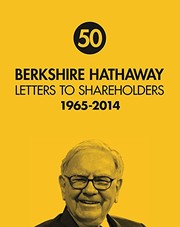
Every Berkshire annual letter since 1965, in order, as the company grew.
“…books I've recommended, highlighted to death, or forced on friends.” — Andrew Wilkinson
Source: Andrew Wilkinson's Bookshelf, neverenough.com
Recommended by: Andrew Wilkinson, Arnold Van Den Berg and 5 others

Buffett's life to 2008, written with full access to his files and his friends.
“…books I've recommended, highlighted to death, or forced on friends.” — Andrew Wilkinson
Source: Andrew Wilkinson's Bookshelf, neverenough.com
Recommended by: Andrew Wilkinson, Guy Spier, Mohnish Pabrai and 5 others
Buffett's method as tests of the business, its managers, its finances and price.
Recommended by: Mohnish Pabrai, Bill Ackman, Howard Marks and 1 other
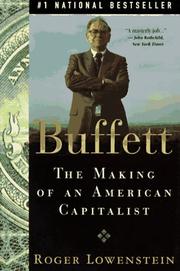
Buffett's life from Omaha and Graham's class to building Berkshire Hathaway.
“…books I've recommended, highlighted to death, or forced on friends.” — Andrew Wilkinson
Source: Andrew Wilkinson's Bookshelf, neverenough.com
Recommended by: Andrew Wilkinson, Christopher Bloomstran and 12 others
Miller reconstructs Buffett's partnership-era rules and results.
Recommended by: Mohnish Pabrai, Warren Buffett
Where it sits in the reference 4
Topics