
The Money Game
The classic on markets as a game of psychology and identity
About George Goodman
American financial writer and broadcaster (1930-2014) who wrote as "Adam Smith" and hosted Adam Smith's Money World on public television.
The Money Game (1968) and Paper Money (1981), published under the pseudonym Adam Smith, explained markets, money managers and inflation to general readers.
Who recommended it 9 · 8 direct
“The Money Game, written in 1968 by George Goodman under the pseudonym Adam Smith, included among its characters the Great Winfield.”
“In the late 1960s, the stock market was dominated by fast-talking, fast-trading young whizzes. The former money manager George J.W. Goodman, who wrote under the pen name "Adam Smith," christened them "gunslingers.”
“Adam Smith, The Money Game (New York: Random House, 1967), 48”
“Finally, for a magnificent account of the current financial scene, you should hurry out and get a copy of "The Money Game" by Adam Smith. It is loaded with insights and supreme wit.”
Similar books 6
Chosen by shared topics, the entries that hold them, and the people who recommended both.
Treat stocks as parts of businesses and buy only with a margin of safety.
“Although I’ve been reading The Intelligent Investor on a regular basis over the years, I never reread the 1958 speech, until I came across a Latin quote from Ben Graham and searched far and wide for its origin.” — Francois Rochon
Source: Giverny Capital Annual Letter to Partners 2018, page 9
Recommended by: Benjamin Graham, Christopher Bloomstran and 32 others
How to read financial statements sceptically and value bonds and stocks.
“I am reminded once again of the quote that sits in the front of Ben Graham’s Security Analysis, from Horace’s Ars Poetica: “Many shall be restored that now are fallen and many shall fall that now are in honor.” — Bill Miller
Source: 2007 Q3 Market Commentary
Recommended by: Bill Miller, Christopher Bloomstran and 18 others
Buy a few outstanding growth companies, research them by scuttlebutt, and hold.
“In his book « Common stocks and Uncommon Profits », the legendary investor Philip Fisher devoted a complete chapter on “when to buy”.” — Francois Rochon
Source: Giverny Capital Annual Letter to Partners 2003, page 3
Recommended by: Arnold Van Den Berg, Bill Stewart and 12 others
Data showing that low-expectation stocks beat popular ones over the long run.
“all these people really were helpful in forming and getting me involved in investing” — Joel Greenblatt
Source: Masters in Business transcript: Joel Greenblatt (2018)
Recommended by: Joel Greenblatt, Michael Mauboussin and 2 others
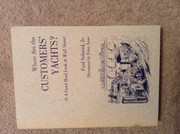
Why Wall Street grows rich on fees while its clients' results stay ordinary.
“First published in 1940, this is the funniest book ever written about investing - and one of the wisest. Schwed, a veteran of Wall Street who survived the Crash of 1929, knew exactly how the markets worked back then. Nothing has changed.” — Jason Zweig
Source: Best Books for Investors: A Short Shelf — jasonzweig.com
Recommended by: Jason Zweig, John C. Bogle, Mohnish Pabrai and 6 others
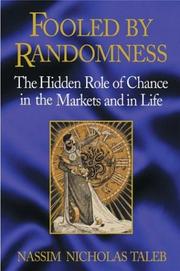
Why people mistake luck for skill, above all in markets.
“Fooled By Randomness was unquestionably the best non-fiction book I read in 2005.” — Brad Feld
Source: Book Review: Fooled By Randomness — Feld Thoughts
Recommended by: Barton Biggs, Brad Feld, Derek Sivers and 15 others
Where it sits in the reference 3
Topics 1
As an Amazon Associate I earn from qualifying purchases.