Updates

  1. Person pages list letters, writing, profiles and links as sortable tables with filters, and show each person's companies as links; Fund letters show each letter's description in its own column.
  2. Experts show a checked job title and a short description of each person; 30 more people have photographs.
  3. Every company, fund, university and publication the experts work for has a page listing the people there.
  4. Fund letters show each letter's thesis and filter by it; 225 person pages list the essays, columns and newsletter issues the person wrote.
  5. Person pages list every essay and newsletter issue a person wrote, and their own books as a table in List view.
  6. Recommends shows the five largest kinds of book and the rest under More; browse pictures load sooner.
  7. Podcasts and talks link the original episode, filter by Audio and video or Press, and list each publisher once.
  8. Pages are wider, Recommends has List and Grid, and a filter clicked again turns off.
  9. Book cards sit in a ruled grid with Open Library and Goodreads links and each book's one-line note.
  10. Funds is now Investors; each investor's styles are buttons that filter the table.
  11. Podcasts and talks on a person's page filter by year and publisher and show as a list or a grid of pictures.
  12. Quotes show only people's own words: 472 summaries written by list sites are gone.
  13. Country pages open from Browse again, and every link on the shelf lands on a page.
  14. Subject and person pages show their sections as tabs, and each book appears once on a person's page.
  15. Book cards show the quote, who said it and the source; grids show five cards to a row.
  16. On a phone, a menu holds the sections, search, Updates, Feedback and dark mode.
  17. Feedback takes a screenshot of the page with no browser prompt, opens a screenshot full size when you click it, and clears itself once sent.
  18. Book cards are centred, search names the topic each book sits in, and any text cut short shows whole on hover.
  19. Search groups its results by kind: people, companies, geographies, subjects, topics, books, funds, fund letters and papers.
  20. The Books table lists who recommended each book by name, and the browser tab names the section you are in.
  21. Feedback can take a screenshot of the page, or one you paste or choose, and opens in the corner beside Updates.
  22. Each rail button reopens its section where you left it, and Browse, Table and People show on every book and subject page.
  23. Filters grey out choices that hold nothing instead of hiding them, and Books › People filters by authors or recommenders.
  24. Feedback takes a subject line and up to three screenshots.
  25. Biographies are grouped by the person they are about: 41 new pages, from Abraham Lincoln to Lee Kuan Yew.
  26. Sport splits into 23 sports, and Religion into one topic per faith.
  27. Book lists show as cards: the cover, one recommendation quote and every recommender by name.
  28. Seventeen subjects that had two or three pages under different names now have one page each.
  29. Every page lists its Experts as authors and recommenders, with a link to them on the Experts tab.
  30. Economics, Financial history, Financial panics and Accounting are subjects of their own, with one page per financial crisis.
  31. Book, person and subject pages open inside the app, so the tabs stay in view.
  32. 996 more book covers, and photographs or logos for 227 more people and companies.
  33. Books › Browse shows every subject as cards, and the rail holds Fund letters, Papers, Experts, Books and Funds.
  34. Every topic over 150 books splits into narrower topics, each with a page of its own.

Send feedback

What is it?
Screenshots, up to 3 (optional)
or paste one with Ctrl+V

We use your email only to reply to you.

The SaaS Playbook

The SaaS Playbook

Rob Walling, Jason Cohen
2022
T3 200 pages · about 3h 20m to read Open Librarygoodreads

Bootstrapped SaaS economics: pricing, churn, plateau.

Summary

Rob Walling founded several software businesses, runs the TinySeed accelerator for bootstrapped software companies, and wrote this as a practical guide for founders building software as a service businesses without venture funding.

The orientation is the distinguishing feature. Almost all published advice on software businesses assumes venture funding and the growth trajectory it requires, and Walling writes for founders who intend to build profitable businesses at a smaller scale. The differences he identifies are substantial: bootstrapped companies must reach profitability early, cannot buy growth, must price for margin rather than for share, and should serve customers who can pay rather than pursuing the largest possible market.

The operational content covers pricing, which he treats as the highest-leverage decision most founders neglect, including the argument for charging more than feels comfortable and for pricing on a value metric that grows with the customer; churn and its measurement, including the distinction between logical churn and the negative revenue churn that expansion produces; positioning and the identification of an ideal customer profile narrow enough to be actionable; marketing channels and the finding that most companies succeed on one or two rather than many; hiring and the sequence in which a founder should delegate; and the psychological aspects of running a company alone. The book is short and specific. It draws on Walling's own experience and on the companies in his accelerator rather than on systematic research.

Key takeaways 7

  1. Bootstrapped software companies must price for margin rather than for market share, because they cannot buy growth.
  2. Pricing is the highest-leverage decision most founders neglect, and most charge substantially less than customers would pay.
  3. A value metric that grows with the customer's usage produces revenue expansion without requiring new customer acquisition.
  4. Net negative revenue churn, where expansion from existing customers exceeds losses, changes the growth mathematics entirely.
  5. Most successful companies succeed on one or two marketing channels rather than on many, so testing broadly and then concentrating is the pattern.
  6. An ideal customer profile must be narrow enough to determine specific decisions about product, pricing and channel.
  7. Walling argues that serving customers who can pay is more important than addressing the largest available market.

Who should read it

Founders building software businesses without venture funding who want operational specifics on pricing, churn and channel selection.

Similar books 6

Chosen by shared topics, the entries that hold them, and the people who recommended both.
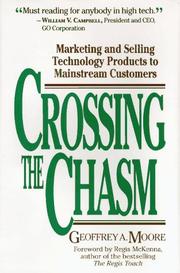
Geoffrey A. Moore · 1991

Why tech products stall between early adopters and the mainstream, and how to cross.

Aaron Ross, Jason Lemkin · 2016

The SaaS growth playbook: niche, funnel, hiring cadence.

Recommended by: David Cancel
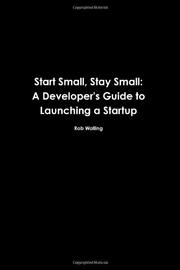
Rob Walling, Mike Taber · 2010

How to build a deliberately small, niche software business that pays.
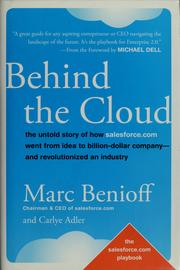
Marc Benioff, Carlye Adler · 2009

How Salesforce was built, set out as 111 plays on marketing, sales and growth.

Reid Hoffman, Chris Yeh · 2018

When and how to put speed before efficiency to capture a market before rivals.

Elad Gil · 2018

Operating manual for scaling a company from fifty to thousands

Where it sits in the reference 2

Business models
Business models

Topics

Entrepreneurship and StartupsTechnology and ComputingSmall Business and BootstrappingTech strategy and platform economics