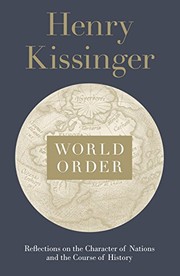
World Order
Competing regional ideas of legitimate order and the balance of power.
Competing regional conceptions of legitimate order and the balance of power
Summary
Kissinger argues that there has never been a true world order. For most of history each civilisation defined its own idea of order, saw itself as the centre of the world and treated its own principles as universal. China imagined a cultural hierarchy with the Emperor at its top. Rome saw itself surrounded by barbarians, and after Rome broke apart, European peoples developed an equilibrium of sovereign states and tried to export it. Early Islam considered itself the only legitimate political unit, destined to expand until the world lived by its principles. The United States was founded on the belief that democracy applies everywhere.
Now these concepts meet, because every region takes part in the high policy of every other, yet the major powers share no agreement on the rules or the destination, and tension rises. Drawing on his years as National Security Advisor and Secretary of State, Kissinger walks through the Nixon administration's talks with Hanoi, Reagan's debates with Gorbachev at Reykjavik, United States relations with China, the European Union, Iraq and Afghanistan, nuclear talks with Iran, the Arab Spring and Russia's dispute over Ukraine.
Key takeaways 4
- No single world order has ever existed; each civilisation built its own idea of order.
- China, Europe, Islam and the United States each treated their own principles as universal.
- Global politics now forces these competing ideas of order into contact.
- Without agreed rules among the major powers, international tension grows.
Who should read it
Investors with exposure to geopolitics who want Kissinger's account of the competing regional ideas of legitimate order.
Who recommended it 3 · 1 direct
Similar books 6
Chosen by shared topics, the entries that hold them, and the people who recommended both.
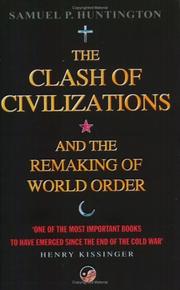
After the Cold War, conflict will follow cultural and religious fault lines.
Recommended by: Mohnish Pabrai, Patrick Collison and 3 others
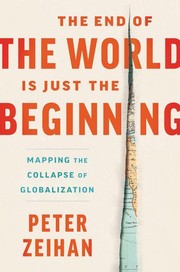
Why the US-guarded trading order is ending, and what that means for supply chains.
Recommended by: Andrew Wilkinson
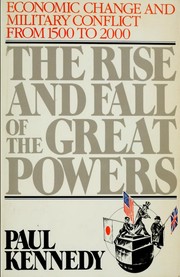
Why great powers decline when military spending outruns their economic base.
“The River Out of Eden by Richard Dawkins, The Rise and Fall of the Great Powers by Paul Kennedy” — Ray Dalio
Source: Ray Dalio Reddit AMA, r/IAmA (u/RayTDalio)
Recommended by: Jim Collins, Ray Dalio, William J. Bernstein and 3 others
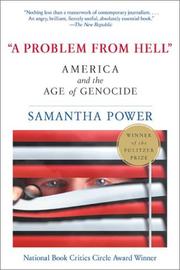
Why American leaders who vowed never again failed to stop modern genocides.
Recommended by: Patrick Collison
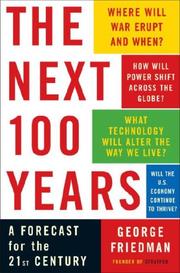
A forecast of the long-term geopolitical shifts of the coming century.
Recommended by: Sophie Bakalar
Case studies of how policymakers can use history to make better decisions.
Recommended by: Patrick Collison, Stewart Brand