Updates

  1. Person pages list letters, writing, profiles and links as sortable tables with filters, and show each person's companies as links; Fund letters show each letter's description in its own column.
  2. Experts show a checked job title and a short description of each person; 30 more people have photographs.
  3. Every company, fund, university and publication the experts work for has a page listing the people there.
  4. Fund letters show each letter's thesis and filter by it; 225 person pages list the essays, columns and newsletter issues the person wrote.
  5. Person pages list every essay and newsletter issue a person wrote, and their own books as a table in List view.
  6. Recommends shows the five largest kinds of book and the rest under More; browse pictures load sooner.
  7. Podcasts and talks link the original episode, filter by Audio and video or Press, and list each publisher once.
  8. Pages are wider, Recommends has List and Grid, and a filter clicked again turns off.
  9. Book cards sit in a ruled grid with Open Library and Goodreads links and each book's one-line note.
  10. Funds is now Investors; each investor's styles are buttons that filter the table.
  11. Podcasts and talks on a person's page filter by year and publisher and show as a list or a grid of pictures.
  12. Quotes show only people's own words: 472 summaries written by list sites are gone.
  13. Country pages open from Browse again, and every link on the shelf lands on a page.
  14. Subject and person pages show their sections as tabs, and each book appears once on a person's page.
  15. Book cards show the quote, who said it and the source; grids show five cards to a row.
  16. On a phone, a menu holds the sections, search, Updates, Feedback and dark mode.
  17. Feedback takes a screenshot of the page with no browser prompt, opens a screenshot full size when you click it, and clears itself once sent.
  18. Book cards are centred, search names the topic each book sits in, and any text cut short shows whole on hover.
  19. Search groups its results by kind: people, companies, geographies, subjects, topics, books, funds, fund letters and papers.
  20. The Books table lists who recommended each book by name, and the browser tab names the section you are in.
  21. Feedback can take a screenshot of the page, or one you paste or choose, and opens in the corner beside Updates.
  22. Each rail button reopens its section where you left it, and Browse, Table and People show on every book and subject page.
  23. Filters grey out choices that hold nothing instead of hiding them, and Books › People filters by authors or recommenders.
  24. Feedback takes a subject line and up to three screenshots.
  25. Biographies are grouped by the person they are about: 41 new pages, from Abraham Lincoln to Lee Kuan Yew.
  26. Sport splits into 23 sports, and Religion into one topic per faith.
  27. Book lists show as cards: the cover, one recommendation quote and every recommender by name.
  28. Seventeen subjects that had two or three pages under different names now have one page each.
  29. Every page lists its Experts as authors and recommenders, with a link to them on the Experts tab.
  30. Economics, Financial history, Financial panics and Accounting are subjects of their own, with one page per financial crisis.
  31. Book, person and subject pages open inside the app, so the tabs stay in view.
  32. 996 more book covers, and photographs or logos for 227 more people and companies.
  33. Books › Browse shows every subject as cards, and the rail holds Fund letters, Papers, Experts, Books and Funds.
  34. Every topic over 150 books splits into narrower topics, each with a page of its own.

Send feedback

What is it?
Screenshots, up to 3 (optional)
or paste one with Ctrl+V

We use your email only to reply to you.

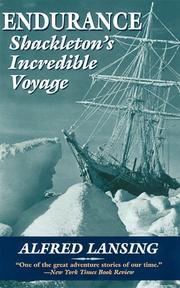
Endurance

Endurance

Alfred Lansing
1959
T2 282 pages · about 4h 42m to read Open Librarygoodreads

Shackleton's survival; decision-making when the plan is already lost

Summary

Lansing reconstructs Ernest Shackleton's 1914 to 1916 Imperial Trans-Antarctic Expedition, in which the ship Endurance was trapped in pack ice in the Weddell Sea, drifted for ten months, was crushed and sank, and the twenty-eight men survived for a further year on ice floes and on Elephant Island before rescue. Nobody died. Lansing interviewed surviving expedition members and used their diaries, which is why the account carries detail no later reconstruction could match.

The leadership material is why the book is read outside the adventure category. Shackleton abandoned the expedition's original objective immediately once the ship was lost and redefined the goal as bringing everyone home. He managed morale deliberately, assigning tents to separate potential troublemakers and keeping the men he considered problematic close to himself. He maintained routines including regular meals, sleeping schedules and organised recreation while the situation deteriorated. He enforced equality of rations and physical labour regardless of rank, including having officers scrub floors.

The operational decisions include the sledging attempts across the ice, the retreat to the boats, the passage to Elephant Island, and the eight hundred mile open boat journey to South Georgia in a twenty-two foot lifeboat, followed by the first crossing of the island's interior.

Lansing wrote in 1959 and the book is narrative history without analysis. The leadership lessons must be extracted by the reader, and the situation differs from business in ways that limit transfer, particularly that the men could not leave. The account of Shackleton changing the objective the moment the original became impossible is the part with the widest application.

Key takeaways 8

  1. Shackleton abandoned the expedition's objective immediately when it became impossible and redefined success as everyone surviving.
  2. Maintaining routine, including regular meals, work assignments and recreation, held the group together during periods when no progress was possible.
  3. Potential sources of dissent were kept close to the leader and separated from each other deliberately rather than isolated or punished.
  4. Equality of rations, labour and treatment regardless of rank removed the grievance that would otherwise have split the group.
  5. The leader made decisions visibly and quickly, and the men's confidence depended on seeing decisions made rather than on the decisions being right.
  6. Physical and mental deterioration was managed by giving people work with an immediate purpose even when the work was not strictly necessary.
  7. The eight hundred mile boat journey was a calculated bet on a single navigational chance, undertaken because waiting offered a worse expected outcome.
  8. Every man survived, which is the fact against which all of the leadership claims should be tested.

Who should read it

Leaders who want a documented case of holding a group together through a prolonged period where the original objective is gone and no progress is visible.

Who recommended it 10 · 3 direct

Jason Friedreported
Jeff Bezosreported
Ray Dalioreported
Ryan Holidayreported
Scott Belskyreported

Similar books 6

Chosen by shared topics, the entries that hold them, and the people who recommended both.
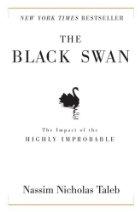
Nassim Nicholas Taleb · 2007

Rare, unforeseen, high-impact events drive history, explained only after the fact.

“The message of The Black Swan is how important it is to realize that the things everyone rules out can still come to pass.” — Howard Marks

Source: Oaktree memo 'The Limits to Negativism'

Recommended by: Howard Marks, Marc Andreessen, Nat Eliason and 18 others
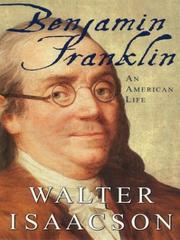
Walter Isaacson · 2003

Franklin's life as printer, scientist, diplomat and founder.

“…books I've recommended, highlighted to death, or forced on friends.” — Andrew Wilkinson

Source: Andrew Wilkinson's Bookshelf, neverenough.com

Recommended by: Alfred Lin, Andrew Wilkinson, Mohnish Pabrai and 7 others

Where it sits in the reference 1

Portfolio & risk

Topics

Travel and ExplorationGeneral HistoryBiography and MemoirWar, Exploration and TravelExploration and Voyages