Updates

  1. Person pages list letters, writing, profiles and links as sortable tables with filters, and show each person's companies as links; Fund letters show each letter's description in its own column.
  2. Experts show a checked job title and a short description of each person; 30 more people have photographs.
  3. Every company, fund, university and publication the experts work for has a page listing the people there.
  4. Fund letters show each letter's thesis and filter by it; 225 person pages list the essays, columns and newsletter issues the person wrote.
  5. Person pages list every essay and newsletter issue a person wrote, and their own books as a table in List view.
  6. Recommends shows the five largest kinds of book and the rest under More; browse pictures load sooner.
  7. Podcasts and talks link the original episode, filter by Audio and video or Press, and list each publisher once.
  8. Pages are wider, Recommends has List and Grid, and a filter clicked again turns off.
  9. Book cards sit in a ruled grid with Open Library and Goodreads links and each book's one-line note.
  10. Funds is now Investors; each investor's styles are buttons that filter the table.
  11. Podcasts and talks on a person's page filter by year and publisher and show as a list or a grid of pictures.
  12. Quotes show only people's own words: 472 summaries written by list sites are gone.
  13. Country pages open from Browse again, and every link on the shelf lands on a page.
  14. Subject and person pages show their sections as tabs, and each book appears once on a person's page.
  15. Book cards show the quote, who said it and the source; grids show five cards to a row.
  16. On a phone, a menu holds the sections, search, Updates, Feedback and dark mode.
  17. Feedback takes a screenshot of the page with no browser prompt, opens a screenshot full size when you click it, and clears itself once sent.
  18. Book cards are centred, search names the topic each book sits in, and any text cut short shows whole on hover.
  19. Search groups its results by kind: people, companies, geographies, subjects, topics, books, funds, fund letters and papers.
  20. The Books table lists who recommended each book by name, and the browser tab names the section you are in.
  21. Feedback can take a screenshot of the page, or one you paste or choose, and opens in the corner beside Updates.
  22. Each rail button reopens its section where you left it, and Browse, Table and People show on every book and subject page.
  23. Filters grey out choices that hold nothing instead of hiding them, and Books › People filters by authors or recommenders.
  24. Feedback takes a subject line and up to three screenshots.
  25. Biographies are grouped by the person they are about: 41 new pages, from Abraham Lincoln to Lee Kuan Yew.
  26. Sport splits into 23 sports, and Religion into one topic per faith.
  27. Book lists show as cards: the cover, one recommendation quote and every recommender by name.
  28. Seventeen subjects that had two or three pages under different names now have one page each.
  29. Every page lists its Experts as authors and recommenders, with a link to them on the Experts tab.
  30. Economics, Financial history, Financial panics and Accounting are subjects of their own, with one page per financial crisis.
  31. Book, person and subject pages open inside the app, so the tabs stay in view.
  32. 996 more book covers, and photographs or logos for 227 more people and companies.
  33. Books › Browse shows every subject as cards, and the rail holds Fund letters, Papers, Experts, Books and Funds.
  34. Every topic over 150 books splits into narrower topics, each with a page of its own.

Send feedback

What is it?
Screenshots, up to 3 (optional)
or paste one with Ctrl+V

We use your email only to reply to you.

Profits, Politics and Panics

Profits, Politics and Panics

Leo Goodstadt
2007
T3 Open Librarygoodreads

How Hong Kong's banks and bank crises shaped the miracle economy.

Summary

Leo Goodstadt worked in the Hong Kong government as head of the Central Policy Unit and wrote this history of Hong Kong's banking system from 1935 to 1985, drawing on colonial archives that had recently become available.

The book's argument runs against Hong Kong's reputation for laissez-faire. Goodstadt shows that the banking system was repeatedly unstable, with runs and failures in 1935, in the 1960s including the Ming Tak and Canton Trust failures and the 1965 crisis that took down Hang Seng's independence, and in the early 1980s. He documents the colonial government's reluctance to regulate, its dependence on the Hongkong and Shanghai Banking Corporation to act as an unofficial central bank, and the political constraints imposed by London and by the need to accommodate Chinese business interests.

He also covers the monetary arrangements: the sterling link, the float after 1974, and the currency crisis of 1983 that produced the dollar peg. His general claim is that Hong Kong's financial stability was achieved through repeated crisis and reluctant regulation rather than through a coherent free-market policy, and that the official history has been written backward from the result. The archival research is the book's contribution. It is written for readers with some knowledge of Hong Kong and is not an introduction to the territory.

Key takeaways 7

  1. Hong Kong's banking system experienced repeated runs and failures, which contradicts its reputation for stability through non-intervention.
  2. The colonial government relied on the Hongkong and Shanghai Banking Corporation to perform central banking functions it declined to establish.
  3. Regulation in Hong Kong followed crises rather than preventing them, and each round was resisted until failure forced it.
  4. Chinese-owned banks were treated differently by the colonial administration than British-owned ones, which shaped which failures were rescued.
  5. Goodstadt argues that Hong Kong's laissez-faire reputation was constructed retrospectively and does not describe the historical record.
  6. The absence of a central bank left the currency exposed to political shocks, which the 1983 crisis demonstrated.
  7. Depositor protection was resisted for decades on the argument that it would encourage risk-taking, and its absence produced runs instead.

Who should read it

Readers studying Hong Kong's financial system or the history of banking regulation in a jurisdiction that claimed not to regulate.

Similar books 6

Chosen by shared topics, the entries that hold them, and the people who recommended both.
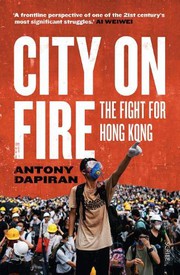
Antony Dapiran · 2020

Hong Kong's 2019 protests, from the extradition bill to months of street battles.
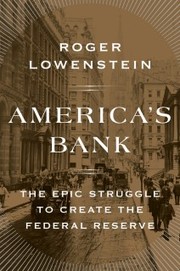
Roger Lowenstein · 2015

How the Federal Reserve was argued into existence, from the 1907 panic to 1913.

Recommended by: Seth Klarman

Benn Steil · 2013

The 1944 Bretton Woods conference as a contest between Keynes and Harry Dexter White.
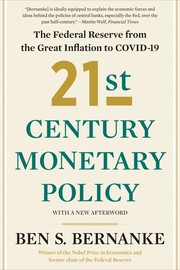
Ben S. Bernanke · 2022

Insider account of the Fed from Burns through the QE era.
Sidney Homer, Richard Sylla · 1963

Interest rates from Babylonian lending through Rome and Europe to modern bonds.

Recommended by: Mohnish Pabrai
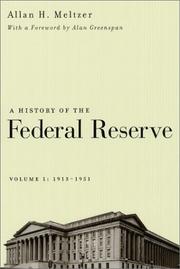
Allan H. Meltzer · 2003

The Fed from 1913 to 1951, told from its own minutes and internal memos.

Where it sits in the reference 2

Geographies
Financial history

Topics

Financial HistoryGeneral HistoryPolitics and GovernmentAsia, Africa, Latin America and the Middle EastAsia and the Pacific