Saving Capitalism From Short-Termism: How to Build Long-Term Value and Take Back Our Financial Future
Summary
Rappaport, who wrote Creating Shareholder Value and co-wrote Expectations Investing, argues that the shareholder value idea has been corrupted in practice and that what corporations, investors and regulators now pursue is short-term share price rather than long-term value.
His diagnosis identifies specific mechanisms. Executive compensation tied to short-vesting stock options and to annual earnings targets rewards actions that raise the current price at the expense of value. Quarterly earnings guidance commits management publicly to a number and then produces the accounting and operating decisions required to hit it. Fund managers are measured over periods far shorter than the investments they hold, which forces them to trade on quarterly results. Analysts' consensus estimates become the target that management manages to. The accounting itself treats value-creating investment in research, brand and training as expense, which makes long-horizon investment reduce reported earnings.
His proposals are concrete: abolish quarterly guidance, extend option vesting well past a chief executive's tenure, index option strike prices to sector performance so managers are not paid for market moves, pay fund managers on long-horizon results with their own capital at risk, and supplement statutory reporting with a corporate performance statement that separates cash flows from accounting estimates.
The book is a practitioner argument rather than empirical research, and the evidence that short-termism reduces aggregate investment is contested among economists. The specific compensation and guidance proposals are the most actionable part and several have been adopted since.
Key takeaways 7
- Shareholder value as practised measures short-term share price rather than long-term value, which are different objectives that the language conflates.
- Executive options that vest within a few years reward raising the current price rather than building value, and the vesting period should extend past the executive's tenure.
- Option strike prices should be indexed to sector performance, since unindexed options pay executives for market movements they did not cause.
- Quarterly earnings guidance commits management to a number and then produces the operating and accounting decisions required to meet it.
- Fund managers measured over quarters cannot hold positions requiring years, which transmits short-termism from the asset owner to the company.
- Accounting treats investment in research, brand and training as expense, which makes value-creating long-horizon spending reduce reported earnings.
- Companies should publish a corporate performance statement separating cash flows from accounting estimates, so users can see which figures rest on judgement.
Who should read it
Directors, executives and asset owners designing compensation, guidance and mandate structures that reward long-horizon value.
About Alfred Rappaport
Professor emeritus at the Kellogg School of Management, Northwestern University; originated shareholder value analysis.
Creating Shareholder Value demonstrated that reported earnings and accounting growth do not measure value creation, and identified the cash flow drivers that do - a framework corporate finance departments still run on. Expectations Investing, written with Michael Mauboussin, inverts the exercise: read the expectations already priced into a stock, then judge whether the business can beat them.
Kellogg School of Management, Northwestern University, The Alcar Group
Who recommended it 1 · 1 direct
Similar books 6
Chosen by shared topics, the entries that hold them, and the people who recommended both.

Value is discounted future cash flow, not earnings per share or return on equity.
“I read that book and the light bulbs all went off for me personally.” — Michael Mauboussin
Source: The Tim Ferriss Show #659 — official transcript
Recommended by: Michael Mauboussin, Mohnish Pabrai
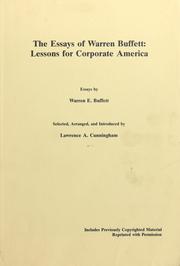
Berkshire's shareholder letters arranged by topic: governance, valuation, mergers.
“The resource is as valuable as Larry Cunningham's The Essays of Warren Buffett, which similarly organizes by subject matter” — Christopher Bloomstran
Source: Semper Augustus 2024 Letter to Clients, 'Books and Tunes for Walking', p. 96
Recommended by: Christopher Bloomstran, Francois Rochon and 11 others
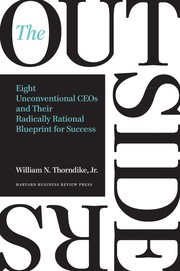
Eight CEOs who beat the market by allocating capital, not by running operations.
“…books I've recommended, highlighted to death, or forced on friends.” — Andrew Wilkinson
Source: Andrew Wilkinson's Bookshelf, neverenough.com
Recommended by: Andrew Wilkinson, Dan Loeb, Francois Rochon and 12 others

Every Berkshire annual letter since 1965, in order, as the company grew.
“…books I've recommended, highlighted to death, or forced on friends.” — Andrew Wilkinson
Source: Andrew Wilkinson's Bookshelf, neverenough.com
Recommended by: Andrew Wilkinson, Arnold Van Den Berg and 5 others
Why mergers fail; the break risk an arbitrageur underwrites.
Where it sits in the reference 4
Topics