
The Asian Financial Crisis
Country-by-country anatomy of the crisis, reform and recovery.
Summary
Shalendra Sharma provides a comparative account of the 1997 and 1998 Asian financial crisis across the affected economies, examining what happened in each and assessing the competing explanations.
The country chapters cover Thailand, where the crisis began with the baht devaluation in July 1997; Indonesia, where it produced the deepest economic collapse and the fall of the Suharto government; South Korea, where the chaebol debt structure and short-term foreign borrowing produced a rapid reserve loss; and Malaysia, which imposed capital controls in September 1998 against the advice of the International Monetary Fund. He also covers the economies that were less affected, and the crisis's transmission to Russia and Brazil.
The analytical question is whether the crisis reflected fundamental weaknesses in these economies, principally weak financial supervision, connected lending and moral hazard from implicit guarantees, or whether it was a panic in which self-fulfilling expectations produced a run on economies that were fundamentally sound. Sharma examines both and concludes that the answer differs by country. He also assesses the International Monetary Fund's programmes, which required fiscal tightening and high interest rates in economies whose problem was private rather than public debt, and which are now generally considered to have been misdesigned. The book is comprehensive and academic, published in 2003 with the benefit of distance.
Key takeaways 7
- The Asian crisis combined genuine financial sector weaknesses with a self-fulfilling panic, in proportions differing by country.
- Short-term foreign currency borrowing funding long-term domestic lending was the common vulnerability across affected economies.
- Implicit government guarantees to banks and to connected borrowers encouraged lending that no risk assessment justified.
- International Monetary Fund programmes required fiscal tightening in economies whose deficits were private rather than public.
- High interest rates intended to defend currencies deepened the corporate insolvency that was the underlying problem.
- Malaysia's capital controls in 1998 produced an outcome no worse than its neighbours', which weakened the case against them.
- Sharma argues that the crisis was transmitted between countries by investor behaviour rather than by trade or financial linkages.
Who should read it
Investors in emerging markets who want a comparative account of a currency and banking crisis and an assessment of the policy response.
Similar books 6
Chosen by shared topics, the entries that hold them, and the people who recommended both.
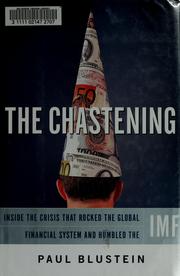
How the IMF handled the Asian and Russian crises of 1997 and 1998, from inside.

How Jho Low diverted billions from Malaysia's 1MDB fund into parties and politics.
Recommended by: Alexis Ohanian, Alfred Lin and 5 others
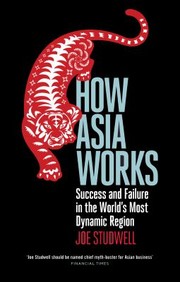
Why some Asian nations grew rich: land reform, export-led industry, directed credit.
“it's a good read for anyone who wants to understand what actually determines whether a developing economy will succeed.” — Bill Gates
Source: Gates Notes review of How Asia Works
Recommended by: Bill Gates, Mohnish Pabrai, Patrick Collison

How East Asian governments' interventions helped produce rapid growth.
Written straight after the 1997 crisis on opacity, related-party dealing and family control.
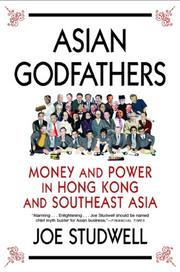
How Southeast Asia's tycoons got rich from political favours, not productivity.
Where it sits in the reference 2
Topics