Updates

  1. Person pages list letters, writing, profiles and links as sortable tables with filters, and show each person's companies as links; Fund letters show each letter's description in its own column.
  2. Experts show a checked job title and a short description of each person; 30 more people have photographs.
  3. Every company, fund, university and publication the experts work for has a page listing the people there.
  4. Fund letters show each letter's thesis and filter by it; 225 person pages list the essays, columns and newsletter issues the person wrote.
  5. Person pages list every essay and newsletter issue a person wrote, and their own books as a table in List view.
  6. Recommends shows the five largest kinds of book and the rest under More; browse pictures load sooner.
  7. Podcasts and talks link the original episode, filter by Audio and video or Press, and list each publisher once.
  8. Pages are wider, Recommends has List and Grid, and a filter clicked again turns off.
  9. Book cards sit in a ruled grid with Open Library and Goodreads links and each book's one-line note.
  10. Funds is now Investors; each investor's styles are buttons that filter the table.
  11. Podcasts and talks on a person's page filter by year and publisher and show as a list or a grid of pictures.
  12. Quotes show only people's own words: 472 summaries written by list sites are gone.
  13. Country pages open from Browse again, and every link on the shelf lands on a page.
  14. Subject and person pages show their sections as tabs, and each book appears once on a person's page.
  15. Book cards show the quote, who said it and the source; grids show five cards to a row.
  16. On a phone, a menu holds the sections, search, Updates, Feedback and dark mode.
  17. Feedback takes a screenshot of the page with no browser prompt, opens a screenshot full size when you click it, and clears itself once sent.
  18. Book cards are centred, search names the topic each book sits in, and any text cut short shows whole on hover.
  19. Search groups its results by kind: people, companies, geographies, subjects, topics, books, funds, fund letters and papers.
  20. The Books table lists who recommended each book by name, and the browser tab names the section you are in.
  21. Feedback can take a screenshot of the page, or one you paste or choose, and opens in the corner beside Updates.
  22. Each rail button reopens its section where you left it, and Browse, Table and People show on every book and subject page.
  23. Filters grey out choices that hold nothing instead of hiding them, and Books › People filters by authors or recommenders.
  24. Feedback takes a subject line and up to three screenshots.
  25. Biographies are grouped by the person they are about: 41 new pages, from Abraham Lincoln to Lee Kuan Yew.
  26. Sport splits into 23 sports, and Religion into one topic per faith.
  27. Book lists show as cards: the cover, one recommendation quote and every recommender by name.
  28. Seventeen subjects that had two or three pages under different names now have one page each.
  29. Every page lists its Experts as authors and recommenders, with a link to them on the Experts tab.
  30. Economics, Financial history, Financial panics and Accounting are subjects of their own, with one page per financial crisis.
  31. Book, person and subject pages open inside the app, so the tabs stay in view.
  32. 996 more book covers, and photographs or logos for 227 more people and companies.
  33. Books › Browse shows every subject as cards, and the rail holds Fund letters, Papers, Experts, Books and Funds.
  34. Every topic over 150 books splits into narrower topics, each with a page of its own.

Send feedback

What is it?
Screenshots, up to 3 (optional)
or paste one with Ctrl+V

We use your email only to reply to you.

The Chastening

The Chastening

Paul Blustein
2001
T2 448 pages · about 7h 28m to read Open Librarygoodreads

The IMF inside the 1997 crisis, reported from the negotiating rooms.

Summary

Paul Blustein, a Washington Post economics correspondent, reported this account of the International Monetary Fund's handling of the crises of 1997 and 1998 with unusual access to the institution and to the officials involved.

The narrative follows the sequence: Thailand's devaluation and the first programme, Indonesia's collapse and the political conditions attached to its programme, Korea's reserve exhaustion and the Christmas 1997 rescue in which foreign banks were persuaded to roll their loans, Russia's default and devaluation in August 1998, and Brazil's programme afterward. Blustein reconstructs the internal debates, the disagreements between the Fund, the United States Treasury and the affected governments, and the decisions made under time pressure with inadequate information.

His assessment is critical but not hostile. He documents the specific errors: fiscal tightening in economies whose deficits were private, high interest rates that deepened corporate insolvency, the Indonesian programme's structural conditions that extended far beyond the Fund's competence and destabilised the government, and the bank bailouts that protected foreign lenders while borrowers bore the adjustment. He also shows the constraints the Fund worked under, including its shareholders' politics and the absence of any alternative institution. The book is the best available account of how these decisions were actually made, and it shaped the subsequent reform of Fund conditionality.

Key takeaways 7

  1. The Fund required fiscal tightening in economies whose deficits were private rather than public, which deepened the contraction.
  2. High interest rates intended to defend currencies accelerated corporate insolvency, which was the actual problem.
  3. The Indonesian programme's structural conditions extended far beyond the Fund's competence and contributed to political collapse.
  4. Korea's rescue worked because foreign banks were persuaded to roll their loans, which was a private negotiation rather than a Fund programme.
  5. Fund programmes protected foreign creditors while domestic borrowers and workers bore the adjustment cost.
  6. Blustein documents that decisions were made under severe time pressure with information the Fund knew to be inadequate.
  7. The Fund's shareholders' politics constrained what it could do as much as its economic analysis did.

Who should read it

Investors and policymakers who want a documented account of how international crisis lending decisions are actually made under pressure.

Similar books 6

Chosen by shared topics, the entries that hold them, and the people who recommended both.

Shalendra D. Sharma · 2003

Country-by-country anatomy of the crisis, reform and recovery.
Tom Wright, Bradley Hope · 2018

How Jho Low diverted billions from Malaysia's 1MDB fund into parties and politics.

Joe Studwell · 2013

Why some Asian nations grew rich: land reform, export-led industry, directed credit.

“it's a good read for anyone who wants to understand what actually determines whether a developing economy will succeed.” — Bill Gates

Source: Gates Notes review of How Asia Works

Recommended by: Bill Gates, Mohnish Pabrai, Patrick Collison
World Bank · 1993

How East Asian governments' interventions helped produce rapid growth.
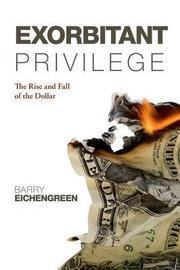
Barry Eichengreen · 2011

How the dollar became the world's currency, what it gives the US, what may follow.

Where it sits in the reference 2

Geographies
Financial panics

Topics

Financial HistoryEconomicsPolitics and GovernmentGlobalisation, development and offshore money