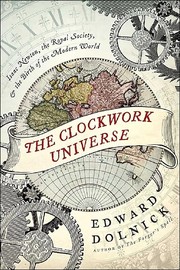
The Clockwork Universe
The Royal Society scientists who pictured a universe that ran like a machine.
Summary
Edward Dolnick tells the story of the men of the Royal Society at the end of the seventeenth century, who lived in a world of dirt and disease, religious war, plague and the Great Fire of London, but pictured a universe that ran like a perfect machine. When most people saw the world falling apart, these early scientists declared that, however chaotic it looked, the universe was as intricate and precisely regulated as a clock.
Dolnick sets the scene at the tail end of Shakespeare's century, when the natural and the supernatural were still intertwined: disease was a punishment from God, astronomy had not broken free of astrology and the sky was full of omens. The men he portrays believed in angels, alchemy and the devil and also in precise mathematical laws of nature, a contradiction that tormented them and changed the course of history. The book combines history and science in a group portrait of minds who, Dolnick argues, made the modern world, and whose answers still shape how the world is understood.
Key takeaways 4
- Modern science began among men who also believed in alchemy and angels.
- The idea of a universe governed by mathematical laws arose amid plague and war.
- The Royal Society brought together the first generation of modern scientists.
- Religious belief and scientific method coexisted in the same minds.
Who should read it
Readers of the history of science and of seventeenth-century England.
Who recommended it 1
Similar books 6
Chosen by shared topics, the entries that hold them, and the people who recommended both.
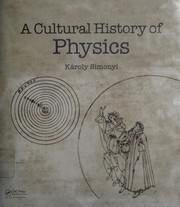
A history of physics set in its cultural context.
Recommended by: Naval Ravikant
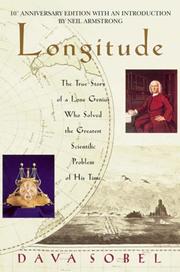
How a clockmaker solved the longitude problem, the hardest science of his day.
Recommended by: Jim Collins, Patrick Collison and 1 other

A non-technical story of the people and companies who built the first atomic bomb.
Recommended by: Patrick Collison
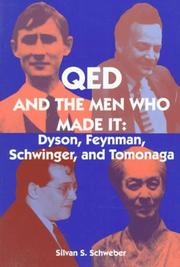
How Dyson, Feynman, Schwinger and Tomonaga built quantum electrodynamics.
Recommended by: Eric Weinstein
The relationship between science and society, from the flint axe to the H-bomb.
Recommended by: Patrick Collison
Essays by scientists and writers marking 350 years of the Royal Society.
Recommended by: Mohnish Pabrai