Updates

  1. Person pages list letters, writing, profiles and links as sortable tables with filters, and show each person's companies as links; Fund letters show each letter's description in its own column.
  2. Experts show a checked job title and a short description of each person; 30 more people have photographs.
  3. Every company, fund, university and publication the experts work for has a page listing the people there.
  4. Fund letters show each letter's thesis and filter by it; 225 person pages list the essays, columns and newsletter issues the person wrote.
  5. Person pages list every essay and newsletter issue a person wrote, and their own books as a table in List view.
  6. Recommends shows the five largest kinds of book and the rest under More; browse pictures load sooner.
  7. Podcasts and talks link the original episode, filter by Audio and video or Press, and list each publisher once.
  8. Pages are wider, Recommends has List and Grid, and a filter clicked again turns off.
  9. Book cards sit in a ruled grid with Open Library and Goodreads links and each book's one-line note.
  10. Funds is now Investors; each investor's styles are buttons that filter the table.
  11. Podcasts and talks on a person's page filter by year and publisher and show as a list or a grid of pictures.
  12. Quotes show only people's own words: 472 summaries written by list sites are gone.
  13. Country pages open from Browse again, and every link on the shelf lands on a page.
  14. Subject and person pages show their sections as tabs, and each book appears once on a person's page.
  15. Book cards show the quote, who said it and the source; grids show five cards to a row.
  16. On a phone, a menu holds the sections, search, Updates, Feedback and dark mode.
  17. Feedback takes a screenshot of the page with no browser prompt, opens a screenshot full size when you click it, and clears itself once sent.
  18. Book cards are centred, search names the topic each book sits in, and any text cut short shows whole on hover.
  19. Search groups its results by kind: people, companies, geographies, subjects, topics, books, funds, fund letters and papers.
  20. The Books table lists who recommended each book by name, and the browser tab names the section you are in.
  21. Feedback can take a screenshot of the page, or one you paste or choose, and opens in the corner beside Updates.
  22. Each rail button reopens its section where you left it, and Browse, Table and People show on every book and subject page.
  23. Filters grey out choices that hold nothing instead of hiding them, and Books › People filters by authors or recommenders.
  24. Feedback takes a subject line and up to three screenshots.
  25. Biographies are grouped by the person they are about: 41 new pages, from Abraham Lincoln to Lee Kuan Yew.
  26. Sport splits into 23 sports, and Religion into one topic per faith.
  27. Book lists show as cards: the cover, one recommendation quote and every recommender by name.
  28. Seventeen subjects that had two or three pages under different names now have one page each.
  29. Every page lists its Experts as authors and recommenders, with a link to them on the Experts tab.
  30. Economics, Financial history, Financial panics and Accounting are subjects of their own, with one page per financial crisis.
  31. Book, person and subject pages open inside the app, so the tabs stay in view.
  32. 996 more book covers, and photographs or logos for 227 more people and companies.
  33. Books › Browse shows every subject as cards, and the rail holds Fund letters, Papers, Experts, Books and Funds.
  34. Every topic over 150 books splits into narrower topics, each with a page of its own.

Send feedback

What is it?
Screenshots, up to 3 (optional)
or paste one with Ctrl+V

We use your email only to reply to you.

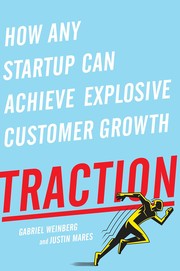
Traction

Traction

Gabriel Weinberg, Justin Mares
2014
T3 240 pages · about 4h to read Open Librarygoodreads

Summary

Weinberg, who founded DuckDuckGo, and Mares argue that most startups fail from lack of distribution rather than lack of product, and that founders systematically underinvest in channels. Their prescription is the fifty percent rule, meaning that a founder should spend half their time on product and half on traction from the start rather than building first and distributing later.

The book's structure is a catalogue of nineteen traction channels: targeting blogs, publicity, unconventional public relations, search engine marketing, social and display ads, offline ads, search engine optimisation, content marketing, email marketing, viral marketing, engineering as marketing, business development, sales, affiliate programmes, existing platforms, trade shows, offline events, speaking engagements and community building. Each gets a chapter with tactics and with interviews from practitioners who used it successfully.

The method for choosing among them is the bullseye framework. A founder brainstorms plausible approaches in every channel, ranks them into an outer ring of possibilities, a middle ring of promising candidates to test, and an inner ring of the one channel that is working. They then run cheap tests in the middle ring simultaneously, with defined cost per acquisition targets, and concentrate entirely on whichever works.

The underlying claims are that one channel usually dominates at any stage, that the dominant channel changes as the company grows, and that founders default to the channels they already know rather than testing. The tactics are dated, since specific platforms, costs and mechanics have changed considerably since 2014. The channel taxonomy and the bullseye process have held up. The interviews are brief and mostly confirm the framework. It works as a checklist against which to test whether a company has actually considered its options.

Key takeaways 8

  1. Startups fail more often from lack of distribution than from lack of product, and founders systematically underinvest in it.
  2. Half of a founder's time should go to traction from the start rather than after the product is finished.
  3. There are roughly nineteen distinct customer acquisition channels, and most founders consider only the two or three they already know.
  4. One channel usually dominates at any given stage, so effort should concentrate there rather than spread across several.
  5. The dominant channel changes as the company grows, so a channel that stops working indicates a stage transition rather than a failure of execution.
  6. Channels should be tested cheaply and in parallel with defined cost targets before any is scaled.
  7. Building a free tool that serves the target customer is a distribution method rather than a product decision, which is what engineering as marketing means.
  8. Testing a channel properly requires enough spend and time to reach a conclusion, and abandoning tests early produces the false conclusion that nothing works.

Who should read it

Founders past product-market fit who need a systematic way to find their acquisition channel rather than defaulting to what they know.

Who recommended it 10 · 1 direct

Ali Abdaalreported
Austin Riefreported
Leo Polovetsreported
Nick Huberreported
Nir Eyalreported

Similar books 6

Chosen by shared topics, the entries that hold them, and the people who recommended both.
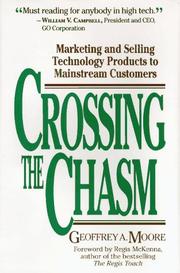
Geoffrey A. Moore · 1991

Why tech products stall between early adopters and the mainstream, and how to cross.

Elad Gil · 2018

Operating manual for scaling a company from fifty to thousands

Peter Thiel, Blake Masters · 2014

Why startups should build something new and own a small market before growing.

Where it sits in the reference 1

Business themes

Topics

Entrepreneurship and StartupsSales and MarketingGrowth, Sales and MarketingGrowth, pricing and channels