Updates

  1. Search groups its results by kind: people, companies, geographies, subjects, topics, books, funds, fund letters and papers.
  2. The Books table lists who recommended each book by name, and the browser tab names the section you are in.
  3. Feedback can take a screenshot of the page, or one you paste or choose, and opens in the corner beside Updates.
  4. Each rail button reopens its section where you left it, and Browse, Table and People show on every book and subject page.
  5. Filters grey out choices that hold nothing instead of hiding them, and Books › People filters by authors or recommenders.
  6. Feedback takes a subject line and up to three screenshots.
  7. Biographies are grouped by the person they are about: 41 new pages, from Abraham Lincoln to Lee Kuan Yew.
  8. Sport splits into 23 sports, and Religion into one topic per faith.
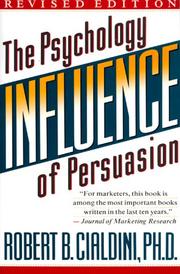
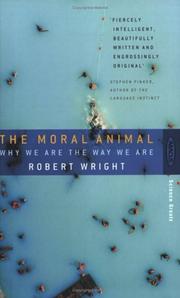
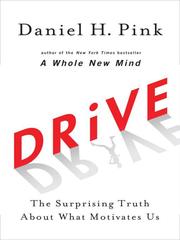
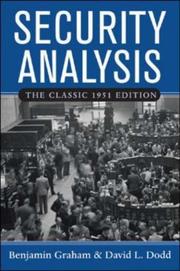
  9. Book lists show as cards: the cover, one recommendation quote and every recommender by name.
  10. Seventeen subjects that had two or three pages under different names now have one page each.
  11. Every page lists its Experts as authors and recommenders, with a link to them on the Experts tab.
  12. Economics, Financial history, Financial panics and Accounting are subjects of their own, with one page per financial crisis.
  13. Book, person and subject pages open inside the app, so the tabs stay in view.
  14. 996 more book covers, and photographs or logos for 227 more people and companies.
  15. Books › Browse shows every subject as cards, and the rail holds Fund letters, Papers, Experts, Books and Funds.
  16. Every topic over 150 books splits into narrower topics, each with a page of its own.

Send feedback

What is it?
Screenshots, up to 3 (optional)
or paste one with Ctrl+V

We use your email only to reply to you.

Mental models

63 mental models, 2 topics and 1 business theme holding 364 books. Each opens its own page with its books, tier first, and the people who recommend them.

Adverse SelectionWhen one side knows more than the other before the deal, the average quality of what is offered falls, and in the limit the market unravels.5 books
AntifragilityTaleb's category beyond robust: things that gain from disorder because their payoff is convex, so shocks help more than they hurt.6 books
Availability HeuristicProbability judgements ride on how easily examples come to mind, so vivid and recent events swamp long-run frequencies.7 books
Base Rates and the Outside ViewThe inside view forecasts from the particulars of your case; the outside view starts with what happened to everyone who ever stood where you stand.14 books
Bayesian UpdatingArithmetic for changing your mind: start from a prior, weigh new evidence by how much likelier it is under one hypothesis than another, arrive at a…6 books
Bottlenecks and the Theory of ConstraintsEvery system has one binding constraint, and improvement anywhere else is an illusion that shows up as inventory rather than throughput.5 books
Campbell's LawCampbell's sharper social-science version: the more a quantitative indicator is used for decision-making, the more it will be corrupted and the more…5 books
Chesterton's FenceBefore removing a rule, a process or a line item, find out why it was put there.5 books
Circle of CompetenceThe set of businesses an investor can genuinely evaluate, including their economics and their failure modes.7 books
Comparative AdvantageRicardo's result that trade pays even when one party is better at everything, because what matters is relative rather than absolute cost.10 books
Compounding and Long-Term HoldingWhy time and reinvestment rate dominate returns, and what makes a business worth holding through cycles.27 books
Confirmation BiasOnce you own a position, evidence stops being neutral: what supports the thesis is sought and remembered, what contradicts it is discounted or never…8 books
Correlation versus CausationTwo series moving together says nothing about which moves the other, or whether a third thing moves both.10 books
Creative DestructionSchumpeter's engine of capitalism: the entrant that revolutionises the structure from within, destroying the incumbent's franchise in the act of…10 books
Deferred GratificationTrading a smaller reward now for a larger one later - the temperament every compounding model depends on.13 books
Economic MoatsThe central question of quality investing: what stops competition from arbitraging away a high return on capital.11 books
Economies of ScaleUnit costs falling as volume rises, through fixed-cost absorption, purchasing power, density or learning.5 books
ErgodicityThe average outcome across many players is not the outcome one player gets moving through time; where ruin is possible the time average is ruin…5 books
Evolution and SelectionVariation, selection and retention will optimise a population without anyone designing it, and will keep doing so as the environment moves.19 books
Expected ValueEach outcome's payoff weighted by its probability, summed.7 books
FalsifiabilityPopper's boundary between knowledge and story: a genuine thesis specifies the evidence that would prove it wrong.12 books
Fat TailsMarket returns have fat tails: extreme moves arrive orders of magnitude more often than the bell curve predicts, and a few days decide decades of…9 books
Feedback LoopsNegative feedback pushes a system back toward balance - high margins invite competitors who compress them - while positive feedback amplifies, as…8 books
First-Principles ReasoningStrip a thesis to what must be true - unit economics, customer behaviour, the capital cycle - and rebuild from there rather than reasoning by…24 books
Game Theory and Nash EquilibriumFormal analysis of situations where your payoff depends on what others choose, with equilibrium as the point at which no player gains by deviating…13 books
Goodhart's LawWhen a measure becomes a target it ceases to be a good measure, because effort flows to the proxy rather than the thing.5 books
Hanlon's RazorDo not attribute to malice what is adequately explained by incompetence, distraction or ordinary incentives.5 books
IncentivesMunger's observation that incentives do more than tempt - they quietly reshape what people sincerely believe, which is why the broker recommending…13 books
Intrinsic ValueWhat a business is worth to a silent owner: all the cash it will produce over its life, discounted to today.16 books
InversionInstead of asking how an investment wins, list what would guarantee it loses - fraud, leverage, obsolescence, a price that assumes perfection - and…5 books
Kelly CriterionThe fraction of capital that maximises long-run compound growth given an edge: edge divided by odds.5 books
Law of Large NumbersSample averages converge on the true mean only as samples grow, and small samples produce extreme results far more often than intuition allows.5 books
Loss Aversion and Prospect TheoryPeople evaluate outcomes as gains and losses from a reference point, and losses weigh roughly twice as heavily as equal gains.7 books
Margin of SafetyThe gap between conservatively estimated value and the price actually paid, demanded up front so a flawed appraisal or bad luck still returns your…5 books
Market Cycles and the PendulumMarkets swing between euphoria and despair and spend almost no time at the fair-value midpoint.11 books
Moral HazardOnce a party is insulated from the downside, its behaviour changes: risk is taken because someone else carries the loss.6 books
Mr. MarketGraham's personification of the market as a manic-depressive partner who quotes a price every day and is never offended when you decline.6 books
Munger's Psychology of Human MisjudgmentMunger's assembled list of about twenty-five standard causes of human error - incentive bias, consistency, social proof, deprival superreaction,…13 books
Narrative FallacyThe mind builds causal stories that fit the facts and then treats the story as evidence, compressing luck and noise into a clean explanation.9 books
Network Effects and PlatformsWhy some businesses get stronger with scale in a way that traditional cost-curve analysis misses.10 books
Occam's RazorAmong explanations that fit the evidence, prefer the one with fewest assumptions.5 books
OODA LoopBoyd's cycle - observe, orient, decide, act - with orientation as the step where the edge actually lives, because it is where prior models meet new…5 books
Opportunity CostThe cost of any investment is the best alternative it displaces, not the dollars it consumes.5 books
OverconfidenceCalibration research keeps returning the same result: confidence outruns accuracy, and the gap widens with information and expertise.7 books
Owner EarningsBuffett's cash-based replacement for reported profit: net income plus non-cash charges, minus the capital spending needed merely to hold unit volume…5 books
Path DependenceReturns chain rather than average, so a 50 percent loss needs a 100 percent gain to repair and the order of outcomes matters as much as their mean.8 books
Power Laws and the Pareto PrincipleIn power-law domains a few observations produce most of the outcome and there is no stable typical case to anchor on.8 books
Prisoner's DilemmaThe canonical case where individually rational defection produces a worse outcome for both than mutual cooperation would.7 books
Redundancy and MarginSpare capacity looks like waste in every quarter it is not needed and is the only thing that works in the quarter it is.6 books
ReflexivitySoros's observation that prices are participants rather than scorekeepers: a rising stock cheapens a company's capital, fattens its collateral and…5 books
Regression to the MeanExtreme results are part skill and part luck, and on the next draw the luck component resets, so outliers drift back toward average.5 books
Scale and the Square-Cube LawAs a thing grows, volume rises with the cube of length while surface area rises only with the square, so what works small breaks large.6 books
Second-Order ThinkingFirst-level thinking says good company, buy the stock; second-level asks what the price already assumes and who on the other side disagrees.5 books
Signal versus NoiseMost of what arrives daily is variation without information, and the volume of data has grown far faster than the amount of signal in it.7 books
Social Proof and Mimetic DesireUnder uncertainty people treat others' behaviour as evidence of correct behaviour, and Girard pushed it further: we copy the desire itself.16 books
Sunk Cost FallacyMoney and effort already spent are gone and should not enter a forward decision, yet they reliably do, because abandoning a position feels like…5 books
Survivorship BiasRecords are kept by the survivors, so any base rate built from what you can see is biased upward.6 books
Systems ThinkingSeeing stocks, flows, delays and loops rather than isolated events, so that behaviour is explained by structure rather than by blame.12 books
The Efficient Market HypothesisThe claim that prices absorb available information fast enough that trading on it yields nothing after costs - a model with documented cracks in…30 books
The Lindy EffectFor non-perishables - ideas, institutions, business models - expected remaining life grows with age, because each year survived is evidence of…5 books
The Map Is Not the TerritoryEvery model discards detail in order to be usable, and the discarded detail is where it will eventually fail you.11 books
The Normal Distribution and Its LimitsThe bell curve is the right model where outcomes are additive and independent, and the wrong one wherever they multiply or feed back.7 books
The Principal-Agent ProblemWhenever one party acts on another's behalf, their interests diverge and the agent's information advantage lets the divergence pay.7 books
Thermodynamics and EntropyOrder is expensive and disorder is free: any organised system needs a continuous energy input or it decays.7 books
Time ArbitrageMost capital is graded quarterly, so prices overweight the next earnings report and underweight the next decade.5 books
Tragedy of the CommonsA shared resource with private incentives to consume it gets depleted, because each user captures the whole benefit and bears a fraction of the cost.6 books

Other ways to browse

Companies Geographies Biographies Industries Assets Business models Business themes Investment styles Portfolio and risk Investment philosophy Secular themes Art and design Entrepreneurship Fiction History Learning and reference Philosophy and religion Politics and government Psychology Sales and marketing Science Society and culture Technology Sport Economics Financial history Financial panics Accounting All kinds