Updates

  1. Search groups its results by kind: people, companies, geographies, subjects, topics, books, funds, fund letters and papers.
  2. The Books table lists who recommended each book by name, and the browser tab names the section you are in.
  3. Feedback can take a screenshot of the page, or one you paste or choose, and opens in the corner beside Updates.
  4. Each rail button reopens its section where you left it, and Browse, Table and People show on every book and subject page.
  5. Filters grey out choices that hold nothing instead of hiding them, and Books › People filters by authors or recommenders.
  6. Feedback takes a subject line and up to three screenshots.
  7. Biographies are grouped by the person they are about: 41 new pages, from Abraham Lincoln to Lee Kuan Yew.
  8. Sport splits into 23 sports, and Religion into one topic per faith.
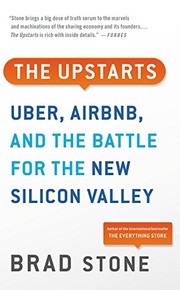
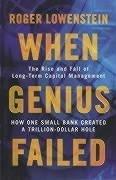
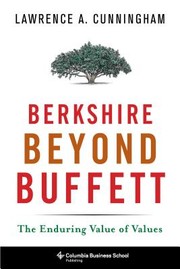
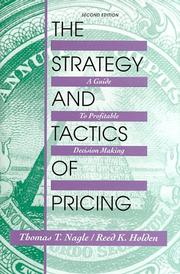
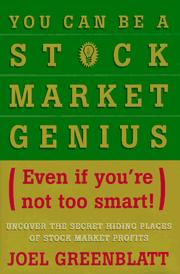
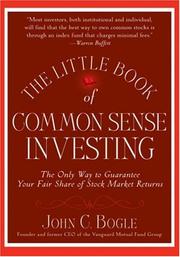
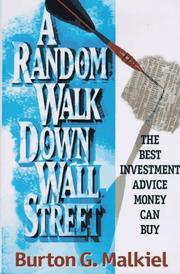
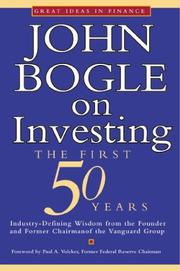
  9. Book lists show as cards: the cover, one recommendation quote and every recommender by name.
  10. Seventeen subjects that had two or three pages under different names now have one page each.
  11. Every page lists its Experts as authors and recommenders, with a link to them on the Experts tab.
  12. Economics, Financial history, Financial panics and Accounting are subjects of their own, with one page per financial crisis.
  13. Book, person and subject pages open inside the app, so the tabs stay in view.
  14. 996 more book covers, and photographs or logos for 227 more people and companies.
  15. Books › Browse shows every subject as cards, and the rail holds Fund letters, Papers, Experts, Books and Funds.
  16. Every topic over 150 books splits into narrower topics, each with a page of its own.

Send feedback

What is it?
Screenshots, up to 3 (optional)
or paste one with Ctrl+V

We use your email only to reply to you.

Business models

44 business models, 2 investment styles, 1 business theme and 1 asset holding 379 books. Each opens its own page with its books, tier first, and the people who recommend them.

Advertising-supported mediaThe audience is the inventory.9 books
Aggregators and demand captureOwning the demand side and commoditising supply.7 books
Asset-light and outsourced manufacturingOwn the brand and the design, rent the factory.8 books
Cloud and infrastructure as a serviceCapital-heavy capacity resold by the hour.6 books
Consulting and agency modelsSelling billable judgement.9 books
Consumer brands and repeat purchaseCheap, frequent, low-involvement purchases; the empirical marketing literature here is unusually good.14 books
Contract manufacturing and foundriesMaking other companies' products at scale.6 books
Cooperatives and mutualsOwned by members rather than investors, so surplus returns to users.8 books
Dealerships and distribution rightsProtected territories granted by a manufacturer.9 books
Direct selling and multi-level marketingSelling through a recruited distributor network paid on downline volume.8 books
Direct to consumerOwning the customer relationship instead of renting shelf space; the trade-off is paid acquisition replacing wholesale margin.9 books
Discount and everyday low priceLow price as a permanent operating discipline rather than a promotion; the same logic appears in grocery and in airlines.7 books
Employee ownership and ESOPsOwnership distributed to the workforce.7 books
Family businesses and long-horizon ownershipConcentrated, patient ownership and the succession problem that eventually tests it.9 books
FranchisingSelling the system rather than the product: royalty streams, brand control, and the recurring conflict between franchisor and franchisee.6 books
FreemiumA free tier funded by a paying minority.8 books
Gig and labour marketplacesMatching labour to demand while classifying the labour as independent.8 books
Hedge fundsFee-driven absolute-return vehicles; the best books are biographies of the funds themselves rather than strategy manuals.16 books
Holding companies and conglomeratesA parent that allocates capital across unrelated subsidiaries.6 books
Insurance and floatUnderwriting produces float, which is leverage that can be invested; the literature runs from risk theory to the failures that show what happens…10 books
Just-in-time and supply chain designInventory held as late as possible, and the fragility that buys.6 books
Leasing and rentalBuying an asset once and selling its use repeatedly.8 books
Licensing and intellectual propertyRenting out rights as the product.7 books
Luxury and pricing powerPrice as a signal rather than a clearing mechanism, and the discipline needed to defend it.7 books
Market making and high-frequency tradingProviding liquidity for a spread, now industrialized; the literature pairs microstructure theory with reporting on the arms race for speed.10 books
Marketplaces and two-sided platformsBusinesses that make money by matching two groups and taking a cut; economics and practice are both well covered here.9 books
Membership and warehouse clubsMargin capped by policy, profit taken in the membership fee.8 books
Merger arbitrageCapturing the spread between deal price and market price; a narrow strategy with a narrow but real literature.8 books
Mutual funds and index fundsThe shift from active mutual funds to indexing is the largest change in asset management, and it has a well-defined canon.16 books
Network businesses and natural monopoliesWhere cost structure or network effects make one supplier the efficient outcome, and what that does to pricing and politics.7 books
Open source and commercial open sourceGiving the code away and charging for something adjacent.7 books
Operations, lean and qualityThe Toyota Production System, lean, the theory of constraints, quality management, management systems, project delivery and supply-chain resilience.32 books
Pay per use and metered pricingCharging for consumption rather than access.6 books
Platform ecosystems and app storesOwning the layer that third parties build on, and taxing what they sell.6 books
Private equityLeveraged buyouts as an ownership model; the literature moved from deal drama in the 1980s to institutional critique after 2010.15 books
Professional services and partnershipsLeverage, utilisation and profit per partner.6 books
Razor and bladesSell the handle cheap, earn on the consumable.8 books
Razor-thin margin high-turnover distributionPennies on huge volume, funded by negative working capital and inventory turns.6 books
Retail and big-boxLarge-format retail: the model is turns, buying power and the cost of occupancy, not merchandising taste.8 books
Roll-ups and serial acquirersCompanies that compound by buying small businesses repeatedly.9 books
Short sellingThe craft of being short: borrow, carry, timing and the asymmetry of the payoff.9 books
Software as a serviceSoftware sold as a metered, renewing service rather than a licence; the good books are operating manuals rather than theory.8 books
Subscription and recurring revenueRevenue that renews by default: the literature is practitioner-written and recent, and is mostly about churn, pricing tiers and the accounting that…7 books
Toll roads and tollbooth businessesBuffett's term for a business that clips a fee on activity it does not have to fund.8 books
Utilities and regulated returnsCapital deployed against an allowed rate of return.8 books
Venture capitalNot the business of running a fund but the shape of the returns: extreme skew, illiquidity, and a persistence of manager performance that shows up…24 books
Vertical integrationOwning successive stages of the chain.8 books
Vertical SaaS and industry-specific softwareSoftware written for one industry, sold at high retention and low churn.7 books

Other ways to browse

Companies Geographies Biographies Industries Assets Business themes Investment styles Portfolio and risk Investment philosophy Secular themes Mental models Art and design Entrepreneurship Fiction History Learning and reference Philosophy and religion Politics and government Psychology Sales and marketing Science Society and culture Technology Sport Economics Financial history Financial panics Accounting All kinds