
The Art of the Start 2.0
Summary
Kawasaki was an early Apple evangelist and later a venture investor, and this is the revised edition of his practical guide to starting an organisation. It is written as a set of instructions organised by activity rather than as an argument.
The chapters cover starting, which he frames around making meaning rather than making money and around answering what the organisation makes possible; launching, including the advice to ship and then test rather than perfect; leading; bootstrapping, with specific cash management instructions; pitching, including his ten slide rule with a twenty minute limit and thirty point type; writing a business plan, which he treats as secondary to the pitch; recruiting; raising money; partnering; branding; rainmaking; evangelising; socialising, covering online presence; and enduring.
His most cited specific material is the pitch structure, which specifies the ten slides and their order, and the argument that a plan exists to force the thinking rather than to be read. He includes material on crowdfunding, on social media and on self-publishing that the first edition predated.
The book is a compilation of tactical advice and offers no framework. It is written in a breezy register with frequent lists, and the substance per page is low. The specific advice dates quickly, particularly around platforms and fundraising mechanics. The pitch structure and the cash management instructions are what practitioners actually use, and both can be extracted quickly.
Key takeaways 8
- An organisation should be started around what it makes possible rather than around a revenue objective.
- A pitch should contain ten slides, run twenty minutes and use thirty point type, which forces the elimination of everything that is not essential.
- A business plan exists to force the founders' thinking rather than to be read by investors, who decide on the pitch.
- A product should be shipped and then tested rather than perfected before release, since the information only arrives after contact with users.
- Cash management determines survival for a bootstrapped company, and profitability should be prioritised over growth when outside capital is unavailable.
- Recruiting should target people who are infected with the same purpose rather than people with the most impressive backgrounds.
- Partnerships should be evaluated by whether they produce revenue or reduce cost, since most produce neither.
- The advice is tactical and dates quickly, particularly around platforms and fundraising mechanics.
Who should read it
First-time founders who want tactical instructions, particularly the pitch structure, extracted quickly rather than read through.
About Guy Kawasaki
Chief evangelist at Canva; earlier Apple's Macintosh evangelist and a co-founder of Garage Technology Ventures.
The Art of the Start breaks early-company work into concrete tasks - pitching, positioning, recruiting, bootstrapping, partnering - for founders with no prior company behind them. The Macintosh Way and Selling the Dream document how Apple built developer and customer evangelism into a product launch, which is where the modern practice of developer relations comes from.
Who recommended it 4 · 1 direct
Similar books 6
Chosen by shared topics, the entries that hold them, and the people who recommended both.

Why startups should build something new and own a small market before growing.
Recommended by: Balaji S. Srinivasan, Eric Weinstein and 36 others

Operating manual for scaling a company from fifty to thousands
Recommended by: Balaji S. Srinivasan, Matt Mullenweg and 10 others

When and how to put speed before efficiency to capture a market before rivals.
Recommended by: Anthony Pompliano, Bill Gates, Biz Stone and 7 others
An operating framework for growing firms: priorities, data and meeting rhythm.
Recommended by: Julie Stevanja

Data on 10,000 founders: co-founders, hiring, investors, control and succession.
Recommended by: Patrick Collison, Leo Polovets
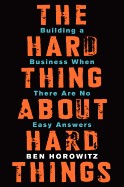
Subtitled 'Building a Business When There Are No Easy Answers'
“…books I've recommended, highlighted to death, or forced on friends.” — Andrew Wilkinson
Source: Andrew Wilkinson's Bookshelf, neverenough.com
Recommended by: Andrew Wilkinson, Balaji S. Srinivasan and 34 others
Where it sits in the reference 4
Topics