Updates

  1. Person pages list letters, writing, profiles and links as sortable tables with filters, and show each person's companies as links; Fund letters show each letter's description in its own column.
  2. Experts show a checked job title and a short description of each person; 30 more people have photographs.
  3. Every company, fund, university and publication the experts work for has a page listing the people there.
  4. Fund letters show each letter's thesis and filter by it; 225 person pages list the essays, columns and newsletter issues the person wrote.
  5. Person pages list every essay and newsletter issue a person wrote, and their own books as a table in List view.
  6. Recommends shows the five largest kinds of book and the rest under More; browse pictures load sooner.
  7. Podcasts and talks link the original episode, filter by Audio and video or Press, and list each publisher once.
  8. Pages are wider, Recommends has List and Grid, and a filter clicked again turns off.
  9. Book cards sit in a ruled grid with Open Library and Goodreads links and each book's one-line note.
  10. Funds is now Investors; each investor's styles are buttons that filter the table.
  11. Podcasts and talks on a person's page filter by year and publisher and show as a list or a grid of pictures.
  12. Quotes show only people's own words: 472 summaries written by list sites are gone.
  13. Country pages open from Browse again, and every link on the shelf lands on a page.
  14. Subject and person pages show their sections as tabs, and each book appears once on a person's page.
  15. Book cards show the quote, who said it and the source; grids show five cards to a row.
  16. On a phone, a menu holds the sections, search, Updates, Feedback and dark mode.
  17. Feedback takes a screenshot of the page with no browser prompt, opens a screenshot full size when you click it, and clears itself once sent.
  18. Book cards are centred, search names the topic each book sits in, and any text cut short shows whole on hover.
  19. Search groups its results by kind: people, companies, geographies, subjects, topics, books, funds, fund letters and papers.
  20. The Books table lists who recommended each book by name, and the browser tab names the section you are in.
  21. Feedback can take a screenshot of the page, or one you paste or choose, and opens in the corner beside Updates.
  22. Each rail button reopens its section where you left it, and Browse, Table and People show on every book and subject page.
  23. Filters grey out choices that hold nothing instead of hiding them, and Books › People filters by authors or recommenders.
  24. Feedback takes a subject line and up to three screenshots.
  25. Biographies are grouped by the person they are about: 41 new pages, from Abraham Lincoln to Lee Kuan Yew.
  26. Sport splits into 23 sports, and Religion into one topic per faith.
  27. Book lists show as cards: the cover, one recommendation quote and every recommender by name.
  28. Seventeen subjects that had two or three pages under different names now have one page each.
  29. Every page lists its Experts as authors and recommenders, with a link to them on the Experts tab.
  30. Economics, Financial history, Financial panics and Accounting are subjects of their own, with one page per financial crisis.
  31. Book, person and subject pages open inside the app, so the tabs stay in view.
  32. 996 more book covers, and photographs or logos for 227 more people and companies.
  33. Books › Browse shows every subject as cards, and the rail holds Fund letters, Papers, Experts, Books and Funds.
  34. Every topic over 150 books splits into narrower topics, each with a page of its own.

Send feedback

What is it?
Screenshots, up to 3 (optional)
or paste one with Ctrl+V

We use your email only to reply to you.

The Battle for the Soul of Capitalism

The Battle for the Soul of Capitalism

John C. Bogle
2005
T4 288 pages · about 4h 48m to read Open Librarygoodreads

Summary

Bogle argues that American capitalism has been transformed from a system in which owners controlled companies into one in which managers and financial intermediaries extract value from both companies and investors, and that the failure of institutional owners to act as owners is the central mechanism.

His analysis of corporate America covers the growth of executive compensation relative to worker pay and to company performance, the use of stock options which reward share price movement rather than value creation and which were unexpensed for decades, the earnings management practices that produce reported results matching guidance, the failure of boards and compensation committees to act as agents of shareholders, and the conflicts of accounting firms earning consulting fees from audit clients.

His analysis of investment America covers the transformation of fund management from a profession into a marketing business, the growth of costs relative to returns, the conflict between fund company profitability and fund shareholder returns, and the failure of fund managers to vote proxies or engage with the companies they own on behalf of their investors.

His analysis of mutual fund America covers the ownership structure of fund management companies and the argument for the mutual structure Vanguard uses. His proposed remedies centre on requiring institutional owners to act as owners, on disclosure of proxy voting, and on a federal standard of fiduciary duty. The book repeats arguments from his other work and the moralising register is heavy. Written in 2005, it anticipated several of the governance failures that the financial crisis exposed. The analysis of why institutional owners do not act as owners is the most durable part.

Key takeaways 8

  1. American capitalism has moved from owners controlling companies to managers and intermediaries extracting value from both companies and investors.
  2. Institutional owners hold most corporate equity and do not act as owners, which leaves managers effectively unsupervised.
  3. Stock options reward share price movement rather than value creation, and were unexpensed for decades which concealed their cost.
  4. Earnings management produces reported results that match guidance, which means the guidance rather than the business determines the reported numbers.
  5. Boards and compensation committees do not function as agents of shareholders, and the mechanisms by which they fail are structural rather than personal.
  6. Accounting firms earning consulting fees from audit clients cannot function as an independent check.
  7. Fund management changed from a profession into a marketing business, which changed the objective from returns to asset gathering.
  8. Fund managers do not vote proxies or engage with companies on behalf of their investors, which removes the last available owner.

Who should read it

Investors and trustees who want a systematic account of why the ownership chain fails to supervise corporate managers.

About John C. Bogle

Founder and CEO, The Vanguard Group 1974-1996; creator of the first retail index mutual fund

He built the institution and wrote the primary-source case for low-cost indexing that every later index advocate builds on.

The Vanguard Group

Who recommended it 2 · 1 direct

Similar books 6

Chosen by shared topics, the entries that hold them, and the people who recommended both.
Alfred Rappaport · 1986

Value is discounted future cash flow, not earnings per share or return on equity.

“I read that book and the light bulbs all went off for me personally.” — Michael Mauboussin

Source: The Tim Ferriss Show #659 — official transcript

Recommended by: Michael Mauboussin, Mohnish Pabrai
David Sadtler · 1997

The case for demerger argued from the parent company's side.

Robert F. Bruner · 2005

Why mergers fail; the break risk an arbitrageur underwrites.
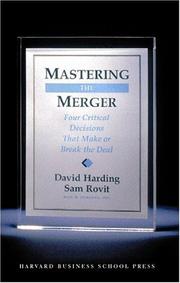
David Harding, Sam Rovit · 2004

Bain's evidence that frequent small deals beat occasional large ones.

Where it sits in the reference 4

Investors
Business themes
Financial history
Business themes

Topics

Finance and MarketsBusiness and ManagementPolitics and GovernmentRegulation, central banks and public policy