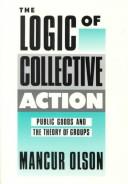
The Logic of Collective Action
Why people with a shared interest often fail to act together for it.
Summary
Olson attacked the assumption, common in political science and sociology at the time, that individuals with a shared interest will act together to advance it. His argument is that a rational individual in a large group will not contribute to a collective good, because the individual bears the full cost of contributing while receiving only a tiny fraction of the benefit, and because the good will be available whether or not the individual contributes.
The argument produces a size prediction. Small groups organise successfully because each member's share of the benefit is large enough to justify the cost, and because members can observe each other. Very small groups exhibit what Olson called the exploitation of the great by the small, where the largest member provides the good and the others free-ride on it. Large groups fail to organise unless they use selective incentives, meaning private benefits withheld from non-contributors, or coercion.
The explanatory payoff is that lobbies representing concentrated producers routinely defeat dispersed consumers and taxpayers, not because producers are more numerous or more virtuous, but because they can organise and the others cannot. Olson used union closed shops, professional associations and farm groups as evidence, and he later extended the framework to national economic decline in The Rise and Decline of Nations.
The theory has been challenged by evidence that people contribute to public goods more than the model predicts, by experimental economics on conditional cooperation, and by Elinor Ostrom's work showing that communities govern common resources through institutions Olson did not anticipate. The core insight about concentrated versus dispersed interests remains standard.
Key takeaways 7
- Rational individuals in large groups will not voluntarily contribute to a good they receive whether or not they pay.
- Group size is the primary determinant of whether a shared interest gets organised, not the intensity of the interest.
- Large organisations survive by offering selective private benefits or by compelling membership, not by delivering collective goods.
- In small groups the largest member typically provides the collective good and the smaller members free-ride.
- Concentrated producer interests defeat dispersed consumer interests systematically, and this is a structural result rather than corruption.
- Trade unions require the closed shop or equivalent compulsion because their wage gains are available to non-members.
- Shared interest is not sufficient evidence that a group will act, so political analysis must examine organisational incentives directly.
Who should read it
Founders and investors dealing with regulation, industry associations or coalition building, who need to predict which interests will actually mobilise.
Who recommended it 2 · 2 direct
“The answer lies in the work of an obscure thinker, the late Mancur Olson, best known among economists for a thin, insightful book, The Logic of Collective Action.”
Similar books 6
Chosen by shared topics, the entries that hold them, and the people who recommended both.

How communities manage shared resources without either the state or the market.
Recommended by: Patrick Collison, Stewart Brand
How developed economies moved from capitalism to a knowledge society.
How leaders of dictatorships and democracies gain and keep power.
Recommended by: Nat Eliason, Andrew Chen, Marc Andreessen
Economic freedom as a condition of political freedom, applied to policy questions.
“During the quarter, I reread three volumes authored by great economists: The General Theory of Employment, Interest and Money by John Maynard Keynes, The Road to Serfdom by F. A. Hayek, and Capitalism and Freedom by Milton Friedman.” — Martin J. Whitman
Source: Third Avenue Funds Q4 2005 Shareholder Letters (Chairman's letter by Martin J. Whitman)
Recommended by: Martin J. Whitman, Marc Andreessen
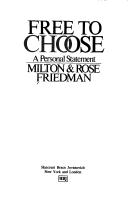
The case for free markets and limited government, policy area by policy area.
Recommended by: Brian Armstrong, Jim Collins, Mohnish Pabrai and 2 others

An inquiry into the nature of freedom and the uses of power.
Recommended by: Marc Andreessen
Where it sits in the reference 2
Topics 5
As an Amazon Associate I earn from qualifying purchases.