
Governing the Commons: The Evolution of Institutions for Collective Action (Political Economy of Institutions and Decisions)
How communities manage shared resources without either the state or the market.
Who recommended it 2 · 2 direct
Similar books 6
Chosen by shared topics, the entries that hold them, and the people who recommended both.
Why people with a shared interest often fail to act together for it.
“The answer lies in the work of an obscure thinker, the late Mancur Olson, best known among economists for a thin, insightful book, The Logic of Collective Action.” — William J. Bernstein
Source: Efficient Frontier, issue 704 (2004)
Recommended by: Nat Eliason, William J. Bernstein
How developed economies moved from capitalism to a knowledge society.
Voters hold systematic biases about economics, so democracies choose bad policies.
“A critical look at democracy. I love the way he thinks so it’s fun to hear his thought process even though I’m not that interested in this subject.” — Derek Sivers
Source: Derek Sivers book notes (primary, rated list) · Rating: 7/10
Recommended by: Derek Sivers, Marc Andreessen and 1 other
Economic freedom as a condition of political freedom, applied to policy questions.
“During the quarter, I reread three volumes authored by great economists: The General Theory of Employment, Interest and Money by John Maynard Keynes, The Road to Serfdom by F. A. Hayek, and Capitalism and Freedom by Milton Friedman.” — Martin J. Whitman
Source: Third Avenue Funds Q4 2005 Shareholder Letters (Chairman's letter by Martin J. Whitman)
Recommended by: Martin J. Whitman, Marc Andreessen
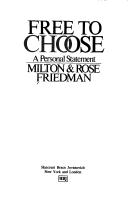
The case for free markets and limited government, policy area by policy area.
Recommended by: Brian Armstrong, Jim Collins, Mohnish Pabrai and 2 others
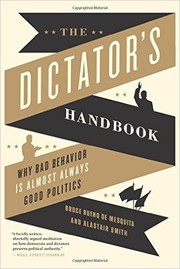
How leaders of dictatorships and democracies gain and keep power.
Recommended by: Nat Eliason, Andrew Chen, Marc Andreessen
Where it sits in the reference 2
Topics 5
As an Amazon Associate I earn from qualifying purchases.