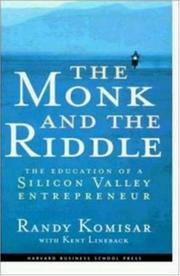
The Monk and the Riddle
A venture adviser on startups and the trap of the deferred life plan.
Summary
Komisar was a Silicon Valley executive and venture partner who described his role as virtual chief executive officer, working with several startups at once without running any of them. The book combines a fictional narrative, in which he advises a founder pitching an online funeral services business, with reflections on what he learned from LucasArts, Claris, WebTV and TiVo.
The central concept is what he calls the deferred life plan, meaning the arrangement in which a person does work they do not care about in order to earn the position to do what they want later. Komisar argues that this trade rarely completes, that the first stage consumes the years and forms habits that make the second stage unreachable, and that founders in particular adopt it in the specific form of building a company they do not care about in order to become wealthy enough to do something they do.
The business content concerns what makes a startup worth building. Komisar pushes the fictional founder from a business plan optimised for exit toward a proposition he actually cares about, on the argument that the difficulty of building a company exceeds what a purely financial motive will sustain. He also covers the differences between the chief executive, the founder and the investor roles, and what a company actually needs from each.
The book is short and the fictional device is thin. It comes from the 1998 to 2000 period and the specific market conditions are gone. It offers no method and is closer to an argument about motivation. The deferred life plan is the concept that has persisted and it applies well beyond startups.
Key takeaways 8
- The deferred life plan, in which a person does work they do not care about in order to earn the right to do what they want later, rarely completes.
- The first stage of a deferred life plan consumes the years and forms habits that make the second stage unreachable.
- Building a company is difficult enough that a purely financial motive will not sustain the founder through it.
- A business plan optimised for an exit produces different decisions from one built around a proposition the founder cares about.
- A founder, a chief executive and an investor want different things from a company, and confusing the roles produces bad decisions.
- Passion in Komisar's usage means caring about the problem rather than enthusiasm about the opportunity, and the two are frequently confused.
- The question of what you would do with your life if you were not doing this should be answered before the company is started rather than after.
- The book offers an argument about motivation rather than any method for building a business.
Who should read it
Founders deciding what company to build and anyone operating on a plan to do what they want after some future financial event.
Who recommended it 6 · 2 direct
Similar books 6
Chosen by shared topics, the entries that hold them, and the people who recommended both.
Naval Ravikant's ideas on building wealth and being happy, gathered from his talks.
Recommended by: Balaji S. Srinivasan, Nat Eliason and 9 others
Life in Nazi concentration camps, and logotherapy: finding meaning to survive.
“What's more certain to me is that we all need a why, as Viktor Frankl told us in Man's Search for Meaning.” — David Heinemeier Hansson
Source: Universal Basic Dead End
Recommended by: David Heinemeier Hansson, David Perell and 29 others
Finite games are played to win; infinite games are played to keep playing.
“So abstract. Maybe the most abstract book you'll ever read. Compares "finite" games with rules and winners, versus "infinite" games without winners where we can play with the game itself.” — Derek Sivers
Source: Book notes by Derek Sivers
Recommended by: Derek Sivers, Graham Duncan, Mohnish Pabrai and 9 others
52 essays, one a week, that apply Nietzsche's ideas to entrepreneurship.
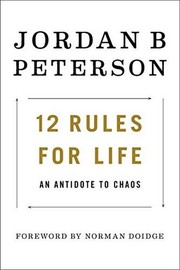
Twelve rules for living, each drawn from clinical practice, biology and myth.
“A unique thinker with strong opinions presented as indisputable fact. More surprisingly interesting ideas than almost any book I've ever read. Extremely thoughtful, but occasionally abruptly concludes with an unsupported point. It has a conservative “this is how it is” certainty. It’s a broad collection of thoughtful insights on life, mixed with a lot of Bible interpretation.” — Derek Sivers
Source: Derek Sivers book notes (primary, rated list) · Rating: 9/10
Recommended by: Derek Sivers, Guy Spier, Nat Eliason and 8 others
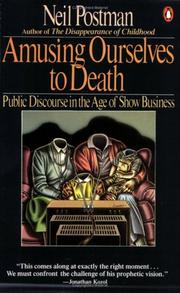
How television turned public discourse from argument into entertainment.
“The most prescient here is Neil Postman's Amusing Ourselves to Death, originally published in 1985. It's long, but I'm going to quote the foreword in its entirety because it's worth reading a few times over:” — Matt Mullenweg
Source: Culture of Distraction
Recommended by: Keith Rabois, Matt Mullenweg, Nat Eliason and 3 others
Where it sits in the reference 4
As an Amazon Associate I earn from qualifying purchases.