
Future Babble
Summary
Gardner examines why expert predictions fail so consistently and why people continue to seek and believe them. His empirical foundation is Philip Tetlock's twenty-year study, which collected over eighty thousand forecasts from nearly three hundred experts and found their accuracy barely better than chance and worse than simple extrapolation rules.
Tetlock's most useful finding, which Gardner develops, is that a forecaster's field, experience and access to information predicted accuracy poorly, while their cognitive style predicted it well. Experts Tetlock classified as hedgehogs, meaning those who apply one organising framework to everything, performed worse than those classified as foxes, meaning those who use many partial frameworks, tolerate contradiction and adjust. Hedgehogs also attracted more media attention, because a single confident framework produces the definite statements broadcasting wants.
Gardner covers the psychology of why prediction fails: the illusion of control, hindsight bias which erases our memory of having been wrong, confirmation, and the human intolerance of uncertainty, which he argues is the demand side of the prediction industry. He documents specific failed forecasts across resource depletion, population, oil prices, geopolitics and economics, including the ones that made their authors famous.
His conclusion is that the correct response to an unpredictable future is not better forecasting but preparation that does not depend on any particular outcome. The book is journalism synthesising Tetlock's research rather than original work, and readers wanting the research itself should read Expert Political Judgment or Superforecasting.
Key takeaways 7
- Expert predictions about complex systems are barely more accurate than chance and worse than simple extrapolation rules.
- A forecaster's field, credentials and access to information predict accuracy poorly, while their cognitive style predicts it well.
- Forecasters who apply one organising framework to everything perform worse than those who use many partial frameworks and tolerate contradiction.
- Confident single-framework forecasters attract more media attention precisely because their errors come packaged as definite statements.
- Hindsight bias erases our memory of having been wrong, which is why the persistent failure of prediction does not reduce demand for it.
- Human intolerance of uncertainty is what sustains the prediction industry, since the demand is psychological rather than informational.
- The correct response to an unpredictable future is preparation that does not depend on any particular outcome rather than better forecasting.
Who should read it
Investors and executives who rely on forecasts and want the evidence on their accuracy and on which forecasters are worth reading.
About Dan Gardner
Canadian journalist who co-wrote Superforecasting with Philip Tetlock and How Big Things Get Done with Bent Flyvbjerg.
Superforecasting reports the Good Judgment Project tournament results and the habits that separated accurate forecasters: breaking questions into parts, updating in small increments, keeping score in numbers. How Big Things Get Done adds base-rate evidence from thousands of megaprojects on why budgets and schedules fail and what the successful ones did differently.
Who recommended it 1
Similar books 6
Chosen by shared topics, the entries that hold them, and the people who recommended both.
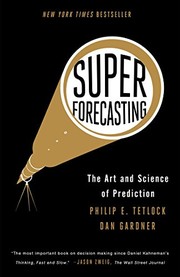
The Good Judgment Project; the practices that measurably improve forecasts.
Recommended by: Patrick Collison and 9 others
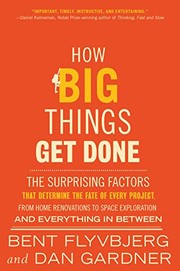
Why megaprojects overrun, and the reference-class forecasting correction.

Bevelin distilling observation and inference habits from Sherlock Holmes
Recommended by: Mohnish Pabrai, Patrick O'Shaughnessy and 1 other

Dialogue form; Munger's inversion habit worked through systematically.
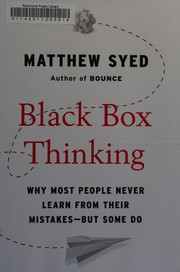
Why aviation learns from every failure while fields like medicine hide theirs.
Recommended by: Richard Branson, Daniel Ek
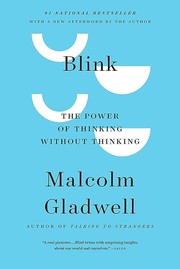
How snap judgments work, when to trust them and when they mislead.
Recommended by: Mohnish Pabrai, Ev Williams, Packy McCormick
Where it sits in the reference 2
Topics