Updates

  1. Person pages list letters, writing, profiles and links as sortable tables with filters, and show each person's companies as links; Fund letters show each letter's description in its own column.
  2. Experts show a checked job title and a short description of each person; 30 more people have photographs.
  3. Every company, fund, university and publication the experts work for has a page listing the people there.
  4. Fund letters show each letter's thesis and filter by it; 225 person pages list the essays, columns and newsletter issues the person wrote.
  5. Person pages list every essay and newsletter issue a person wrote, and their own books as a table in List view.
  6. Recommends shows the five largest kinds of book and the rest under More; browse pictures load sooner.
  7. Podcasts and talks link the original episode, filter by Audio and video or Press, and list each publisher once.
  8. Pages are wider, Recommends has List and Grid, and a filter clicked again turns off.
  9. Book cards sit in a ruled grid with Open Library and Goodreads links and each book's one-line note.
  10. Funds is now Investors; each investor's styles are buttons that filter the table.
  11. Podcasts and talks on a person's page filter by year and publisher and show as a list or a grid of pictures.
  12. Quotes show only people's own words: 472 summaries written by list sites are gone.
  13. Country pages open from Browse again, and every link on the shelf lands on a page.
  14. Subject and person pages show their sections as tabs, and each book appears once on a person's page.
  15. Book cards show the quote, who said it and the source; grids show five cards to a row.
  16. On a phone, a menu holds the sections, search, Updates, Feedback and dark mode.
  17. Feedback takes a screenshot of the page with no browser prompt, opens a screenshot full size when you click it, and clears itself once sent.
  18. Book cards are centred, search names the topic each book sits in, and any text cut short shows whole on hover.
  19. Search groups its results by kind: people, companies, geographies, subjects, topics, books, funds, fund letters and papers.
  20. The Books table lists who recommended each book by name, and the browser tab names the section you are in.
  21. Feedback can take a screenshot of the page, or one you paste or choose, and opens in the corner beside Updates.
  22. Each rail button reopens its section where you left it, and Browse, Table and People show on every book and subject page.
  23. Filters grey out choices that hold nothing instead of hiding them, and Books › People filters by authors or recommenders.
  24. Feedback takes a subject line and up to three screenshots.
  25. Biographies are grouped by the person they are about: 41 new pages, from Abraham Lincoln to Lee Kuan Yew.
  26. Sport splits into 23 sports, and Religion into one topic per faith.
  27. Book lists show as cards: the cover, one recommendation quote and every recommender by name.
  28. Seventeen subjects that had two or three pages under different names now have one page each.
  29. Every page lists its Experts as authors and recommenders, with a link to them on the Experts tab.
  30. Economics, Financial history, Financial panics and Accounting are subjects of their own, with one page per financial crisis.
  31. Book, person and subject pages open inside the app, so the tabs stay in view.
  32. 996 more book covers, and photographs or logos for 227 more people and companies.
  33. Books › Browse shows every subject as cards, and the rail holds Fund letters, Papers, Experts, Books and Funds.
  34. Every topic over 150 books splits into narrower topics, each with a page of its own.

Send feedback

What is it?
Screenshots, up to 3 (optional)
or paste one with Ctrl+V

We use your email only to reply to you.

My Life in Full

My Life in Full

Indra Nooyi
2021
T3 304 pages · about 5h 4m to read Open Librarygoodreads

Insider account: Nooyi's memoir of twelve years as CEO.

Summary

Indra Nooyi was chief executive of PepsiCo from 2006 to 2018 and wrote this memoir after leaving. It covers her upbringing in Madras, her education there and at the Indian Institute of Management Calcutta and then Yale, her consulting career at Boston Consulting Group, her work at Motorola and ABB, and her twenty-four years at PepsiCo.

The business content centres on Performance with Purpose, the strategy she introduced that committed the company to shifting its portfolio toward healthier products, reducing environmental impact and improving employment practices, while continuing to deliver financial results. She describes the acquisitions of Tropicana and Quaker Oats, the divestiture of the restaurant business that became Yum Brands, the reformulation programme, and the resistance from investors who considered the health orientation a distraction from returns. Nelson Peltz's activist campaign and the pressure to split the company appear, though Nooyi treats them briefly.

The second theme is the conflict between the demands of the role and family life, which she treats directly and without resolution. She argues that the American arrangements for childcare, paid leave and elder care make it impossible for most women to do what she did, and that individual determination is not the answer. The book is a memoir rather than a business analysis, and readers wanting an assessment of PepsiCo's performance under her tenure will need to look at the numbers separately, since the share price underperformed Coca-Cola and the broader market for much of the period.

Key takeaways 7

  1. Nooyi committed PepsiCo to shifting its portfolio toward healthier products while maintaining financial performance, and treated the two as compatible rather than competing.
  2. Investors resisted the health and sustainability orientation, and Nooyi argues that long-horizon repositioning requires absorbing that pressure.
  3. Acquiring Tropicana and Quaker Oats built the nutrition portfolio that reformulation alone could not have produced.
  4. Nooyi argues that individual effort cannot solve the conflict between senior corporate roles and caregiving, and that the arrangements must change.
  5. Paid leave, childcare and elder care are infrastructure questions rather than benefits questions, and their absence removes women from the workforce.
  6. She describes writing to the parents of her senior executives, which she presents as a deliberate mechanism for building loyalty that compensation cannot buy.
  7. An outsider's perspective, which Nooyi attributes to her background, is an asset in strategy work and a liability in organisational politics.

Who should read it

Executives interested in long-horizon portfolio repositioning under investor pressure, and readers of chief executive memoirs on the structural obstacles facing women in senior roles.

Similar books 6

Chosen by shared topics, the entries that hold them, and the people who recommended both.
Thomas F. O'Boyle · 1998

The contemporaneous dissent, twenty years ahead of the consensus.
Jeff Immelt, Amy Wallace · 2021

Insider account: Immelt's defence of his sixteen years as CEO.
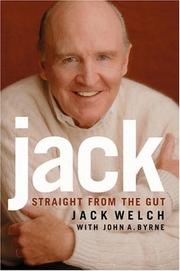
Jack Welch, John A. Byrne · 2001

Running General Electric from 1981 to 2001, as told on retiring.

Robert Iger · 2019

Running Disney and buying Pixar, Marvel, Lucasfilm and Fox to add creative talent.

Louis V. Gerstner · 2002

How IBM was kept whole in 1993 and turned from hardware toward services.

Recommended by: Mohnish Pabrai, Aaron Levie

Where it sits in the reference 3

Companies
Business themes
Business themes

Topics

Biography and MemoirLeadershipExecutives and Corporate Insiders