Updates

  1. Person pages list letters, writing, profiles and links as sortable tables with filters, and show each person's companies as links; Fund letters show each letter's description in its own column.
  2. Experts show a checked job title and a short description of each person; 30 more people have photographs.
  3. Every company, fund, university and publication the experts work for has a page listing the people there.
  4. Fund letters show each letter's thesis and filter by it; 225 person pages list the essays, columns and newsletter issues the person wrote.
  5. Person pages list every essay and newsletter issue a person wrote, and their own books as a table in List view.
  6. Recommends shows the five largest kinds of book and the rest under More; browse pictures load sooner.
  7. Podcasts and talks link the original episode, filter by Audio and video or Press, and list each publisher once.
  8. Pages are wider, Recommends has List and Grid, and a filter clicked again turns off.
  9. Book cards sit in a ruled grid with Open Library and Goodreads links and each book's one-line note.
  10. Funds is now Investors; each investor's styles are buttons that filter the table.
  11. Podcasts and talks on a person's page filter by year and publisher and show as a list or a grid of pictures.
  12. Quotes show only people's own words: 472 summaries written by list sites are gone.
  13. Country pages open from Browse again, and every link on the shelf lands on a page.
  14. Subject and person pages show their sections as tabs, and each book appears once on a person's page.
  15. Book cards show the quote, who said it and the source; grids show five cards to a row.
  16. On a phone, a menu holds the sections, search, Updates, Feedback and dark mode.
  17. Feedback takes a screenshot of the page with no browser prompt, opens a screenshot full size when you click it, and clears itself once sent.
  18. Book cards are centred, search names the topic each book sits in, and any text cut short shows whole on hover.
  19. Search groups its results by kind: people, companies, geographies, subjects, topics, books, funds, fund letters and papers.
  20. The Books table lists who recommended each book by name, and the browser tab names the section you are in.
  21. Feedback can take a screenshot of the page, or one you paste or choose, and opens in the corner beside Updates.
  22. Each rail button reopens its section where you left it, and Browse, Table and People show on every book and subject page.
  23. Filters grey out choices that hold nothing instead of hiding them, and Books › People filters by authors or recommenders.
  24. Feedback takes a subject line and up to three screenshots.
  25. Biographies are grouped by the person they are about: 41 new pages, from Abraham Lincoln to Lee Kuan Yew.
  26. Sport splits into 23 sports, and Religion into one topic per faith.
  27. Book lists show as cards: the cover, one recommendation quote and every recommender by name.
  28. Seventeen subjects that had two or three pages under different names now have one page each.
  29. Every page lists its Experts as authors and recommenders, with a link to them on the Experts tab.
  30. Economics, Financial history, Financial panics and Accounting are subjects of their own, with one page per financial crisis.
  31. Book, person and subject pages open inside the app, so the tabs stay in view.
  32. 996 more book covers, and photographs or logos for 227 more people and companies.
  33. Books › Browse shows every subject as cards, and the rail holds Fund letters, Papers, Experts, Books and Funds.
  34. Every topic over 150 books splits into narrower topics, each with a page of its own.

Send feedback

What is it?
Screenshots, up to 3 (optional)
or paste one with Ctrl+V

We use your email only to reply to you.

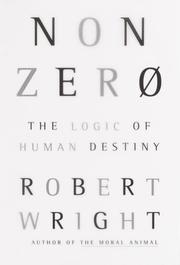
Nonzero

Nonzero

Robert Wright
2000
T3 447 pages · about 7h 27m to read Open Librarygoodreads

History read as an expanding series of non-zero-sum games

Summary

Wright argues that history has a direction, driven by the increasing scope and complexity of non-zero-sum interactions, meaning situations where the parties can both gain. His claim is that both biological evolution and cultural evolution produce increasing complexity because organisms and societies that find ways to cooperate outcompete those that do not.

The historical section traces the expansion of non-zero-sum relationships from hunter-gatherer bands through agriculture, chiefdoms, states, empires and eventually global economic integration. He argues that technology, particularly information and transport technology, expands the range over which cooperation is possible, and that societies which adopt technologies enabling wider cooperation displace those that do not. The biological section makes the parallel argument for evolution, covering the transitions from replicating molecules to cells, from cells to multicellular organisms, and from organisms to social groups, each of which involved previously independent units becoming interdependent.

His argument about the direction of history is explicitly against Stephen Jay Gould's position that evolution has no direction, and Wright addresses this directly. The final section speculates about global governance and about whether the expansion of non-zero-sum relationships implies a purpose, which is where he loses most readers who accepted the earlier argument.

The thesis is difficult to falsify, since almost any development can be described as an expansion of non-zero-sum relations after the fact. Wright underweights the zero-sum conflicts and the destroyed societies that his direction requires. The framework for thinking about when cooperation is available is useful independent of the directional claim.

Key takeaways 8

  1. History has a direction driven by the increasing scope and complexity of situations where parties can both gain.
  2. Societies that find ways to cooperate across wider ranges outcompete those that do not, which produces the direction without anyone intending it.
  3. Technology, particularly in information and transport, expands the range over which cooperation is possible and therefore drives the expansion.
  4. Biological evolution shows the same pattern, with previously independent units repeatedly becoming interdependent at higher levels of organisation.
  5. Non-zero-sum relationships require mechanisms for detecting and punishing defection, which is why trust infrastructure develops alongside trade.
  6. Increasing interdependence makes conflict more costly for both parties, which changes the calculation independently of any moral development.
  7. The thesis can describe almost any development as an expansion of non-zero-sum relations after the fact, which makes it hard to falsify.
  8. Wright underweights the zero-sum conflicts and the destroyed societies that the directional claim requires him to account for.

Who should read it

Readers interested in a framework for when cooperation becomes available and profitable, treating the directional claim as a hypothesis.

Who recommended it 4 · 1 direct

Ev Williamsreported
Reid Hoffmanreported

Similar books 6

Chosen by shared topics, the entries that hold them, and the people who recommended both.
William Poundstone · 1992

Von Neumann, game theory and the prisoner's dilemma in nuclear strategy.
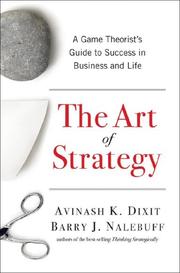
Avinash K. Dixit, Barry J. Nalebuff · 2008

Game theory without maths, with new examples: commitment, signals, bargaining.
Robert Axelrod · 1984

Computer tournaments of the prisoner's dilemma show why tit-for-tat wins.

Avinash K. Dixit, Barry J. Nalebuff · 1991

Game theory without maths: look forward, reason back, and make threats credible.
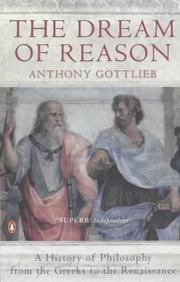
Anthony Gottlieb · 2000

History of Western philosophy from the Greeks to the Renaissance

Ibn Khaldun · 1858

Why states rise and fall, explained through asabiyyah, the cohesion of a group.

Where it sits in the reference 2

Mental models
Mental models

Topics

General HistoryPhilosophyWorld and Big HistoryHistory of ideas