AE
Asian economies
Country studies of China, Japan, India, Korea, Taiwan, Singapore, Hong Kong, Southeast Asia, Pakistan and Bangladesh, including East Asia's developmental states.
53 books on Asian economies, 2 of them tier 1, recommended by 7 people including Mohnish Pabrai and Patrick Collison.
53 books · 13 experts
Start here
- MITI and the Japanese MiracleChalmers A. Johnson, 1982
- Governing the MarketRobert Wade, 1990
- Japan as Number OneEzra F. Vogel, 1979
- The East Asian MiracleWorld Bank, 1993
- The Economic Growth of SingaporeW. G. Huff, 1994
The best books on Asian economies 53
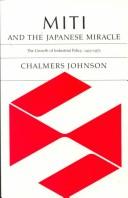
Chalmers A. Johnson · 1982
The founding text on the developmental state and industrial policy.
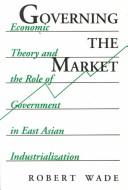
Robert Wade · 1990
The canonical study of Taiwanese industrial policy and state-led investment.
Ezra F. Vogel · 1979
The high-water mark of Western awe, useful now as a study in extrapolation.

World Bank · 1993
The official pre-crisis interpretation; read alongside Studwell to see what it missed.
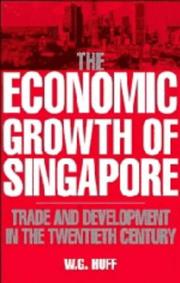
W. G. Huff · 1994
The economic history: entrepot trade, forced saving and state-directed investment.
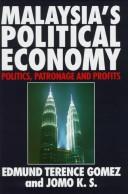
Edmund Terence Gomez, Jomo K. S. · 1997
The canonical mapping of party-linked ownership across corporate Malaysia.
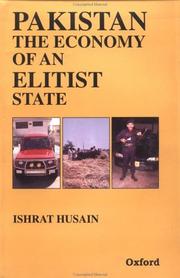
Ishrat Husain · 1999
By a later central bank governor; the structural diagnosis that still holds.
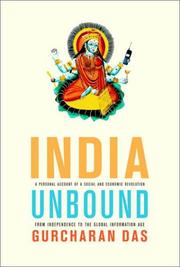
Gurcharan Das · 2000
A Procter & Gamble insider on the 1991 liberalisation and what preceded it.
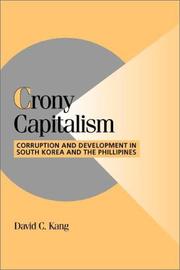
David C. Kang · 2002
Why the same corruption produced growth in Korea and stagnation here.
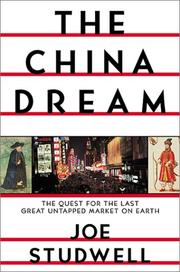
Joe Studwell · 2002
The recurring foreign delusion about the size of the China opportunity.

Alice H. Amsden, Wan-wen Chu · 2003
How Taiwan moved from imitation to scale in electronics and chips.

Nicholas R. Lardy · 2014
The case that private firms drove the growth miracle.

Arthur R. Kroeber · 2016
The best single-volume orientation for a newcomer to the market.
Neil Monnery · 2017
Cowperthwaite and the fiscal rules that produced the low-tax model.

Nicholas R. Lardy · 2019
The same author documenting the reversal towards state control.

Just Faaland, J. R. Parkinson · 1976
The founding pessimist study; useful baseline for what was later beaten.
Pasuk Phongpaichit, Chris Baker · 1995
The pre-crisis baseline: how the boom economy was actually structured.
Eun Mee Kim · 1997
The state-chaebol bargain and how it shifted over forty years.
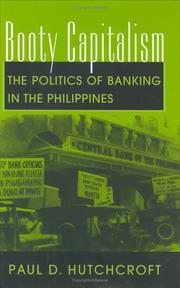
Paul D. Hutchcroft · 1998
Why oligarch families captured the banks rather than the state capturing business.
Pasuk Phongpaichit, Chris Baker · 1998
The definitive account of the bubble and the baht devaluation that started the Asian crisis.

Pasuk Phongpaichit, Chris Baker · 2000
Follow-up on the IMF programme, bank restructuring and who paid for it.
Arsenio M. Balisacan, Hal Hill · 2003
The standard economics volume: trade, banking, land and industrial policy.

Alice Poon · 2005
The clearest short account of how the property oligopoly extracts rent.
Henri Ghesquiere · 2006
An IMF economist on which policies were actually causal, and which transferable.

Pietro Masina · 2006
Industrial policy and FDI dependence assessed against the East Asian model.

John Greenwood · 2007
The currency board explained by the economist who designed the peg.

Linda Lim · 2015
Retrospective essays on the limits of the model and what comes next.


Edmund Terence Gomez, Thirshalar Padmanabhan, Norfaryanti Kamaruddin, Sunil Bhalla, Fikri Fisal · 2017
Who actually controls the GLCs that dominate the local market.
Dinny McMahon · 2018
Local-government financing vehicles, shadow banking and the property build-out.

Ishrat Husain · 2018
Insider on why Pakistani institutional reform keeps failing at implementation.
T3 Backstage
Montek Singh Ahluwalia · 2019
Insider memoir by the architect of much of the reform programme.

Recommended byPatrick Collison
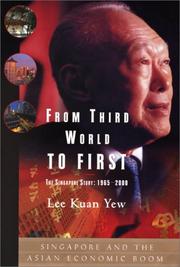
Lee Kuan Yew · 2000
The founder's own account of how the development strategy was chosen.

Recommended byMohnish Pabrai

Recommended byMohnish Pabrai
Recommended byMohnish Pabrai
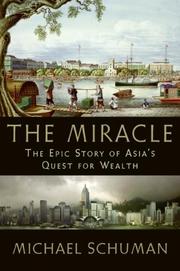
Michael Schuman · 2009
Asia's growth stories told through the people who drove them.
Recommended byMohnish Pabrai

David Lewis · 2011
The one readable overview of how the state, NGOs and business interlock.

Tai-chun Kuo, Ramon H. Myers · 2011
The policy record of the transition from agriculture to electronics.


G. E. Anderson · 2012
Recommended byMohnish Pabrai

Recommended byMohnish Pabrai

Nirmalya Kumar, Phanish Puranam · 2012
Recommended byMohnish Pabrai
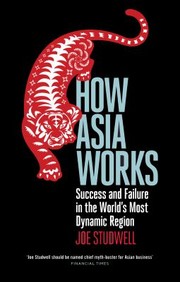
Joe Studwell · 2013
The state-directed export discipline that produced the Korean chaebol.
“it's a good read for anyone who wants to understand what actually determines whether a developing economy will succeed.”Bill Gates
Graham Allison, Robert D. Blackwill, Ali Wayne · 2013
Lee's own strategic judgements, edited into a short reference.
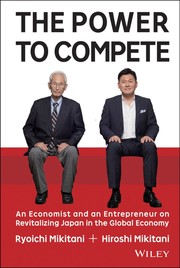
Hiroshi Mikitani, Ryoichi Mikitani · 2014

Henry M. Paulson · 2015
Former Treasury secretary on negotiating with China's state and firms

Winston Ma · 2016
Payments and mobile commerce structure behind Alipay and Taobao.

Li Lu · 2020
Published in Chinese only; no English edition exists.
Recommended byMohnish Pabrai
Steven Towns
unverified
Recommended byMohnish Pabrai
Experts 13
The people who wrote this page's books, and the people who recommend them.
Authors 6
CB
Chris Bakerwrote 3 books herePP
Pasuk Phongpaichitwrote 3 books hereJS
Joe Studwellwrote 2 books here Michael E. Porterwrote 1 book here
LL
Li Luwrote 1 book here Lee Kuan Yewwrote 1 book here
Recommenders 7
MP
Mohnish Pabrairecommends 15 books here Patrick Collisonrecommends 4 books here
 Bill Gatesrecommends 2 books here
SP
Shane Parrishrecommends 1 book hereAP
Anthony Pomplianorecommends 1 book hereBS
Balaji S. Srinivasanrecommends 1 book here Mark Zuckerbergrecommends 1 book here
Related
More economics: ← Trade, globalisation and shipping · Behavioural economics and uncertainty → · All economics