Software and SaaS

Near-zero marginal cost, high gross margin and recurring revenue; the dominant destination for growth capital since the 1990s.

18 books · 34 people behind it · 1 reading lists

Start here

  1. The Hard Thing About Hard ThingsBen Horowitz, 2014
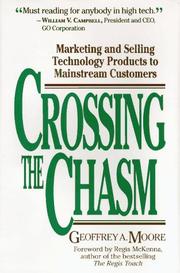
  2. Crossing the ChasmGeoffrey A. Moore, 1991
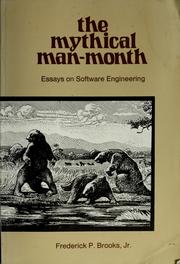
  3. The Mythical Man-MonthFrederick P. Brooks Jr., 1975

The people behind it 34

Each person holds a book in this entry or names it in their own tags.

Investors 5

ML
Mark Leonardnamed in their tags
PF
Philip Fishernamed in their tags
BM
Bill Millernamed in their tags
HH
Hamilton Helmernamed in their tags
JD
John Doerrnamed in their tags

Founders 12

Ben Horowitz1 book here
MB
Marc Benioff1 book here
Marc Andreessennamed in their tags
ML
Mark Leonardnamed in their tags
Paul Grahamnamed in their tagsPeter Thielnamed in their tagsBrad Feldnamed in their tagsReid Hoffmannamed in their tags
DH
David Heinemeier Hanssonnamed in their tags
GK
Guy Kawasakinamed in their tags
MD
Michael Dellnamed in their tags
SB
Safi Bahcallnamed in their tags

Executives 3

AS
Andrew S. Grovenamed in their tags
ML
Mark Leonardnamed in their tags
ES
Eric Schmidtnamed in their tags

Academics 1

RE
Randall E. Strossnamed in their tags

Strategists 5

GA
Geoffrey A. Moore1 book here
Clayton Christensennamed in their tags
HH
Hamilton Helmernamed in their tags
DT
Don Tapscottnamed in their tags
SB
Safi Bahcallnamed in their tags

Journalists 8

SL
Steven Levy1 book here
BS
Brad Stonenamed in their tags
CA
Chris Andersonnamed in their tags
KK
Kevin Kellynamed in their tags
WI
Walter Isaacsonnamed in their tags
BM
Ben Mezrichnamed in their tags
DT
Don Tapscottnamed in their tags
RE
Randall E. Strossnamed in their tags

Reading list — Essential Coding in the age of AI reading list · Superbook

10 books, in the order the list argues for

There is no canonical book on vibe coding yet. That is not a gap to apologize for — it is an honest description of where the field stands in 2025. The tools are changing faster than publishing cycles. What exists instead is a layered foundation: classics of software craft that turn out to matter more when an AI is generating your first drafts, and recent books on the nature and trajectory of AI systems that give that

Sources: Simon Willison's Weblog — AI-assisted coding posts · Ethan Mollick — One Useful Thing newsletter · Martin Fowler — Refactoring.com
Books 18

Frederick P. Brooks Jr. · 1975 · Why adding people to a late software project makes it later.
Harold Abelson, Gerald Jay Sussman · 1985 · The classic computer science text on abstraction and program structure
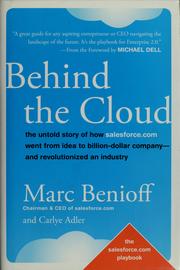
Marc Benioff, Carlye Adler · 2009 · Insider account of building Salesforce and the SaaS model.
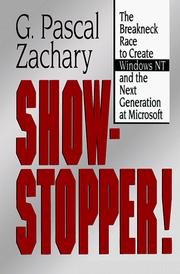
G. Pascal Zachary · 1994 · The making of Windows NT as an anatomy of a large software project.
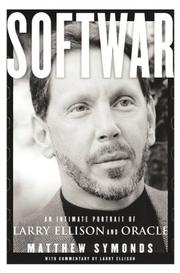
Matthew Symonds, Larry Ellison · 2003 · Oracle and Larry Ellison, with Ellison's own annotations.
John Ousterhout · Ousterhout's core argument — that the enemy of good software is complexity, and that complexity accumulates through shallow abstractions and tactical shortcuts — maps directly onto the failure mode of AI-assisted development. Models are natural tactical coders. This book argues for the strategic counterweight.
Robert C. Martin · Controversial in its prescriptiveness, but useful precisely because AI-generated code routinely violates every heuristic in it: long functions, unclear names, mixed levels of abstraction. Reading Martin sharpens the vocabulary for what to fix in a model's output, even if the rules are applied with judgment rather than dogma.
Ethan Mollick · Mollick is a Wharton professor who studies AI adoption and writes with unusual clarity about working alongside LLMs across knowledge domains. The framing — that effective AI collaboration requires treating the model as a co-worker with specific strengths and specific blind spots — is the most practically useful frame available for day-to-day coding with AI.
Martin Fowler · Fowler catalogued the moves that make existing code better without changing its behavior. In an era where AI generates working-but-messy first drafts, refactoring is the core skill: not writing code from scratch, but reshaping what you have. The catalog of smells is a better prompt-debugging tool than most people realize.
Brian Christian · Christian's account of the gap between what AI systems are optimized for and what we actually want from them. The alignment problem is not only an AI-safety abstraction — it surfaces in every code generation session where a model produces code that passes the tests but misses the intent. The book builds the conceptual vocabulary for understanding why.
Mustafa Suleyman · Suleyman co-founded DeepMind and writes about AI and synthetic biology as a combined wave of general-purpose technologies. Relevant here not as a how-to but as context: the tools that make individual developers dramatically more productive are part of a broader technology transition whose governance is still unsettled.
David Thomas, Andrew Hunt · The craft baseline. Hunt and Thomas articulate the discipline that AI code generation does not replace: knowing when code is good enough, how to automate the right things, and what a working developer owes to the person reading the code next. The 20th-anniversary edition updated the examples but the reasoning has not aged.
Tracy Kidder · Kidder embedded with a Data General engineering team in 1978 and wrote the definitive account of what it feels like to ship hardware under pressure. The human dynamics — the obsession, the burnout, the pride in craft — are unchanged. Reading it alongside AI tools is a reminder that the emotional texture of building things has not been automated away.
Nadia Eghbal · Eghbal's study of open-source maintainers is partly about how software gets made and partly about what happens when a solo creator's work becomes infrastructure for thousands of strangers. Both questions bear on AI-assisted development: the tools lower the floor for creating software, but the maintenance and social questions remain human.