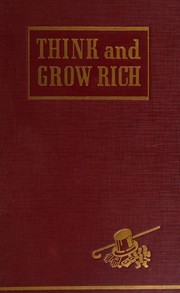
Think and Grow Rich: The Original Classic
Summary
Hill published in 1937 a book he claimed was built from twenty years studying more than five hundred wealthy men at Andrew Carnegie's suggestion. It sets out thirteen principles: desire, faith, autosuggestion, specialised knowledge, imagination, organised planning, decision, persistence, the master mind, the transmutation of sex energy, the subconscious mind, the brain, and the sixth sense.
The practical elements are the ones with lasting influence. Hill argues for a definite chief aim stated as a specific amount with a specific date and a specific service to be given in exchange, written down and read aloud twice daily. He argues for a master mind group, meaning a small group meeting regularly in a spirit of harmony toward a defined objective, which is the origin of the modern peer group and advisory board practice. He argues that persistence after apparent defeat is the differentiating trait, using the Darby story about a gold mine abandoned three feet from the vein.
The claims about the subconscious mind, autosuggestion and the sixth sense have no evidential basis and read as mysticism. The chapter on the transmutation of sex energy is dated and strange.
The biggest problem is Hill himself. Researchers have found no evidence that the Carnegie commission occurred, Hill's biography includes multiple fraud allegations and failed ventures, and the claimed interviews with named industrialists cannot be verified. The book's central mechanism, that thoughts materialise as physical conditions, is false as stated and encourages attributing outcomes to belief rather than to circumstance and effort. Its historical importance to the entire self-help industry is real and its specific practices around written goals and peer groups are useful independent of the framework.
Key takeaways 8
- A goal should be stated as a specific amount, with a specific deadline, a specific service given in exchange, and a written plan, rather than as a general wish.
- Reading a written statement of the objective aloud daily is Hill's mechanism for holding attention on it, which he calls autosuggestion.
- A master mind group of people working in coordination toward a defined objective produces results none of them would reach alone.
- Persistence after apparent defeat is the trait Hill identifies as separating those who succeed, and most people quit close to the result.
- Specialised knowledge, rather than general education, produces money, and it can be organised and directed rather than personally possessed.
- Decisions should be made quickly and changed slowly, and Hill claims the reverse pattern characterises those who fail.
- Hill's central claim that thoughts become physical reality has no evidential basis and misattributes outcomes to belief.
- The book's origin story about a commission from Andrew Carnegie has never been verified and the author has a documented record of fraud.
Who should read it
Readers who want the historical source of modern goal-setting and peer-group practice, with the metaphysical claims and the author's credibility treated sceptically.
Who recommended it 10 · 2 direct
“I've always been a big fan of books and teaching seminars specializing in the area of self-improvement. Think And Grow Rich by Napoleon Hill is one book I'd recommend to everyone.”
Similar books 6
Chosen by shared topics, the entries that hold them, and the people who recommended both.

Recommended by: Mohnish Pabrai

Change behaviour by changing what you link with pain and pleasure.
Recommended by: Guy Spier, Nat Eliason, Brian Koppelman and 2 others
Recommended by: The Barefoot Investor
Recommended by: Mohnish Pabrai
The size of your thinking sets the size of your results, and how to think bigger.
Recommended by: Ali Abdaal, Mohnish Pabrai, Nat Eliason and 2 others
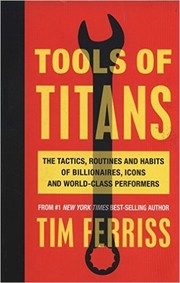
Routines, tools and advice from over 200 podcast guests on health, wealth and wisdom.
Recommended by: Keith Rabois, Nat Eliason, Kevin Rose and 4 others
Where it sits in the reference 0
No entry holds this book yet. It reached the reference because someone recommended it.
Topics