
Purple Cow
Summary
Godin argues that traditional advertising has stopped working because consumers have too many choices and too little attention, and that the only viable response is to build products remarkable enough to generate their own word of mouth. His term for such a product is a purple cow, meaning something so different that people notice and talk about it.
His argument against advertising is structural rather than aesthetic. He holds that the postwar model, in which an average product was sold to a mass market through interruption advertising, worked because attention was cheap and choice was limited, and that both conditions have reversed. Spending on advertising an unremarkable product therefore produces no return regardless of the creative quality.
He argues that the remarkable quality must be built into the product rather than added by marketing, which makes marketing a product design responsibility rather than a communications one. He also argues for targeting what he calls sneezers, meaning the people in a market who tell others, and for accepting that a remarkable product will be disliked by some, since a product designed to offend nobody will be noticed by nobody.
His treatment of the adoption curve inverts the standard approach, arguing that a company should design for the early adopters and let them carry it to the majority rather than aiming at the majority directly. The book is short and repetitive, with many brief examples rather than sustained analysis. It has no evidence beyond cases chosen after the outcome. Many remarkable products fail, which Godin does not address. The argument that being unremarkable is now the highest risk is the part that has held up as attention has become scarcer still.
Key takeaways 8
- Advertising an unremarkable product produces no return, because attention is scarce and choice is abundant regardless of the creative quality.
- The remarkable quality must be built into the product, which makes marketing a design responsibility rather than a communications function.
- A product designed to offend nobody will be noticed by nobody, so accepting that some people will dislike it is a requirement.
- Word of mouth from a small number of people who tell others carries a product further than paid distribution can.
- Companies should design for early adopters and let them reach the majority, rather than designing for the majority directly.
- Being safe and average is now the riskiest position, because it guarantees invisibility in a market with unlimited alternatives.
- Marketing budgets should be spent on making the product remarkable rather than on promoting it after the fact.
- Every remarkable product eventually becomes ordinary as it is copied, which means the process has to be repeated rather than completed.
Who should read it
Founders and marketers deciding whether to spend on promotion or on making the product itself worth discussing.
About Seth Godin
American marketing writer, founder of Yoyodyne and Squidoo, who has published a daily marketing blog for two decades.
Permission Marketing argued for earning attention through opt-in years before that became the default of email and content marketing, and Purple Cow made remarkability the product's job rather than the advertising budget's. The Dip supplies a decision rule for when to quit a market and when the difficulty itself is the barrier worth pushing through.
Who recommended it 6 · 1 direct
Similar books 6
Chosen by shared topics, the entries that hold them, and the people who recommended both.

Companies lose their position by broadening; narrowing the focus wins it back.
Recommended by: Mohnish Pabrai, Arianna Huffington and 3 others

Marketing happens in the buyer's mind: find an open position there and own it.
Recommended by: Patrick Collison, Aaron Levie, David Cancel and 4 others
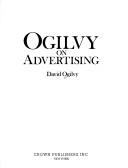
Rules for advertising that sells, drawn from direct-response testing.
“Ogilvy is a brilliant guy and a terrific writer. Really enjoyed this book and learned a lot.” — Mohnish Pabrai
Source: Mohnish's Bookshelf — Books on Sales & Marketing, entry 40
Recommended by: Mohnish Pabrai, David Cancel, Ev Williams and 1 other

Twenty-two rules of marketing, such as being first is better than being better.
Recommended by: Brian Armstrong, Mohnish Pabrai, Nat Eliason and 3 others
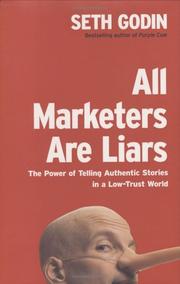
Great marketers tell a story buyers want to believe, not a list of features.
Recommended by: Joe Gebbia

How to win and keep agency clients and write advertising that sells.
Recommended by: Mohnish Pabrai, David Cancel, Sam Parr
Where it sits in the reference 2
Topics