Negotiation and Dealmaking

Where transaction value is actually captured or destroyed, from bargaining tactics to the acquirer's post-close arithmetic.

55 books · 7 people behind it · 1 reading lists

Start here

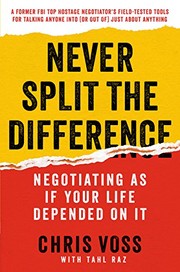
  1. Never Split the DifferenceChris Voss, Tahl Raz, 2016
  2. Getting to YesRoger Fisher, William Ury, Bruce Patton, 1981
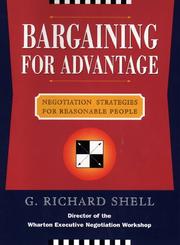
  3. Bargaining for AdvantageG. Richard Shell, 1999
  4. 3-D NegotiationDavid A. Lax, James K. Sebenius, 2006

The people behind it 7

Each person holds a book in this entry or names it in their own tags.

Founders 1

Brad Feld1 book here

Academics 3

RB
Robert B. Cialdini3 books here
Daniel Kahneman1 book here
AG
Adam Grant1 book here

Journalists 3

RG
Robert Greene3 books here
AG
Adam Grant1 book here
CA
Chris Anderson1 book here

Reading list — The best books on Negotiation · Superbook

8 books, in the order the list argues for

The negotiation canon starts with a clean thesis: most people treat bargaining as positional warfare, haggling over numbers until someone blinks. Getting to Yes replaced that model with interest-based negotiation — find out what each side actually needs, then design agreements that meet both. That insight, developed at Harvard in the 1980s, still anchors the field. But interests-based negotiation has a problem: it a

Sources: Getting to Yes – Roger Fisher & William Ury (Harvard Negotiation Project) · Never Split the Difference – Chris Voss official site · Harvard Program on Negotiation · Difficult Conversations – Harvard Negotiation Project

Books 55

Sun Tzu · 1900 · Classical strategy: position, deception and choosing when to fight
Thomas C. Schelling · 1960 · Commitment, threats and bargaining; the founding text of strategic conflict
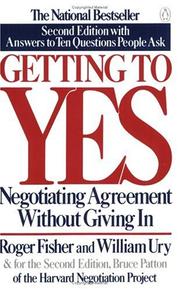
Roger Fisher, William Ury, Bruce Patton · 1981 · Principled negotiation and BATNA; the field's standard vocabulary.
Robert A. Caro · 2002 · Caro on Johnson's mastery of an institution's levers and incentives
Vance Packard · 1957 · Motivational research and the first popular backlash against it.
Catherine Drinker Bowen · 1966 · The constitutional convention as a long and contested negotiation
G. Richard Shell · 1999 · The best research-grounded bridge between theory and the table.
Doris Kearns Goodwin · 2003 · Lincoln's cabinet of opponents; a study in managing rivals
David A. Lax, James K. Sebenius · 2006 · Adds setup and deal design to tactics; the dealmaker's version.
Max H. Bazerman, Margaret A. Neale · 1992 · Cognitive bias applied to bargaining; anchoring and the winner's curse.
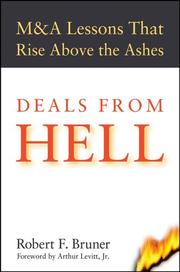
Robert F. Bruner · 2005 · M&A failures studied as a class rather than as anecdotes.
Kerry Patterson, Joseph Grenny, Ron McMillan, Al Switzler · Patterson et al. address high-stakes conversations where opinions differ and emotions run hot — conditions that describe most negotiations worth having. The STATE model and the concept of the pool of shared meaning give practitioners concrete tools rather than abstract principles.
Douglas Stone, Bruce Patton, Sheila Heen · From the Harvard Negotiation Project, this examines the negotiations we avoid: performance reviews, relationship ruptures, disagreements about fault. The three-conversation model (what happened, feelings, identity) explains why these go wrong and provides a structure for having them anyway.
Roger Fisher, William Ury · The founding text of interest-based negotiation. Fisher and Ury's core move — separating positions from interests, then inventing options for mutual gain — remains the clearest framework for turning zero-sum standoffs into joint problem-solving. Read it first; everything else responds to it.
Adam Grant · Grant's research on givers, takers, and matchers reframes negotiation as a long-run game. Takers win individual negotiations; givers build the networks and reputations that produce better deal flow over time. The evidence changes how you think about concessions and relationship investment.
Robert B. Cialdini · Cialdini's six principles — reciprocity, commitment, social proof, authority, liking, scarcity — are the persuasion levers that operate before formal negotiation begins. Understanding them is partly defensive (recognizing when they're being used on you) and partly offensive (deploying them ethically).
Douglas Stone, Sheila Heen · Stone and Heen focus on the receiving side of evaluative conversations — performance reviews, criticism, unsolicited advice. Negotiators spend a lot of energy crafting messages and far less understanding why feedback triggers defensiveness. This book corrects that imbalance.
Daniel Kahneman · Kahneman's synthesis of behavioral economics is the cognitive science underpinning every negotiation tactic. Anchoring, loss aversion, framing effects, and the planning fallacy — understanding why these biases operate, not just that they exist, makes you harder to exploit and more honest about your own irrationality.
Alan Palmer · 2013 · Short method for direct conversations and difficult requests