Value Investing

Buying securities below a conservatively estimated intrinsic value; the oldest formalised approach in the field and the one with the deepest bibliography.

96 books · 58 people behind it · 1 reading lists

Start here

  1. The Intelligent InvestorBenjamin Graham, 1949
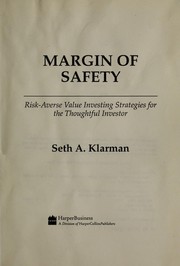
  2. Margin of SafetySeth A. Klarman, 1991
  3. Security AnalysisBenjamin Graham, David L. Dodd, 1934

The people behind it 58

Each person holds a book in this entry or names it in their own tags.

Investors 38

Benjamin Graham3 books hereHoward Marks3 books here
JT
John Train3 books here
JG
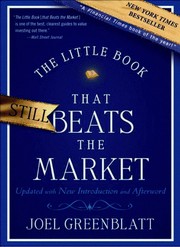
Joel Greenblatt2 books here
Warren Buffett2 books here
DD
David Dreman2 books here
PD
Pat Dorsey2 books here
RG
Robert G. Hagstrom2 books here
Charlie Munger1 book here
JD
Jack D. Schwager1 book here
John C. Bogle1 book hereRay Dalio1 book here
MP
Mohnish Pabrai1 book here
PL
Peter Lynch1 book here
PL
Philip L. Carret1 book here
Guy Spier1 book here
TE
Tobias E. Carlisle1 book here
Whitney Tilson1 book hereClifford Asnessnamed in their tags
JG
James Grantnamed in their tags
BM
Bill Millernamed in their tags
Bruce Flattnamed in their tags
DE
David Einhornnamed in their tags
EC
Edward Chancellornamed in their tags
JP
James P. O'Shaughnessynamed in their tags
JG
Jeremy Granthamnamed in their tags
John Neffnamed in their tags
LL
Li Lunamed in their tags
MJ
Martin J. Whitmannamed in their tags
NS
Nick Sleepnamed in their tags
Prem Watsanamed in their tagsRobert D. Arnottnamed in their tagsSeth Klarmannamed in their tags
WN
William N. Thorndike Jr.named in their tags
BN
Bill Nygrennamed in their tags
CB
Christopher Brownenamed in their tags
DL
Daniel Loebnamed in their tags
EW
Ed Wachenheimnamed in their tags

Founders 1

John C. Bogle1 book here

Executives 2

John C. Bogle1 book hereBruce Flattnamed in their tags

Academics 4

JK
Judd Kahn2 books here
BG
Burton G. Malkiel1 book here
DL
David L. Dodd1 book here
BG
Bruce Greenwaldnamed in their tags

Journalists 13

JL
Janet Lowe5 books here
JT
John Train3 books here
RG
Robert G. Hagstrom2 books here
JD
Jack D. Schwager1 book here
MH
Morgan Housel1 book here
JR
John Rothchild1 book here
TE
Tobias E. Carlisle1 book here
JG
James Grantnamed in their tags
RL
Roger Lowensteinnamed in their tags
EC
Edward Chancellornamed in their tags
JZ
Jason Zweignamed in their tags
WN
William N. Thorndike Jr.named in their tags
WG
William Greennamed in their tags

Reading list — Essential Investing reading list · Superbook

12 books, in the order the list argues for

The list starts with Benjamin Graham, whose Security Analysis and The Intelligent Investor established the vocabulary that everyone in this field still uses — intrinsic value, margin of safety, Mr. Market. Every book written after 1949 on stock-picking is in dialogue with Graham whether or not it acknowledges him. Warren Buffett extended Graham's framework in practice, and the books about Buffett (Snowball, The Warr

Sources: Berkshire Hathaway annual letters (1977–present) · Howard Marks memos — Oaktree Capital · Bogle Financial Markets Research Center — speeches and papers · Ray Dalio — Economic Principles (free PDF)


Books 96

Seth A. Klarman · 1991 · Out of print and expensive; the clearest modern statement of risk-first value investing.
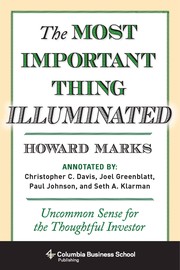
Howard Marks, Paul Johnson · 2012 · Marks on risk, cycles and second-level thinking, with commentary.
Philip L. Carret · 1930 · Pre-Graham manual on speculation, margin and the psychology of markets
John Train · 1980 · Profiles of nine investors including Graham, Buffett and Fisher
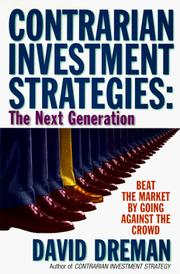
David Dreman · 1998 · Statistical evidence that low-expectation stocks beat glamour stocks.
Bruce C. N. Greenwald, Judd Kahn, Paul D. Sonkin, Michael van Biema · 2001 · Columbia's teaching text; earnings power value and the asset-reproduction method.
James Montier · 2009 · Behavioural case for value, written by a practitioner sceptic.
James Montier · 2009 · Montier applies behavioural evidence to a value investing process.
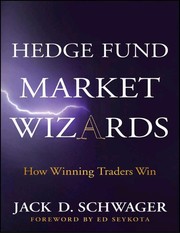
Jack D. Schwager · 2012 · Schwager interviews hedge fund managers on edge and risk control.
William Proctor · 1983 · Templeton's method: buying at the point of maximum pessimism worldwide
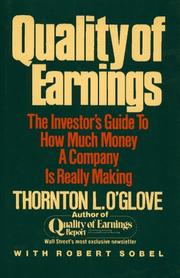
Thornton L. O'glove · 1987 · O'glove on separating reported profit from durable earning power.
Geraldine Weiss, Janet Lowe · 1988 · Weiss uses dividend yield as the central valuation gauge.
Philip Carret · 1995 · Reflections from a fund manager with a fifty-five-year record
Kathryn F. Staley · 1997 · Staley on finding accounting decay and overvaluation from the short side.
David Dreman · 1999 · Dreman argues low-expectation stocks beat glamour over full cycles.
John Train · 2000 · Profiles of the great money managers and their differing methods.
Robert G. Hagstrom · 2001 · Buffett's principles restated as tenets a practitioner can apply
Howard Schilit, Jeremy Perler · 2002 · Field guide to the accounting tricks that hide deteriorating businesses.
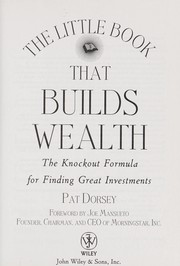
Pat Dorsey · 2003 · Morningstar primer on analysing businesses sector by sector.
Thomas P. Au · 2004 · Updates Graham and Dodd's valuation method for modern financial statements
Frank K. Martin · 2006 · Client letters through the dot-com bubble; value discipline written contemporaneously
Christopher H. Browne · 2006 · Tweedy Browne's distilled version of the Graham method.
Vitaliy N. Katsenelson · 2007 · Katsenelson on buying and selling inside range-bound markets.
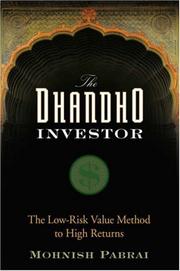
Mohnish Pabrai · 2007 · Pabrai on low-risk, high-uncertainty bets and cloning good ideas.
Bruce C. N. Greenwald, Judd Kahn · 2007 · Columbia course text linking Graham valuation to franchise analysis.
Lauren Templeton, Scott Phillips · 2008 · How Templeton bought maximum pessimism across global markets.
Pat Dorsey · 2008 · Dorsey on identifying and valuing durable competitive advantage.
Vitaliy N. Katsenelson · 2010 · Shorter restatement of active value investing for flat markets.
Wesley Gray, Tobias Carlisle · 2012 · Gray and Carlisle test value screens with quantitative evidence.
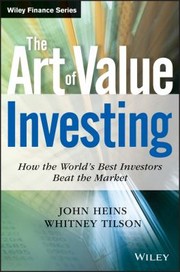
John Heins, Whitney Tilson · 2013 · Interview-sourced maxims from dozens of practising value investors.
Tobias E. Carlisle · 2014 · Carlisle on the acquirer multiple and mechanical deep-value buying.
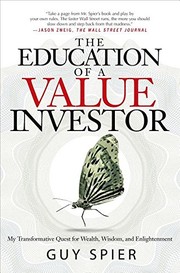
Guy Spier · 2014 · Spier on the psychology and habits behind durable value investing.
Jeremy C. Miller · 2016 · Miller reconstructs Buffett's partnership-era rules and results.
Burton G. Malkiel · Malkiel's academic case for market efficiency, updated through multiple editions. The first two thirds — the historical bubbles, the technical analysis critique, the efficient market hypothesis — are the most durable. His asset allocation chapters are less original.
Howard Marks · Marks's follow-up goes deeper on where in the cycle the market is and what that implies for risk-taking. Less prescriptive than it sounds — his point is calibration rather than market timing — and the chapter on the credit cycle is especially relevant after 2008.
Charlie Munger · Munger's collected talks and essays, assembled by Peter Kaufman. The Almanack is where Buffett's analytical framework gets its philosophical underpinning: the lattice of mental models, the virtue of inversion, the insistence on understanding the domain rather than memorizing formulas.
Ray Dalio · Dalio's investment principles occupy the second half of this book, preceded by his unusual autobiography. The template of 'pure alpha' overlaid on 'beta' and his systematic approach to tracking the debt cycle are the most original ideas here, even if the corporate-culture sections haven't aged well.
Warren Buffett · Lawrence Cunningham's arrangement of Buffett's annual letters by theme rather than chronology. The sections on accounting, management quality, and the nature of competitive moats make this the most efficient distillation of Buffett's thinking on what makes a business worth owning.
John C. Bogle · Bogle's case for index funds in book form. The core argument — that costs compound against the investor just as returns compound for them, and that active management reliably underperforms after fees — is backed by decades of data and has only gotten stronger since publication.
Howard Marks · Howard Marks distills the memos he has sent to Oaktree clients for decades into a single argument: superior investing is about second-level thinking — not 'this is a good company' but 'the market thinks this is a good company and I think they're wrong.' The book on investment temperament.
Morgan Housel · Morgan Housel's 19 short essays on the behavioral and psychological forces that determine financial outcomes. The chapter distinguishing getting wealthy from staying wealthy is the clearest statement of why the skills are different and why most people conflate them.
Alice Schroeder · Alice Schroeder's authorized biography. Long, but the investment decisions are narrated with specificity that no other Buffett book matches — you see the actual reasoning, including the mistakes, rather than the retrospective justifications.
Janet Lowe · 1996 · Graham's method restated for beginners
Mary Buffett, David Clark · 1997
Lars Tvede · 1997 · Tvede on how credit and business cycles drive asset prices.
Thomas R. Ittelson · 1998 · Plain-language guide to reading the three financial statements.
Lars Tvede · 2010 · Long-horizon view of the trends reshaping economies and markets.
Michael Shearn · 2011 · Seventy questions to ask before buying any business.
Jeeva Ramaswamy · 2012 · Step-by-step attempt to replicate Buffett’s selection process.
John Mihaljevic · 2013 · Framework for sourcing and ranking value ideas systematically.
Tweedy, Browne Company LLC · Tweedy Browne survey of empirical studies supporting value factors.