
problems
company
Embed problems.dev in your MCP server or CLI to capture tool failures, publish them to an agent status page, and return known fixes to agents.
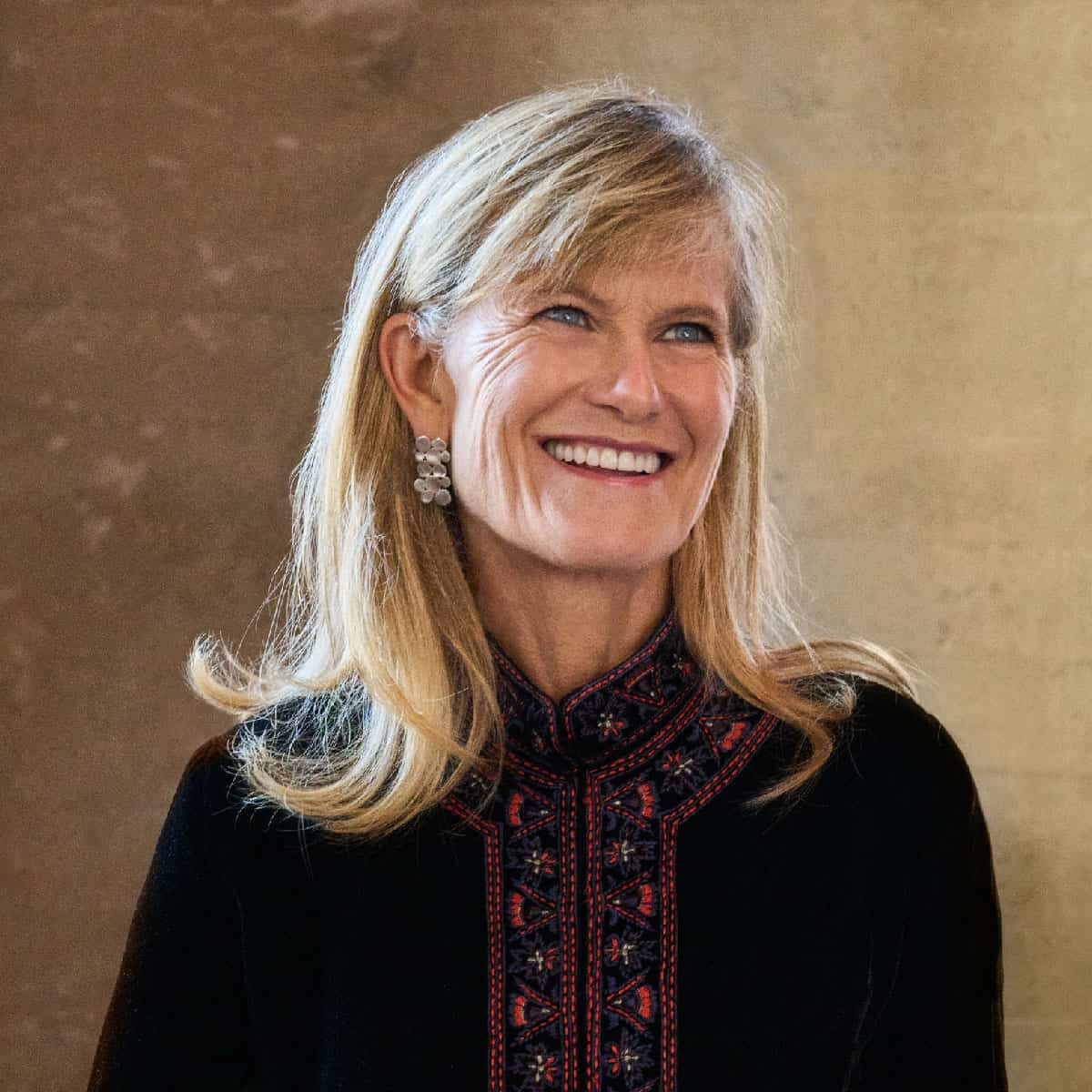 Jacqueline Novogratznamed it in 10 interviews“Acumen uses “patient capital” to invest in entrepreneurs solving problems in energy, agriculture, healthcare, education, and workforce development.” — Building Markets with Jacqueline Novogratz, Founder & CEO of Acumen (Investing in Impact | Impact Investing, 2025)
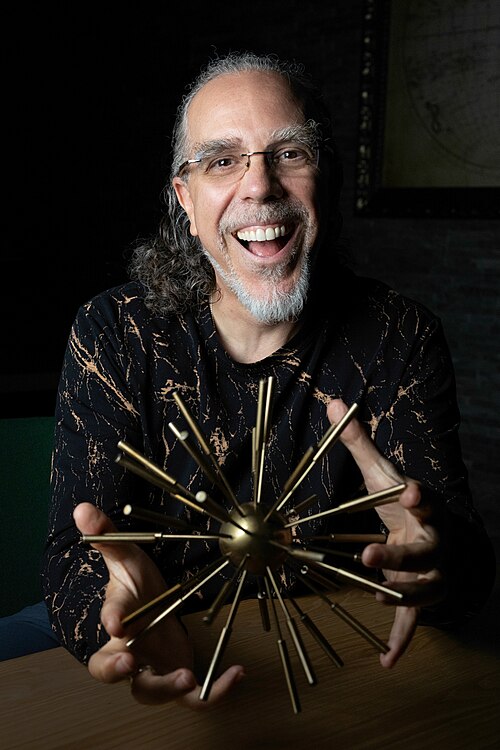 Astro Tellernamed it in 8 interviews“Astro Teller is the head of the X team at Alphabet, a company that creates radical technologies to help solve some of the world’s largest problems.” — Why you need to fail at work with Astro Teller (Worklife with Molly Graham, 2026)
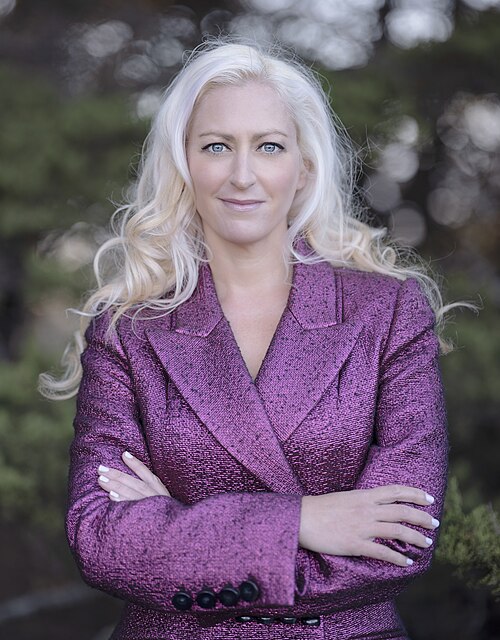 Jane McGonigalnamed it in 8 interviews“Jane McGonigal's "Reality is Broken" explores how game design principles can be applied to address real-world problems and enhance human well-being.” — 🎮 Reality Is Broken: Why Games Make Us Better and How They Can Change the World - Jane McGonigal (Infinitum Leadership: Unlock Your Potential, 2025)
 Phil Libinnamed it in 6 interviews“He’s the former CEO of Evernote and the co-founder and CEO of All Turtles, a product studio that solves what they describe as meaningful problems.” — Phil Libin on The Out of Office World (The Human Risk Podcast, 2022)
 Campbell R. Harveynamed it in 5 interviews“They identified problems with the current financial system and the possibility of solutions through DeFi, such as the need for an alternative to the SWIFT system for wire transfers and the ability to store and use value in transactions.” — 336: Predicting the Next Economic Recession & Revolutionizing Banking with Decentralized Finance | Campbell Harvey (The Commercial Investing Show, 2024)
 David Heinemeier Hanssonnamed it in 2 interviews; named it in 3 articles“Rails 6 will provide users with more frameworks so that they do not have to build all of their own solutions to common problems.” — RR 428: Arming the Rebels with Rails 6 Featuring David Heinemeier Hansson (Ruby Rogues, 2019)
 Cindy Eckertnamed it in 5 interviews“Disclaimer: ADDYI is for premenopausal women with acquired, generalized hypoactive (low) sexual desire disorder who have not had problems with low sexual desire in the past, and who have low sexual desire no matter the type of sexual activity, the situation or the sexual partner.” — #349: She Built the Female Viagra & Two Billion-Dollar Companies: Cindy Eckert on Bold Moves, Big Dreams & Building for Impact (Behind Her Empire, 2025)
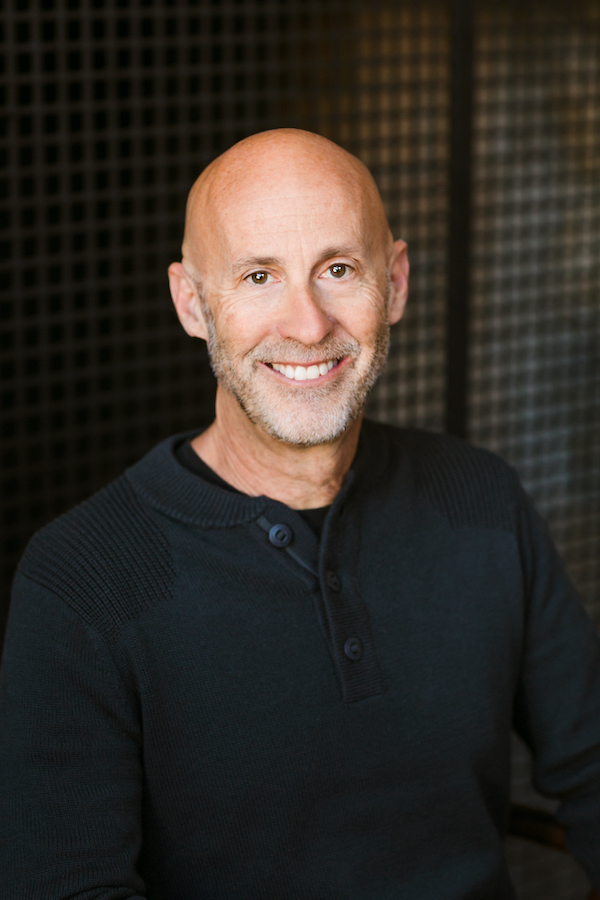 Marty Cagannamed it in 5 interviews“But the real advantage these companies have is not so much who they hire, but rather how they enable their people to work together to solve hard problems and create extraordinary products.” — Marty Cagan - Empowered: Ordinary People, Extraordinary Products (The Innovation Show, 2023)
 Codie Sancheznamed it in 4 interviews“Plus, the industries she'd invest in right now, and why most small business owners are solving the wrong problems.” — Rapid Response: Stop creating businesses. Buy one instead, with Codie Sanchez (Masters of Scale, 2026)
 Daniel Burkanamed it in 4 interviews“Together they co-founded Hard Problems, a not-for-profit with a goal to help more technologists to work on the world's hardest problems, like climate change and public health.” — The Biggest Competitor to Your Product Might Be Paper | Daniel Burka, Mahima Chandak & Elyce Cole, Hard Problems (Unmissables with Ariba Jahan, 2026)
 Reshma Sohoninamed it in 4 interviews“Reshma Sohoni is the founding partner of Seedcamp , Europe's seed fund, investing early in world-class founders attacking large, global markets and solving real problems using technology.” — Discover happiness as an entrepreneur: Reshma Sohoni, SeedCamp (Startup Dads, 2022)
 Jim Rogersnamed it in 3 interviews“Jim was one of the most successful investors of his generation, building one of the greatest track records in hedge fund history alongside Soros, who later became known for making over $1 billion on the famous pound trade.Jim gives a serious warning to traders and investors: nearly every market in the world is booming, markets are making all-time highs, and whenever people say “it’s different now”, you should be very worried.In this interview, Jim breaks down why problems are coming, why timing can wipe you out even when you’re right, why the number one rule is don’t lose money, and what traders can learn from gold, silver, central banks, George Soros, market crashes, global investing and decades of surviving in the markets.” — He Made 4200% At The World’s TOP Hedge Fund (He’s SOLD EVERYTHING) - Jim Rogers (Words of Rizdom - Trading Podcast, 2026)
Show all 138
 Whitney Tilsonnamed it in 3 interviews“Also on the show, Tom Lydon, vice chairman at VettaFi , makes a niche-focused financial-services fund his ETF of the Week, noting that it could start trending positively as the banking sector moves past recent problems.” — BNY Mellon's Jolly: Credit crunch will create hard landing but fast recovery (Money Life with Chuck Jaffe, 2023)
 Anjney Midhanamed it in 3 interviews“"And the reason why I think that open source is really important here is because you have the large AI labs, which have the resources to employ specialized red teams and start to find these problems, but there are only, let's say, five big AI labs that are doing this.” — Democratizing Generative AI Red Teams (AI + a16z, 2024)
 Chris Dixonnamed it in 3 articles
 Ezra Kleinnamed it in 3 articles
 John Arnoldnamed it in 3 interviews“Government can’t be trusted to fix any problems | John Arnold | The Reason Interview” (ReasonTV, 2025)
 Martin Casadonamed it in 3 interviews“They discuss whether AI can learn to diagnose problems, test hypotheses, and debug systems like a human engineer.” — AI Can Write the Code. Can It Run the System? | Grepr CEO Jad Naous (The a16z Show, 2026)
 Max Levchinnamed it in 3 interviews“He didn’t fully find himself until years later, when he rediscovered his passion for the “hard, valuable, fun” problems of fintech.” — Affirm: Max Levchin (Part 2 of 2) (How I Built This with Guy Raz, 2022)
 Michael Batkonamed it in 3 interviews“Michael explains Startmate’s approach to selecting and nurturing startups, focusing on people, problems, and the exciting growth of AI and hardware companies in their cohorts.” — Startmate’s CEO Michael Batko on the Power of Serendipity and Startup Success (Random VC, 2024)
 Pat Gradynamed it in 3 interviews“(02:00:04) - Sonya Huang, a partner at Sequoia Capital, discusses the current state of artificial general intelligence (AGI), emphasizing that AGI has arrived and urging founders to leverage existing technologies to address real-world problems.” — Elon vs OpenAI, Ads in ChatGPT, Leaked Tech Emails | Sean Frank, Bill Shufelt, Alex Mashrabov, Sonya Huang & Pat Grady (TBPN, 2026)
 Shaun Maguirenamed it in 3 interviews“(59:09) - Harjot Gill is the co-founder and CEO of CodeRabbit, an AI developer tools company building automated code-review software that analyzes pull requests for bugs, security issues, and code quality problems.” — Kushner and Iger Buy The Lakers, Grok 4.6 Launch, NVIDIA Nemotron | Darren Rovell, Patrick Whitesell, Harjot Gill, Jeff Huber, Soren Monroe-Anderson & Shaun Maguire, Andrei Georgescu (TBPN, 2026)
 Ben Horowitznamed it in 2 interviews“a16z’s Erik Torenberg, Ben Horowitz, and Jennifer Li sit down with Vals founder and CEO Rayan Krishnan to discuss one of AI’s increasingly difficult problems: how do you actually measure whether a model is getting better?” — Who Grades the AI Models? | Ben Horowitz & Rayan Krishnan (The a16z Show, 2026)
 Geoffrey A. Moorenamed it in 2 interviews“Geoff argues that while technology outpaces traditional education methods, the core customer problems remain the same.” — Ep 134 - Geoffrey Moore - Crossing the Chasm with Customer Education (CELab: The Customer Education Lab, 2024)
 Gillian Tettnamed it in 2 interviews“In this podcast, author and Financial Times journalist, Gillian Tett says anthropology offers insights into public policy challenges and helps economists better understand socioeconomic problems.” — Gillian Tett: Lessons from Anthropology for the Modern Economist (IMF Podcasts, 2023)
 Kevin Kellynamed it in 2 interviews“Things like “Being enthusiastic is worth 25 IQ points” and “That thing that made you weird as a kid could make you great as an adult—if you don’t lose it.” Today on the show he shares his best advice for building careers, nurturing relationships, solving problems, and finding satisfaction.” — EXCELLENT ADVICE: Life Lessons From Wired Co-Founder Kevin Kelly (The Next Big Idea, 2023)
 Robert D. Arnottnamed it in 2 interviews“Rob Arnott, founder and chairman of the board at Research Affiliates, discusses how markets move based on narratives that are always changing, and says that investors worried about today's headlines should be asking themselves if the problems will still be big concerns in a few years.” — Rob Arnott: 'Focus on what's still going to matter in 3-5 years' (Money Life with Chuck Jaffe, 2022)
 Rory Sutherlandnamed it in 2 interviews“The problem with “purpose-led brands” = too boring and serious, Sausage Rolls can’t solve world problems 2.” — Rory Sutherland: Why Following Logic is Dangerous For Challenger Brands, Act Foolish To Unlock Opportunities Your Competition Don’t See (HUNGRY., 2023)
AB
Andy Buddnamed it in 2 interviews“Andy joined us to discuss the importance of design in startups, particularly growth design's role in driving business growth and solving problems.” — The Growth Equation: The Power of Design in Solving Business Problems | Andy Budd (Grow the Product, 2024) Antonio García Martíneznamed it in 2 interviews“"We have arrived at a unique point in history," a recent essay argues, "where many Americans love nothing more than themselves, and the only functioning organization that touches their lives is a corporation." The author continues, "that's all good and well as a single striver sprinting along our treadmill of an economic system; the above realization takes on a more somber tone when confronted with the only form of immortality available to most of us: our children." That secular modernity functions perfectly fine until the biggest questions of life arise is just one notable observation among many made by the tech entrepreneur Antonio Garcia Martinez in his two-part essay "Why Judaism." In it, Martinez looks at how Judaism presented itself to him as the antidote to the problems he felt mainstream secular American life couldn't solve.” — Antonio Garcia Martinez on Choosing Judaism as an Antidote to Secular Modernity (The Tikvah Podcast, 2021)
BE
Benedict Evansnamed it in 1 interview; named it in 1 article“He unpacks why the chatbot remains a poor interface, introduces the "blank screen" and "jagged frontier" problems that keep software companies alive, and explains why large language models inherently give you "the average." Closing the conversation, Benedict reflects on the indicators that would show AI has truly eaten the world — and why the answer is better products, not better models."When you automate away work, you can always see the jobs that are going away because they're right there.” — If AI Models Have No Moat, What Are Investors Buying? with Benedict Evans (Analyse Podcast, 2026)BC
Brant Coopernamed it in 2 interviews““You have to learn what the proper way to empower your people to actually solve these problems, and it is hard.” — Episode 269 Brant Cooper | Igniting Entrepreneurial Action (The Business Sphere, 2022) Caie Kelleynamed it in 2 interviews“For his second act, he is going bigger to solve massive problems that require real solutions across energy, power, water, AI, transmission, and nuclear fusion.” — Lowercarbon Capital’s Chris Sacca and Caie Kelley - investing in the powerhouses driving the new energy economy (Alt Goes Mainstream: The Latest on Alternative Investments, WealthTech, & Private Markets, 2026)
 Charles Kochnamed it in 2 interviews“As an influential philanthropist, he supports education, a community of organizations addressing persistent poverty, and public-policy research focused on developing effective solutions to societal problems.” — Charles Koch || Believe in People (Human Potential Lab, 2022)
 David Ulevitchnamed it in 2 interviews“Three years ago, a16z General Partner Katherine Boyle wrote a bold thesis called Building American Dynamism , challenging this apathy and calling for startups to tackle the country’s biggest problems.” — From Thesis to Meme to Fund: Building American Dynamism (The a16z Show, 2025)
 Deena Shakirnamed it in 2 interviews“Continuing her series on women leading deep tech investments, VP at Boost VC, Maddie Callander, sat down with Lux Capital Partner, Deena Shakir, to discuss her journey to venture and how she approaches solving some of the world’s biggest problems.” — Women in Deep Tech: Deena Shakir, Lux Capital Partner on turning Science Fiction into Fact (Kauffman Fellows Podcast, 2022)
EJ
Eric Jorgensonnamed it in 2 interviews“We Discuss: The principles behind Elon Musk's success Why first-principles thinking changes how you solve problems Why execution matters more than having a great idea The role of obsession, urgency and extreme commitment Why pursuing a meaningful mission sometimes means upsetting people Elon Musk vs Naval Ravikant: wealth, freedom and ambition What exceptional founders understand that others miss How AI could transform work, wealth and the future of humanity Eric's central message is that if you believe something important needs to exist, you can't wait for everyone else to agree with you.” — How Elon Musk Thinks: The Principles Behind His Success | Eric Jorgenson (Sonia and Simon, 2026) Esther Dysonnamed it in 2 interviews“Esther and Auren discuss the structural problems that drive poor wellbeing across modern society.” — Esther Dyson: Using Data to Revolutionize Wellness (Summation with Auren Hoffman, 2022)
 James Joaquinnamed it in 2 interviews“In this episode, we meet Diamond Foundry, a company revolutionizing the diamond industry with their affordable, lab-created diamonds—free from the myriad of problems associated with the mining process.” — Fire: Net-Zero Plasma Diamonds (Unseen Upside: Investments Beyond Their Returns, 2022)
 Josh Wolfenamed it in 2 interviews““must-solve” problems, how to leverage inside vs.” — Episode 038: A Contrarian’s Guide to Venture Capital with Josh Wolfe (The Decision Education Podcast, 2025)
 Julia Galefnamed it in 2 interviews“Are these problems fully forming because of the other person, or ourselves?” — Rookie Reply: Stop Making Excuses in Business & How to Develop a “Scout Mindset” (Real Estate Rookie, 2021)
 Julie Zhuonamed it in 2 interviews“Julie is passionate about building thoughtful cultures, empowering people, and tackling big, meaningful problems with teams she loves.” — Julie Zhuo: Secret Sauce to Success-Teams, Culture and the Future of Management (Mick Unplugged, 2025)
 Kevin Systromnamed it in 2 interviews“I have found them both to be extremely good people who have a rare talent for finding and solving interesting problems.” — Kevin Systrom and Mike Krieger – How to Build a Great Product (Invest Like the Best with Patrick O'Shaughnessy, 2019)
 Leo Polovetsnamed it in 2 interviews“In this episode, we sit down with Leo Polovets, co-founder of Humba Ventures, a fund built around the physical, hard-tech problems most investors avoid.” — Leo Polovets: A Different Kind of VC Bet (Massive Signals, 2026)
 Lisha Linamed it in 2 interviews“a16z Infra Partner Lisha Li sits down with OpenAI mathematicians Mehtaab Sawhney and Mark Sellke to discuss how quickly AI’s mathematical capabilities are advancing, what recent results reveal about model reasoning, and what happens when AI begins making progress on problems mathematicians have struggled with for decades.” — OpenAI Researchers on the Future of Mathematical Reasoning (The a16z Show, 2026)
 Marie Forleonamed it in 2 interviews“Original Air Date: May 22nd, 2019 In a live appearance at UCLA’s Royce Hall, author, entrepreneur and award-winning web host Marie Forleo explains why she believes everything in life is what she calls “figureoutable.” Marie wonders, “Why do some people struggle while others find a way to thrive, often despite the most challenging circumstances?” In exploring the answer, Marie shares the valuable life lessons her mother taught her about how to handle life’s inevitable problems.” — Super Soul Special: Marie Forleo: Everything is “Figureoutable” (Oprah's Super Soul, 2023)
 Mark Cubannamed it in 2 interviews“Mark Cuban joins Tom Papa to reveal what really happens after a Shark Tank deal, explain why AI will transform work, and break down the problems hidden inside America’s healthcare system.” — Mark Cuban: Insurance Companies Are Not Your Friend (Breaking Bread with Tom Papa, 2026)
 Niki Scevaknamed it in 2 interviews“We talked about the power of investing early, how AI companies solve problems for customers and why they're interesting to investors, and how world-beating companies can come from anywhere.” — E11: The Rapid Rise of AI, Global Startups, and How to Treat Founders with Niki Scevak (Investing in Startups, 2024)
 Raghu Raghuramnamed it in 2 interviews“Drawing on his experience designing Intel's 386 and 486 processors, Pat explains how AI could transform chip design, but also why faster design alone won't solve the industry's biggest problems.” — Chips, Memory, and Power | Pat Gelsinger (The a16z Show, 2026)
SL
Sahil Lavingianamed it in 2 interviews“* Master the art of finding your tribe and solving *real* problems.” — Escape the Unicorn Chase: Build a Profitable Business You Love with Sahil Lavingia's "Minimalist Entrepreneur" (CEO's Library: The 1% Bookshelf, 2025) Sarah Wangnamed it in 2 interviews“Along the way, Bryk shares his views on AI-native products, the future of information discovery, and why some of the most important problems in technology can ultimately be framed as search problems.” — Building Search for AI Agents with Exa CEO Will Bryk (The a16z Show, 2026)
 Sonya Huangnamed it in 2 interviews“(02:00:04) - Sonya Huang, a partner at Sequoia Capital, discusses the current state of artificial general intelligence (AGI), emphasizing that AGI has arrived and urging founders to leverage existing technologies to address real-world problems.” — Elon vs OpenAI, Ads in ChatGPT, Leaked Tech Emails | Sean Frank, Bill Shufelt, Alex Mashrabov, Sonya Huang & Pat Grady (TBPN, 2026)
 Vinod Khoslanamed it in 2 interviews“He takes a hard look at how innovations such as hybrid cars and fuel cell buses may, in fact, be exacerbating our problems, and offers concrete, iconoclastic suggestions as to what science, business, and government should be focusing on instead.” — Vinod Khosla - Moving from "Greenwashing" to Truly Green (Inside Social Innovation, 2009)
 Zack Oniskonamed it in 2 interviews“He then worked with Branchout that mastered growth through virality on the Facebook platform, before he led growth for Creative Market and Hired, solving very unique growth problems.” — From hypervirality to sustainable growth - with Zack Onisko(CEO at Dribbble) (Intelligent Artifice, formerly the Mobile User Acquisition Show, 2019)
 Howard Marksnamed it in 1 interview“Howard wanted to solve the problems entrepreneurs face in raising funding, especially when entrepreneurs don't fit the young straight white male stereotype that VCs typically see.” — 286. Interviews: Howard Marks, Co-Founder, Activison and StartEngine (Fintech Insider Podcast by 11:FS, 2019)
JG
Joel Greenblattnamed it in 1 interview“In today’s episode we’re talking about real proposals for real problems.” — Joel Greenblatt, Gotham Asset Management -Nine Out Of Ten Families In The Top Fifth Of The... (The Meb Faber Show - Better Investing, 2020) Marc Andreessennamed it in 1 interview“Along the way, Andreessen shares his views on optimism, abundance, and why he believes technological progress remains one of humanity’s most powerful tools for solving problems.” — Marc Andreessen on AI, Technology, and the Future of Humanity (The a16z Show, 2026)
 Richard H. Thalernamed it in 1 interview“Does that hold good when the problems we face become urgent and existential?” — Richard Thaler: Is a nudge enough to change our behaviour? (The Interview, 2021)
 Richard Rumeltnamed it in 1 interview“In this podcast, he shares: Why so many organizations practice “Bad Strategy” and how to spot it when you see it Why strategy is fundamentally about solving problems How the secret behind the strategies of SpaceX and other breakthrough companies rests on finding the “crux” of the problem and how to choose a crux that others are not paying attention to Why we see so much vertical integration today and when that will change The three skills of: figuring out what is critical, constraining what is critical vs.” — #46—Richard Rumelt: Finding the Crux of Your Strategy (Outthinkers, 2022)
 Robert J. Shillernamed it in 1 interview“Robert Shiller of Yale University talks with EconTalk host Russ Roberts about the current housing mess and related financial market problems.” — Robert Shiller on Housing and Bubbles 09/15/2008 (EconTalk, 2008)
 Bethany McLeannamed it in 1 interview“Student loans have proved to be one of the most pressing problems young Americans face, and critics say the college industry is in part to blame.” — Josh Mitchell: Inside the Student Loan Debt Trap (Commonwealth Club of California Podcast, 2021)
 Edward Chancellornamed it in 1 interview“Lastly, we discuss how the Fed policy of “cleaning up afterwards” creates unintended problems, how a zero interest policy can pose a threat to capitalism and much more.” — The History of Interest & The Next Devastating Crisis | ft. Edward Chancellor | Ideas Lab 6 (Top Traders Unplugged, 2022)
 Jeremy Granthamnamed it in 1 interview“While Jeremy is frequently referred to as a bear, one of my big takeaways is his optimism and excitement to solve some of the longer-term problems faced around the globe.” — Jeremy Grantham, GMO – Short-Term Pessimist, Long-Term Optimist (The Meb Faber Show - Better Investing, 2022)
 Joseph E. Stiglitznamed it in 1 interview“Joe Stiglitz and Henning Meyer discuss the key problems of the Euro, what needs to be done to solve them and whether in the end an amicable breakup might be the best option on the table.” — Joseph Stiglitz - The Real Issues Of The Eurozone And How To Solve Them (Social Europe Podcast, 2016)
 Morgan Houselnamed it in 1 interview“When John D Rockefeller was asked how much money was enough, he famously replied, “Just a little bit more.” This quote is often used to illustrate our hard-to-shake view that money will solve all life’s problems.” — How To Live A Happy and Contented Life, Why Wealth Is Nothing To Do With Money & Why Hacks Don’t Work with Morgan Housel #430 (Feel Better, Live More with Dr Rangan Chatterjee, 2024)
 Robert Greenenamed it in 1 interview“He crystalizes the best historical lessons about war, strategy, and power that can help us make sense of the problems that we face in the modern world.” — Robert Greene on the War in Ukraine (The Daily Stoic, 2022)
 Tyler Cowennamed it in 1 article
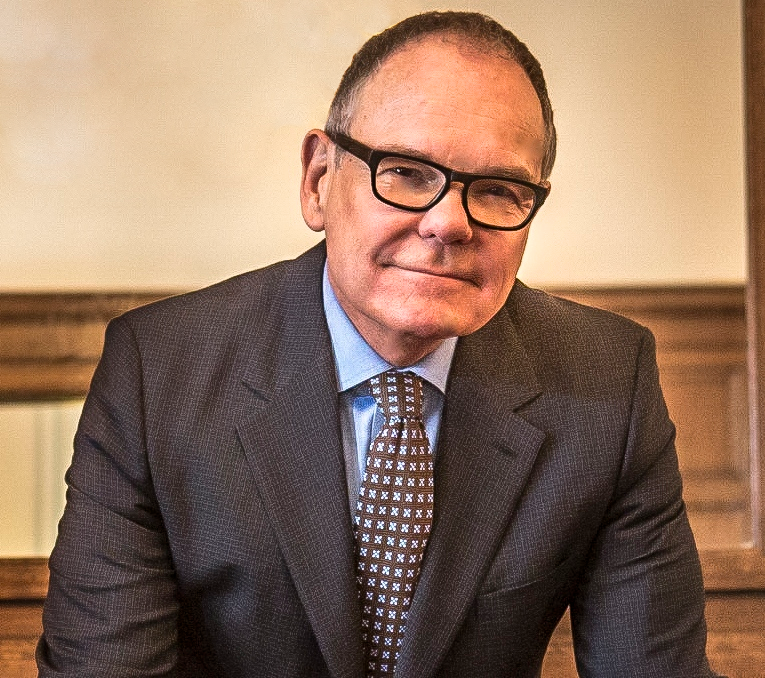 Don Tapscottnamed it in 1 interview“"These intermediaries do an okay job", Alex states, "but with some pretty significant limitations." Alex walks us through the limitations these intermediaries face and how blockchain technology fixes these problems.” — Don and Alex Tapscott | Leading a Revolution in Blockchain (AQ's Blog & Grill, 2016)
 Guy Kawasakinamed it in 1 interview“In the book Guy explains how Enchantment comes about and shows us in very practical ways how to achieve it by thinking more about yourself, how we develop relationships with those around us and how we use various technology tools to tackle big problems.” — Enchantment: Interview with Guy Kawasaki (Punk CX: Customer Experience Insights with Adrian Swinscoe, 2020)
LS
Larry Swedroenamed it in 1 interview“Do ARK’s current problems tell us anything about the state of the global equity markets?” — Ep 31: Larry Swedroe on Cathie Wood's stricken ARK fund (The Evidence-Based Investor, 2023)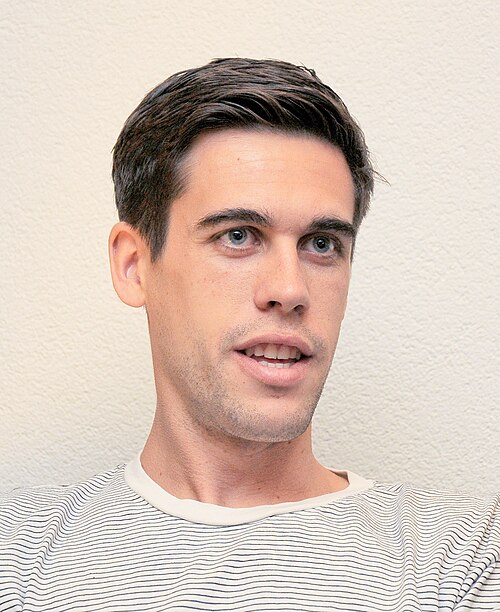 Ryan Holidaynamed it in 1 article
 Safi Bahcallnamed it in 1 interview“In this episode, Safi Bahcall goes behind the mindsets required to see the world a little differently, explores why a focus on collaboration might counterintuitively hold us back from innovating in some situations and why thinking like a physicist just might offer a path to solving some of the world's biggest problems.” — Why Collaboration Is Overrated with Safi Bahcall (#4) (The Non-Obvious Show, 2021)
 Adam Gazzaleynamed it in 1 interview“Rosen, and he’s a scientist who enjoys seeing his work solve real-world problems.” — Episode 20: Adam Gazzaley on the Distracted Mind During a Crisis (Distributed, with Matt Mullenweg, 2020)
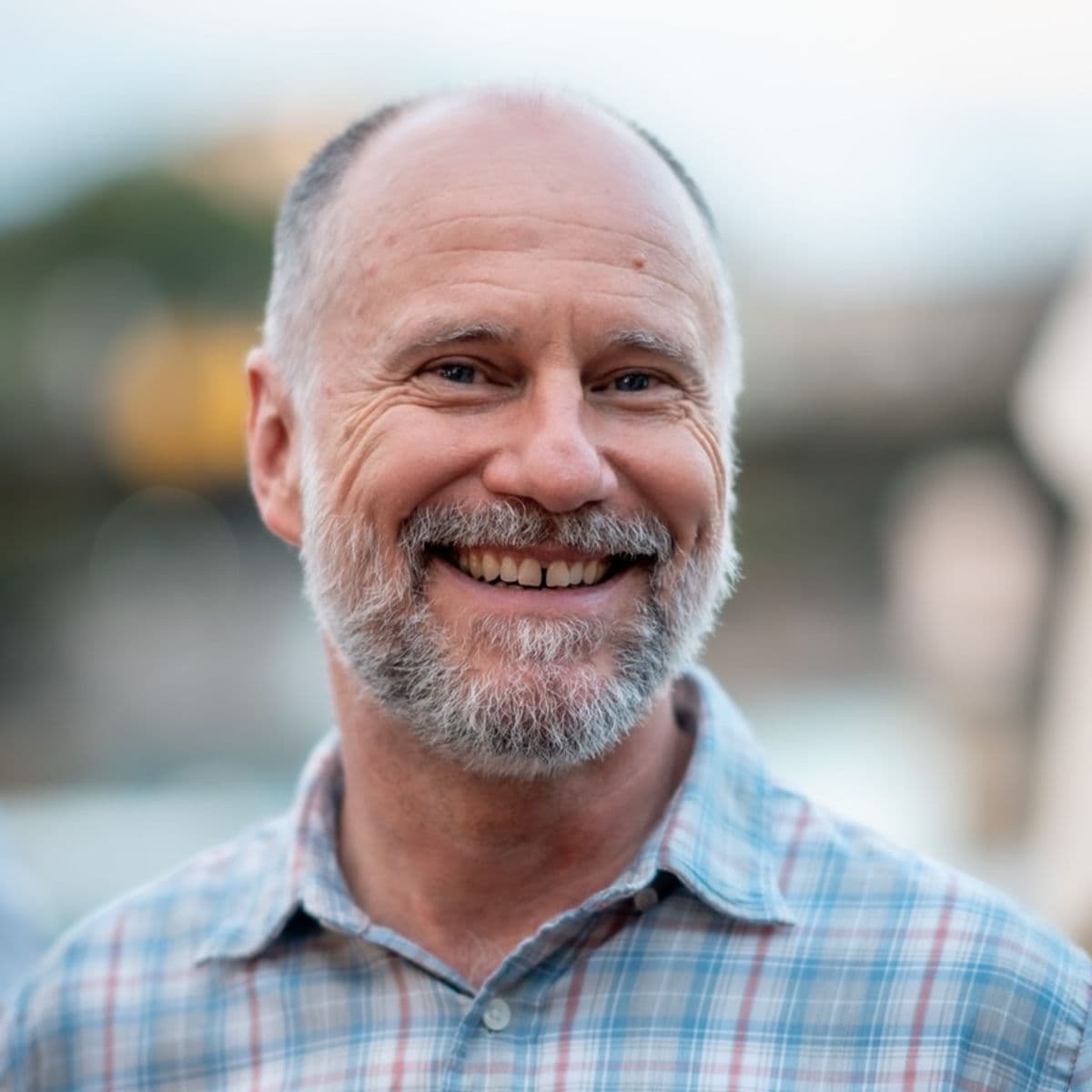 Albert Wengernamed it in 1 interview“First up is the Union Square Ventures partner Albert Wenger , author of The World After Capital , who - in spite of all the problems of the last two decades - remains defiantly optimistic about the future.” — Episode 2306: Albert Wenger on how to save the Internet, Capitalism and the Planet (Keen On America, 2025)
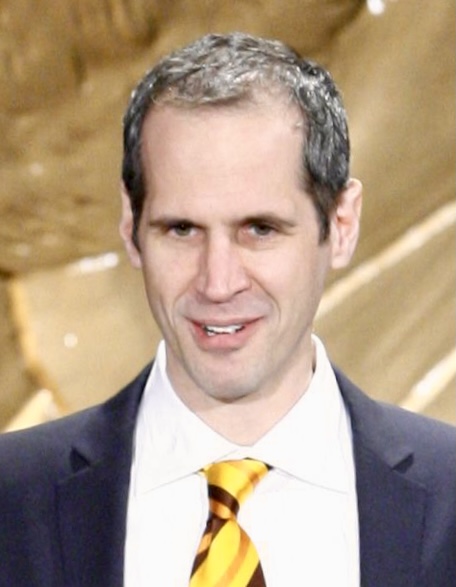 Alex Blumbergnamed it in 1 interview“Best known as the founder of Gimlet Media and co-creator of Planet Money , Blumberg’s second venture focuses on solving one of the most overlooked problems in climate: the misaligned incentives inside buildings.” — Alex Blumberg on Turning Buildings into Grid Assets with DaisyChain Energy (Inevitable, 2026)
 Alex Rampellnamed it in 1 interview“money tradeoff 21:00 – Reviews, shill content, and trust problems 23:50 – Hosted checkout: could ChatGPT become a marketplace?” — AI Shopping Agents & the Future of Commerce | Alex Rampell, Andreessen Horowitz (Retailgentic | Consumer Behavior & Retail Trend, 2025)
AM
Alexey Moiseenkovnamed it in 1 articleAW
Andrew Wilkinsonnamed it in 1 interview“What he found, though, was that the same problems which pervade life in the lower economic classes are still there in the upper crust.” — From Barista to Billionaire (Mo Money Same Problems) (Beginning Balance, 2024) Anne Wojcickinamed it in 1 interview“After Yale (biology and a year of hockey) and a Wall Street career that exposed ethical problems in healthcare, Wojcicki drew inspiration from HIV patient advocates to build a platform for people to advocate for themselves.” — Breaking the Code: Anne Wojcicki on Genetics, Reinvention, and Rewriting Consumer Health (Breaking Precedent, 2026)
 Bertalan Meskónamed it in 1 interview“And while there's a lot to be excited about when it comes to emerging health technologies, those innovations alone won't solve our problems.” — Health Care Innovations: The Futurists' Guide (The Future Age, 2024)
 Bill Trenchardnamed it in 1 interview“After working with Bill Trenchard from First Round Capital on a California task force to connect startups with the government to help in the COVID-19 crisis, Josh realized that he wanted to do something more to help with these huge societal problems.” — Ep. 137: Josh Felser, Angel investor and Co-Founder of Freestyle VC (Inevitable, 2020)
 Brett Adcocknamed it in 1 interview“We also cover Brett's decision to part ways with OpenAI, the challenges of building physical intelligence, and what it takes to solve one of the hardest problems in engineering.” — Brett Adcock, CEO of Figure (Sourcery, 2026)
 Brian Armstrongnamed it in 1 interview“Crypto is facing two distinct, yet related problems.” — Coinbase CEO Brian Armstrong on the Two Big Challenges Facing Crypto | Odd Lots (Odd Lots, 2023)
 Chamath Palihapitiyanamed it in 1 interview“My guest today is Chamath Palihapitiya, the founder and CEO of Social Capital, whose mission is to advance humanity by solving the world's hardest problems.” — Chamath Palihapitiya – The Major Problems Facing the World (Invest Like the Best with Patrick O'Shaughnessy, 2021)
 Cynthia Johnsonnamed it in 1 interview“Hear how to build your personal brand, why the internet is the evolution of your resume, how to solve complex problems with your clients, the genius of the two-liter bottle, and why she wanted to grow up to be Judge Judy.” — Cynthia Johnson - Personal Branding Expert, Co-Founder of Bell + Ivy (Wild Business Growth, 2019)
 Daisy Wolfnamed it in 1 interview“She emphasized the vast opportunities within the healthcare industry for startups to address real problems and make a meaningful impact.” — Investing in Healthcare, with Daisy Wolf (Healthy Savings, by milu, 2024)
 Daniel Eknamed it in 1 interview“Daniel Ek, founder of digital music service, Spotify, is driven by a desire to solve interesting problems.” — Daniel Ek: A Playlist for Entrepreneurs [Entire Talk] (Entrepreneurial Thought Leaders (ETL), 2012)
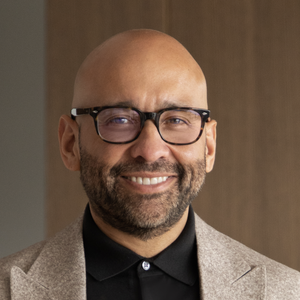 David Cancelnamed it in 1 interview“But what they did have, was an obsession to solve problems for their customer.” — David Cancel - CEO at Drift - 0-150K Customers: The Drift Playbook for Hypergrowth (The Growth Hub Podcast, 2019)
 David Habernamed it in 1 interview“In this episode, recorded live at New York Tech Week, a16z General Partner David Haber speaks with Trey Holterman (Tennr) and Christophe Rimann (Camber), two founders tackling the core infrastructure problems slowing healthcare down - from broken referral handoffs to denied insurance claims.” — How Startups are Fixing Healthcare Friction (a16z Live, 2025)
 Delian Asparouhovnamed it in 1 interview“Driven by intellectual curiosity and an appetite for hard problems, he’s helping shape the future of both industry and exploration.” — Delian Asparouhov | Trailblazers Episode 28! (Trailblazers by Erica Wenger, 2026)
 Drew Houstonnamed it in 1 interview“Houston touches on the importance of persevering through early challenges at a startup, selecting the right co-founder, and focusing on solving problems to maximize customer happiness.” — Drew Houston: Finding Your Way as an Entrepreneur [Entire Talk] (Entrepreneurial Thought Leaders (ETL), 2012)
EH
Emily Holdmannamed it in 1 interview“We discuss how Emily evaluates businesses, creatively solves problems in deal-making, and balances risk and opportunity while thriving in a non-founder role.” — 97 - You DON'T Need to Be a FOUNDER to Be SUCCESSFUL (Here's Proof!) with Emily Holdman (Nikonomics - The Economics of Small Business, 2024)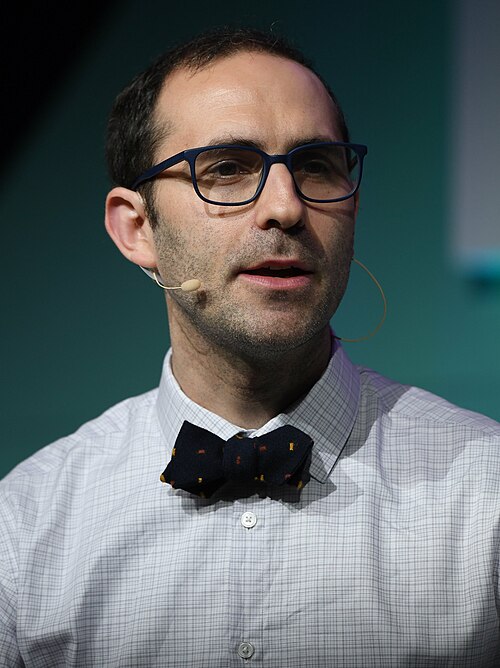 Emmett Shearnamed it in 1 interview“We talk about agency, meta learning, deliberate practice, coordination problems, parasocial relationships, positive sum games, and more.” — #033 - Emmett Shear on Practice, Agency, Coordination, & Positive Sum Games (Audience of One, 2023)
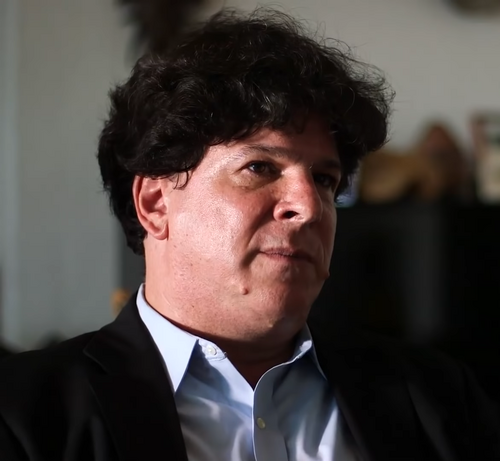 Eric Weinsteinnamed it in 1 interview“Dave Rubin of "The Rubin Report" talks with Ben Shapiro, Jordan Peterson, and Eric Weinstein about the origins of the Intellectual Dark Web; why free speech, open debate, and civil disagreement became the foundation of their conversations; how challenging the strongest version of opposing arguments leads to better thinking; why identity politics and ideological tribalism undermine meaningful discourse; the importance of intellectual humility, curiosity, and changing your mind; self-improvement versus systemic problems; entrepreneurship, individual responsibility, and institutional failure; the future of political conversation; and much more.” — The Conversation That Changed Everything: Ben Shapiro, Jordan Peterson, Eric Weinstein & Dave Rubin (The Rubin Report, 2026)
FB
Frank Blakenamed it in 1 interview“We discuss his hyper focus on solving their customer’s problems before their own, investing time into the employee experience, and his intentionality with how he is perceived as a leader.” — Frank Blake - Leading By Example (Invest Like the Best with Patrick O'Shaughnessy, 2024)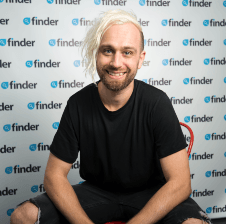 Fred Schebestanamed it in 1 interview“Advances in technology have the potential to disrupt traditional systems and drive progress, and by embracing this power, individuals and communities can challenge the norms and create innovative solutions to the world’s most pressing problems.” — Changing the World Through Innovation | Fred Schebesta (The CG Show, 2023)
 Garry Tannamed it in 1 interview“Garry and I dove deep into why vertical SaaS and AI-native startups are poised to drive the next wave of innovation, how lean, AI-augmented teams are rewriting the rules of company building, and why real traction still comes down to solving tangible user problems.” — Garry Tan of Y Combinator: How Innovation Is Changing (Innovation with Mark Peter Davis, 2025)
 Guido Appenzellernamed it in 1 interview“Drawing on his experience designing Intel's 386 and 486 processors, Pat explains how AI could transform chip design, but also why faster design alone won't solve the industry's biggest problems.” — Chips, Memory, and Power | Pat Gelsinger (The a16z Show, 2026)
 Jack Dorseynamed it in 1 interview“Dorsey addresses several problems, including the proliferation of harassment and hate speech on the site.” — Jack Dorsey speaks: CNN's full interview with Twitter's CEO (Reliable Sources, 2018)
 Jamie Dimonnamed it in 1 interview“It’s a masterclass in dealing with problems by preparing for them ahead of time.” — #15: Part 2: Jamie Dimon, JP Morgan Chase Chairman & CEO—Always Have a Plan to Deal With Problems (How Leaders Lead with David Novak, 2020)
 Jeff Atwoodnamed it in 1 interview“Great discussions about adventures in RAID controllers and NIC drivers and how FireBug can diagnose your network problems.” — Jeff Atwood Has A Server Fault! (RunAs Radio, 2009)
 Jennifer Linamed it in 1 interview“a16z’s Erik Torenberg, Ben Horowitz, and Jennifer Li sit down with Vals founder and CEO Rayan Krishnan to discuss one of AI’s increasingly difficult problems: how do you actually measure whether a model is getting better?” — Who Grades the AI Models? | Ben Horowitz & Rayan Krishnan (The a16z Show, 2026)
 Jerry Colonnanamed it in 1 interview“Our guest is career coach Jerry Colonna, author of "Reboot: Leadership and the Art of Growing Up." He argues that a lot of the adult problems we face can spring from fundamental childhood experiences.” — Managing Career Transitions Part 1: Facing Childhood Demons (The Anxious Achiever, 2019)
JK
Jim Kwiknamed it in 1 interview“Why NOBODY is born a genius—and how anybody can become one How limiting beliefs are holding you back in more ways than you think—and exactly how to change that The biggest myths about our brains What exactly your brain animal is & how to use it to your advantage The importance of play for brain health & how exactly to bring more play into your life How to raise your kids to maximize their intelligence Why reading, meditation, and learning new skills feel so hard (and how to make them feel way easier) The secret formula for finding WAY more motivation Simple tricks for improving your focus & memory A genius new approach to solving even the hardest problems How to optimize your calendar to be more productive A morning routine for optimum brain health and so much more!” — Optimizing Brain Health To Maximize Intelligence, Focus, & Memory with Jim Kwik (The Liz Moody Podcast, 2023) Joel de la Garzanamed it in 1 interview“They also explore whether AI could help defenders patch vulnerabilities as quickly as they're discovered, and why new AI threats don't make the old security problems go away.” — Microsoft's Deputy CISO on Securing AI Agents (The a16z Show, 2026)
JZ
John Zeratskynamed it in 1 interview“Tune in to learn how focusing on the right problems, understanding your customers, and differentiating from competitors are critical steps to building something that truly 'clicks.'” — 90% of Startups Fail But This Fixes It | John Zeratsky (Author of Make Time, Sprint, Click) (Making Things Click with John Zeratsky, 2025) Julie Yoonamed it in 1 interview“In this conversation with a16z's Julie Yoo, the CVS Senior VP explains why 50% of Americans can't afford a healthcare emergency, how CVS is becoming a platform to solve structural healthcare problems, and why the future depends on consumers finally controlling their own health data.” — CVS Health: Building Healthcare’s Consumer Platform (Raising Health, 2025)
KC
Kim-Mai Cutlernamed it in 1 interview“Kim-Mai has spent most of her life around Silicon Valley and knows from her experiences and studies just what the problems tech faces and its impact on California and the world as a whole.” — Kim-Mai Cutler on the growth of venture capital and supporting great ideas (Technori Podcast, 2021) Konstantine Buhlernamed it in 1 interview“He emphasizes the importance of focusing on real customer needs and using AI as a tool to solve significant problems and discusses Sequoia Capital's pre-seed and seed program, Arc, which leverages decades of experience to help startups with market approach, hiring, scaling, and more.” — How AI Has Generated Trillions in Value Long Before ChatGPT and the Future of AI, with Konstantine Buhler, Partner at Sequoia Capital (The Next Great Thing, 2024)
 Laura Demingnamed it in 1 interview“Together, they also discuss why ice is the enemy of tissue, using engineering tools to help solve biological problems, and how this technology may revolutionize organ transplantation by removing time as a variable.” — Why Cryopreservation is No Longer Science Fiction with Until Co-founder and CEO Laura Deming (No Priors: Artificial Intelligence | Technology | Startups, 2026)
 Luis von Ahnnamed it in 1 interview“In 2000, Luis von Ahn was starting his PhD in computer science when he attended a talk and happened to learn about one of Yahoo's biggest problems: automated bots were signing up for millions of free Yahoo email accounts, and generating tons of spam.” — reCAPTCHA and Duolingo: Luis von Ahn (2020) (How I Built This with Guy Raz, 2023)
MH
Mamoon Hamidnamed it in 1 interview“He still loved the problems he had been trying to solve, and launched Rippling because “there was an opportunity there, [and] if it works ...” — #162 CEO & Co-Founder Rippling, Parker Conrad w/ Mamoon Hamid: Compounding (Grit, 2023) Manav Gargnamed it in 1 interview“Across this episode, we unpack: Why Emergent, Composio and a handful of Indian AI infra companies are real global contenders How AI BPO, AI-native services, and India-first B2C AI products could define the next decade Where mid-market and enterprise India should actually start with AI (beyond buzzwords) The founder traits that matter in the AI era – hard problems, deep tech, distribution, and “Olympic champion” stamina How Manav’s early grounding in the Gita, philosophy and physics shaped his first-principles lens for building and backing companies How to think about markets when you’re committing the next 10+ years of your life as a founder If you’re an aspiring AI founder, operator, or investor trying to understand where India truly stands – and where the real opportunities are – this is a dense, candid playbook.” — E236 - Inside India’s Secret AI Boom | Manav Garg, Together Fund (Indian Silicon Valley with Jivraj Singh Sachar, 2025)
 Maria Popovanamed it in 1 interview“In this in-depth conversation, we cover just about everything: how it happened, her workflow, how she writes (and workarounds to problems), how her site generates revenue, her workouts, and many more details.” — #460: Maria Popova on Writing, Workflow, and Workarounds (Repost) (The Tim Ferriss Show, 2020)
 Melanie Perkinsnamed it in 1 interview“late-stage problems: “The mistakes or the learnings are constant.” — Episode 4: Melanie Perkins, co-founder and CEO of Canva, and Rachel Carlson, co-founder and CEO of Guild Education (This Is Series A, 2020)
 Muna AbuSulaymannamed it in 1 interview“She has also launched, managed, and scaled multiple businesses and is running a consultancy that focuses on solving problems in education, gender issues, media, and entrepreneurship.” — EP 117: Muna AbuSulayman, Saudi Arabian Entrepreneur and Media Icon (Disruptive CEO Nation, 2021)
 Nat Eliasonnamed it in 1 interview“18] Productivity is sold as the silver bullet to all our modern problems.” — Is productivity a waste of time? [Nat Eliason] (The Examined Life, 2023)
PM
Packy McCormicknamed it in 1 interview“Over the past four years, Packy has built Not Boring into one of the most trusted, hilarious, and unique publications covering the bleeding edge of deep tech startups working to solve hard but important problems.” — Technology, Optimism, and Embracing Bold Ideas with Packy McCormick (Good Work with Barrett Brooks, 2024) Palmer Luckeynamed it in 1 interview“We also talked about John Carmack, Elon Musk, dealing with haters, working on hard problems and what drives incredibly productive people and his advice for founders.” — Palmer Luckey on Elon Musk and John Carmack, selling Oculus for $2B and starting defense tech company Anduril (The Aarthi and Sriram Show, 2022)
 Patrick Collisonnamed it in 1 interview“(00:45:17) Solutions to these problems (01:01:03) Over- and underrated (01:07:37) Other creative endeavors (01:11:05) Audience comments This is a public episode.” — Metascience 101 - EP2: “Is Science Slowing Down?” (The Macroscience Podcast, 2024)
 Ramit Sethinamed it in 1 interview“Ramit Sethi, New York Times Best Selling author of “I Will Teach You To Be Rich,” joins the show to discuss the most common money problems people face.” — How to Build a Rich Life — ft. Ramit Sethi | Prof G Markets (Prof G Markets, 2024)
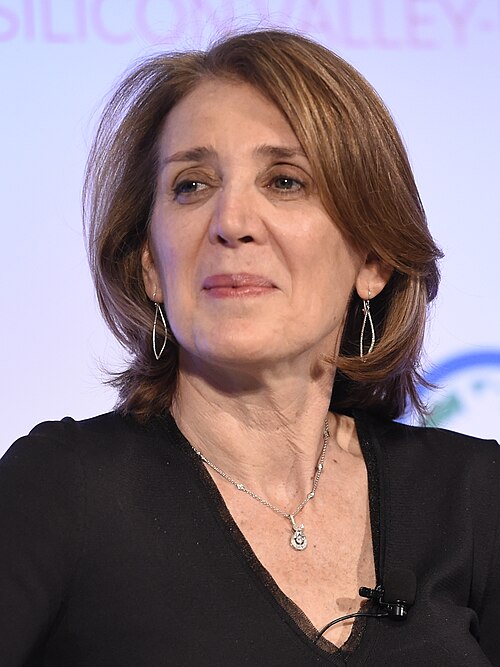 Ruth Poratnamed it in 1 interview“Ruth Porat - President and Chief Investment Officer of Google and Alphabet - discusses the social responsibilities that come with technological advancement and how AI must be used to tackle society’s most intractable problems.” — Bonus: Ruth Porat - “If We Can, We Must.” (Ruthie's Table 4, 2026)
RH
Ryan Hoovernamed it in 1 article Ryan Orbuchnamed it in 1 interview“But years of reporting have revealed major problems in the industry, from worthless credits to outright fraud .” — Fixing the messy voluntary carbon market (Catalyst with Shayle Kann, 2024)
 Saam Motamedinamed it in 1 interview“Saam elaborates that he is focused less on the theoretical applications of these tools and more on how they are used to solve problems for customers.” — Episode 129 - Seeing the Value in Everything with Saam Motamedi (Hacker Valley Studio, 2021)
 Samir Kaulnamed it in 1 interview“The firm is known for investing in companies that are solving very large and complex problems.” — Khosla Venture's Samir Kaul on building an iconic, durable firm, and the role of non-consensus decision making (Venture Unlocked: The playbook for venture capital managers, 2024)
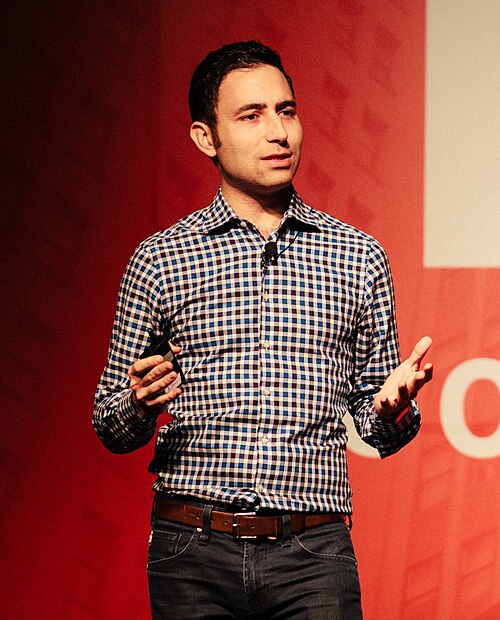 Scott Belskynamed it in 1 interview“Find out why Scott believes the intersection of design, technology & business converges on some of the most important problems worth solving today.” — Scott Belsky, Building Adobe & the Future of Design (Minus One, 2025)
 Scott Nolannamed it in 1 interview“Scott Nolan spent 12 years at Founders Fund looking for the most important problems that no one else was funding.” — Scott Nolan - SpaceX, Founders Fund, and Rebuilding American Uranium Enrichment (Invest Like the Best with Patrick O'Shaughnessy, 2026)
SE
Sean Ellisnamed it in 1 interview“AI Accelerates Growth but Doesn't Replace Fundamentals: While AI tools streamline processes, the foundational elements—solving real problems and aligning with customer needs—remain paramount.” — Sean Ellis on the Evolution of Growth, PMF, and Testing in the AI Era (The Long Game, 2025)SB
Sophie Bakalarnamed it in 1 interview“today on read receipt i’m talking with sophie bakalar from fable, the design-forward gear company that solves problems for you and your furry pals.” — sophie bakalar & fable (Read Receipt, 2021) Susan J. Fowlernamed it in 1 interview“They discuss why self leadership matters at every level, how people can challenge assumed constraints, and what happens when individuals bring solutions instead of just problems.” — What Self Leadership Looks Like Today with Susan Fowler and Lucy Dannewitz (Blanchard LeaderChat, 2026)
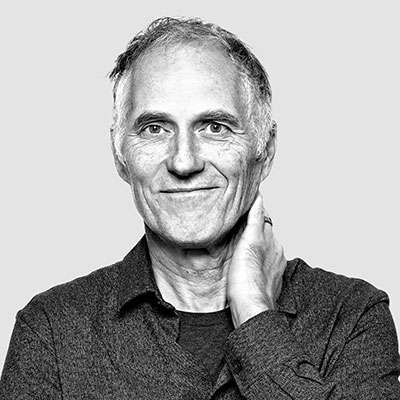 Tim O’Reillynamed it in 1 interview“From rethinking workflows and experiences to the valuable role of idealism in business, O'Reilly makes the case for entrepreneurs to work on the hard problems that matter.” — Tim O'Reilly: Create More Value Than You Capture [Entire Talk] (Entrepreneurial Thought Leaders (ETL), 2013)
 Tobi Lütkenamed it in 1 interview“Since his early days running an online snowboard shop from his carport, Tobi has envisioned himself as fundamentally a craftsman first and a business exec second, a mindset that he has used to solve a wide variety of problems over the course of his career.” — Tobi Lütke: CEO and Founder, Shopify (Behind The Tech with Kevin Scott, 2023)
 Tom Bilyeunamed it in 1 interview“Learn tools that therapists, trauma coaches, mindset leaders, neuroscientists, and researchers use to help people heal and recover from mental health problems.” — Steps to Transform Your Life | with Tom Bilyeu (Unbroken Business Support Podcast With Michael Anthony, 2024)
 Trae Stephensnamed it in 1 interview“Previously, Trae was an early employee at Palantir Technologies, where he led teams focused on growth in the intelligence and defense sector as well as international expansion, helping large organizations solve their hardest data analysis problems.” — #245 Trae Stephens - Inside Anduril’s AI Superweapons: Eagle Eye Helmet and Autonomous Tech (The Shawn Ryan Show, 2025)
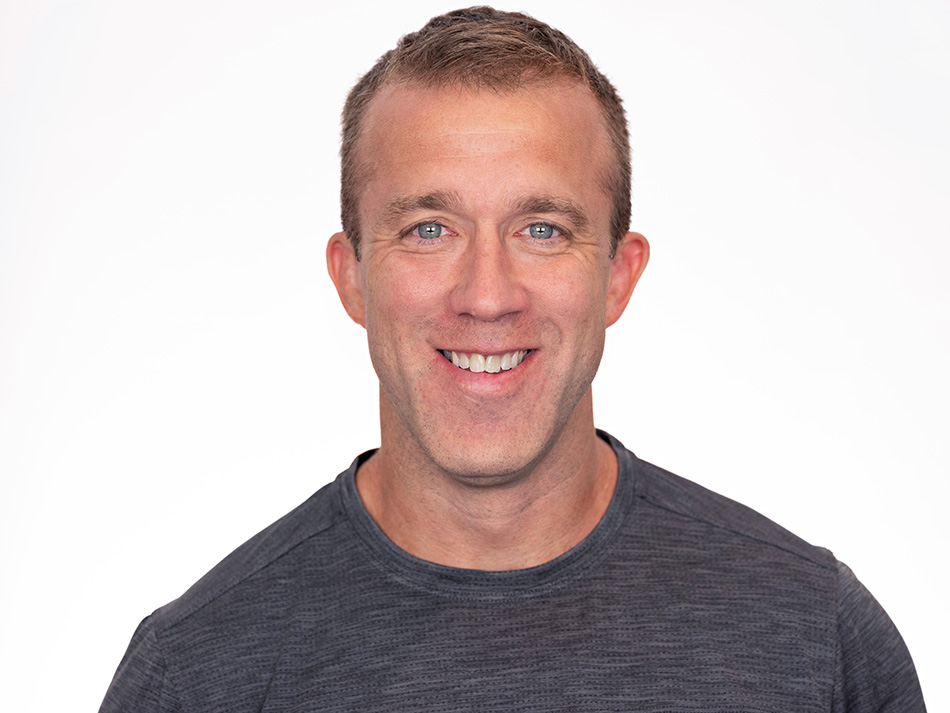 Tucker Maxnamed it in 1 interview“"Being an entrepreneur is solving people's problems" Hosted on Acast.” — 112: How to Position Yourself As Global Bestselling Author with Tucker Max (As Told By Nomads, 2015)
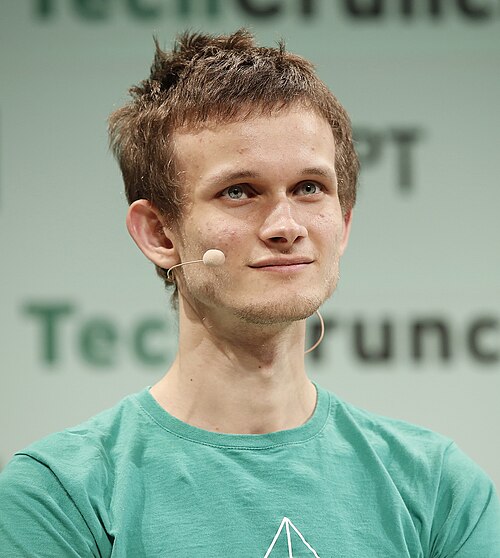 Vitalik Buterinnamed it in 1 interview“Topics covered in this episode: How has the past year been for Vitalik and Ethereum The state of crypto today What interesting experiments are in crypto now defining membership Has Ethereum gone too far into financial applications Vitalik's views on using rollups on non-DeFi applications What are the biggest problems of the world today?” — Vitalik Buterin: Ethereum - Can It Go Beyond DeFi? (Epicenter - Learn about Crypto, Blockchain, Ethereum, Bitcoin and Distributed Technologies, 2021)
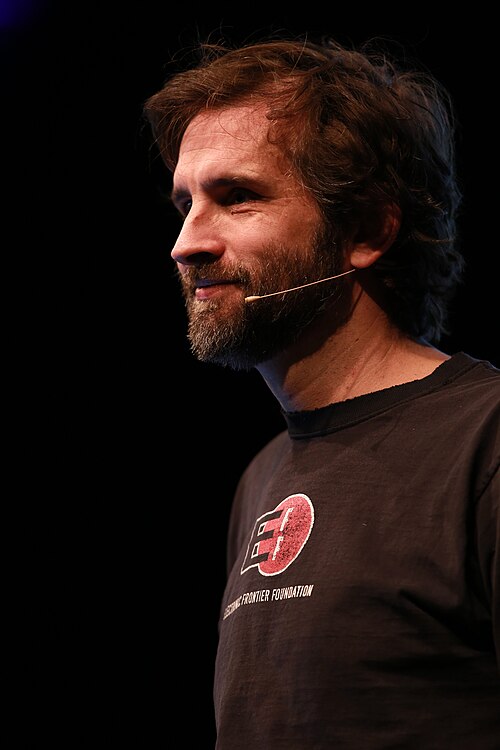 Zooko Wilcoxnamed it in 1 interview“Blockchain is going to solve all our problems.” — 63 - 4/16 - Zooko Wilcox, Founder of Zcash (Colorado = Security Podcast, 2018)
| Lowercarbon Capital’s Chris Sacca and Caie Kelley - investing in the powerhouses driving the new energy economy | Caie Kelley | Alt Goes Mainstream: The Latest on Alternative Investments, WealthTech, & Private Markets | 2026-10-29 | Welcome back to the Alt Goes Mainstream podcast. One of the best-performing venture investors in history is back in the saddle. And this time, he’s bringing the stampede to invest in some of the most consequential companies of our time. For Chris Sacca , the seeds of investing in energy were sown 23 years ago when he was building data centers for Google. His investing career went into full bloom with Lowercase Capital, the venture firm he founded in 2010 with $8.4M in capital. Thanks to early investments in Uber, Twitter, Stripe, Instagram, Blue Bottle Coffee, Docker, Optimizely, and others, Lowercase’s first fund returned over 204x DPI and around 250x MOIC. For his second act, he is going bigger to solve massive problems that require real solutions across energy, power, water, AI, transmission, and nuclear fusion. He and his wife, Crystal, co-founded Lowercarbon Capital (and are the firm’s largest LPs) to invest in companies that own every part of the electrical stack, from sunlight to socket. Chris and Crystal have built out a stellar team to match the opportunity in front of them by bringing together the requisite ingredients to be an expert and differentiated investor in energy, advanced manufacturing, nuclear fusion, and transmission. General Partner Clay Dumas was previously Chief of Staff in the White House Office of Digital Strategy. The firm’s most recent General Partner to join the ranks is Caie Kelley , who leads the firm’s Growth investing efforts. | |
| Mark Cuban: Insurance Companies Are Not Your Friend | Mark Cuban | Breaking Bread with Tom Papa | 2026-10-27 | 1:23 | Mark Cuban joins Tom Papa to reveal what really happens after a Shark Tank deal, explain why AI will transform work, and break down the problems hidden inside America’s healthcare system. They also talk about Cost Plus Drugs, family, wealth, Indiana football, and the airline pass that once let Mark Cuban fly almost anywhere. Check out Cost Plus Drugs at costplusdrugs.com , check out the Mark Cuban Foundation AI Bootcamp at markcubanai.org Our thanks to Helix! Go to helixsleep.com/PAPA for 20% off sitewide. See Privacy Policy at https://art19.com/privacy and California Privacy Notice at https://art19.com/privacy#do-not-sell-my-info . |
| Why you need to fail at work with Astro Teller | Astro Teller | Worklife with Molly Graham | 2026-10-27 | 47 min | When you’re tasked with a big project at work, your first instinct is probably to put your head down, be as productive as possible, and nail it on the first try. But while this approach is often rewarded, it can get in the way of real creativity and innovation. Astro Teller is the head of the X team at Alphabet, a company that creates radical technologies to help solve some of the world’s largest problems. His official title is Captain of Moonshots, and he frequently leads a “bad ideas brainstorm” session to produce radical innovation in his team. In this episode, Molly attends one of these sessions and sits down with Astro to learn more about his “innovation machine” at X’s Moonshot Factory. Astro emphasizes the importance of taking real risks and celebrating failure, and shares 5 principles any organization can use to help drive innovation. He also points out things around X’s office that encourage creativity, and explains why employees there have to break a simple rule to get into the building. Connect with the team Follow Molly on Instagram , LinkedIn , and at glueclub.com/ Subscribe to Molly’s Substack Lesson Watch WorkLife videos on YouTube at TEDPods Follow TED on X , Instagram , Facebook , LinkedIn , and TikTok For the full text transcript, visit https://www.ted.com/podcasts/worklife-transcripts Hosted on Acast. See acast.com/privacy for more information. |
| How Elon Musk Thinks: The Principles Behind His Success | Eric Jorgenson | Eric Jorgenson | Sonia and Simon | 2026-10-25 | 56 min | What makes Elon Musk capable of building companies that attempt what others consider impossible? Eric Jorgenson, author of The Book of Elon and The Almanack of Naval Ravikant, has spent years distilling the ideas, philosophies and mental models of some of the world's most influential thinkers. Eric breaks down the principles behind Elon Musk's approach to success from thinking from first principles and questioning conventional wisdom to building exceptional teams, executing relentlessly and pursuing a mission bigger than yourself. But extraordinary success comes with uncomfortable trade-offs. Eric explores why achieving something meaningful can require upsetting people, challenging the status quo and accepting that you won't always be liked. We Discuss: The principles behind Elon Musk's success Why first-principles thinking changes how you solve problems Why execution matters more than having a great idea The role of obsession, urgency and extreme commitment Why pursuing a meaningful mission sometimes means upsetting people Elon Musk vs Naval Ravikant: wealth, freedom and ambition What exceptional founders understand that others miss How AI could transform work, wealth and the future of humanity Eric's central message is that if you believe something important needs to exist, you can't wait for everyone else to agree with you. Sometimes, you have to build it yourself. |
| AI Can Write the Code. Can It Run the System? | Grepr CEO Jad Naous | Martin Casado | The a16z Show | 2026-10-16 | a16z General Partner Martin Casado sits down with Grepr CEO Jad Naous to ask what comes after AI learns to write code: can it also debug and operate the systems that code creates? Jad shares how AI has transformed engineering inside his 10-person team, cutting some projects from six months to just 10 days. But operating production systems is a harder challenge, with unpredictable workloads, failures, and countless possible states. They discuss whether AI can learn to diagnose problems, test hypotheses, and debug systems like a human engineer. They also explore AI SREs, security, query optimization, and why the best engineers may be gaining the most leverage from coding agents. Resources: Follow Jad Naous on X: https://x.com/jadtnaous Follow Martin Casado on X: https://x.com/martin_casado Learn more about Grepr: https://www.grepr.ai/ Stay Updated: Find a16z on YouTube: YouTube Find a16z on X Find a16z on LinkedIn Listen to the a16z Show on Spotify Listen to the a16z Show on Apple Podcasts Follow our host: https://twitter.com/eriktorenberg Please note that the content here is for informational purposes only; should NOT be taken as legal, business, tax, or investment advice or be used to evaluate any investment or security; and is not directed at any investors or potential investors in any a16z fund. a16z and its affiliates may maintain investments in the companies discussed. For more details please see a16z.com/disclosures. Hosted by Simplecast, an AdsWizz company. | |
| Chips, Memory, and Power | Pat Gelsinger | Guido Appenzeller, Raghu Raghuram | The a16z Show | 2026-10-09 | a16z's Raghu Raghuram and Guido Appenzeller sit down with Playground Global General Partner and former Intel CEO Pat Gelsinger to discuss the next wave of semiconductor innovation and the physical constraints shaping the AI buildout. Drawing on his experience designing Intel's 386 and 486 processors, Pat explains how AI could transform chip design, but also why faster design alone won't solve the industry's biggest problems. They examine the bottlenecks in manufacturing, memory bandwidth, advanced packaging, and power, and why today's explosion of specialized AI chips may eventually consolidate around a smaller number of architectures. They also discuss the potential for new memory technologies, the shift from copper to optical networking, and why energy capacity could become a major constraint on AI growth. Finally, they revisit Pat's VMware years to ask what virtualization might look like when infrastructure is built for agents rather than humans. | |
| Astro Teller: Inside Google X's 2,000-Idea Moonshot Factory & How Google Brain Made the T in ChatGPT | Astro Teller | Moonshots with Peter Diamandis | 2026-10-05 | 40 min | The mates sit down with Astro Teller, Captain of Moonshots at X, at MOONSHOTS Live 2026 to discuss how moonshots are built, why ambitious innovation is getting cheaper, and how X turns thousands of ideas into breakthrough technologies. This episode was filmed at Moonshots Live 2026. Learn more at https://moonshots.com/ Get access to metatrends 10+ years before anyone else - https://qr.diamandis.com/metatrends Peter H. Diamandis, MD, is the Founder of XPRIZE, Singularity University, ZeroG, and A360 Salim Ismail is the founder of Open ExO, a GP at Exponential Venture Capital/The Organizational Singularity Fund and a sought after global speaker and thought leader. Dave Blundin is the founder & GP of Link Ventures Dr. Alexander Wissner-Gross is a computer scientist and founder of Reified Astro Teller is the co-founder and Captain of Moonshots at X, Alphabet’s innovation lab, where he leads the development of ambitious technologies aimed at solving some of the world’s biggest problems. |
| Caie Kelley | Lowercarbon Capital | Caie Kelley | Fun Raising | 2026-09-29 | Caie's path is late-stage finance into hardware growth. Econ undergrad, JP Morgan tech investment banking in the DTC-goes-public era (including WeWork), then private equity, then a move west when talent started clustering around hard tech builders. A couple of years concentrating on companies ready to commercialize and scale manufacturing, then Lowercarbon Capital for the last few years on the same beat: Series B and C checks, typically $10 to $30 million, one step past team-and-dream and one step earlier than mega growth funds, right as commercial proof points and unit economics start to change. Favorite part of the job is learning from founders tackling problems that feel like a calling. Least favorite is ripping a BOM or techno-economic analysis after the gut already said yes. The integrity line is you cannot fake science. The tactical spine is authenticity over narrative noise. By the time a theme is loud on Twitter or LinkedIn, many investors already underwrote it 12 to 24 months earlier. Pitch the story that is true to you for a ten-year partnership, not the consensus slot of the week. Growth is also a different process map: more nebulous definitions of "growth," less regular 12 to 24 month cadence, and a readiness test of whether you can say if I put $10 million in I know how to push that into $100 million of sales. Growth investors try to know founders before a formal raise and watch for that inflection. Signal matters. | |
| Rapid Response: Stop creating businesses. Buy one instead, with Codie Sanchez | Codie Sanchez | Masters of Scale | 2026-09-26 | 33 min | Own or be owned. That's Codie Sanchez's ultimatum for anyone serious about their financial future. The founder of Contrarian Thinking and author of the new book Own or Be Owned returns to Rapid Response to make her most impassioned case yet for why buying a small business is the most reliable path to wealth that most people are too scared to take. She breaks down what "cowboying" your business is costing you, and why AI isn’t a shortcut for everyone, but instead an accelerator for what's already inside you. Plus, the industries she'd invest in right now, and why most small business owners are solving the wrong problems. Visit the Rapid Response website here: https://www.rapidresponseshow.com/ See Privacy Policy at https://art19.com/privacy and California Privacy Notice at https://art19.com/privacy#do-not-sell-my-info . |
| Breaking the Code: Anne Wojcicki on Genetics, Reinvention, and Rewriting Consumer Health | Anne Wojcicki | Breaking Precedent | 2026-09-10 | 55 min | What did Anne Wojcicki see in healthcare that made her leave Wall Street and risk challenging an entire industry to put power back in patients’ hands? Welcome to the brand new season of Breaking Precedent where Leah Solivan interviews 23andMe founder Anne Wojcicki about breaking medical “gatekeeping” by giving consumers direct access to their genetic information and using that data to drive research and prevention. Solivan shares learning she did not carry BRCA2 while pregnant, and Wojcicki recounts motivations shaped by her mother’s fierce self-advocacy, a Stanford community of inquiry, and an immigrant family history that emphasized purpose over materialism. After Yale (biology and a year of hockey) and a Wall Street career that exposed ethical problems in healthcare, Wojcicki drew inspiration from HIV patient advocates to build a platform for people to advocate for themselves. She describes co-founding 23andMe in 2006 with Linda Avey and Paul Cusenza, early public skepticism, the unexpected power of ancestry, medical resistance to broad genetic testing, and how COVID-era telehealth and AI enable new prevention tools. Wojcicki explains buying 23andMe back via a nonprofit to better align incentives, scale research access, and build a subscription product integrating genetics with medical records, self-report data, wearables, and updated insights for personalized risk prediction and guidance. |
| Who Grades the AI Models? | Ben Horowitz & Rayan Krishnan | Ben Horowitz, Jennifer Li | The a16z Show | 2026-09-09 | 40 min | a16z’s Erik Torenberg, Ben Horowitz, and Jennifer Li sit down with Vals founder and CEO Rayan Krishnan to discuss one of AI’s increasingly difficult problems: how do you actually measure whether a model is getting better? As public benchmarks saturate and models get better at optimizing for the tests themselves, Rayan makes the case for independent, continuously evolving evaluations. They unpack why self-reported model scores can be misleading, how VALS evaluates models in the hours before a release, and why measuring increasingly agentic systems means testing work that can unfold over hours, days, or even weeks. They also explore why evals are becoming critical for enterprises trying to understand the ROI of AI, what happens if token spend begins to rival employee salaries, and how evaluations could eventually provide a shared language for everything from model routing and recursive self-improvement to AI policy and international coordination. |
| OpenAI Researchers on the Future of Mathematical Reasoning | Lisha Li | The a16z Show | 2026-09-08 | a16z Infra Partner Lisha Li sits down with OpenAI mathematicians Mehtaab Sawhney and Mark Sellke to discuss how quickly AI’s mathematical capabilities are advancing, what recent results reveal about model reasoning, and what happens when AI begins making progress on problems mathematicians have struggled with for decades. Mehtaab and Mark unpack several recent results from OpenAI’s models, including advances in sphere packing and the construction of a non-sofic group. They explain why the surprising part isn’t simply that models can search more possibilities or work longer than humans: in many cases, the reasoning traces look remarkably similar to the work of an expert mathematician, including choosing promising approaches, backtracking when they fail, and combining ideas from across the literature. They also explore what this means for mathematics itself: how the role of human taste and judgment may change, whether AI could produce far more mathematics than humans can absorb, and why models that accelerate discovery may also make sophisticated results easier to understand. | |
| Daniel Litt: The Mathematician's Guide to AI | Lisha Li | The a16z Show | 2026-09-01 | a16z’s Lisha Li sits down with Daniel Litt, Assistant Professor of Mathematics at the University of Toronto, to unpack AI's rapid progress in mathematics, what today's frontier models can actually do, and what they're still missing about the way mathematicians think. Daniel explains why some recent AI-generated results are genuinely impressive, including an autonomous solution to the Erdős unit distance problem, but argues that solving problems is only one part of mathematics. Today's models can grind through calculations, combine known techniques, and search enormous spaces, but still struggle with intuition, theory building, identifying the right questions, and developing the kind of big-picture understanding that drives much of mathematical progress. Lisha and Daniel also explore how AI is already changing mathematical research, why an explosion of AI-generated papers could distort academic incentives, and what happens if researchers outsource the work of thinking rather than use AI to deepen it. Ultimately, they ask a question that extends far beyond mathematics: as AI gets better at intellectual work, how do we make sure humans keep getting better at thinking too? | |
| The Infrastructure Behind the Machine Age | Martin Casado, Raghu Raghuram | The a16z Show | 2026-08-28 | Ben Horowitz, Martin Casado, Raghu Raghuram, and Erik Torenberg discuss the launch of a16z's new Machine Age Fund and the infrastructure buildout behind AI, from chips, memory, and networking to power, cooling, and data centers. Why a dedicated fund now? The group argues that the bottleneck in AI is increasingly shifting from the models themselves to everything beneath them. Hyperscaler CapEx is surging, critical components are booked years in advance, and each new generation of reasoning and agents requires dramatically more compute. They unpack why this cycle looks different from previous infrastructure booms and how AI is turning problems once constrained by engineering into problems that can increasingly be attacked with capital and compute. They also explore where the next generation of infrastructure companies could emerge, why founders are returning to hard technical problems across hardware and systems, and what it will take to rebuild the computing stack for the Machine Age. | |
| The New Economics of AI | Martin Casado & Steven Sinofsky | Martin Casado | The a16z Show | 2026-08-25 | a16z General Partners Martin Casado and Erik Torenberg are joined by Board Partner Steven Sinofsky to explore what recent breakthroughs in AI and mathematics tell us about where the technology is headed, and whether some of the basic assumptions that have governed computing for decades are starting to break. Martin and Steven debate whether AI's progress in mathematics represents a genuine leap in reasoning or simply a new tool for solving problems at a higher level of abstraction. From the four-color theorem and early computers to graphing calculators and today's models, they trace how new technologies have repeatedly changed which problems humans need to solve themselves, and ask what makes this moment different. The conversation then turns to one of the biggest shifts in AI: problems that were once constrained by engineering talent can increasingly be attacked with capital and compute. They discuss what that means for startups versus incumbents, venture capital, the coming wave of AI applications, and why pouring billions into increasingly capable models may force us to rethink what these systems can ultimately accomplish. | |
| Microsoft's Deputy CISO on Securing AI Agents | Joel de la Garza | The a16z Show | 2026-08-21 | a16z's Joel De La Garza is joined by Aaron Zollman, Deputy CISO at Microsoft Gaming, to discuss how security teams can embrace AI agents without losing control. Aaron shares Microsoft's experience with OpenClaw, from the initial instinct to ban it to figuring out how to make it safe to use. They unpack what agents mean for identity, permissions, containerization, and monitoring, as well as how AI is shifting the CISO's role from saying "no" to safely enabling new technology. They also explore whether AI could help defenders patch vulnerabilities as quickly as they're discovered, and why new AI threats don't make the old security problems go away. Stay Updated: Find a16z on YouTube: YouTube Find a16z on X Find a16z on LinkedIn Listen to the a16z Show on Spotify Listen to the a16z Show on Apple Podcasts Follow our host: https://twitter.com/eriktorenberg Please note that the content here is for informational purposes only; should NOT be taken as legal, business, tax, or investment advice or be used to evaluate any investment or security; and is not directed at any investors or potential investors in any a16z fund. a16z and its affiliates may maintain investments in the companies discussed. For more details please see a16z.com/disclosures. Hosted by Simplecast, an AdsWizz company. See pcm.adswizz.com for information about our collection and use of personal data for advertising. | |
| Kushner and Iger Buy The Lakers, Grok 4.6 Launch, NVIDIA Nemotron | Darren Rovell, Patrick Whitesell, Harjot Gill, Jeff Huber, Soren Monroe-Anderson & Shaun Maguire, Andrei Georgescu | Shaun Maguire | TBPN | 2026-08-12 | (00:29) - Kushner and Iger Buy The Lakers (11:46) - Grok 4.6 (15:52) - NVIDIA Nemotron (23:58) - Darren Rovell is a sports business reporter and industry analyst. Darren Rovell discusses the Lakers’ record-setting sale, the growing role of institutional investors in sports ownership, and the risks surrounding prediction markets, sports betting, and gambling-like commerce platforms. (43:13) - Patrick Whitesell is a veteran entertainment executive and investor who co-founded WME and now leads the investment firm Weitzel and sports agency WIN Sports. Patrick Whitesell discusses investing in creator-led media companies, his partnership with Alex Cooper’s Unwell, and how digital creators could reshape traditional Hollywood through authentic audiences, diversified businesses, and new production models. (59:09) - Harjot Gill is the co-founder and CEO of CodeRabbit, an AI developer tools company building automated code-review software that analyzes pull requests for bugs, security issues, and code quality problems. He previously co-founded Netsil, which was acquired by Nutanix, and has spent much of his career building developer infrastructure and observability products. (01:08:25) - Jeff Huber discusses Chroma’s growth and its new Zeitgeist shared-memory solution, which helps AI agents retain, retrieve, and securely share organizational knowledge. | |
| The Conversation That Changed Everything: Ben Shapiro, Jordan Peterson, Eric Weinstein & Dave Rubin | Eric Weinstein | The Rubin Report | 2026-08-10 | 56 min | Dave Rubin of "The Rubin Report" talks with Ben Shapiro, Jordan Peterson, and Eric Weinstein about the origins of the Intellectual Dark Web; why free speech, open debate, and civil disagreement became the foundation of their conversations; how challenging the strongest version of opposing arguments leads to better thinking; why identity politics and ideological tribalism undermine meaningful discourse; the importance of intellectual humility, curiosity, and changing your mind; self-improvement versus systemic problems; entrepreneurship, individual responsibility, and institutional failure; the future of political conversation; and much more. Today's Sponsors: Kalshi - Download the Kalshi app and use code RUBINREPORT to get up to $500 in bonus credits when you trade $25 or go to https://kalshi.com/r/RUBINREPORT . DISCLAIMER: 18+ only. Restrictions and eligibility requirements apply. Event contract trading involves risk and may not be suitable for all investors. Prices, values, and available markets may differ from those mentioned. For more information see kalshi.com/regulatory BUBS Naturals - BUBS helps restore collagen levels closer to what your body had in its youth—so your joints feel stronger, your hair and nails grow healthier, and your skin looks smoother. Live Better Longer with BUBS Naturals. |
| Leo Polovets: A Different Kind of VC Bet | Leo Polovets | Massive Signals | 2026-08-06 | 54 min | In this episode, we sit down with Leo Polovets, co-founder of Humba Ventures, a fund built around the physical, hard-tech problems most investors avoid. Leo makes the case for why deep tech finally became investable around 2020, why revenue is the wrong milestone to underwrite in hardware, and why non-dilutive funding is a tool founders too often misuse. We also get into what separates real moat-building from just chasing government pilots, and why Humba’s five-year track record is starting to prove the category out. In this episode: Why 2020 Changed the Math: How falling hardware costs and a wave of engineers spinning out of SpaceX and Tesla convinced Leo it was finally the right time to leave software behind. No Pivoting From Reactors to Satellites: Why a great deep tech founder can’t switch technologies the way a software founder pivots from a dating app to a video app. Grants Aren’t Revenue: How founders can rack up pilots and government contracts and still miss the one thing that actually proves a business — real, converting demand. The Numbers Don’t Lie: Why Humba’s fund one is tracking at 2X with 60% of seed companies reaching Series A, versus an industry average closer to 20%. Single Customer Risk, Rewritten: Why a government contract that would spook a software investor is often the strongest signal of product-market fit in deep tech. |
| He Made 4200% At The World’s TOP Hedge Fund (He’s SOLD EVERYTHING) - Jim Rogers | Jim Rogers | Words of Rizdom - Trading Podcast | 2026-08-02 | 59 min | On this episode of Words of Rizdom, we are joined by Jim Rogers, co-founder of the Quantum Fund (With George Soros), which achieved over 4,200% in just 7 years. Jim was one of the most successful investors of his generation, building one of the greatest track records in hedge fund history alongside Soros, who later became known for making over $1 billion on the famous pound trade.Jim gives a serious warning to traders and investors: nearly every market in the world is booming, markets are making all-time highs, and whenever people say “it’s different now”, you should be very worried.In this interview, Jim breaks down why problems are coming, why timing can wipe you out even when you’re right, why the number one rule is don’t lose money, and what traders can learn from gold, silver, central banks, George Soros, market crashes, global investing and decades of surviving in the markets. |
| Google X's Astro Teller: Why the Biggest Breakthroughs Start with Failure | EP165 | Astro Teller | Leap Academy with Ilana Golan | Real Career Leaps, and How to Make Yours | 2026-07-28 | 59 min | What does it really take to solve impossible problems? In this episode of Leap Academy with Ilana Golan, Ilana sits down with Astro Teller, CEO of Google X (Alphabet's Moonshot Factory), to uncover the mindset, leadership principles, and innovation frameworks behind some of the world's most groundbreaking technologies—including Waymo, Wing, and Google Brain. Astro shares why the biggest breakthroughs begin with embracing failure, how Google X celebrates shutting down projects that aren't working, and why successful innovators focus on solving the hardest problem first instead of chasing easy wins. From reinventing careers to building billion-dollar ideas, this conversation is packed with practical lessons on taking smarter risks, overcoming fear, and creating a process that leads to extraordinary results. Whether you're an entrepreneur, leader, or simply looking to future-proof your career, this episode will challenge the way you think about success, innovation, and what's possible. 00:00 Introduction 03:30 Meet Astro Teller & the Mission Behind Google X 05:15 How Astro Became CEO of Google's Moonshot Factory 07:30 What Makes a True Moonshot? 10:25 Why Google X Celebrates Failure 15:40 Rethinking Risk: Reward vs. Risk Ratio 19:10 The Reality of Building Breakthrough Innovation 21:45 How Waymo Went from Impossible to Reality 26:45 Wing: Reinventing Delivery with Autonomous Drones 29:20 The "Monkey vs. |
| Marc Andreessen on AI, Technology, and the Future of Humanity | Marc Andreessen | The a16z Show | 2026-06-25 | 1:04 | Michael Malice sits down with Marc Andreessen to discuss artificial intelligence, technological progress, economic growth, and the future of human flourishing. Drawing on decades of experience spanning the birth of the commercial internet through today’s AI boom, Andreessen argues that many of the most common fears about technology are rooted in a misunderstanding of how innovation creates opportunity. He explains how modern AI systems work, why large language models differ from earlier visions of artificial intelligence, and why he believes AI will ultimately expand human capability rather than replace it. The discussion covers AI, automation, productivity, cybersecurity, economic growth, creativity, and the recurring historical pattern of technological disruption. Along the way, Andreessen shares his views on optimism, abundance, and why he believes technological progress remains one of humanity’s most powerful tools for solving problems. |
| If AI Models Have No Moat, What Are Investors Buying? with Benedict Evans | Benedict Evans | Analyse Podcast | 2026-06-24 | 58 min | Fresh out of the studio, Benedict Evans, independent technology analyst and author of AI Eats the World, returns to explore whether the AI model layer is becoming commodity infrastructure. Benedict argues there is no winner-takes-all effect in models yet, drawing parallels to telecoms, cloud, chips and the fiber bubble to ask where durable value actually accrues when everyone runs similar infrastructure on similar tokens. He unpacks why the chatbot remains a poor interface, introduces the "blank screen" and "jagged frontier" problems that keep software companies alive, and explains why large language models inherently give you "the average." Closing the conversation, Benedict reflects on the indicators that would show AI has truly eaten the world — and why the answer is better products, not better models."When you automate away work, you can always see the jobs that are going away because they're right there. And you don't know what the new jobs are going to be. Human needs are infinite. How many people are earning a living from making podcasts now? Imagine predicting that 10 years ago. There's a stage in the evolution of the market where like if you're still arguing about that, you're an idiot. But there's a stage at the beginning where you might have opinions about some of these questions, you're probably not even asking the right questions. That, I think, is where we are with this stuff today." |
| Bonus: Ruth Porat - “If We Can, We Must.” | Ruth Porat | Ruthie's Table 4 | 2026-06-11 | 32 min | Ruth Porat - President and Chief Investment Officer of Google and Alphabet - discusses the social responsibilities that come with technological advancement and how AI must be used to tackle society’s most intractable problems. Order Table 4 at The River Cafe—the star-studded, food-filled book inspired by the beloved podcast: https://bit.ly/Table4AtRiverCafeBook See omnystudio.com/listener for privacy information. |
| Building Search for AI Agents with Exa CEO Will Bryk | Sarah Wang | The a16z Show | 2026-06-06 | Sarah Wang speaks with Exa cofounder and CEO Will Bryk about building search infrastructure for the AI era. The conversation covers Exa’s origins, why traditional search engines were not designed for AI agents, and how search changes when the user is no longer a human but an autonomous system. They discuss retrieval, agent workflows, coding agents, data access, and why search may become a foundational layer for the emerging agent economy. Along the way, Bryk shares his views on AI-native products, the future of information discovery, and why some of the most important problems in technology can ultimately be framed as search problems. Resources: Find Will on X: https://x.com/WilliamBryk Find Sarah on X: https://x.com/sarahdingwang Stay Updated: Find a16z on YouTube: YouTube Find a16z on X Find a16z on LinkedIn Listen to the a16z Show on Spotify Listen to the a16z Show on Apple Podcasts Follow our host: https://twitter.com/eriktorenberg Please note that the content here is for informational purposes only; should NOT be taken as legal, business, tax, or investment advice or be used to evaluate any investment or security; and is not directed at any investors or potential investors in any a16z fund. a16z and its affiliates may maintain investments in the companies discussed. For more details please see a16z.com/disclosures. Hosted by Simplecast, an AdsWizz company. See pcm.adswizz.com for information about our collection and use of personal data for advertising. | |
| Building Search for AI Agents with Exa CEO Will Bryk | Sarah Wang | AI + a16z | 2026-06-04 | Sarah Wang speaks with Exa cofounder and CEO Will Bryk about building search infrastructure for the AI era. The conversation covers Exa’s origins, why traditional search engines were not designed for AI agents, and how search changes when the user is no longer a human but an autonomous system. They discuss retrieval, agent workflows, coding agents, data access, and why search may become a foundational layer for the emerging agent economy. Along the way, Bryk shares his views on AI-native products, the future of information discovery, and why some of the most important problems in technology can ultimately be framed as search problems. Resources: Find Will on X: https://x.com/WilliamBryk Find Sarah on X: https://x.com/sarahdingwang Check out everything a16z is doing with artificial intelligence here , including articles, projects, and more podcasts. Hosted by Simplecast, an AdsWizz company. See pcm.adswizz.com for information about our collection and use of personal data for advertising. | |
| What Self Leadership Looks Like Today with Susan Fowler and Lucy Dannewitz | Susan J. Fowler | Blanchard LeaderChat | 2026-06-01 | 43 min | Self leadership isn't about title or authority, it's about ownership. In this LeaderChat episode, Susan Fowler, co-author of Self Leadership, and Blanchard leadership content developer Lucy Dannewitz explore what it looks like to move from waiting for direction to taking initiative in today's workplace. They discuss why self leadership matters at every level, how people can challenge assumed constraints, and what happens when individuals bring solutions instead of just problems. From emerging leaders to experienced professionals, this conversation offers practical insight into building confidence, activating personal responsibility, and leading yourself with intention. |
| Ben Horowitz - "Your ONLY job is Right Product, Right Time" | Ben Horowitz | The a16z Show | 2026-05-14 | 19 min | Ben Horowitz shares lessons from building and scaling companies, drawing on his experience as a founder and CEO. He explains why a founder’s primary responsibility comes down to one thing: delivering the right product at the right time. The conversation covers how strategy actually develops in practice, why a company’s story is inseparable from its strategy, and how founders should think about hiring, fundraising, and decision-making in fast-changing environments. Horowitz also discusses how AI is reshaping teams, the increasing importance of creativity and relationships, and why roles may evolve toward more generalist “builders.” He also reflects on navigating uncertainty, the reality of pivots, and why defensibility still comes down to solving hard problems and building meaningful relationships with customers. Resources: Follow Ben Horowitz on X: https://x.com/bhorowitz Follow Speedrun on YouTube: https://x.com/speedrun Apply for Speedrun: https://speedrun.a16z.com/ Stay Updated: Find a16z on YouTube: YouTube Find a16z on X Find a16z on LinkedIn Listen to the a16z Show on Spotify Listen to the a16z Show on Apple Podcasts Follow our host: https://twitter.com/eriktorenberg Please note that the content here is for informational purposes only; should NOT be taken as legal, business, tax, or investment advice or be used to evaluate any investment or security; and is not directed at any investors or potential investors in any a16z fund. |
| Brett Adcock, CEO of Figure | Brett Adcock | Sourcery | 2026-04-30 | 33 min | Brett Adcock is the Founder & CEO of Figure, the $39 billion company tackling one of the most ambitious challenges in technology — building a general-purpose humanoid robot that can do the work of a human, both on the factory floor and inside the home. About 50% of global GDP is human labor. In this episode of Sourcery, we go inside Figure's headquarters for a full tour and sit-down interview on the future of robotics, AI, and jobs. Brett shares why humanoid robots are already working today, how Figure plans to scale from thousands of units this year to 1 million per year, and why he believes this could become the biggest business in the world. Backed by nearly $2B across rounds — including investment from Jeff Bezos, Microsoft, Nvidia, and Amazon — Figure 15x'd its valuation to $39B in just 18 months. We also cover Brett's decision to part ways with OpenAI, the challenges of building physical intelligence, and what it takes to solve one of the hardest problems in engineering. We cover:• Why humanoid robots are finally real• The roadmap to millions of robots• Figure’s production ramp and demand• Why robotics is an intelligence problem• The OpenAI partnership — and breakup• The risks of building physical AI (Capital, Economics, Valuation)• Brett’s vision for general robotics If humanoids work, they will reshape the global economy. |
| The Elon Musk Playbook, Space Mining, and the Next Wave Nobody Sees Yet | Ep. 390 with Eric Jorgenson CEO of Scribe Media | Eric Jorgenson | Founder's Story | 2026-04-20 | 24 min | Eric Jorgenson, CEO of Scribe , explains why he chose Elon Musk as a subject, arguing Elon is singular in taking max risk on civilization scale problems and repeatedly pulling off what looks impossible. He breaks down his approach to writing as curation, building a “mosaic” from hundreds of sources so the reader feels like Elon is directly mentoring them. Daniel and Eric also discuss polarization, the next tech frontiers in biology and space, and why Scribe exists to remove gatekeepers and help more people publish books that outlive them. Key Discussion Points Eric explains he wrote the Elon book because Elon is a one of one entrepreneur who takes extreme risk to solve massive human problems. He shares his “curate, not write” method, stitching together everything Elon has said publicly into a smooth, mentor like reading experience. Eric says the biggest surprise was how central purpose is to Elon’s decision making, talent attraction, and willingness to endure public and financial risk. He talks about polarization and why we need to separate political noise from what we can genuinely learn from a person’s craft and lived experience. Eric explains why he’d bet on nanotech, biology, and the AI plus CRISPR wave as the next “get rich while solving real problems” frontier. They dive into space economics, asteroid mining, and why Eric believes we’ll have metal from space on Earth in about a decade. |
| Scott Nolan - SpaceX, Founders Fund, and Rebuilding American Uranium Enrichment | Scott Nolan | Invest Like the Best with Patrick O'Shaughnessy | 2026-04-14 | Scott Nolan spent 12 years at Founders Fund looking for the most important problems that no one else was funding. Then he found a problem so critical, and so ignored, that he couldn't find a company to back. So he started one. General Matter is rebuilding US uranium enrichment. The United States was the world leader in enrichment through the 1980s and then stopped entirely. Today roughly a quarter of US enriched uranium comes from Russia, a ban on those imports takes full effect in 2028, and the advanced reactors everyone is counting on to power the next wave of data centers have no reliable domestic fuel source. Scott believes enrichment is the single bottleneck to a nuclear future, and that the window to solve it is narrow. The conversation covers how Peter Thiel influenced him, why being in love with an idea is dangerous for investors but required for founders, and what it actually takes to rebuild an industrial capability the country let atrophy for 40 years. Please enjoy my conversation with Scott Nolan. For the full show notes, transcript, and links to mentioned content, check out the episode page here . ----- Become a Colossus member to get our quarterly print magazine and private audio experience, including exclusive profiles and early access to select episodes. Subscribe at colossus.com/subscribe . | |
| Alex Blumberg on Turning Buildings into Grid Assets with DaisyChain Energy | Alex Blumberg | Inevitable | 2026-04-01 | 39 min | Alex Blumberg is Co-founder and CEO of DaisyChain Energy , a company building a hardware-enabled software platform that turns commercial buildings into flexible grid assets. Best known as the founder of Gimlet Media and co-creator of Planet Money , Blumberg’s second venture focuses on solving one of the most overlooked problems in climate: the misaligned incentives inside buildings. In this episode, Blumberg explains why building decarbonization has stalled—not because of smart grid technology, but because of economics. The conversation explores how DaisyChain uses submetering and rate arbitrage to create immediate financial value for building owners, while unlocking the ability to deploy batteries, heat pumps, and other distributed energy resources over time. They also discuss their expansion into hospitals, where power quality issues create major operational risk, and how the same platform can solve both problems. At a system level, Blumberg outlines a future where aggregated building loads become flexible assets that help stabilize the energy grid and reduce peak demand. We’re proud to have invested in DaisyChain and support their journey towards the modernization of the grid. |
| Delian Asparouhov | Trailblazers Episode 28! | Delian Asparouhov | Trailblazers by Erica Wenger | 2026-03-10 | 49 min | This week we chat with Delian Asparouhov! Delian is a Partner at Founders Fund and the President and Co-Founder of Varda Space Industries, one of the most ambitious companies redefining what’s possible in space and manufacturing. Varda is pioneering the orbital economy by producing pharmaceuticals and advanced materials in microgravity—unlocking breakthroughs that simply can’t be achieved on Earth. Before co-founding Varda, Delian earned a Thiel Fellowship while still an undergraduate, leaving MIT to move to Silicon Valley and build at the frontier of technology. Since then, he’s become a leading voice at the intersection of startups, deep tech, and national ambition. Beyond venture and space manufacturing, Delian is also the co-creator of the Hill & Valley Forum, which brings together leaders from Washington and Silicon Valley to strengthen collaboration around technology, defense, and national security. Born abroad and raised in Salt Lake City, Delian’s journey—from a young coder obsessed with space to backing and building category-defining companies—has been anything but conventional. Driven by intellectual curiosity and an appetite for hard problems, he’s helping shape the future of both industry and exploration. ✨ This episode is presented by Brex. Brex: brex.com/trailblazerspod This episode is supported by RocketReach, Gusto, OpenPhone & Athena. |
| The Biggest Competitor to Your Product Might Be Paper | Daniel Burka, Mahima Chandak & Elyce Cole, Hard Problems | Daniel Burka | Unmissables with Ariba Jahan | 2026-03-05 | 49 min | What if the hardest part of building technology isn’t the interface, it’s earning a place in systems that already work? Daniel Burka left Google Ventures to spend eight years building health tech in rural clinics across India, Bangladesh, Ethiopia, and Sri Lanka. Mahima Chandak builds AI-powered screening tools for frontline healthcare workers. Elyce Cole is the organizational psychologist focused on the power structures and team dynamics that determine whether technology actually reaches the people it's meant to serve. Together they co-founded Hard Problems, a not-for-profit with a goal to help more technologists to work on the world's hardest problems, like climate change and public health. Their platform Simple is used a million times a month to manage hypertension across some of the most constrained clinical environments on the planet. In this conversation: why paper was their real competition, what it takes to get a clinical visit down to 13 seconds of data entry, why they deliberately hid individual productivity from managers, and what co-design looks like when your government partner is going through a coup. |
| Why Cryopreservation is No Longer Science Fiction with Until Co-founder and CEO Laura Deming | Laura Deming | No Priors: Artificial Intelligence | Technology | Startups | 2026-01-29 | 31 min | What if we could pause biological time to wait for a cure for a disease? Thanks to innovations and research in reversible cryopreservation, this possibility is no longer just science fiction. Sarah Guo sits down with Laura Deming, CEO and co-founder of biotech startup Until, to dive deep into the growing field of reversible cryopreservation. Laura talks about how her time as a Thiel Fellow as well as her founding of the Longevity Fund fueled her obsession with solving the “social blindspot” of aging. Laura details how her new startup, Until, seeks to build tools that allow for “pressing pause” on biological time, starting with human organs with the hopes of scaling up to full body medical hibernation. Together, they also discuss why ice is the enemy of tissue, using engineering tools to help solve biological problems, and how this technology may revolutionize organ transplantation by removing time as a variable. Sign up for new podcasts every week. |
| Elon vs OpenAI, Ads in ChatGPT, Leaked Tech Emails | Sean Frank, Bill Shufelt, Alex Mashrabov, Sonya Huang & Pat Grady | Pat Grady, Sonya Huang | TBPN | 2026-01-16 | Sign up for TBPN’s daily newsletter at TBPN.com (02:30) - Elon vs OpenAI (58:16) - Ads in ChatGPT (01:11:57) - WSJ Mansion Section (01:28:54) - Bill Shufelt, a former hedge fund trader and ultramarathon runner, co-founded Athletic Brewing Company in 2017 to create high-quality non-alcoholic craft beers that cater to health-conscious consumers. In the conversation, he discusses his transition from finance to brewing, the development of a proprietary brewing process to produce flavorful non-alcoholic beers, and the company's rapid growth, including becoming the top-selling non-alcoholic beer in the U.S. (02:00:04) - Sonya Huang, a partner at Sequoia Capital, discusses the current state of artificial general intelligence (AGI), emphasizing that AGI has arrived and urging founders to leverage existing technologies to address real-world problems. She highlights the evolution of AI capabilities, noting recent advancements in long-horizon agents that can persist and iterate towards outcomes without constant supervision. Huang also touches on the shift from product-led growth to agent-led growth, where AI agents autonomously select and utilize the best tools and services, potentially transforming traditional business models. (02:31:46) - Sean Frank, CEO of Ridge Wallet, discusses the company's eagerness to advertise on OpenAI's ChatGPT platform, highlighting the high revenue per user from AI-driven traffic compared to traditional sources. | |
| E236 - Inside India’s Secret AI Boom | Manav Garg, Together Fund | Manav Garg | Indian Silicon Valley with Jivraj Singh Sachar | 2025-11-30 | In this episode of the Indian Silicon Valley Podcast, we sit down with Manav Garg – Founder of Eka Software and Co–Founder & Managing Partner at Together Fund – to decode what’s actually happening inside India’s AI ecosystem. From backing breakout infra players like Emergent and Composio to early bets in healthcare, RCM and AI-powered services, Manav has a ringside view into the 10–20 Indian AI companies that are quietly proving global potential. This conversation cuts through the noise and asks: Is India really in the AI game, or are we just spectators to the US–China race? Across this episode, we unpack: Why Emergent, Composio and a handful of Indian AI infra companies are real global contenders How AI BPO, AI-native services, and India-first B2C AI products could define the next decade Where mid-market and enterprise India should actually start with AI (beyond buzzwords) The founder traits that matter in the AI era – hard problems, deep tech, distribution, and “Olympic champion” stamina How Manav’s early grounding in the Gita, philosophy and physics shaped his first-principles lens for building and backing companies How to think about markets when you’re committing the next 10+ years of your life as a founder If you’re an aspiring AI founder, operator, or investor trying to understand where India truly stands – and where the real opportunities are – this is a dense, candid playbook. | |
| REPLAY - Pat Grady (Sequoia) - What actually works in AI startups | Pat Grady | Get Paid with Manny Medina | 2025-11-14 | In a recent deep dive with Sequoia Capital partner Pat Grady, he shared surprising insights about what separates winning AI companies from the rest, and challenged conventional wisdom about AI moats, pricing models, and what investors truly value. Our favorite takeaways: * Building AI companies is just building a company. It’s 95% the same and people problems still dominate * Trust is the critical design pattern most AI companies miss. Users need to see how you arrive at your results * Most AI products achieve 80% functionality quickly, but the final 20% takes 5-10x longer and is what builds actual trust. * The greatest moat in AI isn't data or tech - it's founders with relentless execution. | |
| CVS Health: Building Healthcare’s Consumer Platform | Julie Yoo | Raising Health | 2025-11-10 | Josh Weiner left Meta to return to CVS Health with two painful realizations: consumers don't manage their health—they expect it, and the healthcare market fundamentally violates every principle of economics. In this conversation with a16z's Julie Yoo, the CVS Senior VP explains why 50% of Americans can't afford a healthcare emergency, how CVS is becoming a platform to solve structural healthcare problems, and why the future depends on consumers finally controlling their own health data. Timecodes: 0:00 The Healthcare Market Isn't Functioning 2:30 Consumers Don't Manage Health, They Just Expect It 3:39 Why Consumer Playbooks Die in Healthcare 5:41 Motion vs Progress: The Innovation Illusion 8:46 Platform Philosophy: "It Takes a Village" 11:38 The Vaccine Paradox Under One Roof 19:37 The 40% Hidden Reality: Healthcare Is Caregiving 21:04 The Deductible Comprehension Crisis 22:10 "This Does Have an Expiration Date" 24:40 The Health Passport Future Resources: Find Josh on LinkedIn: https://www.linkedin.com/in/joshweiner2/ Follow Julie on X: https://x.com/julesyoo Stay Updated: If you enjoyed this episode, be sure to like, subscribe, and share with your friends! | |
| #245 Trae Stephens - Inside Anduril’s AI Superweapons: Eagle Eye Helmet and Autonomous Tech | Trae Stephens | The Shawn Ryan Show | 2025-10-16 | Trae Stephens is Co-founder and Executive Chairman of Anduril Industries, a defense technology company, and a General Partner at venture capital firm Founders Fund, where he invests across sectors with a particular interest in startups operating in the government space. Previously, Trae was an early employee at Palantir Technologies, where he led teams focused on growth in the intelligence and defense sector as well as international expansion, helping large organizations solve their hardest data analysis problems. He was also an integral part of the product team, leading the design and strategy for new product offerings. While at Palantir, Trae also served as an adjunct faculty member at Georgetown University. Before joining Palantir, Trae worked as a computational linguist building enterprise solutions to Arabic/Persian name matching and data enrichment within the U.S. Intelligence Community. He began his career working in the office of then Congressman Rob Portman and in the Political Affairs Office at the Embassy of Afghanistan in Washington, D.C. immediately following the installation of Hamid Karzai’s transitional government. Trae graduated from the School of Foreign Service at Georgetown University. Join the Glacier waitlist - https://theglacierapp.com/waitlist Shawn Ryan Show Sponsors: Buy PSYOP Now - https://psyopshow.com https://tryarmra.com/srs https://aura.com/srs https://betterhelp.com/srs This episode is sponsored. | |
| Codie Sanchez—The Messaging Playbook Behind Building a Thought Leader Brand | Codie Sanchez | The StoryBrand Podcast | 2025-10-13 | 44 min | Get free marketing videos from Don every week at WeeklySoundbite.com So many entrepreneurs struggle to stand out because they sound like everyone else. They bury their message in jargon, chase every shiny object, or spread themselves too thin across platforms. The result? People tune out, engagement stalls, and the business that should be thriving ends up stuck. Attention is the currency of today's economy. And without a sharp, repeatable message, you won't earn it. So how do you cut through the noise and become the go-to voice your audience can't ignore? In today's episode, Donald Miller and Kyle Reed talk with Codie Sanchez, the investor and entrepreneur behind Contrarian Thinking, who built a massive following by saying bold things clearly and consistently. Codie reveals how she frames problems in ways that demand attention, why repeating simple soundbites scales faster than constant novelty, and how her approach has made her a leading voice in business and investing. Listen in to learn how to sharpen your voice and build influence that actually drives results. -- Click HERE to attend the upcoming StoryBrand Your Business LIVE event! Click HERE to find a StoryBrand certified marketing coach to help you grow your business! Unlock the power of a framework that works—the StoryBrand Framework at StoryBrand.ai . It's like having the world's best copywriter create high-converting marketing whenever you need it. Start your free 7-day trial at StoryBrand.ai . |
| Episode 038: A Contrarian’s Guide to Venture Capital with Josh Wolfe | Josh Wolfe | The Decision Education Podcast | 2025-10-08 | 1:01 | How do you spot opportunities hidden in plain sight? In this episode, our host, Annie Duke, sits down with Lux Capital co-founder Josh Wolfe to explore his unconventional approach to venture investing and decision-making under uncertainty. From his early days in Coney Island to building a multibillion-dollar fund, Josh shares how he spots hidden opportunities by asking a simple but powerful question: “What sucks?” He explains how this mindset drives Lux’s strategy of investing where others aren’t looking, taking bold bets on frontier technologies, and uncovering breakthroughs before they hit the mainstream. Together, Annie and Josh unpack the psychology behind big bets—balancing optimism with skepticism, managing uncertainty, avoiding biases, and learning when to trust your gut versus the data. Key takeaways include how to distinguish between “nice-to-have” vs. “must-solve” problems, how to leverage inside vs. outside views for better decision-making, and why understanding human nature is as critical as understanding technology when investing in the future. |
| Astro Teller & Ivo Stivoric: Why moonshots require unlearning everything you know | Astro Teller | Design Better | 2025-09-10 | 27 min | This is a preview of a premium episode. To hear the full episode, head to our Substack: https://designbetterpodcast.com/p/astro-teller-and-ivo-stivoric-why When a company talks about taking a “moonshot,” it often ends up being something trivial: a new emoji keyboard, or delivering a pizza in less than 30 minutes. But at X, the Moonshot Factory , which is part of Google, they’re tackling some of the world’s thorniest problems: sustainably feeding the world’s population, climate change, education, and much more. Today we’re speaking with Astro Teller, Captain of Moonshots, and Ivo Stivoric, Vice President at X. Astro has a PhD in artificial intelligence from Carnegie Mellon and wrote a prophetic 1997 novel about AI called Exegesis . He's the grandson of Edward Teller of Manhattan Project fame, but his own legacy is built on creating protected spaces where multidisciplinary teams can tackle humanity's biggest challenges—from self-driving cars to internet access delivered by balloons. Ivo leads a portfolio focused on climate, sustainability, and social justice. A designer by training who cut his teeth in the early days of wearable computing at Carnegie Mellon's Engineering Design Research Center, Ivo brings a unique perspective on bridging human needs with breakthrough technology. Together with Astro, he co-founded BodyMedia, one of the pioneering companies in wearable health monitors, which was later acquired by Jawbone. |
| Codie Sanchez: This is How You Get Rich off Your Normal Salary! (Use THIS Easy Formula to Build REAL Wealth NOW) | Codie Sanchez | On Purpose with Jay Shetty | 2025-09-08 | 1:42 | How do you track your spending? What’s the easiest way for you to save money? Today, Jay welcomes back Codie Sanchez, entrepreneur, investor, and founder of Contrarian Thinking, to share the mindset shifts needed to thrive financially in today’s world. Codie explains why renting can sometimes be the smarter move, how to negotiate with confidence, and why mastering the language of money, from credit scores to strategic debt, is essential before you can build real wealth. Together, Jay and Codie debunk the myths of financial literacy, showing that clarity and confidence matter far more than complicated strategies. This conversation takes an honest look at what it really takes to make money in a tough economy, whether that’s launching a side hustle without quitting your job or spotting opportunities that others overlook when markets are down. Codie highlights that building wealth isn’t about chasing trends or quick wins, but about making disciplined decisions, managing risk with intention, and turning problems into possibilities. Together, Jay and Codie also discuss how to grow within your career by understanding your true value, negotiating with confidence, and recognizing that profit and purpose don’t have to compete, they can align in practical, meaningful ways. |
| Julie Zhuo: Secret Sauce to Success-Teams, Culture and the Future of Management | Julie Zhuo | Mick Unplugged | 2025-09-08 | 40 min | Julie Zhuo is the former VP of Product Design at Facebook, where she rose from intern to executive as the company scaled into a global powerhouse. Renowned for her human-centered approach to leadership, Julie is the co-founder of Sundial, a startup that leverages data and AI to help companies make better decisions. She’s also the bestselling author of "The Making of a Manager," an essential guide for new managers navigating the changing landscape of leadership. Julie is passionate about building thoughtful cultures, empowering people, and tackling big, meaningful problems with teams she loves. Takeaways: Managers (and Leaders) Aren’t Born, They’re Made: Julie stresses that effective management is a skill that can be learned and developed—what matters most is a desire for growth, self-awareness, and the willingness to focus on team outcomes rather than just individual output. T he Power of Culture and Removing Toxins: Julie highlights the importance of a healthy team culture and the danger of tolerating toxic behaviors—even from high performers—because doing so stifles the potential of the whole group. AI Is Redefining Leadership: As AI and automation increasingly handle outputs, the value of managers will be in guiding teams through change, reinforcing core human values, and focusing on outcomes that matter most. |
| Astro Teller on Moonshots, Self-Driving Cars, and the Future of Innovation | Astro Teller | The James Altucher Show | 2025-08-27 | 1:00 | A Note from James What does it take to make a discovery that changes the world? Think about landing on the moon — a true moonshot. Along the way, countless technologies were invented that reshaped life back on Earth. My guest today, Astro Teller, has been part of that same kind of world-changing work. At X — Alphabet’s Moonshot Factory — he’s led projects that gave us self-driving cars, Google Brain, drone delivery, augmented reality with Google Glass, and much more. We even talk about quantum computing, drones that bring your groceries to your backyard, and the mindset it takes to believe in something that once sounded like science fiction. Astro and I first crossed paths when I visited Google X back in 2012 or 2013. He was on this podcast in 2015, and now, ten years later, he’s back to talk about his own show — The Moonshot Podcast — and the latest bold projects that could shape our future . Episode Description Astro Teller, Captain of Moonshots at Alphabet’s X, joins James to share how impossible-sounding ideas become real. From Waymo’s self-driving cars to Wing’s drones, from the birth of Google Brain to breakthroughs in quantum networking and modernizing electric grids, Astro explains the engineering mindset that drives innovation. This episode goes beyond technology — it’s about how to think like a moonshot maker. You’ll hear how X chooses projects, why systems engineering often matters more than pure science, and how to break down massive problems into solvable steps. |
| AI Shopping Agents & the Future of Commerce | Alex Rampell, Andreessen Horowitz | Alex Rampell | Retailgentic | Consumer Behavior & Retail Trend | 2025-08-26 | What happens when more than half of online shopping traffic comes from AI agents, not humans? In this episode of the Retailgentic Podcast, Scot Wingo sits down with Alex Rampell, General Partner at Andreessen Horowitz, to unpack the seismic shift happening at the intersection of AI, commerce, and payments. We cover: Is Google really screwed? (and why AI threatens its business model) The future of agentic commerce & attribution wars Lessons from TrialPay, Affirm, and affiliate marketing How platforms like ChatGPT could become checkout destinations Why “optimization” may be the killer feature of AI shopping agents If you’re in e-commerce, retail, fintech, or just want to know how AI will change the way we buy and sell, this is a must-listen. ⏱️ Time Stamps 04:45 – Alex’s early days: shareware & credit card processing 06:26 – TrialPay, affiliates & the Netflix-for-shareware idea 08:45 – Founding Affirm & moving into venture at a16z 09:55 – The “apps practice” and where value accrues (infra vs. apps) 10:57 – “Is Google Screwed?” background & themes 13:02 – Commerce attribution & affiliate marketing evolution 15:04 – Impulse vs. highly considered purchases in AI era 18:27 – Optimization: why AI wins on time vs. money tradeoff 21:00 – Reviews, shill content, and trust problems 23:50 – Hosted checkout: could ChatGPT become a marketplace? 26:14 – Will Apple jump into AI commerce? | |
| How Startups are Fixing Healthcare Friction | David Haber | a16z Live | 2025-06-25 | What if the biggest lever for improving U.S. healthcare isn’t clinical, but operational? In this episode, recorded live at New York Tech Week, a16z General Partner David Haber speaks with Trey Holterman (Tennr) and Christophe Rimann (Camber), two founders tackling the core infrastructure problems slowing healthcare down - from broken referral handoffs to denied insurance claims. They discuss building trust in high-stakes workflows, how better incentives (not just better tech) drive adoption, and why the most defensible products aren’t just smart - they work 97%+ of the time. Plus: advice for founders, the cultural edge of New York startups, and what they’d fix first if they ran HHS. | |
| #349: She Built the Female Viagra & Two Billion-Dollar Companies: Cindy Eckert on Bold Moves, Big Dreams & Building for Impact | Cindy Eckert | Behind Her Empire | 2025-06-09 | 1:00 | Cindy is a serial entrepreneur and champion for women’s health and wealth. Over her 25+ year career in healthcare, she’s built and sold two companies for over $1 billion, including Sprout Pharmaceuticals, where she launched Addyi, the first prescription drug for women’s low libido and what many people call the “female Viagra.” She’s now the founder of The Pink Ceiling, where she invests in and mentors women-led businesses breaking barriers in health, wellness, and beyond. In this week’s episode, Cindy shares the lessons of building billion-dollar companies. She talks about why competence matters more than confidence, and how importance of taking the shot, even when you don’t have all the answers. She shares how growing up constantly on the move taught her how to adapt quickly, build relationships, and embrace change — skills that became her foundation in business. She opens up about the emotional toll of entrepreneurship, the power of building a strong team, and why women need to talk more openly about pleasure, power, and money, and so much more. Disclaimer: ADDYI is for premenopausal women with acquired, generalized hypoactive (low) sexual desire disorder who have not had problems with low sexual desire in the past, and who have low sexual desire no matter the type of sexual activity, the situation or the sexual partner. |
| The Power of the Pink Pill: Cindy Eckert on Creating Addyi | Cindy Eckert | Beauty Bytes with Dr. Kay: Secrets of a Plastic Surgeon™ | 2025-05-28 | 39 min | In this episode, we sit down with Cindy Eckert — the trailblazing founder behind Addyi, the first FDA-approved pill for women’s low sexual desire. Cindy shares the raw, behind-the-scenes story of what it took to bring female sexual wellness to the forefront of medicine and culture. From navigating regulatory roadblocks to challenging deep-rooted stigmas, she opens up about the fight to get women’s desire taken seriously. We dive into the gender gap in healthcare, why sex is still a taboo topic for women, and how Addyi became more than just a pill — it became a movement. Stay tuned to learn more! ADDYI is for premenopausal women with acquired, generalized hypoactive (low) sexual desire disorder who have not had problems with low sexual desire in the past, and who have low sexual desire no matter the type of sexual activity, the situation or the sexual partner. The low sexual desire is troubling to them and is not due to a medical or mental health problem, problems in the relationship or medicine or other drug use. ADDYI is not for use in men or to enhance sexual performance. Your risk of severe low blood pressure and fainting is increased if you drink 1-2 standard alcoholic drinks close in time to your ADDYI dose. Wait at least 2 hours after drinking before taking ADDYI at bedtime. Your risk of severe low blood pressure and fainting is also increased if you take certain prescription, over the counter or herbal medications, or have liver problems. |
| I Choose...To Talk About Sex with Cindy Eckert | Cindy Eckert | I Choose Me with Jennie Garth | 2025-05-21 | 41 min | Low libido happens, but it's how you CHOOSE to deal with it. Jennie is sitting down with the incredible self-made serial entrepreneur, Cindy Eckert , to talk about how this female founder brought the little pink pill, Addyi, that is the first-ever FDA-approved drug for low sexual desire in women, to the mainstream market! Let's talk about sex! Let's end the stigma! Follow the "I Choose Me" Podcast on Instagram and TikTok Follow Jennie on Instagram , TikTok , and Facebook ADDYI is for premenopausal women with acquired, generalized hypoactive (low) sexual desire disorder who have not had problems with low sexual desire in the past, and who have low sexual desire no matter the type of sexual activity, the situation or the sexual partner. The low sexual desire is troubling to them and is not due to a medical or mental health problem, problems in the relationship or medicine or other drug use. ADDYI is not for use in men or to enhance sexual performance. Your risk of severe low blood pressure and fainting is increased if you drink 1-2 standard alcoholic drinks close in time to your ADDYI dose. Wait at least 2 hours after drinking before taking ADDYI at bedtime. Your risk of severe low blood pressure and fainting is also increased if you take certain prescription, over the counter or herbal medications, or have liver problems. Low blood pressure and fainting can happen when you take ADDYI even if you don't drink alcohol or take other medicines. |
| Jim Rogers: I Sold Almost All My Stocks - “I’ve Seen This Party Before” | Jim Rogers | Wealthion - Be Financially Resilient | 2025-05-19 | 39 min | Jim Rogers, legendary investor and co-founder of the Quantum Fund, has a stark warning for investors: “I've seen this party before, and this one worries me.” In this exclusive interview with James Connor, Rogers reveals why he’s exited most of his global equity positions and is now holding massive amounts of cash, gold, and silver. He explains why today’s global economic optimism masks deeper problems: a global debt crisis, unsustainable speculation, and a dangerous shift away from free trade. Key Topics: Why Jim sold all his U.S. stocks How the debt burden will haunt the next generation What Buffett’s $300B cash pile means, and why Jim agrees India’s surprising rise, and why Jim is watching closely Why he’s buying silver and gold, but avoiding mining stocks What makes Uzbekistan interesting, and Argentina risky Chapters: 00:16 - Settling in Singapore’s Tropical Efficiency 01:16 - Are Tariffs Ending Rules-Based Globalization? 02:18 - Tariff Taxes: Do Consumers Foot the Bill? 02:46 - China’s Property Hangover: How Deep Is the Slowdown? 03:44 - 90-Day Pause: Will China Compromise on Tariffs? 05:02 - Can India Become America’s Next Debt Buyer? 07:10 - Trump: Mere Disruptor or Global Transformer? 09:42 - Britain’s 1970s Bankruptcy: A Cautionary Tale for the U.S.? 11:24 - U.S. Economy Looks Strong—Should Investors Worry Anyway? 13:14 - S&P Near Highs: Exit Signal or More Room to Run? |
| Building Markets with Jacqueline Novogratz, Founder & CEO of Acumen | Jacqueline Novogratz | Investing in Impact | Impact Investing | 2025-05-14 | 47 min | This content is for informational and entertainment purposes only, you should not construe any such information or other material as legal, tax, investment, financial, or other advice. ---------------------------------------- In this episode, I had the pleasure of speaking with Jacqueline Novogratz, Founder & CEO of Acumen on her global journey that led her from the world of international banking to the heart of social entrepreneurship—beginning in Rwanda, and now reaching 650+ million lives through Acumen’s work around the world. From Chase Bank to Kigali: A Journey Rooted in Empathy Jacqueline’s journey began not with a grand strategy, but with a moment of clarity while working in Rwanda in the late 1980s, where she helped launch one of the country’s first microfinance institutions. There, she witnessed how markets could be harnessed to empower individuals—especially women—but also saw how fragmented and fragile traditional aid systems were. "Access isn't enough; capability is key."That idea would eventually become Acumen. The Founding of Acumen: Bridging Markets and Philanthropy Founded in 2001, Acumen was created to tackle what Jacqueline calls "the blue flame" space—the gap between pure philanthropy and market-driven capitalism. Acumen uses “patient capital” to invest in entrepreneurs solving problems in energy, agriculture, healthcare, education, and workforce development. |
| Building Markets: The Acumen Journey to Poverty Alleviation - Jacqueline Novogratz, Founder & CEO of Acumen | Jacqueline Novogratz | Disruptors for GOOD | Social Entrepreneurs and Social Enterprises | 2025-05-06 | 47 min | In episode 228 of the Disruptors for GOOD Podcast, I had the pleasure of speaking with Jacqueline Novogratz, Founder & CEO of Acumen on her global journey that led her from the world of international banking to the heart of social entrepreneurship—beginning in Rwanda, and now reaching 650+ million lives through Acumen’s work around the world. From Chase Bank to Kigali: A Journey Rooted in Empathy Jacqueline’s journey began not with a grand strategy, but with a moment of clarity while working in Rwanda in the late 1980s, where she helped launch one of the country’s first microfinance institutions. There, she witnessed how markets could be harnessed to empower individuals—especially women—but also saw how fragmented and fragile traditional aid systems were. "Access isn't enough; capability is key."That idea would eventually become Acumen. The Founding of Acumen: Bridging Markets and Philanthropy Founded in 2001, Acumen was created to tackle what Jacqueline calls "the blue flame" space—the gap between pure philanthropy and market-driven capitalism. Acumen uses “patient capital” to invest in entrepreneurs solving problems in energy, agriculture, healthcare, education, and workforce development. "We need to reframe what risk means in investing."Acumen has since invested over $150 million into companies that have impacted millions of people in low-income communities across Africa, South Asia, Latin America, and the U.S. But the goal isn’t just scale—it’s systemic change. |
| Escape the Unicorn Chase: Build a Profitable Business You Love with Sahil Lavingia's "Minimalist Entrepreneur" | Sahil Lavingia | CEO's Library: The 1% Bookshelf | 2025-05-06 | 27 min | Are you tired of the relentless pressure to build the *next* billion-dollar unicorn? 🦄 Feeling the burnout from the "growth-at-all-costs" hamster wheel? What if there's a smarter, more sustainable path to building a business you actually *love* running? 🤔 Join us on CEO's Library as we dissect Sahil Lavingia's game-changing book, *The Minimalist Entrepreneur*. Discover the counterintuitive secrets from the Gumroad founder who turned a near-failure into a thriving, profitable company *without* chasing mythical creatures. Learn why starting with community (🤝) *before* product, building *as little as possible* initially, and marketing by simply *being you* (📢) are the keys to long-term success and freedom. This isn't just theory; it's a practical playbook packed with actionable steps: * Unlock the mindset shift from chasing growth to prioritizing profit (💰). * Master the art of finding your tribe and solving *real* problems. * Discover how to sell authentically to your first 100 customers (without a splashy, stressful launch!). * Learn strategies for mindful growth and building a resilient company culture (even remotely 🏠!). * Avoid the common pitfalls that sink most startups. Ready to ditch the high-stakes VC game and build a business that serves your life, your customers, and your community? 🌱 Hit play and learn how to build the house *you* want to live in. Your future self (and bank account) will thank you! 👇 |
| 90% of Startups Fail But This Fixes It | John Zeratsky (Author of Make Time, Sprint, Click) | John Zeratsky | Making Things Click with John Zeratsky | 2025-04-30 | In the first episode of 'Making Things Click,' author John Zeratsky discusses the core ideas from his new book 'Click' and introduces the concept of the Foundation Sprint. This proven two-day method helps teams clearly define and test the hypotheses behind new products, services, and projects to significantly increase their chances of success. John shares insights from his extensive experience with successful startups and his work at Google Ventures, emphasizing the importance of crafting a clear founding hypothesis and involving key decision-makers in the process. Tune in to learn how focusing on the right problems, understanding your customers, and differentiating from competitors are critical steps to building something that truly 'clicks.' | |
| Purpose AND Alleviating Poverty with Jacqueline Novogratz CEO of Acumen | Jacqueline Novogratz | AND is the Future - Making Businesses Sustainable AND Profitable | 2025-04-29 | 33 min | How can we use the tools of the marketplace and business to solve the problems that lead to poverty? That’s where patient capital comes in. Jacqueline Novogratz, the CEO of Acumen, explains how her venture capital fund’s long term investments, which prioritize social progress along with financial returns, have positively impacted 650 million people across the globe. She and Ilham discuss the most inspiring companies Acumen has invested in; the importance of kindness and patience in business; achieving audacity AND humility when working towards one’s goals; how storytelling is key to success, and so much more. Timestamps 1:42 - Inspiration for solving the problems of poverty3:39 - Becoming a banker6:18 - Founding Acumen and the emergence of patient capital8:59 - How to build sustainable and profitable companies12:47- Most inspiring companies Acumen invests in16:23 - The beauty of Acumen’s manifesto20:05 - The importance of storytelling25:37 - Pushing back against the naysayers29:46 - Embracing the beautyJacqueline Novogratz is an entrepreneur, an author and quite frankly a beacon of light in the world. She is the founder and CEO of Acumen, a nonprofit global venture capital fund that uses entrepreneurial approaches to address global poverty by investing in companies with the purpose. She is the author of Manifesto for a Moral Revolution: Practices to Build a Better World and The Blue Sweater: Bridging the Gap Between Rich and Poor in an Interconnected World. |
| Garry Tan of Y Combinator: How Innovation Is Changing | Garry Tan | Innovation with Mark Peter Davis | 2025-04-10 | 15 min | Y Combinator has long been - and continues to be - the tip of the innovation spear. That's why I was especially excited to sit down with Garry Tan, President & CEO of Y Combinator, for a conversation that gets right to the core of what’s changing across the startup landscape. At Interplay, I've spent years working alongside entrepreneurs who are laser-focused on building, scaling, and making a lasting impact. Over that time, I've seen countless trends come and go - but when a true seismic shift hits, like the one we’re seeing with AI today, it’s critical to step back and understand the bigger picture. Garry and I dove deep into why vertical SaaS and AI-native startups are poised to drive the next wave of innovation, how lean, AI-augmented teams are rewriting the rules of company building, and why real traction still comes down to solving tangible user problems. We also explored the geographic shifts reshaping where startups thrive, the current realities of AI adoption, and what it truly takes to build a product the world actually wants. It’s a great, timely conversation. A special thanks to Garry for joining me and sharing his insights. |
| 🎮 Reality Is Broken: Why Games Make Us Better and How They Can Change the World - Jane McGonigal | Jane McGonigal | Infinitum Leadership: Unlock Your Potential | 2025-04-08 | 25 min | Gamify your Life! Jane McGonigal's "Reality is Broken" explores how game design principles can be applied to address real-world problems and enhance human well-being. The book argues that games effectively meet fundamental human needs that conventional reality often fails to satisfy, such as fulfilling work, social connection, and a sense of purpose. McGonigal examines various examples of games and alternate reality experiences to demonstrate their potential for fostering collaboration, evoking positive emotions, and motivating individuals to achieve epic goals. She proposes that by understanding and harnessing the motivational power of games, we can "fix" aspects of reality that are currently unproductive, depressing, or isolating. McGonigal suggests adopting a "gameful" mindset can lead to greater happiness, stronger communities, and innovative solutions to global challenges. Ultimately, the book advocates that games are not merely entertainment but powerful tools for personal and societal transformation. |
| S1E7: Agent Talk #7: Pat Grady (Sequoia) - What actually works in AI startups | Pat Grady | Get Paid with Manny Medina | 2025-03-26 | In a recent deep dive with Sequoia Capital partner Pat Grady, he shared surprising insights about what separates winning AI companies from the rest, and challenged conventional wisdom about AI moats, pricing models, and what investors truly value. Our favorite takeaways: * Building AI companies is just building a company. It’s 95% the same and people problems still dominate * Trust is the critical design pattern most AI companies miss. Users need to see how you arrive at your results * Most AI products achieve 80% functionality quickly, but the final 20% takes 5-10x longer and is what builds actual trust. * The greatest moat in AI isn't data or tech - it's founders with relentless execution. | |
| From Thesis to Meme to Fund: Building American Dynamism | David Ulevitch | The a16z Show | 2025-03-11 | For over a century, the United States has been the birthplace of world-changing innovation – from the Wright brothers’ first flight to the invention of the transistor, the moon landing, and the birth of the internet. But in recent years, belief in American progress has wavered. Three years ago, a16z General Partner Katherine Boyle wrote a bold thesis called Building American Dynamism , challenging this apathy and calling for startups to tackle the country’s biggest problems. The idea spread fast – first as a meme, then as a movement, and today as a $600M dedicated fund. In this episode, Katherine and fellow a16z General Partner David Ulevitch discuss: The origins of American Dynamism —and why it was controversial at first How Washington and Silicon Valley can come together America’s competitiveness in today’s great power competition The latest American Dynamism 50 list focused on the Indo-Pacific, showcasing the top startups building for the national interest If you’re curious about the future of America, this is a conversation you won’t want to miss. Check out this year’s full AD50 list at a16z.com/AD50 . | |
| Josh Wolfe (Lux Capital) - Investing at the Cutting Edge [ETL Looks Back] | Josh Wolfe | Entrepreneurial Thought Leaders (ETL) | 2025-01-22 | 49 min | For the winter 2025 installment of ETL Looks Back, we asked the team at the Stanford Technology Ventures Program to recommend some of their favorite ETL episodes from the past. Our first pick comes from Ravi Belani and features Josh Wolfe, co-founder of Lux Capital, which funds scientists and entrepreneurs who pursue counter-conventional solutions to the most vexing problems of our time. Wolfe believes ambitious projects, like creating matter from light, are essential for a brighter future. Also a founding investor with Bill Gates in Kymeta, Wolfe discusses the principles guiding his entrepreneurship and investments, sharing insights from his experiences with various innovative companies. The episode first aired on June 7, 2023 |
| Episode 2306: Albert Wenger on how to save the Internet, Capitalism and the Planet | Albert Wenger | Keen On America | 2025-01-17 | 41 min | We are back in Munich at the DLD Conference , Europe’s foremost tech gathering. DLD is celebrating its 20th anniversary this year and, to mark this occasion, we spoke to some of the leading DLD’ers about the tumultuous last twenty years. First up is the Union Square Ventures partner Albert Wenger , author of The World After Capital , who - in spite of all the problems of the last two decades - remains defiantly optimistic about the future. He emphasizes the need to move beyond "industrial age thinking" focused on physical capital toward solutions suited for the digital age, where attention is the primary constraint. On AI, Wenger believes we've reached a genuine breakthrough moment, suggesting a 10-15% chance of artificial superintelligence emerging within the next year or two. He advocates for open AI models rather than concentration among a few large tech companies, proposing copyright reforms to encourage transparency in AI development. Wenger also discusses his practical efforts to create positive change, including his universal basic income pilot in Hudson, NY, and initiatives promoting "steward ownership" to make capital more enabling and less extractive. He envisions a future where technological advances help solve climate change, disease, and food security challenges while restoring natural environments. |
| Scott Belsky, Building Adobe & the Future of Design | Scott Belsky | Minus One | 2025-01-15 | 53 min | Scott Belsky, Adobe’s Chief Strategy Officer & EVP of Design & Emerging Products (and previous Co-founder at Behance), joined us in NYC. Find out why Scott believes the intersection of design, technology & business converges on some of the most important problems worth solving today. |
| Sean Ellis on the Evolution of Growth, PMF, and Testing in the AI Era | Sean Ellis | The Long Game | 2025-01-15 | 1:05 | In this episode of The Long Game Podcast , Alex Birkett speaks with Sean Ellis, the creator of the term "growth hacking" and a pioneer in startup growth strategies. Sean shares his insights on product-market fit, the fundamentals of sustainable growth, and how AI is reshaping the startup landscape. From his groundbreaking work at Dropbox and Eventbrite to the evolving nature of customer acquisition, Sean offers practical advice for founders and marketers. This episode explores balancing foundational principles with emerging technologies and strategies to achieve growth in an ever-changing environment. Key Takeaways The Sean Ellis Test for Product-Market Fit: A simple yet effective question: "How would you feel if you could no longer use this product?" A response rate of 40% or higher for "very disappointed" indicates strong product-market fit. AI Accelerates Growth but Doesn't Replace Fundamentals: While AI tools streamline processes, the foundational elements—solving real problems and aligning with customer needs—remain paramount. Retention and Word-of-Mouth as Growth Signals: Organic word-of-mouth and customer retention are better indicators of growth potential than surface-level tactics like referral programs. Tailoring Customer Onboarding: Match onboarding experiences to the specific use case that brought a customer to the product, enhancing retention and satisfaction. |
| 97 - You DON'T Need to Be a FOUNDER to Be SUCCESSFUL (Here's Proof!) with Emily Holdman | Emily Holdman | Nikonomics - The Economics of Small Business | 2024-12-16 | 🚨MY NEWSLETTER https://nikolas-newsletter-241a64.beehiiv.com/subscribe 🚨 Join me, Nik ( https://x.com/CoFoundersNik ), as I sit down with Emily Holdman ( https://x.com/emilyleldridge ), managing director at Permanent Equity. Emily shares her journey from journalism and economics to becoming a leader in acquisitions with a no-intention-to-sell philosophy. In this episode, we focus on intrapreneurship - the art of being entrepreneurial within a larger company, and why it’s a viable but often overlooked path to success. We discuss how Emily evaluates businesses, creatively solves problems in deal-making, and balances risk and opportunity while thriving in a non-founder role. If you’ve ever wondered how to make an impact without starting your own business, this episode is packed with insights you can’t miss. Questions this Episode Answers: What is intrapreneurship , and why is it a viable path to success? How can you thrive as an entrepreneurial thinker within a larger company? What strategies does Emily use to evaluate businesses and balance risk ? How can creative problem solving enhance deal-making and acquisitions ? Why might a non-founder role offer unique opportunities for growth and impact? Enjoy the conversation! __________________________ Love it or hate it, I'd love your feedback. Please fill out this brief survey with your opinion or send me an email at Nik@cofounders.com with your thoughts. | |
| Jon Stewart & Mark Cuban Talk 2024 Politics, Healthcare, Crypto and AI | The Weekly Show | Mark Cuban | The Weekly Show with Jon Stewart | 2024-12-12 | 1:12 | As 2024 draws to a close, we're joined by Mark Cuban to reflect on how technology, business, and politics shaped this year. Together we explore his foray into the political arena as a surrogate for Kamala Harris, his mission to disrupt America's healthcare system, and ways government might harness AI to tackle the country’s most entrenched problems. Plus, Mark gives Jon a lesson in crypto. Follow The Weekly Show with Jon Stewart on social media for more: > YouTube: https://www.youtube.com/@weeklyshowpodcast > Instagram: https://www.instagram.com/weeklyshowpodcast > TikTok: https://tiktok.com/@weeklyshowpodcast > X: https://x.com/weeklyshowpod > BlueSky: https://bsky.app/profile/theweeklyshowpodcast.com Host/Executive Producer – Jon Stewart Executive Producer – James Dixon Executive Producer – Chris McShane Executive Producer – Caity Gray Lead Producer – Lauren Walker Producer – Brittany Mehmedovic Video Editor & Engineer – Rob Vitolo Audio Editor & Engineer – Nicole Boyce Researcher & Associate Producer – Gillian Spear Music by Hansdle Hsu — This podcast is brought to you by: ZipRecruiter Try it for free at this exclusive web address: ziprecruiter.com/ZipWeekly Learn more about your ad choices. Visit podcastchoices.com/adchoices |
| Decart’s Dean Leitersdorf on AI-Generated Video Games and Worlds | Shaun Maguire, Sonya Huang | Training Data | 2024-11-13 | Can GenAI allow us to connect our imagination to what we see on our screens? Decart’s Dean Leitersdorf believes it can. In this episode, Dean Leitersdorf breaks down how Decart is pushing the boundaries of compute in order to create AI-generated consumer experiences, from fully playable video games to immersive worlds. From achieving real-time video inference on existing hardware to building a fully vertically integrated stack, Dean explains why solving fundamental limitations rather than specific problems could lead to the next trillion-dollar company. Hosted by: Sonya Huang and Shaun Maguire, Sequoia Capital 00:00 Introduction 03:22 About Oasis 05:25 Solving a problem vs overcoming a limitation 08:42 The role of game engines 11:15 How video real-time inference works 14:10 World model vs pixel representation 17:17 Vertical integration 34:20 Building a moat 41:35 The future of consumer entertainment 43:17 Rapid fire questions | |
| Health Care Innovations: The Futurists' Guide | Bertalan Meskó | The Future Age | 2024-10-30 | 28 min | Innovations shaping the future of health care. In this episode of The Future Age podcast, host Zannat Reza explores what the future of health care could look like with guests Dr. Bertalan Meskó, Director of The Medical Futurist Institute, and Dr. Zayna Khayat, the health futurist in residence at Deloitte Canada. They discuss major trends and innovations shaping the future of health care, including globalization, digital therapeutics, and bringing care to a patient’s home. And while there's a lot to be excited about when it comes to emerging health technologies, those innovations alone won't solve our problems. For more information and a list of resources go to TheFutureAge.ca. |
| From Barista to Billionaire (Mo Money Same Problems) | Andrew Wilkinson | Beginning Balance | 2024-09-27 | 38 min | Mark and Jesse discuss their most recent read, Never Enough: From Barista to Billionaire by Andrew Wilkinson, a one-time barista and co-founder of Tiny, a holding company that buys and holds businesses for the long-term (like Berkshire Hathaway). At the age of 36, Wilkinson found himself owner of a company worth over a billion dollars, and in a new stratosphere of wealth he had never experienced before. What he found, though, was that the same problems which pervade life in the lower economic classes are still there in the upper crust. The presentation of the problems are different, sure (the middle class aren't generally obssessed with yachts), but the nature is the same -- jealousy, covetousness, ego, etc. Jesse shares his own experiences dealing with business and financial success while trying to stay genuine and honest.... while cracking some terrible puns in the process. Mark Butler The Money School: https://moneyschool.works https://markbutler.com https://letsdothebooks.com YNAB https://www.youneedabudget.com |
| The Growth Equation: The Power of Design in Solving Business Problems | Andy Budd | Andy Budd | Grow the Product | 2024-09-26 | 1:34 | Andy is a design leader, speaker, investor, coach and founder, many times over. From ClearLeft to Seedcamp, always a designer at heart, Andy believes design is powerful in transforming companies, teams and customers' lives for the better. Andy joined us to discuss the importance of design in startups, particularly growth design's role in driving business growth and solving problems. Together, we explore practical strategies for acquiring early customers, including leveraging networks, attending industry events, and utilising outbound sales. Andy highlights the importance of growth designers in these early stages, particularly for customer discovery and research. He introduces the concept of "language-market fit," stressing the need to understand the target audience's specific language and needs. He concludes by discussing the need for adaptability and quick iterations in early-stage startups and the future of design, including the merging of roles and new tools. Key Topics Discussed: Finding early users and achieving product-market fit. The importance of founder-led sales and marketing. The role of growth designers in customer discovery and research. Understanding the language and needs of potential customers ("language market fit"). Takeaways Growth design focuses on improving existing capabilities and solving business goals, rather than just adding new features. Outbound sales and personalized outreach can be valuable strategies for acquiring early customers. |
| Metascience 101 - EP2: “Is Science Slowing Down?” | Patrick Collison | The Macroscience Podcast | 2024-09-17 | 1:19 | IN THIS EPISODE : OpenPhil CEO Alexander Berger interviews economist Matt Clancy and Stripe co-founder Patrick Collison to talk about whether science itself is slowing down, one of the key motivating concerns in metascience. They look at the challenges of measuring scientific progress, the reasons why progress might be slowing down, and what we might be able to do about it. “Metascience 101” is a nine-episode set of interviews that doubles as a crash course in the debates, issues, and ideas driving the modern metascience movement. We investigate why building a genuine “science of science” matters, and how research in metascience is translating into real-world policy changes. Chapters (00:00:00) Introductions (00:01:25) Per-capita slowing in science (00:05:03) Measuring breakthroughs via inputs (00:09:20) Measuring breakthroughs via outputs (00:12:53) Books and sources (00:14:57) Predictions from these models (00:21:35) After the low hanging fruit era (00:31:30) How much is institutional? (00:45:17) Solutions to these problems (01:01:03) Over- and underrated (01:07:37) Other creative endeavors (01:11:05) Audience comments This is a public episode. If you would like to discuss this with other subscribers or get access to bonus episodes, visit www.macroscience.org |
| E11: The Rapid Rise of AI, Global Startups, and How to Treat Founders with Niki Scevak | Niki Scevak | Investing in Startups | 2024-09-16 | 36 min | Niki Scevak is the Co-Founder of Blackbird Ventures and a multi-time startup founder. Blackbird is the largest venture capital firm in Australia and has backed massive winners such as Canva, Zoom, and Culture Amp, among others. We talked about the power of investing early, how AI companies solve problems for customers and why they're interesting to investors, and how world-beating companies can come from anywhere. Please enjoy. Investing in Startups is hosted by Joe Magyer and produced by Seaplane Ventures . |
| How to Build a Rich Life — ft. Ramit Sethi | Prof G Markets | Ramit Sethi | Prof G Markets | 2024-08-15 | 52 min | Ramit Sethi, New York Times Best Selling author of “I Will Teach You To Be Rich,” joins the show to discuss the most common money problems people face. He offers actionable tips for navigating finances with your partner, buying vs. renting your home, and raising your kids to appreciate money. Ramit and Scott also discuss the skill of spending money well. Subscribe to No Mercy / No Malice Follow the podcast across socials @profgpod: Instagram Threads X Reddit Follow Scott on Instagram Follow Ed on Instagram and X Learn more about your ad choices. Visit podcastchoices.com/adchoices |
| Startmate’s CEO Michael Batko on the Power of Serendipity and Startup Success | Michael Batko | Random VC | 2024-08-15 | 52 min | Welcome back to the Random VC podcast, where we discuss random topics connected to venture capital, innovation, technology, entrepreneurs, community, and investors. Each episode features five random questions to surprise our guests. In this episode, Maria Halasz sits down with Michael Batko, the CEO of Startmate, to discuss his journey from Austria to Australia, his experiences in the startup world, and his leadership at one of Australia’s most prominent startup accelerators. Michael shares how a chance encounter with bedbugs in Sweden led him to meet his now-wife, bringing him eventually to Australia. He talks about his early career, starting with a serendipitous job at Mad Paws through a soccer game connection, and how that sparked his passion for the startup ecosystem. Michael explains Startmate’s approach to selecting and nurturing startups, focusing on people, problems, and the exciting growth of AI and hardware companies in their cohorts. He also talks about the importance of community and the unique initiatives Startmate has created to support women in startups, including the Ladymates Collective. Towards the end, Michael discusses his personal productivity platform, Puddle Pod, where he shares tips on efficiency and maximising output—skills he clearly puts to good use in his busy life. |
| Democratizing Generative AI Red Teams | Anjney Midha | AI + a16z | 2024-08-02 | In this episode of the AI + a16z podcast, a16z General Partner Anjney Midha speaks with PromptFoo founder and CEO Ian Webster about the importance of red-teaming for AI safety and security, and how bringing those capabilities to more organizations will lead to safer, more predictable generative AI applications. They also delve into lessons they learned about this during their time together as early large language model adopters at Discord, and why attempts to regulate AI should focus on applications and use cases rather than models themselves. Here's an excerpt of Ian laying out his take on AI governance: "The reason why I think that the future of AI safety is open source is that I think there's been a lot of high-level discussion about what AI safety is, and some of the existential threats, and all of these scenarios. But what I'm really hoping to do is focus the conversation on the here and now. Like, what are the harms and the safety and security issues that we see in the wild right now with AI? And the reality is that there's a very large set of practical security considerations that we should be thinking about. "And the reason why I think that open source is really important here is because you have the large AI labs, which have the resources to employ specialized red teams and start to find these problems, but there are only, let's say, five big AI labs that are doing this. And the rest of us are left in the dark. | |
| How AI Has Generated Trillions in Value Long Before ChatGPT and the Future of AI, with Konstantine Buhler, Partner at Sequoia Capital | Konstantine Buhler | The Next Great Thing | 2024-08-01 | In this episode of The Next Great Thing , we sit down with Konstantine Buhler, a Sequoia Capital partner and AI pioneer, to explore the transformative journey of artificial intelligence. From his early days at Stanford to his influential roles in startups and venture capital, Konstantine shares his unique perspective on the evolution of AI, highlighting key milestones such as the deep learning revolution and the impact of groundbreaking algorithms like AlexNet. He explains how AI has already generated trillions of dollars in value by predicting user behaviors and optimizing business processes, long before the advent of ChatGPT. Konstantine also shares his insights on the differences between startup and venture capital worlds, advice for entrepreneurs, and how AI can enhance human creativity and connections. He emphasizes the importance of focusing on real customer needs and using AI as a tool to solve significant problems and discusses Sequoia Capital's pre-seed and seed program, Arc, which leverages decades of experience to help startups with market approach, hiring, scaling, and more. One fascinating point Konstantine makes is about the future of AI. He envisions a world where multiple AI models collaborate and compete, each excelling in different areas, leading to better outcomes for consumers and businesses. Show notes, episodes, and more at thenextgreatthingpodcast.com . For more information on SF AppWorks, visit sfappworks.com . | |
| Beyond Language: Inside a Hundred-Trillion-Token Video Model | Anjney Midha | AI + a16z | 2024-07-03 | In this episode of the AI + a16z podcast, Luma Chief Scientist Jiaming Song joins a16z General Partner Anjney MIdha to discuss Jiaming's esteemed career in video models, culminating thus far in Luma's recently released Dream Machine 3D model that shows abilities to reason about the world across a variety of aspects. Jiaming covers the history of image and video models, shares his vision for the future of multimodal models, and explains why he thinks Dream Machine demonstrates its emergent reasoning capabilities. In short: Because it was trained on a volume of high-quality video data that, if measured in relation to language data, would amount to hundreds of trillions of tokens. Here's a sample of the discussion, where Jiaming explains the "bitter lesson" as applied to training generative models, and in the process sums up a big component of why Dream Machine can do what it does by using context-rich video data: "For a lot of the problems related to artificial intelligence, it is often more productive in the long run to use methods that are simpler but use more compute, [rather] than trying to develop priors, and then trying to leverage the priors so that you can use less compute. "Cases in this question first happened in language, where people were initially working on language understanding, trying to use grammar or semantic parsing, these kinds of techniques. But eventually these tasks began to be replaced by large language models. | |
| Steps to Transform Your Life | with Tom Bilyeu | Tom Bilyeu | Unbroken Business Support Podcast With Michael Anthony | 2024-06-28 | 54 min | In this powerful episode, Michael sits down with Tom Bilyeu, co-founder of Impact Theory, to explore the transformative power of mindset and personal growth. Tom shares his journey from self-doubt to building a billion-dollar company, emphasizing the importance of continuous learning and overcoming limiting beliefs. The conversation delves into topics such as "getting out of the Matrix," developing a growth mindset, the role of storytelling in cultural change, and Tom's vision for Impact Theory. Listeners will gain valuable insights on harnessing their potential, challenging assumptions, and creating lasting positive change in their lives. Whether you're an entrepreneur, aspiring creator, or simply looking to improve your life, this inspiring discussion will motivate you to push beyond your perceived limitations and embrace a mindset of unlimited possibility. ************* LINKS & RESOURCES ************* Learn how to heal and overcome childhood trauma, narcissistic abuse, ptsd, cptsd, higher ACE scores, anxiety, depression, and mental health issues and illness. Learn tools that therapists, trauma coaches, mindset leaders, neuroscientists, and researchers use to help people heal and recover from mental health problems. Discover real and practical advice and guidance for how to understand and overcome childhood trauma, abuse, and narc abuse mental trauma. Heal your body and mind, stop limiting beliefs, end self-sabotage, and become the HERO of your own story. |
| Ep 134 - Geoffrey Moore - Crossing the Chasm with Customer Education | Geoffrey A. Moore | CELab: The Customer Education Lab | 2024-06-27 | 32 min | As technology evolves at lightning speed, how can we keep up with educating our customers? We pose this question to the legendary Geoffrey A. Moore , author of the iconic book " Crossing the Chasm ". Geoff argues that while technology outpaces traditional education methods, the core customer problems remain the same. In this episode we'll discuss Geoff's perspective for understanding different customer segments and adapting education approaches. We'll also get his take on balancing product knowledge with true customer empathy. "Education starts with the student, not with the teacher. You're trying to change the behavior of the student, not trying to execute your own agenda." Geoffrey Moore - 8:45 And what about AI? Will it be our savior or our downfall in education? Stick around for the whole discussion - you don't want to miss his sage advice on connecting educators with executives to maximize impact. Make sure check out Geoff's books including Crossing the Chasm and Zone to Win . |
| Investing in Healthcare, with Daisy Wolf | Daisy Wolf | Healthy Savings, by milu | 2024-06-20 | Daisy Wolf from A16Z Bio and Health joined Sasha Gribov, host of Healthy Savings, to discuss the healthcare industry and the potential for innovation and impact. Daisy provided insights into A16Z's role as a venture capital fund investing in health and life sciences startups, highlighting the importance of technology in transforming healthcare. She emphasized the vast opportunities within the healthcare industry for startups to address real problems and make a meaningful impact. Daisy shared her journey into the healthcare investing world, mentioning her experience at Facebook and a venture fund before joining A16Z. She discussed the potential of AI in healthcare, mentioning its role in drug discovery, diagnosis, care delivery, and back-office automation. Daisy highlighted the current focus on non-clinical AI solutions to streamline administrative processes in healthcare and improve efficiency. Sasha and Daisy discuss the challenges and opportunities in healthcare, including the shift towards consumer-driven healthcare, increased focus on longevity and biohacking, and the importance of data transparency and cost awareness. They discussed the need for founders in healthcare to challenge the status quo, innovate, and leverage technology to solve real problems. Daisy encouraged aspiring founders to consider healthcare as a rewarding industry for creating impactful and scalable solutions. | |
| John Arnold on Why It's So Hard To Build Things in America | Odd Lots | John Arnold | Odd Lots | 2024-06-20 | 50 min | Virtually everyone, across the ideological spectrum, has the view right now that it's too hard to build things (or get things done generally) in America. New infrastructure is thwarted by red tape and permitting. New housing is thwarted by YIMBYism. Even something that doesn't require much new construction -- like NYC's attempt to impose congestion pricing -- is difficult to get done after years and years of wrangling. What is the core problem? And what can be done to address it? On this episode, we speak with John Arnold, who started his career as an energy trader at Enron, before going on to found a highly successful energy hedge fund. Now in his role as the co-founder of Arnold Ventures, he works on policy solutions to address these key bottlenecks. We discuss how he goes about philanthropy to affect policy change, the problems he's identified, and what solutions could be put in place to improve domestic development. See omnystudio.com/listener for privacy information. |
| Frank Blake - Leading By Example | Frank Blake | Invest Like the Best with Patrick O'Shaughnessy | 2024-06-11 | 1:04 | My guest today is Frank Blake . Frank is the former chairman and CEO of Home Depot. I recently interviewed Home Depot co-founder Ken Langone and became fascinated by the business’s impressive lineup of leaders through the decades. Frank led the company from 2007 to 2014 and shares how he carried on the legacy of Ken and the others, upholding their culture of an inverted hierarchy and producing seven consecutive years of growth for the largest home improvement retailer in America. We discuss his hyper focus on solving their customer’s problems before their own, investing time into the employee experience, and his intentionality with how he is perceived as a leader. Please enjoy this discussion with Frank Blake. Listen to Founders Podcast For the full show notes, transcript, and links to mentioned content, check out the episode page here. ----- This episode is brought to you by Tegus , where we're changing the game in investment research. Step away from outdated, inefficient methods and into the future with our platform, proudly hosting over 100,000 transcripts – with over 25,000 transcripts added just this year alone. Our platform grows eight times faster and adds twice as much monthly content as our competitors, putting us at the forefront of the industry. Plus, with 75% of private market transcripts available exclusively on Tegus, we offer insights you simply can't find elsewhere. See the difference a vast, quality-driven transcript library makes. |
| A Conversation with Alphabet’s Captain of Moonshots | Astro Teller | The Journal. | 2024-06-04 | 21 min | Astro Teller, the CEO of Aphabet’s X, runs a lab dedicated to solving some of the world’s most pressing problems while also coming up with viable businesses. After he spoke at the WSJ’s Future of Everything festival, we sat down with him to talk about A.I., self-driving cars, and the changing economy of tech. Further Watching: - Astro Teller’s Meaning of Life Further Listening: - Google CEO Sundar Pichai on How AI Could Change Search - The Future of Self-Driving Cars Is Here Learn more about your ad choices. Visit megaphone.fm/adchoices |
| Technology, Optimism, and Embracing Bold Ideas with Packy McCormick | Packy McCormick | Good Work with Barrett Brooks | 2024-04-30 | 1:42 | Packy McCormick is known for his unique insights into technology and startups. As the founder of Not Boring, he’s built a passionate audience of more than 200,000 people through his knack for deep analysis and genuine storytelling. Packy is a vibe-setter with a career spanning writing, investing, and podcasting (to name a few). Over the past four years, Packy has built Not Boring into one of the most trusted, hilarious, and unique publications covering the bleeding edge of deep tech startups working to solve hard but important problems. This week, Barrett talks with Packy about everything from the complexities of creating content that remains true to its roots while expanding to new audiences, to the personal growth that comes from never giving up. They discuss the financial and societal implications of investing in futuristic ideas, the significance of intellectual honesty in storytelling, particularly with contentious topics like nuclear energy, and the importance of optimism despite market downturns and societal challenges. Packy shares his optimistic vision for the future, fueled by technology and innovation, and his dedication to contributing to a world where work not only shapes individuals but drives prosperity for everyone. |
| Unlocking Desire: Cindy Eckert on Women's Sexual Health | Cindy Eckert | Generations M.D. | 2024-04-12 | 41 min | This episode is a must listen!! We talk to Cindy Eckert, the founder and CEO of Sprout Pharmaceuticals. She discusses how she created ADDYI, a medicine for low libido in women. We talk about the challenges she faced, and how she is changing the rhetoric around women's sexual health. Cindy's story is captivating, educational, and entertaining!! ISI: ADDYI is for premenopausal women with acquired, generalized hypoactive (low) sexual desire disorder who have not had problems with low sexual desire in the past, and who have low sexual desire no matter the type of sexual activity, the situation or the sexual partner. The low sexual desire is troubling to them and is not due to a medical or mental health problem, problems in the relationship or medicine or other drug use. ADDYI is not for use in men or to enhance sexual performance.Your risk of severe low blood pressure and fainting is increased if you drink 1-2 standard alcoholic drinks close in time to your ADDYI dose. Wait at least 2 hours after drinking before taking ADDYI at bedtime. Your risk of severe low blood pressure and fainting is also increased if you take certain prescription, over the counter or herbal medications, or have liver problems. Low blood pressure and fainting can happen when you take ADDYI even if you don’t drink alcohol or take other medicines. Do not take if you are allergic to any of the ingredients in ADDYI. Allergic reactions may include hives, itching or trouble breathing. |
| How To Live A Happy and Contented Life, Why Wealth Is Nothing To Do With Money & Why Hacks Don’t Work with Morgan Housel #430 | Morgan Housel | Feel Better, Live More with Dr Rangan Chatterjee | 2024-02-28 | 1:10 | When John D Rockefeller was asked how much money was enough, he famously replied, “Just a little bit more.” This quote is often used to illustrate our hard-to-shake view that money will solve all life’s problems. But as today’s guest is keen to point out, it probably won’t. Because life’s true riches don’t have a £-sign in front of them. Today’s guest is the multi award-winning financial writer and bestselling author Morgan Housel. Morgan is a partner at The Collaborative Fund and a former columnist at The Wall Street Journal . In his first book, The Psychology of Money , Morgan explains how doing well with finance is less about what you know and more about how you behave. This is an idea that I believe applies equally to health. That book became a global sensation and to date has sold over 4 million copies. And his second book, Same as Ever:Timeless Lessons on Risk, Opportunity and Living a Good Life has just come out. Morgan explains that in finance, as in health, we generally don’t want to put in the hard work over the long term. We want shortcuts, secret hacks, silver bullets. Yet, he says, basic truths and principles remain the same as ever. We also talk about the relationship between money and happiness, the relationship between our finances and our health, the real meaning of wealth and the importance of having a sense of control. |
| Khosla Venture's Samir Kaul on building an iconic, durable firm, and the role of non-consensus decision making | Samir Kaul | Venture Unlocked: The playbook for venture capital managers | 2024-02-16 | Follow me @samirkaji for my thoughts on the venture market, with a focus on the continued evolution of the VC landscape. We have a conversation with Samir Kaul from Khosla Ventures . Founded in 2004, Khosla is one of the largest and most well-known venture capital firms in the world and led by legendary investor and entrepreneur Vinod Khosla . The firm is known for investing in companies that are solving very large and complex problems. The firm currently has over $15B in AUM investing in companies such as Square, Doordash, Stripe, OpenAI, and Impossible Foods. During the episode, we covered investing across cycles, the market insanity we saw pre-2022, and how they approach both building a firm and investing. Note: We recorded this prior to the news that Keith Rabois was rejoining the firm, hence no mention of it during the discussion. About Samir Kaul: Samir Kaul is a Founding Partner and Managing Director at Khosla Ventures, and he specializes in investments across health, sustainability, food, and advanced technology sectors. His notable investments leading to successful exits through IPOs or acquisitions include companies like Vicarious Surgical, View, Guardant Health, Nutanix, Oscar, Quantumscape, Granular, SLD, NanoH2O, Iora Health, and Raxium. | |
| 20: Are startup accelerators worth it? (with Michael Batko) | Michael Batko | DO AS I SAY | 2024-02-13 | 37 min | THE GUEST Michael Batko is the CEO of Startmate, Australia's most ambitious accelerator. Michael started as a business student following the traditional path into consulting and corporate life (Amex, PwC, KPMG) … but then fell in love with the startup world growing two start-ups from a team of 2 to 50+, including a $ 13M Series B capital raise. Then he joined Startmate, Australia's most ambitious accelerator, as Head of Operations, and ended up taking over as CEO. On top of this, Michael is the founder of Puddle Pod, a 5 week virtual productivity huddle which brings together incredible founders who are obsessed with improving their businesses and lives. And my personal favourite, Michael runs a book club that I attended and it actually introduced me to Fantasy books which I now love. Michael is an absolute expert at building 0 to 1 and building up founders. THE TAKEAWAYS Joining a startup accelerator is extremely beneficial for founders who want to accelerate their growth and have access to mentors and resources. Outsourcing app development can be risky and is generally a bad idea. Iit is always better to find a technical co-founder or team member. Prioritising sleep is crucial for overall well-being and productivity. Establishing work-life boundaries and implementing healthy habits can help improve sleep quality. THE SHOW DO AS I SAY is an advice show about the real problems in startups. THE SPONSOR Thanks Miro for sponsoring this video! |
| 336: Predicting the Next Economic Recession & Revolutionizing Banking with Decentralized Finance | Campbell Harvey | Campbell R. Harvey | The Commercial Investing Show | 2024-01-30 | 32 min | Jason discusses the topic of decentralized finance (defi) and its potential advantages in the cryptocurrency world. He also touches on the issue of the US housing shortage and how it presents opportunities for real estate investors. Additionally, Jason highlights the benefits of joining the "Fire Your Managers" program and announced an upcoming Empowered Investor pro meeting that will host a guest who will present a special "tenant insurance" product. Finally, he invites everyone to join their community to grow their real estate portfolio. Jason then interviews Professor Campbell R. Harvey from Duke University's Fuqua School of Business and the author of DeFi and the Future of Finance as they talk about the yield curve and Decentralized Finance. Harvey discusses the phenomenon of an inverted yield curve, which has predicted every recession for the last several decades. Harvey expressed his concern about the current inverted yield curve, which has been in place for 12 months, traditionally leading to a recession. Jason and Campbell also discuss the significance of an inverted yield curve and the potential of decentralized finance (defi) in the financial world. They identified problems with the current financial system and the possibility of solutions through DeFi, such as the need for an alternative to the SWIFT system for wire transfers and the ability to store and use value in transactions. |
| 463: Predicting the Next Economic Recession & Revolutionizing Banking with Decentralized Finance | Campbell Harvey | Campbell R. Harvey | American Monetary Association | 2024-01-29 | 29 min | Jason discusses the topic of decentralized finance (defi) and its potential advantages in the cryptocurrency world. He also touches on the issue of the US housing shortage and how it presents opportunities for real estate investors. Additionally, Jason highlights the benefits of joining the "Fire Your Managers" program and announced an upcoming Empowered Investor pro meeting that will host a guest who will present a special "tenant insurance" product. Finally, he invites everyone to join their community to grow their real estate portfolio. Jason then interviews Professor Campbell R. Harvey from Duke University's Fuqua School of Business and the author of DeFi and the Future of Finance as they talk about the yield curve and Decentralized Finance. Harvey discusses the phenomenon of an inverted yield curve, which has predicted every recession for the last several decades. Harvey expressed his concern about the current inverted yield curve, which has been in place for 12 months, traditionally leading to a recession. Jason and Campbell also discuss the significance of an inverted yield curve and the potential of decentralized finance (defi) in the financial world. They identified problems with the current financial system and the possibility of solutions through DeFi, such as the need for an alternative to the SWIFT system for wire transfers and the ability to store and use value in transactions. |
| 642: Predicting the Next Economic Recession & Revolutionizing Banking with Decentralized Finance | Campbell Harvey | Campbell R. Harvey | Holistic Survival Show - Economic Crisis | 2024-01-20 | 32 min | Jason discusses the topic of decentralized finance (defi) and its potential advantages in the cryptocurrency world. He also touches on the issue of the US housing shortage and how it presents opportunities for real estate investors. Additionally, Jason highlights the benefits of joining the "Fire Your Managers" program and announced an upcoming Empowered Investor pro meeting that will host a guest who will present a special "tenant insurance" product. Finally, he invites everyone to join their community to grow their real estate portfolio. Jason then interviews Professor Campbell R. Harvey from Duke University's Fuqua School of Business and the author of DeFi and the Future of Finance as they talk about the yield curve and Decentralized Finance. Harvey discusses the phenomenon of an inverted yield curve, which has predicted every recession for the last several decades. Harvey expressed his concern about the current inverted yield curve, which has been in place for 12 months, traditionally leading to a recession. Jason and Campbell also discuss the significance of an inverted yield curve and the potential of decentralized finance (defi) in the financial world. They identified problems with the current financial system and the possibility of solutions through DeFi, such as the need for an alternative to the SWIFT system for wire transfers and the ability to store and use value in transactions. |
| Fixing the messy voluntary carbon market | Ryan Orbuch | Catalyst with Shayle Kann | 2024-01-04 | The voluntary carbon market is a mess. Oil majors, big tech, and many other industries purchase voluntary credits hoping to offset their carbon emissions. But years of reporting have revealed major problems in the industry, from worthless credits to outright fraud . Amid allegations that many of its credits might actually worsen global warming, the CEO of the largest issuer of credits, Verra, resigned last year . And so perhaps it’s no surprise that the market for traditional offsets like renewable energy credits and avoidance credits shrank in recent years . Yet the market for a newer type of credit, carbon removal, is actually growing . So what’s behind this bifurcation in the market? And are the voluntary carbon markets fixable? In this episode, Shayle talks to Ryan Orbuch , partner at Lowercarbon Capital. He leads the firm’s carbon removal work. Ryan argues the market is fixable with major reforms, like overhauling incentives and ditching the idea that the voluntary carbon market can offset buyers’ emissions with as many cheap credits as needed. Shayle and Ryan cover topics like: The bad incentives underlying the problems with the current market. The role of credit-rating agencies in the market. Ryan’s ideas for designing a better market from scratch, including ex-post payments, modular protocols, and a feedback loop for improving supplier methods. | |
| reCAPTCHA and Duolingo: Luis von Ahn (2020) | Luis von Ahn | How I Built This with Guy Raz | 2023-12-11 | 1:09 | In 2000, Luis von Ahn was starting his PhD in computer science when he attended a talk and happened to learn about one of Yahoo's biggest problems: automated bots were signing up for millions of free Yahoo email accounts, and generating tons of spam. Luis' idea to solve this problem became CAPTCHA, the squiggly letters we type into a website to prove we're human. He gave away that idea for free, but years later, that same idea had evolved into a new way to monetize language learning on the web, and became Duolingo. Today, Duolingo is a publicly-traded company with a market cap of $9 billion. This episode was produced by Casey Herman, with music composed by Ramtin Arablouei. It was edited by Neva Grant. You can follow HIBT on X & Instagram , and email us at hibt@id.wondery.com . Learn more about your ad choices. Visit podcastchoices.com/adchoices |
| 71: Predicting the Next Economic Recession & Revolutionizing Banking with Decentralized Finance | Campbell Harvey | Campbell R. Harvey | The CryptoCast with Jason Hartman | 2023-12-10 | 32 min | Jason interviews Professor Campbell R. Harvey from Duke University's Fuqua School of Business and the author of DeFi and the Future of Finance as they talk about the yield curve and Decentralized Finance. Harvey discusses the phenomenon of an inverted yield curve, which has predicted every recession for the last several decades. Harvey expressed his concern about the current inverted yield curve, which has been in place for 12 months, traditionally leading to a recession. Jason and Campbell also discuss the significance of an inverted yield curve and the potential of decentralized finance (defi) in the financial world. They identified problems with the current financial system and the possibility of solutions through DeFi, such as the need for an alternative to the SWIFT system for wire transfers and the ability to store and use value in transactions. With the advent of WEB 3.0 and the decentralization of monetary assets, DeFi is truly set to revolutionize the world in all economic aspects especially finance. |
| 2084: Predicting the Next Economic Recession & Revolutionizing Banking with Decentralized Finance | Campbell Harvey | Campbell R. Harvey | Creating Wealth Real Estate Investing with Jason Hartman | 2023-11-29 | 39 min | Jason discusses the topic of decentralized finance (defi) and its potential advantages in the cryptocurrency world. He also touches on the issue of the US housing shortage and how it presents opportunities for real estate investors. Additionally, Jason highlights the benefits of joining the "Fire Your Managers" program and announced an upcoming Empowered Investor pro meeting that will host a guest who will present a special "tenant insurance" product . Finally, he invites everyone to join their community to grow their real estate portfolio. Jason then interviews Professor Campbell R. Harvey from Duke University's Fuqua School of Business and the author of DeFi and the Future of Finance as they talk about the yield curve and Decentralized Finance. Harvey discusses the phenomenon of an inverted yield curve, which has predicted every recession for the last several decades. Harvey expressed his concern about the current inverted yield curve, which has been in place for 12 months, traditionally leading to a recession. Jason and Campbell also discuss the significance of an inverted yield curve and the potential of decentralized finance (defi) in the financial world. They identified problems with the current financial system and the possibility of solutions through DeFi, such as the need for an alternative to the SWIFT system for wire transfers and the ability to store and use value in transactions. |
| Optimizing Brain Health To Maximize Intelligence, Focus, & Memory with Jim Kwik | Jim Kwik | The Liz Moody Podcast | 2023-11-22 | 1:07 | Jim Kwik, the world renowned brain coach, discusses his tips & tricks for improving your focus, gaining motivation, increasing intelligence, optimizing your learning methods, and more. Why NOBODY is born a genius—and how anybody can become one How limiting beliefs are holding you back in more ways than you think—and exactly how to change that The biggest myths about our brains What exactly your brain animal is & how to use it to your advantage The importance of play for brain health & how exactly to bring more play into your life How to raise your kids to maximize their intelligence Why reading, meditation, and learning new skills feel so hard (and how to make them feel way easier) The secret formula for finding WAY more motivation Simple tricks for improving your focus & memory A genius new approach to solving even the hardest problems How to optimize your calendar to be more productive A morning routine for optimum brain health and so much more! For more from Jim, you can find him on instagram @jimkwik and his website www.jimkwik.com . You can take the quiz to learn your brain animal type at kwikbrain.com and find Limitless Expanded Edition: Upgrade Your Brain, Learn Anything Faster, and Unlock Your Exceptional Life at major retailers. To join The Liz Moody Podcast Club Facebook group, go to https://www.facebook.com/groups/thelizmoodypodcast . Ready to uplevel every part of your life? |
| #162 CEO & Co-Founder Rippling, Parker Conrad w/ Mamoon Hamid: Compounding | Mamoon Hamid | Grit | 2023-10-30 | Guests: Parker Conrad, CEO of Rippling, and Mamoon Hamid, partner at Kleiner Perkins How long did it take for Parker Conrad to stop wanting revenge? “I’ll let you know when it switches over,” the Rippling CEO and co-founder jokes. He resigned from his last company , the buzzy HR unicorn Zenefits, in 2016 and then quickly realized that the company’s new leaders would never return it to its former glory. He still loved the problems he had been trying to solve, and launched Rippling because “there was an opportunity there, [and] if it works ... it’s going to be fundamentally and foundationally better as a product.” It worked. As of March, Rippling has been valued at more than $11 billion, more than double Zenefits’ peak. In this episode, Parker, Mamoon, and Joubin discuss what happened at Zenefits, avoiding press coverage, FOMO and expectations, Paul Graham, fixing corporate insurance, Ryan Peterson’s “revenge portfolio,” CEO coaches, Mike Vernal, approving expenses, anecdata, and the Costco of SaaS. | |
| Is productivity a waste of time? [Nat Eliason] | Nat Eliason | The Examined Life | 2023-10-12 | 1:19 | [Ep. 18] Productivity is sold as the silver bullet to all our modern problems. Do a bit more. A bit faster. Squeeze in that last email. But what if productivity (and the entire self-help industry) is built on a shaky promise? What if it’s just distracting us from lives devoid of meaning or the inability to understand what makes us come alive? Nat Eliason is a writer, marketer, crypto investor and (former) productivity enthusiast. Learn more about Nat: Twitter Instagram Nat's Notes Podcast Newsletter TikTok Books mentioned in this episode: How to Take Smart Notes So Good They Can't Ignore You Deep Work The Artist's Way Getting Things Done The War on Art 4,000 Weeks Brandon Sanderson References from the show: Supercharge Your Productivity Midtwit meme Roon on Twitter Join an upcoming group coaching cohort: Are you looking to ask deep, introspective and provocative questions about your own life (with Khe and likeminded peers) Apply today BECOME A RADREADER: 📩 Join 50,000+ ambitious professionals for our weekly essays on productivity, money and career. 🐦 Twitter 📸 Instagram 💼 LinkedIn 🌍 RadReads Blog |
| Rory Sutherland: Why Following Logic is Dangerous For Challenger Brands, Act Foolish To Unlock Opportunities Your Competition Don’t See | Rory Sutherland | HUNGRY. | 2023-10-02 | 2:27 | You’re being too smart. And, it’s killing your brand. Following logic. Leaning on experience as a crutch. When, ostensibly, it’s a shackle. Petrified of looking dumb. We pre-rationalise decision making. So many brands, including myself, after a honey-moon of magical momentum become sterile, pallid, bland. This moment is VERY dangerous for challenger brands. The Dip. Trough of Sorrow. Really bloody hard bit. Rory says here, we must ditch experience and logic. Instead, act with child-like wonderment and playful curiosity. We may, just, stumble upon a whole new bounty of opportunity, none of your competition ever saw. Delighted to welcome back Rory Sutherland on to the poddy. ON THE MENU: 1. The problem with “purpose-led brands” = too boring and serious, Sausage Rolls can’t solve world problems 2. Would Sushi actually taste good if it was from Somalia or Salford - provenance reframe 3. The easiest way for restaurants/brands to stand out - create gratuitous perversity - Bacon Sandwich 4. The first draft of everything is shit - pre rationalisation pisses over the bonfire of post rationalisation magic, 5. Why a Kitchen porter or corner shop worker is the best MBA - see business as whole system vs. individual components 6. Why You can't cut a sudoku: the optimisation of the parts doesn't create the optimisation of the whole, 7. |
| #033 - Emmett Shear on Practice, Agency, Coordination, & Positive Sum Games | Emmett Shear | Audience of One | 2023-09-06 | 53 min | Emmett Shear is the co-founder and former CEO of Twitch, ex-interim CEO of OpenAI, and a visiting partner at Y Combinator. We talk about agency, meta learning, deliberate practice, coordination problems, parasocial relationships, positive sum games, and more. Please enjoy. — (00:51) When to persist vs. make a change (06:16) Know what you want and how to get it (10:58) Agency is about seeing a path forward & being willing to fail (16:42) Draw 100 owls (19:55) How to find your thing (25:21) Small talk & knowing the environment where conventional norms come from (30:00) All problems are coordination problems (37:42) Geography is still important (41:48) What's Paul Graham's next essay? (44:00) Are parasocial relationships good for humanity? (48:16) We need to articulate a positive vision of the future (50:04) Positive-sum games — Emmett’s Twitter: https://twitter.com/eshear Spencer’s Twitter: https://twitter.com/SP1NS1R Spencer’s Blog: https://spencerkier.substack.com |
| Super Soul Special: Marie Forleo: Everything is “Figureoutable” | Marie Forleo | Oprah's Super Soul | 2023-08-02 | 23 min | Original Air Date: May 22nd, 2019 In a live appearance at UCLA’s Royce Hall, author, entrepreneur and award-winning web host Marie Forleo explains why she believes everything in life is what she calls “figureoutable.” Marie wonders, “Why do some people struggle while others find a way to thrive, often despite the most challenging circumstances?” In exploring the answer, Marie shares the valuable life lessons her mother taught her about how to handle life’s inevitable problems. Marie also believes our attitude, spirit and tenacity can affect the outcome of any challenge that comes our way. Want more podcasts from OWN? Visit https://bit.ly/OWNPods You can also watch Oprah’s Super Soul, The Oprah Winfrey Show and more of your favorite OWN shows on your TV! Visit https://bit.ly/find_OWN Hosted on Acast. See acast.com/privacy for more information. |
| Marty Cagan - Empowered: Ordinary People, Extraordinary Products | Marty Cagan | The Innovation Show | 2023-05-31 | 1:03 | What is it about the top tech product companies such as Amazon, Apple, Google, Netflix and Tesla that enables their record of consistent innovation? Most people think it's because these companies are somehow able to find and attract a level of talent that makes this innovation possible. But the real advantage these companies have is not so much who they hire, but rather how they enable their people to work together to solve hard problems and create extraordinary products. Today's guest has long worked to reveal the best practices of the most consistently innovative companies in the world. A natural companion to his bestselling-book INSPIRED, today's book tackles head-on the reason why most companies fail to truly leverage the potential of their people to innovate: product leadership. It is a great pleasure to welcome the author of EMPOWERED: Ordinary People, Extraordinary Products, Marty Cagan |
| EXCELLENT ADVICE: Life Lessons From Wired Co-Founder Kevin Kelly | Kevin Kelly | The Next Big Idea | 2023-05-11 | 49 min | Kevin Kelly has made a career out of looking to the future. He helped pioneer online social networking all the way back in the 1980s, and he co-founded Wired, the magazine devoted to digital technology, when the internet was still an infant. But in his new book, “Excellent Advice for Living,” he looks backward. It’s a collection of 450 bits of wisdom he wishes he’d known when he was young. Things like “Being enthusiastic is worth 25 IQ points” and “That thing that made you weird as a kid could make you great as an adult—if you don’t lose it.” Today on the show he shares his best advice for building careers, nurturing relationships, solving problems, and finding satisfaction. He also explains why he’s more optimistic than ever about technology (yes, even AI). P.S. Have you checked out our new audiobook, "Immortality: A User's Guide" by Steven Johnson? Download it today by visiting nextbigideaclub.supportingcast.fm |
| Gillian Tett: Lessons from Anthropology for the Modern Economist | Gillian Tett | IMF Podcasts | 2023-04-21 | 34 min | Economists often share a common understanding of the world based on their training and what they've learned from other like-minded professionals. In this podcast, author and Financial Times journalist, Gillian Tett says anthropology offers insights into public policy challenges and helps economists better understand socioeconomic problems. IMF Deputy Secretary, Sabina Bhatia, sits down with Gillian Tett to discuss her recent book Anthro-Vision, a New Way to See in Business and in Life . The conversation took place before a live audience during the IMF and World Bank Group Spring Meetings. Watch the webcast at IMF.org. |
| BNY Mellon's Jolly: Credit crunch will create hard landing but fast recovery | Whitney Tilson | Money Life with Chuck Jaffe | 2023-04-20 | 58 min | Jake Jolly, head of investment analysis at BNY Mellon Investment Management , says that recent turmoil in the banking industry 'will do the additional work' of tightening credit conditions to get inflation down, but creating a recession in the process, with the downturn taking hold late this year or in 2024. Because this recession is 'a typical, monetary-policy induced recession,' Jolly expects that policy can normalize quickly, which should limit the downturn to the short time it takes to slay the inflation dragon. Also on the show, Tom Lydon, vice chairman at VettaFi , makes a niche-focused financial-services fund his ETF of the Week, noting that it could start trending positively as the banking sector moves past recent problems. Plus, we revisit a recent conversation with Whitney Tilson of Empire Financial Research . |
| Jacqueline Novogratz: Moving Beyond Ideology to Solve Real-World Problems | Jacqueline Novogratz | Next Economy Now: For the Benefit of All Life | 2023-04-18 | 43 min | Joining us to share her insights is Jacqueline Novogratz, founder of the global nonprofit, Acumen, a forerunner in the fight against poverty. Having grown up as a military kid, Jacqueline has always had a broader sense of what the word ‘home’ meant to her. We start today’s conversation by unpacking how this has influenced her impactful work of solving the problems of global poverty in an interdependent world. Jacqueline also shares her story of starting Acumen, and speaks to the mission of inclusion and freedom behind it. For show notes, visit: https://www.lifteconomy.com/blog/jacqueline-novogratz Join our nine-month learning journey that gives you the practical skills, strategic clarity, and peer network to transform your organization, launch a values-aligned venture, or lead change from the inside. Save 20% when you register before 2/1! Learn more ➡️ http://lifteconomy.com/mba The LIFT Economy team is passionate about creating learning communities where we can put the skills and values we discuss on Next Economy Now into practice. Learn more ➡️ https://www.lifteconomy.com/nextsteps |
| Blackbird Co-founder Niki Scevak on investing in successful Aussie startups | Seed To Harvest Ep58 | Niki Scevak | Seed to Harvest | 2023-04-11 | 24 min | Send us Fan Mail Today, I'm joined by Niki Scevak, Co-founder of Blackbird, a $2.5 billion Australia based venture firm, investing across Australia and New Zealand at the early stage and beyond. Blackbird backs generational ambition with generational ownership by raising funds, investing in the best startup companies all the way through their journey from idea to beyond IPO. Their portfolio is worth over $7B and includes some of the most successful Aussie and Kiwi startups including Canva, Zoox, SafetyCulture and Culture Amp. Blackbird’s companies are united only by their ambition to tackle the world’s greatest problems, led by founders who are doing their life’s work. Seed to Harvest is a podcast focused on stories & tactics from a diverse array of investors, founders, and creators, hosted by Paige Finn Doherty, a founding partner at Behind Genius Ventures and author of Seed to Harvest, an illustrated children's book for adults. |
| S2 E6. Woman and Change: Business Leaders with Jacqueline Novogratz, Founder and CEO of Acumen | Jacqueline Novogratz | The Story of Woman | 2023-04-10 | 1:09 | In this episode, I speak with Jacqueline Novogratz, Founder and CEO of Acumen, a global organization that invests in for-profit companies that are tackling poverty and building a world where everyone has the opportunity to live with dignity. For too long, businesses and corporations have put profits above everything else, to the detriment of people and the planet. Jacqueline Novogratz has pioneered an entirely new business model that uses traditional market-based approaches to invest in companies that are bringing affordable, life-changing products and services to the world’s poorest populations. In our conversation, Jacqueline speaks about what it takes to be a leader who creates meaningful and lasting social impact, who can withstand the inevitable challenges that get in the way, and who always strives to do what’s right, not what’s easy. Some topics we cover include: How Acumen is pioneering a new business approach that people people and planet above profits Stories of the entrepreneurs Acumen supports, and the lives of the people they impact The importance of building a world based on dignity How change happens – starting small with big dreams Jacqueline’s tips for being a socially responsible entrepreneur and investor Why women are integral to solving the problems of poverty Moral imagination, moral leadership, and the moral revolution And more! |
| X's Astro Teller on Managing Moonshot Innovation | Astro Teller | HBR IdeaCast | 2023-03-28 | 28 min | How do you solve the world's toughest problems? Or find the next big thing in tech? Lots of organizations fail to explore and take big bets on new ideas because they can't tolerate the mess of experimentation and the fear of failure. At X, Alphabet's dedicated innovation factory, they don't have that problem, and Astro Teller, Captain of Moonshots at X, can explain why. Undertaking projects on everything from rural communication to ocean health to machine learning, he and his teams operate with different creative mindsets and decision-making principles than many of us. He spoke with host Alison Beard at HBR at 100: Future of Business live virtual conference. |
| Episode 38: Daniel Burka and the Simple project, from Resolve to Save Lives | Daniel Burka | Sustain Open Source Design | 2023-03-21 | 30 min | Guest Daniel Burka Panelists Memo Esparza | Django Skorupa Show Notes Hello and welcome to Sustain Open Source Design! The podcast where we talk about sustaining open source with design. Learn how we, as designers, interface with open source in a sustainable way, how we integrate into different communities, and how we as coders, work with other designers. Today, we have an amazing guest joining us, Daniel Burka, who’s a product manager and designer who focuses on solving complex global health problems in simple ways. Currently, he’s the director of product and design at Resolve to Save Lives, where he leads the open source project, Simple. Simple is used by thousands of hospitals in India, Bangladesh, Sri Lanka, and Ethiopia to manage over 3.2 million patients with hypertension and diabetes. He’s also on the board of Laboratoria, and Founded the open source project Health icons, to provide free icons to healthcare projects around the world. Daniel started his career with a design agency but switched his focus towards global health. We’ll hear all the cool things he’s doing with the Simple project, he details how design really matters in public health projects, and how he thinks of design. We end with an extraordinary sentiment from Daniel saying, “Design is a big tent, and we need to welcome more people into that tent.” Find out why he said this and much more. Press download now! [00:01:30] Daniel tells us what he’s currently doing right now with the Simple project. |
| Coinbase CEO Brian Armstrong on the Two Big Challenges Facing Crypto | Odd Lots | Brian Armstrong | Odd Lots | 2023-03-06 | 44 min | Crypto is facing two distinct, yet related problems. First, a bunch of people have lost money due to the decline in coin prices and the collapse of major firms, such as FTX. At the same time, regulatory scrutiny is also increasing. And of course, the reason that scrutiny is increasing is in part due all the lost money. So how is the industry dealing with all this? On this episode of the podcast, we speak with Brian Armstrong, the co-founder and CEO of Coinbase, the biggest crypto exchange in the US. He talks about the trajectory of the industry, where he sees it going, the impediments it faces, and much more. See omnystudio.com/listener for privacy information. |
| 195. Developing Empowered, Powerful Product Teams, with Marty Cagan - Part 2 | CULTURE | Marty Cagan | The Innovation Engine Podcast | 2023-02-28 | 25 min | In part two of our interview with Marty Cagan, the celebrated product expert and bestselling author of Empowered and Inspired, we discuss the foundational elements needed for product teams to be successful and how to identify mission-driven teams. We also discuss how to structure product teams to maximize effectiveness, how to hold product teams accountable, and the altitude you need to speak at to handle executive and investor expectations. The key point is that product teams provide the most value when they’re solving complex problems and figuring out how to drive outcomes, not merely following orders. We also discuss how to identify missionaries versus mercenaries, with the key difference being that missionaries identify with the project and take ownership of the outcome. Tune in to the full conversation to hear how teams can balance the immediate needs of the business with the long-term product vision, the importance of taking ownership of things outside of your control, and why empowered product teams are passionate about solving problems. This is a follow-on to the first half of our conversation, in which Marty and Scott Varho discussed why a roadmap focused on outcomes yields far better results than one based on solutions, the importance of clearly communicating and exhibiting an appealing product vision, and the critical inquiry that a strong product vision must address directly. |
| Ep 31: Larry Swedroe on Cathie Wood's stricken ARK fund | Larry Swedroe | The Evidence-Based Investor | 2023-02-18 | 23 min | This time last year it seemed that Cathie Wood could do no wrong. 12 months on, America’s most high-profile active fund manager is struggling to maintain her reputation as one of the most successful stockpickers of the last few years. Her flagship ARK Innovation ETF ended 2021 in a 40% drawdown that only worsened to nearly 50% in the first few days of January. So what should investors make of it? Was Cathie Wood’s stellar outperformance in 2020 down to skill or luck, or a combination of the two? What, if anything, should ARK investors do now? Do ARK’s current problems tell us anything about the state of the global equity markets? And what are the lessons to learn? TEBI’s founding editor ROBIN POWELL has been put putting all of these questions to LARRY SWEDROE. |
| Changing the World Through Innovation | Fred Schebesta | Fred Schebesta | The CG Show | 2023-02-05 | 1:12 | I had the pleasure of chatting with Fred Schebesta, a co-founder of finder.com.au In this podcast, we discussed how rebelling against the status quo and using technology to create positive change is a powerful way to make the world a better place. Advances in technology have the potential to disrupt traditional systems and drive progress, and by embracing this power, individuals and communities can challenge the norms and create innovative solutions to the world’s most pressing problems. Whether it’s developing clean energy sources, creating more equitable access to education and healthcare, or designing new ways to tackle everyday issues, using technology to push against the status quo can result in meaningful and lasting positive change. Christian Gravias: Instagram - https://www.instagram.com/christiangravias/ Twitter - https://twitter.com/christiangrav Facebook - https://www.facebook.com/christiangravias Fred Schebesta: Instagram - https://www.instagram.com/fredschebesta/ Instagram - https://www.instagram.com/finder.au/ |
| Tobi Lütke: CEO and Founder, Shopify | Tobi Lütke | Behind The Tech with Kevin Scott | 2023-01-03 | 1:01 | Tobi Lütke, CEO and founder of the Canadian multinational e-commerce platform Shopify, is always looking for the tools he can use to build a better company. Since his early days running an online snowboard shop from his carport, Tobi has envisioned himself as fundamentally a craftsman first and a business exec second, a mindset that he has used to solve a wide variety of problems over the course of his career. In this episode, he joins Kevin to talk about applying computer science and engineering techniques to build and scale a company, the idea of bringing an 'apprentice mindset' to his work, and how his daily practice of writing code and tinkering in his home lab inspires him to be a more creative leader. Tobi Lütke | Shopify Kevin Scott Behind the Tech with Kevin Scott Discover and listen to other Microsoft podcasts . |
| EP #12 Gaming Will Save The World w/ Jane McGonigal | Jane McGonigal | Moonshots with Peter Diamandis | 2022-11-17 | 1:14 | In this episode, Jane and Peter discuss the power of gaming, Jane’s journey to becoming an alternative reality video game designer, and the gamification of the education system. You will learn about: 49:35 | Jane McGonigal's challenge for the Web3 community. 53:32 | Why the gaming system is better than the education system. 59:22 | Can game developers be nominated for a Nobel Prize? 1:04:01 |Taking the gaming mentality & using it to fix the world. Jane McGonigal is a world-renowned designer of alternate reality video games crafted to improve real-world problems. She is the Director of Games Research & Development at the Institute for the Future and is best known for Inventing and Co-Founding SuperBetter. This game has helped more than 1 million players tackle health challenges such as anxiety, depression, and traumatic brain injury. Her TED Talks about gaming and longevity have over 15 million views, and she’s been named by Fast Company as one of the “Top 100 Creative People in Business.” _____________ Resources Urgent Optimists - an Institute for the Future community, urgentoptimists.org Buy her book, Imaginable - https://www.spiegelandgrau.com/imaginable Levels: Real-time feedback on how diet impacts your health. levels.link/peter Consider a journey to optimize your body with LifeForce. Learn more about Abundance360 . Learn more about Moonshots & Mindsets. Learn more about your ad choices. Visit megaphone.fm/adchoices |
| Palmer Luckey on Elon Musk and John Carmack, selling Oculus for $2B and starting defense tech company Anduril | Palmer Luckey | The Aarthi and Sriram Show | 2022-10-15 | 1:38 | In this episode, Aarthi and Sriram talked to Palmer Luckey, the founder of Oculus and now the founder and CEO of Anduril. We talked about Palmer's unique childhood, how he started Oculus and essentially made re-ignited the VR movement, sold to Meta, got fired, and then went on to start another challenging company called Anduril which focuses on building defense technology. We talked about Palmer's recent trip to Ukraine, the current state of the Ukraine/Russia, China/Taiwan and the threat of nuclear war. We also talked about John Carmack, Elon Musk, dealing with haters, working on hard problems and what drives incredibly productive people and his advice for founders. Follow Sriram: https://www.instagram.com/sriramk/ https://twitter.com/sriramk Follow Aarthi: https://www.instagram.com/aarthir/ https://twitter.com/aarthir Follow the podcast: https://www.instagram.com/aarthiandsriramshow/ https://twitter.com/aarthisrirampod |
| #79 - Leo Polovets, Founder of Susa Ventures, on Measuring Value & Investing for the Future | Leo Polovets | The Next Iteration Podcast | 2022-10-14 | 58 min | Tune in for an intellectually rigorous conversation about investing, value, and the world's hardest problems. Timestamps: 2:30 - Would Nostradamus make a good VC? 6:00 - How’d you go from engineer to VC? 22:30 - What are the hardest problems we need to solve? 25:00 - How do you actually measure value and impact? 37:30 - The benefits of moving to Miami 50:00 - Innovating in legacy industries Leo's favorite Tweet: https://twitter.com/lpolovets/status/1188979329935409152 Follow Leo and check out Susa Ventures https://twitter.com/lpolovets https://susaventures.com/ |
| The History of Interest & The Next Devastating Crisis | ft. Edward Chancellor | Ideas Lab 6 | Edward Chancellor | Top Traders Unplugged | 2022-08-10 | 1:16 | Edward Chancellor, Author, Journalist and unrivaled Financial Historian, joins us today to discuss the history of Interest, based on his new book, “The Price of Time: The Real Story of Interest". We address why it is crucial to pay attention to the historical perspectives of the economy, the allocation of capital and interest and why low interest rates have a feedback effect on the economy, the zombie corporate phenomenon and the impact it has on the economy. We also discuss the longer term consequences of low interest rates and whether bubbles can be beneficial, globalization and how interest rates impacts the fragility of global supply chains, the role of Central Banks and how they affect price stabilization by preventing creative destruction. Lastly, we discuss how the Fed policy of “cleaning up afterwards” creates unintended problems, how a zero interest policy can pose a threat to capitalism and much more. ----- JOIN THE TREND FOLLOWING MANIFESTO BOOK LAUNCH LIST TO GET SPECIAL LOW PRICE ON OUR UPCOMING BOOK DURING THE FIRST WEEK! - CLICK HERE ----- Follow Niels on Twitter , LinkedIn , YouTube or via the TTU website . IT’s TRUE ? – most CIO’s read 50+ books each year – get your FREE copy of the Ultimate Guide to the Best Investment Books ever written here . And you can get a free copy of my latest book “ Ten Reasons to Add Trend Following to Your Portfolio ” here . Learn more about the Trend Barometer here . |
| Phil Libin on The Out of Office World | Phil Libin | The Human Risk Podcast | 2022-08-08 | 1:01 | As employers adjust to a post-pandemic world, how can they design working practices that minimise human risk and maximise human reward? My guest, Phil Libin, is an experienced CEO with some fascinating insights to share on what he calls ‘The Out Of Office World’. He’s the former CEO of Evernote and the co-founder and CEO of All Turtles, a product studio that solves what they describe as meaningful problems. I first came across All Turtles when looking for a solution to make video presentations more engaging. In 2020, they launched a product called mmhmm which, in their words — and I’d agree — gives you ‘communication superpowers’. I’ve been using it ever since. While our discussion begins with mmhmm, it’s the story of what the software inspired that I find really interesting. Because when All Turtles began using it internally, they also discovered a more effective way of working. What mmhmm inspired was the recognition that the perception we all have of video as a poor substitute for ‘in person’ meetings is wrong. There are certain activities that can be improved by the use of video — particularly asynchronous video — and recognising that ‘face to face’ time is so valuable means changing how we use that time. As Phil points out, he’s not created a blueprint for how all companies should think about working; it’s what works for them. But the ideas behind it are something that can inspire all companies. |
| Affirm: Max Levchin (Part 2 of 2) | Max Levchin | How I Built This with Guy Raz | 2022-06-13 | 1:02 | After PayPal sold to eBay in 2002, Max Levchin could have relaxed on a beach for the rest of his life. But that’s not the kind of person he is. He isn’t happy unless he’s coming up with new ideas and building companies – so much so that he actually fell into a dark place after leaving PayPal. He didn’t fully find himself until years later, when he rediscovered his passion for the “hard, valuable, fun” problems of fintech. Now, Max runs another billion-dollar company: Affirm, a “buy now, pay later” service that’s transforming how we purchase things on credit. This is the second part of a two-part conversation with Max; to hear the story of PayPal, be sure to listen to part 1! Learn more about your ad choices. Visit podcastchoices.com/adchoices |
| 591: Whitney Tilson, part 1: Acting on intrinsic motivation versus feeling you have to save the world | Whitney Tilson | This Sustainable Life | 2022-06-08 | 1:42 | Whitney's background and accomplishments are incredible and we start with them. He shares his beliefs and mindsets that lead to his high performance in business, philanthropy, fitness, family, and more. Then we share a fun part of how I invited him to this podcast. After he, in a friendly, helpful way, cursed at some of his newsletter readers in criticizing their behavior during the pandemic, I cursed at him in the same friendly, helpful way. The email got his attention. It led to us meeting in person to pick up litter in Washington Square Park (where he saw his first drug deal in the corner with the syringe drug users), then to recording in person at my apartment. When we spoke on the environment, I heard a common mix: he connected deeply with it, including majestic experiences at some of Earth's most extreme environments, and he also felt about its problems that he couldn't do anything meaningful. My favorite part of my conversation with Whitney was how he put up nearly every form of delay, resistance, and obstacle any other guest has responded to my invitation to act on his environmental values. I believe we were both patient, listened, spoke to be understood. After he found something to act on, you'll hear the change in his perspective on acting on intrinsic motivation versus what sounded to me like trying to save the world, or feeling you have to, but disconnected from intrinsic motivation. |
| Fire: Net-Zero Plasma Diamonds | James Joaquin | Unseen Upside: Investments Beyond Their Returns | 2022-05-17 | Fire is often a marker associated with the worst effects of climate change. But what if fire could actually be harnessed to help reverse it? In this episode, we meet Diamond Foundry, a company revolutionizing the diamond industry with their affordable, lab-created diamonds—free from the myriad of problems associated with the mining process. We’ll learn about the social and environmental impacts of this exploding industry and how investors are rethinking the carbon footprints of their portfolios. We’ll hear from Mona Akhavi (Diamond Foundry); James Joaquin (Obvious Ventures); Dame Caroline Mason (Esmee Fairbairn Foundation); and Simon Hallett (Cambridge Associates). | |
| #46—Richard Rumelt: Finding the Crux of Your Strategy | Richard Rumelt | Outthinkers | 2022-04-29 | 20 min | Richard P. Rumelt is one of the world’s most influential thinkers on strategy and management. McKinsey Quarterly described him as “strategy’s strategist” and “a giant in the field of strategy.” He is the author of Good Strategy/Bad Strategy: The Difference and Why It Matters, reviewed by the Financial Times as “the most interesting business book of 2011” and by Strategy + Business as “the year’s best and most original addition to the strategy bookshelf.” Richard received his doctoral degree from Harvard Business School and is the Harry and Elise Kunin Chair Emeritus at the UCLA Anderson School of Management. His new book, The Crux, goes on sale May 3, 2022, from PublicAffairs. In this podcast, he shares: Why so many organizations practice “Bad Strategy” and how to spot it when you see it Why strategy is fundamentally about solving problems How the secret behind the strategies of SpaceX and other breakthrough companies rests on finding the “crux” of the problem and how to choose a crux that others are not paying attention to Why we see so much vertical integration today and when that will change The three skills of: figuring out what is critical, constraining what is critical vs. what is controllable, and focusing energy on that __________________________________________________________________________________________ Episode Timeline: 00:00—Introducing Richard + The topic of today’s episode 1:46—If you really know me you know that... 2:20—What is your definition of strategy? |
| BEST OF: Evernote co-founder Phil Libin on the key to making better decisions at work | Phil Libin | How I Work | 2022-04-27 | 41 min | **BEST OF** It’s 9:30, and you’ve got just under an hour before your next Zoom meeting. There’s already just a bit too much caffeine buzzing around your brain, and your eyes are half-crossed from the last video call. So how do you recharge and show up refreshed for that next one? If you’re Evernote and mmhmm co-founder Phil Libin, you swim laps. Thanks to the “distributed” nature of mmhmm’s workforce, he can punctuate his work days with distinctly not-work activities. Some days, it’s laps between meetings, other days it’s a stroll around one of his favourite museums while he ponders new ideas. Whatever he chooses on any given day, it’s only possible because of one of the many superpowers of the internet. Phil is happy to solve a few problems with our new way of working, if it means he gets to keep the many, many benefits of working asynchronously and away from a traditional office in the big city. Phil shares his favourite tips on making the most of remote work (including why he doesn’t like the term “remote”) and some of the biggest lessons he learned as the CEO of Evernote. Connect with Phil on Twitter or Linkedin Visit amanthaimber.com/podcast for full show notes from all episodes. |
| Robert Greene on the War in Ukraine | Robert Greene | The Daily Stoic | 2022-04-24 | 46 min | Bismark says that “Fools learn from experience. I prefer to learn from the experience of others.” The best way to understand the present is to study the past. That’s what makes Robert Greene’s work so great. He crystalizes the best historical lessons about war, strategy, and power that can help us make sense of the problems that we face in the modern world. In today’s episode Robert Greene brings you his take on the war that is taking place in Ukraine, seen through the lens of his book the 33 Strategies of War. Robert Greene is an American author known for his books on strategy, power, and seduction. He has written six international bestsellers: The 48 Laws of Power , The Art of Seduction , The 33 Strategies of War , The 50th Law , Mastery , and The Laws of Human Nature . His new book The Daily Laws: 366 Meditations on Power, Seduction, Mastery, Strategy, and Human Nature is a daily devotional designed to help you seize your destiny. Get signed copies of Robert Greene ’s books at the Painted Porch Bookshop . Follow Robert Greene: Twitter , Instagram , Homepage , TikTok , YouTube Hosted on Acast. See acast.com/privacy for more information. |
| Esther Dyson: Using Data to Revolutionize Wellness | Esther Dyson | Summation with Auren Hoffman | 2022-04-14 | 35 min | Esther Dyson is an investor, journalist, author, and philanthropist. She is the executive founder of Wellville, a nonprofit project focused on improving equitable wellbeing. Esther and Auren discuss the structural problems that drive poor wellbeing across modern society. They dive into potential solutions ranging from improving parenting to the role of government. They also discuss how untapped data about people can potentially revolutionize health and wellness. You can find Auren Hoffman (CEO of SafeGraph) on Twitter at @auren and Esther Dyson at @edyson World of DaaS is brought to you by SafeGraph. For more episodes, visit safegraph.com/podcasts |
| Imaginations Shapes The Future with Jane McGonigal | Jane McGonigal | Barry Kibrick - Between the Lines | 2022-04-06 | 1:05 | Jane McGonigal is a future forecaster and game designer who creates games to improve lives and solve real problems. Her TED talks on how gaming can make a better world has more than 15 million views. Her book, “Imaginable,” is an inspirational guide that teaches us how to think about the future so we can improve our own lives and that of our society. Smells Like Humans Like listening to funny friends discuss curious human behavior. Listen on: Apple Podcasts Spotify Support the show |
| Sequoia Capital explains what crypto founders want from VCs | Shaun Maguire | The Scoop | 2022-04-06 | Sequoia Capital has been invested in crypto since 2015, but the VC firm recently raised the stakes by announcing its first sector-specific fund: a $500 million Sequoia Crypto Fund focused on liquid tokens and digital assets. In this episode of The Scoop, Sequoia partners Shaun Maguire and Michelle Bailhe sit down with host Frank Chaparro to discuss Sequoia’s new fund and explain how the power dynamic between venture firms and crypto native founders has evolved. So what are these crypto-native founders looking for when it comes to selecting VC firms? Maguire believes they are looking for funds that can keep pace with the fast-paced crypto industry: “Crypto moves so fast, crypto founders want to work with funds that can move incredibly fast, they want to work with funds that deeply understand their problems, deeply understand the landscape. Those properties are primarily going to live within crypto specific funds rather than in generalist funds.” The crypto-specific fund structure certainly seems to be working well for Sequoia, which recently led a $135 million Series A+ investment in LayerZero Labs, along with FTX Ventures and A16Z. In fact, Bailhe believes that this is why Sequoia’s technical knowledge and understanding of the problems in cross-chain interoperability that LayerZero Labs is attempting to solve made such an impact on co-founder Bryan Pellegrino. | |
| Episode 269 Brant Cooper | Igniting Entrepreneurial Action | Brant Cooper | The Business Sphere | 2022-03-31 | 53 min | “Accountability is still important, but it’s not that you’re dictating how they’ll do the work. This is starting to create that environment where you’re empowering people to actually help your business grow.” New York Times best-selling author of The Lean Entrepreneur and CEO of Moves the Needle, Brant Cooper is also a sought-after keynote speaker who travels the world to share his vision to entrepreneurs and corporate executives on how to redefine modern organizations, combine agile-human centred design and lean methodologies, and leadership development to spark entrepreneurial action and economic freedom. “You have to learn what the proper way to empower your people to actually solve these problems, and it is hard. It’s not you just stepping out of the way. You actually have to teach the behaviour of an empowered person or empowered team. You have to figure out the right metrics to track their progress, but when it’s successful, you’ve got a business that’s functioning.” Join Brant Cooper as he delves into the importance of business resilience and lean startup in running a successful and highly functioning organization in the 21st century and beyond. LinkedIn: https://www.linkedin.com/in/brantcooper Website: https://brantcooper.com/ Facebook: https://facebook.com/brantcooperofficial/ Twitter: https://twitter.com/brantcooper |
| Jane McGonigal || Playing Games with the Future | Jane McGonigal | Human Potential Lab | 2022-03-24 | 58 min | Today we welcome Jane McGonigal. She is a world-renowned game designer who challenges players to tackle real-world problems such as poverty, depression, and climate change through collaboration. Jane is also a future forecaster, serving as the current Director of Games Research & Development at the Institute for the Future. Her games and forecasting work have been featured in The New York Times, Wired, The Economist, CNN, NPR and more. As a two-time New York Times bestselling author, she has recently published her third book called Imaginable. In this episode, I talk to Jane McGonigal about the intersection of gaming and future forecasting. Jane asserts that games are not just for escapist entertainment; they could also be used to help prepare us for what’s to come. Imagining fictional simulations can inspire us to make present changes which can influence our personal and collective futures for the better. We also touch on the topics of creativity, psychotherapy, forecasting, hope, and tech. Website: janemcgonigal.com Twitter: @avantgame Topics 02:08 Futurist game design 05:44 Imagination and the psychological safety of games 09:17 Forecasting and psychotherapy 15:54 Urgent optimism 21:10 Predicting the COVID-19 pandemic in 2010 23:52 Can we predict our own futures? |
| 3 reasons for optimism in difficult times | Kevin Kelly | Kevin Kelly | TED Talks Daily | 2022-03-23 | 10 min | "Every great and difficult thing has required a strong sense of optimism," says editor and author Kevin Kelly, who believes that we have a moral obligation to be optimistic. Tracing humanity's progress throughout history, he's observed that a positive outlook helps us solve problems and empowers us to forge a path forward. In this illuminating talk, he shares three reasons for optimism during challenging times, explaining how it can help us become better ancestors and create the world we want to see for ourselves and future generations. Hosted on Acast. See acast.com/privacy for more information. |
| 256. Imagining the Future with Reality Game Designer and Futurist Jane McGonigal | Jane McGonigal | The Michael Shermer Show | 2022-03-22 | 1:10 | Shermer speaks with world-renowned future forecaster and game designer, Jane McGonigal, about her book Imaginable in which she draws on the latest scientific research in psychology and neuroscience to show us how to train our minds to think the unthinkable and imagine the unimaginable by inviting us to play with provocative thought experiments and future simulations. Shermer and McGonigal discuss: what a futurist is and what they do; counterfactuals: predicting the past; how could the present moment be different?; how can you imagine the unimaginable, or think the unthinkable?; how to envision what our lives will look like ten years from now; how to to solve problems creatively; how to make decisions that will help shape the future we desire; how to simulate any future you want; simulations as thought experiments as counterfactual causality tests; gaming as simulation of problem solving; the 10,000-hour rule for success; your present self vs. your future self and why most of us discount the future too much. |
| Charles Koch || Believe in People | Charles Koch | Human Potential Lab | 2022-03-10 | 57 min | In this episode, my guest is Charles Koch. Charles G. Koch is chairman and CEO of Koch Industries, one of the largest privately held American companies. During his tenure with the company, the estimated value has grown from $21 million to more than $100 billion. Charles has published several books detailing his business philosophy: The Science of Success, Good Profit, and Believe in People. As an influential philanthropist, he supports education, a community of organizations addressing persistent poverty, and public-policy research focused on developing effective solutions to societal problems. He has founded numerous organizations, including Stand Together and the Cato Institute. He holds two master’s degrees in nuclear and chemical engineering from MIT and lives in Wichita, Kansas, with his wife, Liz. In this episode, I talk to Charles Koch about his bottom-up approach to social change. Charles recognizes that each individual has a gift; schools and organizations should cultivate these unique strengths instead of trying to force people into molds. Charles asserts that institutions can create more meaningful value this way, by truly believing in people. We also touch on the topics of multiple intelligences, self-actualization, education, innovation, and philanthropy. |
| Jeremy Grantham, GMO – Short-Term Pessimist, Long-Term Optimist | Jeremy Grantham | The Meb Faber Show - Better Investing | 2022-03-09 | 47 min | Today’s guest is Jeremy Grantham, the Long-Term Investment Strategist and co-founder of GMO. It’s been about a year since we first spoke with Jeremy and given his knowledge of financial history, there are few people who are better to hear from about what’s happening in the world today than Jeremy. We start by touching on his investment in QuantumScape, which he saw grow to $500 million on paper and later decline by 80%. Then Jeremy shares what he thinks the societal implications will be from a huge potential write down of perceived wealth in the US if this superbubble bursts. He also touches on some of his biggest concerns at the moment: the conflict between Russia and Ukraine, labor and materials shortages, poor demographics, and rising inflation. While Jeremy is frequently referred to as a bear, one of my big takeaways is his optimism and excitement to solve some of the longer-term problems faced around the globe. If you want to hear our conversation with Jeremy from February 2021, click here . ----- Follow Meb on Twitter , LinkedIn and YouTube For detailed show notes, click here To learn more about our funds and follow us, subscribe to our mailing list or visit us at cambriainvestments.com ----- Today’s episode is sponsored by MUD\WTR . MUD\WTR is a coffee alternative that supports your morning ritual without all the anxiety and jitters of coffee. Get your starter kit and free frother at mudwtr.com/meb and use code FABER for 15% off. |
| Women in Deep Tech: Deena Shakir, Lux Capital Partner on turning Science Fiction into Fact | Deena Shakir | Kauffman Fellows Podcast | 2022-03-02 | Continuing her series on women leading deep tech investments, VP at Boost VC, Maddie Callander, sat down with Lux Capital Partner, Deena Shakir, to discuss her journey to venture and how she approaches solving some of the world’s biggest problems. Deena Shakir is a Partner at Lux Capital, where she invests in transformative technologies streamlining analog industries and improving lives and livelihoods. She is particularly interested in intersectional and polymath entrepreneurs building breakthrough companies and accelerating advances and equity in human and population health. | |
| Ep. 1052: Jane McGonigal Interview with Michael Covel on Trend Following Radio | Jane McGonigal | Michael Covel's Trend Following | 2022-02-21 | 58 min | My guest today is Jane McGonigal, a future forecaster and designer of reality games created to improve real lives and solve real problems. She is also the author of two New York Times bestselling books, Reality Is Broken: Why Games Make Us Better and How They Can Change the World and SuperBetter: The Power of Living Gamefully. She is the Director of Games Research & Development at the Institute for the Future, a non-profit research group in Palo Alto, California, currently teaches the course "How to Think Like a Futurist" at Stanford University. The topics are psychology and neuroscience. In this episode of Trend Following Radio we discuss: Build our collective imagination so that we can dive into the future and envision, in surprising detail, what our lives will look like ten years from now Develop the courage and vision to solve problems creatively Take actions and make decisions that will help shape the future we desire Access "urgent optimism," an unstoppable force within each of us that activates our sense of agency Jump in! --- I'm MICHAEL COVEL, the host of TREND FOLLOWING RADIO, and I'm proud to have delivered 10+ million podcast listens since 2012. Investments, economics, psychology, politics, decision-making, human behavior, entrepreneurship and trend following are all passionately explored and debated on my show. To start? I'd like to give you a great piece of advice you can use in your life and trading journey… cut your losses! |
| Discover happiness as an entrepreneur: Reshma Sohoni, SeedCamp | Reshma Sohoni | Startup Dads | 2022-02-15 | “The definition of happiness is reality exceeding expectations.” A lover of numbers and people, Reshma Sohoni is continuously excited to see hard work and game changing connections come together. Her team helps push early stage founders through those difficult early days into being household names. In today’s chat with Amrit, Reshma talks about giving up the CEO title, the zero sum versus positive sum delegation, how success changes you and engineering a legacy for your business. Reshma Sohoni is the founding partner of Seedcamp , Europe's seed fund, investing early in world-class founders attacking large, global markets and solving real problems using technology. Keep up to date with everything Startup Dads related on Twitter - https://twitter.com/startupdadspod/ This week’s Startup Shout Outs: Gardin - Creating a real world operating system that will power the future of farming by helping food producers deliver superior yields A Fascinate Production. | |
| John Arnold – Why The Greatest Natural Gas Trader Walked Away To Pursue Philanthropy | John Arnold | The Meb Faber Show - Better Investing | 2022-01-26 | 1:09 | In episode 386, we welcome our guest, John Arnold , arguably the best natural gas trader of all-time and now one of the largest philanthropists in the US, giving away almost half a billion dollars a year. In today’s episode, we start with John’s rapid rise at Enron and later launching his own fund, Centaurus Advisors, which posted eye-popping returns and led him to become the youngest billionaire in the US in 2007. We talk about the mindset that helped him become a successful trader, and even touch on the time he took the other side of Amaranth Advisors in a famous trade. Then we hear why, before the age of 40, he decided to wind down his fund, focus solely on philanthropy, and commit to giving away most of his fortune during his lifetime. We talk about some of the problems he’s tackling around public finance, election reform and health care, and hear what has surprised and frustrated him along the way. ----- Follow Meb on Twitter , LinkedIn and YouTube Check out Meb's Deals for discounts from a lot of companies For detailed show notes, click here To learn more about our funds and follow us, subscribe to our mailing list or visit us at cambriainvestments.com ----- This episode is sponsored by Masterworks . Masterworks is opening the doors to top-tier, blue-chip art investments to everyone. Visit masterworks.io/meb to skip their wait list. |
| Rob Arnott: 'Focus on what's still going to matter in 3-5 years' | Robert D. Arnott | Money Life with Chuck Jaffe | 2022-01-25 | 58 min | Rob Arnott, founder and chairman of the board at Research Affiliates, discusses how markets move based on narratives that are always changing, and says that investors worried about today's headlines should be asking themselves if the problems will still be big concerns in a few years. He suggests that would calm investors -- and have them looking for opportunities -- about coronavirus, global supply-chain issues and inflation, but would leave them with some real concerns about government debt and more. Also on the show, Kristin Myers, editor-in-chief of The Balance, discusses first-date costs, customs and expectations ahead of Valentine's Day, and Chuck discusses Monday's wild market ride and how investors can take their fingers off the panic button and keep their concerns in perspective. |
| S03 E01 The Empowered Organization with Marty Cagan | Marty Cagan | Product Fields | 2022-01-05 | 52 min | Ever since Agile started, different frameworks have emerged. There has been an abundance of training and hyped certificates to get people up to speed. After a few days of following a course, they are now the experts of agility. But does that really support you and your organization in creating the right value? True power comes from empowerment. Having teams and people in the right place, empowered to make the decisions, instead of blindly following the traditional hierarchy is where a lot of organizations could benefit from. Marty Cagan, author and responsible for building products for organizations like HP and eBay, joins us to talk about how empowering organizations. What you’ll discover in this show: - Just implementing any framework won’t help you solve your problems - It takes a whole lot of courage to give power to whoever should have it - Product Discovery is tough but incredibly valuable Speakers: Marty Cagan Partner, Silicon Valley Product Group Marty Cagan founded the Silicon Valley Product Group in 2003 to pursue his interests in helping others create successful products through his writing, speaking, advising, and coaching. Previously, Marty served as an executive responsible for defining and building products for some of the most successful companies in the world, including HP Labs, Netscape Communications, and eBay. |
| Why Collaboration Is Overrated with Safi Bahcall (#4) | Safi Bahcall | The Non-Obvious Show | 2021-12-15 | 23 min | Originally aired: December 15, 2021 Why is collaboration overrated? Safi Bahcall is a former public company CEO, second-generation physicist, biotech entrepreneur, and the author of international bestseller Loonshots. Today Safi advises CEOs and leadership teams on strategy and innovation, and has delivered keynote presentations at industry conferences, investor events, leadership retreats, medical meetings, and leading academic institutions around the world. In this episode, Safi Bahcall goes behind the mindsets required to see the world a little differently, explores why a focus on collaboration might counterintuitively hold us back from innovating in some situations and why thinking like a physicist just might offer a path to solving some of the world's biggest problems. |
| sophie bakalar & fable | Sophie Bakalar | Read Receipt | 2021-12-14 | 43 min | today on read receipt i’m talking with sophie bakalar from fable, the design-forward gear company that solves problems for you and your furry pals. along with her brother, jeremy, sophie leveraged her experience in consumer-brand investing to create an impactful pet brand. we explore how to identify evolving consumer trends, the timeline of product production, and why companies need to fix real life problems in order to get maximum word-of-mouth marketing. |
| The Minimalist Entrepreneur ft. Sahil Lavingia, Founder, Gumroad | Sahil Lavingia | The Indian Dream | 2021-12-12 | 1:11 | We're doing a Book Give Away! We'll be sending copies of 'The Minimalist Entrepreneur' to folks interested in building a profitable internet business. Just follow us on Twitter or Instagram & tell us about what you want to building using the framework laid out in The Minimalist Entrepreneur book . On the episode, we host Sahil Lavingia, Founder of Gumroad and the author of The Minimalist Entrepreneur. We talk to him about the roller-coaster ride of building Gumroad to a profitable internet business with $10 m in revenue and $1m in profit, and some concepts from the book. Timeline: (00:00) - An Introduction to Sahil & Gumroad's journey (02:52) - Why the name 'The Minimalist Entrepreneur' and the intended audience (05:34) - Differences between a VC backed startup and a small profitable internet business (14:09) - Sahil's journey of coming out of the Silicon Valley/Unicorn bubble (20:55) - Leveraging Communities to discover problems (28:55) - Framework to identify ideas within a community (35:06) - Starting with Manual Valuable Process even before building a product (40:45) - How to start a business without worrying about all the skills you need (47:52) - Sahil's 20 Yr plan to becoming a Sci-Fi Writer (53:23) - Gumroad's recent Crowdfunding round of $5m and how is it different from VC (58:51) - Sahil's Experience of being an Angel Investor (01:03:44) - Sahil's relationship with Money |
| James Joaquin (Obvious Ventures) - World Positive Investing | James Joaquin | Entrepreneurial Thought Leaders (ETL) | 2021-11-24 | James Joaquin is the co-founder and managing director of Obvious Ventures, leading the team’s investments focused on plant-forward approaches to food (like Beyond Meat), “good for you” consumer goods (like Olly), and companies at the forefront of how people find and do their best work (like Incredible Health). Joaquin has been working in venture capital since 2007. Prior to investing, he served as president and CEO of Xoom.com and president and CEO of Ofoto, and co-founded When.com. In this conversation with Stanford adjunct lecturer and STVP director of principled entrepreneurship Jack Fuchs, Joaquin discusses his commitment to “world positive investing” and his belief that many highly successful 21st century businesses will be devoted to solving the world’s biggest problems. | |
| Phil Libin — The Pros and Pros of Distributed Workforces | Phil Libin | The Multiplier Effect | 2021-11-19 | 31 min | This week we're joined by Phil Libin, Founder of Mmhmm, the newest product by All Turtles, a mission-driven product studio that works to solve meaningful problems worldwide, this time solving our video chat woes, especially as we embrace a new normal with remote work becoming commonplace in so many professions. In this episode, Phil talks about The Pros and Pros of Distributed Workforces...what it means, and also what it doesn't mean after seeing a shift in hr and benefits packages from companies over the past decade. He talks about how we can integrate meaningful distributed workforce practices with teams and how it overall will positively impact productivity and your bottom line. |
| Evernote co-founder Phil Libin on the key to making better decisions at work | Phil Libin | How I Work | 2021-11-17 | 41 min | It’s 9:30, and you’ve got just under an hour before your next Zoom meeting. There’s already just a bit too much caffeine buzzing around your brain, and your eyes are half-crossed from the last video call. So how do you recharge and show up refreshed for that next one? If you’re Evernote and mmhmm co-founder Phil Libin, you swim laps. Thanks to the “distributed” nature of mmhmm’s workforce, he can punctuate his work days with distinctly not-work activities. Some days, it’s laps between meetings, other days it’s a stroll around one of his favourite museums while he ponders new ideas. Whatever he chooses on any given day, it’s only possible because of one of the many superpowers of the internet. Phil is happy to solve a few problems with our new way of working, if it means he gets to keep the many, many benefits of working asynchronously and away from a traditional office in the big city. Phil shares his favourite tips on making the most of remote work (including why he doesn’t like the term “remote”) and some of the biggest lessons he learned as the CEO of Evernote. Connect with Phil on Twitter or Linkedin Visit amanthaimber.com/podcast for full show notes from all episodes. Get in touch at amantha@inventium.com.au If you are looking for more tips to improve the way you work, I write a short monthly newsletter that contains three cool things that I have discovered that help me work better, which range from interesting research findings through to gadgets I am loving. |
| 13.1: Focus on your strengths — Reshma Sohoni | Reshma Sohoni | Build your Superpower | 2021-11-09 | Reshma Sohoni is a partner at Seedcamp, a top seed fund in Europe . They invest early in founders solving problems with technology in large, global markets. In part 1 we talk with Reshma about: * Why doubling-down on your strengths helps you be happy * How exposing yourself to many things helps you professionally * Why it’s easier to excel by combining skills than trying to be the best at one This is a public episode. If you would like to discuss this with other subscribers or get access to bonus episodes, visit buildyoursuperpower.substack.com | |
| 13.2: Superpowers and happiness — Reshma Sohoni | Reshma Sohoni | Build your Superpower | 2021-11-09 | Reshma Sohoni is a partner at Seedcamp, a top seed fund in Europe . They invest early in founders solving problems with technology in large, global markets. In part 2 we talk with Reshma about: * Why doubling down on your strengths helps you be happy * Where she stands on making decisions with gut and intuition * Why you need to leave your comfort zone to build a superpower This is a public episode. If you would like to discuss this with other subscribers or get access to bonus episodes, visit buildyoursuperpower.substack.com | |
| EP 117: Muna AbuSulayman, Saudi Arabian Entrepreneur and Media Icon | Muna AbuSulayman | Disruptive CEO Nation | 2021-11-03 | 40 min | Show Notes Disruptive CEO Nation Podcast with Allison K. Summers Episode 117 Muna AbuSulayman, Saudi Arabian Entrepreneur and Media Icon It’s a privilege to have a conversation with one of the most influential woman from Saudi Arabia, a serial entrepreneur and media superstar, Muna AbuSulayman. Muna continues hosting the seven years running, number on television show in the Arab world that centers on social issues. Muna is internationally recognized as an expert in management, education, sustainable development, female empowerment, and has spoken at the World Economic Forum, UN, and The World Bank. Muna created five centers of Islamic Studies at Harvard, Georgetown, Edinburgh and Cambridge Universities. She has also launched, managed, and scaled multiple businesses and is running a consultancy that focuses on solving problems in education, gender issues, media, and entrepreneurship. Muna’s mission is to transfer outside knowledge to Saudi Arabia, especially to female entrepreneurs who are bringing transformation to the country. She shares her story of being a media icon to entrepreneurship, and explains how being a social impact investor, and the importance of social entrepreneurism, can provide solutions from both profit and non-profit sectors. We discuss a wide variety of topics, including: · The launch of Adri with her New Zealand co-founder. · Using AI to translate thousands of pages in minutes. · Muna’s personal ethics of how she works with people. |
| Inspiring Health at the Community Level - Esther Dyson, Executive Founder of Wellville | Esther Dyson | Raise the Line | 2021-10-19 | 21 min | “My superpower is asking questions, and that's pretty good training for just about anything,” says Raise the Line guest Esther Dyson. She has decades of experience as an advisor to and investor in companies in a wide range of sectors -- from education, to healthcare, to information technology. Her current focus is Welville, an organization she founded that’s running a 10 year project aimed at developing models to improve health in small communities. “We're basically a coaching organization. We're not giving them fish and we're not teaching them how to fish. We're helping them build their own fishing schools.” Tune in to this episode of Raise the Line to hear Dyson speak with Osmosis Co-Founder Shiv Gaglani about her fascinating career witnessing the birth of the high-tech era and her nonprofit's current proposal to improve the health literacy of underprivileged children in Muskegon, Michigan by getting them involved in measuring their own glucose. Their ultimate goal? To help communities become healthier and more equitable places, and inspire other communities to do the same. Listen in to find out why Dyson believes the inability to think long-term has caused so many of our problems, and why the “human infrastructure” investments being contemplated n Washington are so important. If you like this podcast, please share it on your social channels. You can also subscribe to the series and check out all of our episodes at www.osmosis.org/podcast |
| Antonio Garcia Martinez on Choosing Judaism as an Antidote to Secular Modernity | Antonio García Martínez | The Tikvah Podcast | 2021-10-14 | 43 min | "We have arrived at a unique point in history," a recent essay argues, "where many Americans love nothing more than themselves, and the only functioning organization that touches their lives is a corporation." The author continues, "that's all good and well as a single striver sprinting along our treadmill of an economic system; the above realization takes on a more somber tone when confronted with the only form of immortality available to most of us: our children." That secular modernity functions perfectly fine until the biggest questions of life arise is just one notable observation among many made by the tech entrepreneur Antonio Garcia Martinez in his two-part essay "Why Judaism." In it, Martinez looks at how Judaism presented itself to him as the antidote to the problems he felt mainstream secular American life couldn't solve. Now, in conversation with Mosaic editor Jonathan Silver, he fleshes out his essay, explaining how he came to his conclusions and what made Judaism such a compelling alternative. Musical selections in this podcast are drawn from the Quintet for Clarinet and Strings, op. 31a, composed by Paul Ben-Haim and performed by the ARC Ensemble. |
| Richard Thaler: Is a nudge enough to change our behaviour? | Richard H. Thaler | The Interview | 2021-10-07 | 23 min | From Covid to climate change, governments around the world face challenges which demand modifications of human behaviour. When it comes to getting people to do things differently, what works best: the carrot of persuasion, or the stick of coercion? Stephen Sackur speaks to Richard Thaler, the world renowned economist and behavioural scientist who believes a nudge often works better than a shove when change is needed. Does that hold good when the problems we face become urgent and existential? |
| Designing Solutions in Global Health | Daniel Burka | Daniel Burka | Design Lab with Bon Ku | 2021-09-09 | 48 min | Daniel Burka is a product manager and designer who focuses on solving complex global health problems in simple ways. He is the director of product and design at the not-for-profit Resolve to Save Lives, where he spends the majority of my time on the open source project, Simple.org. Simple is used by thousands of hospitals in India, Bangladesh, and Ethiopia to manage over 950,000 patients with hypertension. In his prior life Daniel and his business partner Kevin Rose started an incubator company called Milk which we sold to Google a year later. He went on to become a design partner at Google Ventures for five years and worked with a huge variety of companies like Flatiron Health, Zipline, Farmers Business Network and Blue Bottle Coffee. In 2021, Daniel also started the open source Healthicons.org project to provide free icons to healthcare projects around the world. Bon and Daniel talk about reducing mortality in non-communicable diseases in India, the journey from Silicon Valley to Global Health and why everyone needs a design mindset. |
| Josh Mitchell: Inside the Student Loan Debt Trap | Bethany McLean | Commonwealth Club of California Podcast | 2021-08-20 | 1:07 | Americans owe more than $1.5 trillion in student loan debt, almost $700 billion more than the total U.S. credit card debt. Student loans have proved to be one of the most pressing problems young Americans face, and critics say the college industry is in part to blame. Originally, well-intentioned government reforms for college access quickly turned into reckless lending and runaway tuition. Easy access to loans allowed colleges to raise tuition to soaring levels. Even the private banks that fronted the money made huge profits on interest. Together, everyone in this business formed an exploitative system that relies on students failing to pay back their debt. In his new book The Debt Trap: How Student Loans Became a National Catastrophe , Wall Street Journal reporter Josh Mitchell uncovers the broken student loan system that was created, and then exploited, by loan company Sallie Mae and the United States Congress. He explains what he says are the ill-advised decisions made that drove Americans into massive debt and continue to wreak havoc today. SPEAKERS Josh Mitchell Economy and Higher Education Reporter, The Wall Street Journal ; Author, The Debt Trap: How Student Loans Became a National Catastrophe In Conversation with Bethany McLean Contributing Editor, Vanity Fair In response to the COVID-19 pandemic, we are currently hosting all of our live programming via YouTube live stream. |
| Vitalik Buterin: Ethereum - Can It Go Beyond DeFi? | Vitalik Buterin | Epicenter - Learn about Crypto, Blockchain, Ethereum, Bitcoin and Distributed Technologies | 2021-07-29 | 55 min | Vitalik Buterin joins us for an in-depth conversation at EthCC 4 in Paris. During his keynote presentation, he expressed his hope for Ethereum to go beyond DeFi as he wishes to see more non-financial applications built on the platform. From better social media platforms to novel approaches for funding public goods, from his perspective, Ethereum has the potential to change the world for the better, beyond financial applications. Topics covered in this episode: How has the past year been for Vitalik and Ethereum The state of crypto today What interesting experiments are in crypto now defining membership Has Ethereum gone too far into financial applications Vitalik's views on using rollups on non-DeFi applications What are the biggest problems of the world today? NFTs and social media The concept of retroactive public goods funding The future of DAOs Episode links: Episode 171 - DAO Lessons, Casper and Blockchain Interoperability Vitalik's talk at EthCC 4 Vitalik on Twitter Sponsors: CowSwap : CowSwap is a Meta-Dex Aggregator built by Gnosis. It taps into all on-chain liquidity offering the best prices on all trades and provides some UX perks (no gas costs for failed transactions!) and protects traders against MEV. - https://epicenter.rocks/cowswap This episode is hosted by Sebastien Couture & Sunny Aggarwal. Show notes and listening options: epicenter.tv/402 |
| Kim-Mai Cutler on the growth of venture capital and supporting great ideas | Kim-Mai Cutler | Technori Podcast | 2021-07-21 | Kim-Mai Cutler, a longtime tech journalist and currently a partner at Initialized Capital, joins the show with Scott Kitun. Kim-Mai has spent most of her life around Silicon Valley and knows from her experiences and studies just what the problems tech faces and its impact on California and the world as a whole. She dives into her journey, how she got interested in journalism, and how building those relationships in tech got her interested in the venture, how venture has grown and helping founders turn their great ideas into real businesses. She also talks about her interest in real estate and proptech companies, her work studying the ongoing California housing crisis and finding viable paths forward for better policy and innovation. | |
| Getting Leadership Up to Speed with Marty Cagan | Marty Cagan | Product Thinking | 2021-07-14 | 44 min | Melissa Perri’s guest on this week’s Product Thinking Podcast is Marty Cagan. Marty is a product executive, the Founder and Product Partner of the Silicon Valley Product Group and the author of “Inspired: How to Create Products Customers Love”. He has over two decades experience in the field of product management. Marty joins Melissa to discuss product management and how to become the best product manager you can possibly be. Here are some key points you’ll hear Melissa and Marty talk about in this episode: The essence of product is how well the team works together to solve problems in ways customers love, but that which also works for the business. [1:31] The focus of Marty’s book, Empowered, is helping leadership up their game. If a product team is not performing well, the fault lies with the leaders. [2:58] The product leader’s first and main job is to make sure that their product team thrives, and that they do their jobs well. Product managers should be encouraging and coaching their teams, and inspiring them so that they can set up their teams for success. [4:23] “Product teams are only as good as their product managers...if those product managers are not good, it all falls apart and then it doesn't matter how much singing and dancing that product leader can do with the other executives if he or she can't deliver results,” Marty tells Melissa. [8:00] What causes organizations to use tactics that only focus on cost reduction. |
| Books Driving Change: Jacqueline Novogratz and Manifesto for a Moral Revolution | Jacqueline Novogratz | Driving Change | 2021-06-28 | 31 min | Today, I'm talking with Jacqueline Novogratz, who is the founder and CEO of Acumen, a nonprofit investment fund that takes businesslike approaches to building a better world. Jacqueline is an extraordinary leader herself and has experienced some really demanding challenges throughout her career, including having launched a microfinance institution in Rwanda, where some of the leaders got caught up on both sides of the genocidal civil war. She is looked to by many of us for wise counsel and inspiration, as we think about how we contribute as leaders to solving some of the most intractable problems facing the world. She's written a new book, “Manifesto for a Moral Revolution: Practices to Build a Better World", which I recommend to everybody. I'm going to be talking with her now about some of the key ideas in the book. |
| Charles Koch & Brian Hooks—How to Become the Best Version of Yourself | Charles Koch | The StoryBrand Podcast | 2021-05-24 | 26 min | This week we're asking the question, "What would happen if you shift the need to control to a need to empower?" Special guests Charles Koch and Brian Hooks, co-authors of Believe In People: Bottom Up Solutions for a Top Down World, give you their answer in this captivating conversation. They explain how an obsession with control is at the root of many of our current problems and offer a solution through empowerment. For anyone wanting to become the best version of themselves and make a true difference inside their business or community, this conversation acts as the perfect roadmap! -- Order Believe In People: Bottom Up Solutions for a Top Down World and learn more about Stand Together at BelieveInPeopleBook.com Start on your path to becoming a Business Made Simple Professional at BusinessMadeSimple.com . For only $275 annually you get instant access to all of our online courses, including our signature course How To Grow A Business, plus live coaching events with Donald Miller every month. Take the mystery out of growing your business and go to BusinessMadeSimple.com today! |
| Manifesto for a Moral Revolution with Jacqueline Novogratz | Jacqueline Novogratz | Thinkers & Ideas | 2021-05-18 | 27 min | Jacqueline Novogratz is the founder and CEO of Acumen, an impact investment fund that has partnered to build more than 100 social enterprises that bring basic services like affordable education, health care, clean water, energy, and sanitation to more than 300 million people across Africa, Latin America, South Asia, and the United States. In her latest book, Manifesto for a Moral Revolution: Practices to Build a Better World, published in May 2020, she explains that continued technological advancement and market solutions won’t solve the defining problems of our time (inequality and climate change). She calls for a moral revolution to reimagine and reform technology, politics, and business. In a conversation with Martin Reeves, Chairman of the BCG Henderson Institute, she discusses insights from her new book, including on moral imagination, and patient capital. *** About the BCG Henderson Institute The BCG Henderson Institute is the Boston Consulting Group’s think tank, dedicated to exploring and developing valuable new insights from business, technology, economics, and science by embracing the powerful technology of ideas. The Institute engages leaders in provocative discussion and experimentation to expand the boundaries of business theory and practice and to translate innovative ideas from within and beyond business. For more ideas and inspiration, sign up to receive BHI INSIGHTS, our monthly newsletter, and follow us on LinkedIn and Twitter. |
| Rookie Reply: Stop Making Excuses in Business & How to Develop a “Scout Mindset” | Julia Galef | Real Estate Rookie | 2021-04-10 | 31 min | It’s not uncommon that we make excuses for ourselves , especially when it comes to our businesses. A contractor may have let us down , or a tenant took advantage of a poorly-written lease , or our partner isn’t doing a job as well as we’d like . Are these problems fully forming because of the other person, or ourselves? Today we talk to Julia Galef , author of The Scout Mindset and host of the “ Rationally Speaking ” podcast. Julia is trying to answer a big question: how do we improve our reasoning and our decision making? For her, there is a big difference in mindset. Sometimes we have a scout mindset , which allows us to be more exploratory and see what really is going on. Then we also have a soldier mindset , which is when we’re seeing only our pre-existing beliefs. How do you know if you’re using your scout or soldier mindset? Ask yourself if you’re rationalizing your situation or just making excuses . This can be hard as business owners and investors because we often are the first to blame someone else for our problems. We even downplay our shortcomings , like when a novice flipper thinks he or she can do the electrical, plumbing, foundation, and flooring work without any prior experience. It’s important for us as people and investors to get honest feedback not only from our clients, tenants, contractors, and partners, but also from ourselves. |
| Why Empowered Teams Make the Best Products with Marty Cagan | Marty Cagan | EntreLeadership | 2021-04-05 | 1:16 | How do you ensure your product or service keeps its edge as you scale? This is a huge challenge many founders of a fast-growing company face as they start to see some success. Marty Cagan, founder of the Silicon Valley Product Group, argues leaders must learn how to empower their teams to solve customer problems (on their own) or risk losing their product mojo. The author, speaker and tech-industry product maker—who’s known for helping some of the world’s most successful companies build products—unpacks the problem-solving principles crucial to designing effective teams and products that win big in the marketplace. entreleadership.com/podcast Silicon Valley Product Group’s website Empowered by Marty Cagan and Chris Jones Principles by Ray Dalio The Founder EntreLeadership's Business Health Assessment EntreLeadership Partners Schedule a call with Tim, the Producer Want expert help with your business question? Call 844-944-1070 and leave a message or send an email to podcast@entreleadership.com . You could be featured on a future podcast episode! Learn more about your ad choices. Visit megaphone.fm/adchoices |
| Episode 129 - Seeing the Value in Everything with Saam Motamedi | Saam Motamedi | Hacker Valley Studio | 2021-04-01 | Saam Motamedi is a General Partner at Greylock, a Silicon Valley venture capital firm. Saam has always found joy in finding individuals with the ideas and perspectives needed to become leaders and seeing them grow. As a student, Saam built student led organizations and nurtured the talent in his peers so they could grow as leaders. Saam started his professional journey on the product side of the industry working for a startup company, BladeIQ. The organization was an early adopter of machine learning and made innovations in the Customer Relationship Management solution market. The company was later acquired by Salesforce and their technology was integrated into the Salesforce CRM solutions. Saam shares that he enjoys helping entrepreneurs go from technical insight to an initial product. His superpower is leveraging his insight into how products and software solutions fit into the larger economic ecosystem. Saam also has success with helping companies continue to develop their products while bring new offerings using planned strategy. Ron asks Saam how he sorts through companies that are focused on artificial intelligence or machine learning in order to find great opportunities and people. Saam elaborates that he is focused less on the theoretical applications of these tools and more on how they are used to solve problems for customers. Saam provides perspective on the value of end user input in improving the quality of machine learning itself. | |
| The Role of Venture Capital in Solving Healthcare Problems – Deena Shakir, Partner at Lux Capital | Deena Shakir | Raise the Line | 2021-03-17 | “It’s not going to be Big Tech solving some of these intractable healthcare problems,” says investor Deena Shakir. In her experiences at Google Ventures and elsewhere, she’s seen how much more impactful and efficient small teams of start-ups can be in moving innovation forward. Now at Lux Capital, she’s seeking out and supporting entrepreneurs tackling a wide range of issues from home diagnostics to women’s health to making clinical trials more accessible and equitable. It’s perhaps not a surprise that she’s drawn to people with diverse backgrounds and believes in the power of intersectionality in healthcare. Her own non-traditional path to VC included experiences as a journalist, diplomat, aid worker and technologist, including a post at the State Department under Secretary of State Hillary Clinton. Check out this fascinating conversation with host Shiv Gaglani for a peek into the promising work being done at the intersection of business, investment, technology and healthcare to improve lives and livelihoods. If you like this podcast, please share it on your social channels. You can also subscribe to the series and check out all of our episodes at www.osmosis.org/podcast | |
| Cultivating the Entrepreneurial Spirit, with Cindy Eckert and Dean Frank Buckless | Cindy Eckert | Poole Podcast | 2021-02-11 | 32 min | On the inaugural episode of the Poole Podcast, Dean Frank Buckless is joined by Cindy Eckert, CEO of The Pink Ceiling and Sprout Pharmaceuticals. Listen in on how the Poole College of Management at NC State University is cultivating budding entrepreneurs to successfully solve real-world problems, just like Cindy. The Poole Podcast is hosted by Jenny Hammond, and is a production of Earfluence. |
| Chamath Palihapitiya – The Major Problems Facing the World | Chamath Palihapitiya | Invest Like the Best with Patrick O'Shaughnessy | 2021-02-02 | 1:09 | My guest today is Chamath Palihapitiya, the founder and CEO of Social Capital, whose mission is to advance humanity by solving the world's hardest problems. I didn't know where this conversation would take us given Chamath's wide-ranging activities and interests but I think it provides an interesting glimpse into some of his core beliefs and the source of his drive. In our wide-ranging discussion we cover potential paths to closing the income inequality gap, how to manage one's personal psychology, his perspective on "value investing", and tackling climate change. I hope you enjoy my conversation with Chamath Palihapitiya. For the full show notes, transcript, and links to mentioned content, check out https://www.joincolossus.com/episodes/33654465/palihapitiya-the-major-problems-facing-the-world . ----- This episode is brought to you by Koyfin, one of the fastest growing fintech startups. I discovered Koyfin earlier this year when I asked Twitter for the best Bloomberg alternative, and the overwhelming winner was an intriguing new product called Koyfin. Koyfin has tons of high-quality data, powerful functionality, and a nice clean interface. If you’re an individual investor, research analyst, portfolio manager, or financial advisor, you should definitely check them out. Sign up for free at koyfin.com . ----- This episode is brought to you by Tegus . Tegus has built the most extensive primary information platform available for investors. |
| #101 Jane McGonigal: The Psychology of Gaming | Jane McGonigal | The Knowledge Project | 2021-01-19 | 1:00 | Jane McGonigal is a PhD Game Designer who advocates for the use of video games to help people learn skills that transfer to the real world, heal physical problems like concussions and improve attitudes and self-esteem in children. Shane and Jane discuss how video games help with decision making, post-traumatic growth as well as how much is too much, what to watch out for and so much more. -- Want even more? Members get early access, hand-edited transcripts, member-only episodes, and so much more. Learn more here: https://fs.blog/membership/ Every Sunday our Brain Food newsletter shares timeless insights and ideas that you can use at work and home. Add it to your inbox: https://fs.blog/newsletter/ Follow Shane on Twitter at: https://twitter.com/ShaneAParrish Learn more about your ad choices. Visit megaphone.fm/adchoices |
| Developers as Creatives | David Ulevitch | The a16z Show | 2021-01-13 | The rise of developers -- as buyers, as influencers, as a creative class -- is a direct result of "software eating the world", and of key shifts in IT from on-prem to cloud & SaaS to the API economy , where application programming interfaces are essentially building blocks for innovation. Developers therefore not only play an outsized role in high-performing tech companies -- but managing and motivating them is actually critical in ALL companies, since every company is a tech company (whether they know it or not). As every industry turns digital, and a company's interface to their customers IS software, "asking" one's developer is the key to solving business problems and to thriving not just surviving, argues Jeff Lawson, CEO and co-founder of cloud communications platform-as-a-service company Twilio , in his new book , Ask Your Developer: How to Harness the Power of Software Developers and Win in the 21st Century. So in this episode of the a16z Podcast in conversation with Sonal Chokshi and David Ulevitch (who previously argued " the developer's way " is the future of work), Lawson shares hard-earned lessons learned, mindsets, strategies, and tactics -- from "build vs. buy" to "build vs. die", to the art and science of small teams ("mitosis") -- for leaders and companies of all sizes. But what does it mean to truly treat developers as creatives within an organization? What does it mean to be "developer first"? And how does this affect customers, product, go-to-market? | |
| Ep. 137: Josh Felser, Angel investor and Co-Founder of Freestyle VC | Bill Trenchard | Inevitable | 2020-12-28 | Today's guest is Josh Felser, Angel investor and Co-Founder of Freestyle VC. I was excited for this episode, as Josh is among a growing group of very successful people coming from other industries who are looking to get serious about addressing climate change. Josh is a several time entrepreneur, (founded Spinner, acquired by AOL Time Warner and Grouper, acquired by Sony), and went on to co-found Freestyle Capital, a venture capital firm focused on backing early stage internet and mobile startups. After working with Bill Trenchard from First Round Capital on a California task force to connect startups with the government to help in the COVID-19 crisis, Josh realized that he wanted to do something more to help with these huge societal problems. He’s been working in and around climate for a long time. He started an organization called #Climate.org, and he’s donated to nonprofits and been on different committees at the Sierra Club and tried to effect change through the nonprofit path. Josh found the nonprofit path to be challenging, at least for him, to leverage his background into impact, and his experience working with Bill gave him the conviction to try to forge a professional path combining investing with tackling the climate crisis. A great article on Josh’s transition is here. If you can’t tell, Josh’s story is pretty similar to yours truly! So I was especially excited to hear how Josh’s process is going and compare notes. It is a great discussion, and I hope you enjoy! | |
| Episode 4: Melanie Perkins, co-founder and CEO of Canva, and Rachel Carlson, co-founder and CEO of Guild Education | Melanie Perkins | This Is Series A | 2020-11-17 | 35 min | In this special episode of This Is Series A, Talia Goldberg speaks with two visionary founders who have carved out new ways for technology to equalize access—Melanie Perkins, CEO and co-founder of Canva, and Rachel Carlson, CEO and co-founder of Guild Education. Canva empowers the average person with zero design experience to create beautiful graphics. And Guild places adult education within reach for millions of less economically advantaged workers. In this conversation, they share an inside look at what it takes to invent a new billion-dollar category. Takeaways: Key differences between tackling early- vs. late-stage problems: “The mistakes or the learnings are constant. There’s no lower volume of them later on than in the early days,” Rachel said. “But it’s different. In the early days, they were problems that cropped up in the morning and you try and solve them by the end of the day. You’re in firefighting mode, you’re figuring out all these various component parts. And then those Lego building blocks build you to a place where now you’re solving much larger challenges. And in Guild’s perspective, the early days, what gave us a competitive advantage and let us be successful is that we were willing to take on the complexities of multiple stakeholder groups and the employers and the universities and the students. Today, we have to make sure that we don’t let that complexity get in our own way. |
| Jacqueline Novogratz: Marshalling a Moral Revolution | Jacqueline Novogratz | Burn the Boats | 2020-11-11 | 35 min | Jacqueline Novogratz, founder and CEO of Acumen, talks about the role of markets in working towards a better world and how the kind of work she does has changed in recent years as the rising generation demands sustainability, inclusion, equity, and justice. Jacqueline’s organization, Acumen, is a nonprofit impact investment fund that uses entrepreneurial approaches to solve the problems of poverty. Learn more about Acumen on their website and find them on Twitter at @Acumen. Find Jacqueline on Twitter at @JNovogratz. Learn more about your ad choices. Visit megaphone.fm/adchoices See Privacy Policy at https://art19.com/privacy and California Privacy Notice at https://art19.com/privacy#do-not-sell-my-info. |
| Joel Greenblatt, Gotham Asset Management -Nine Out Of Ten Families In The Top Fifth Of The... | Joel Greenblatt | The Meb Faber Show - Better Investing | 2020-10-28 | 1:02 | In episode 260, we welcome our guest, Joel Greenblatt, Co-Chief Investment Officer of Gotham Asset Management. In today’s episode we’re talking about real proposals for real problems. We dig into topics that touch everyone in our society. We get into long-term savings, (by the way, nearly half of all working age families have zero retirement savings beyond what they might expect from social security) and discuss a novel tweak to the model that might deliver critical retirement savings for people who may not be in a position to save enough for retirement. We touch on our education system, where the core issues stem from, and how education might be able to be improved for all. We talk about the advantages of being open to immigration, and how a movement of alternative certification might spur an ecosystem that can improve how the workforce prepares for jobs and offer more direct ways of demonstrating technical know-how. Make sure you listen all the way to the end, as Joel covers some high level thoughts about how he thinks about value investing and his perspective on markets right now. All this and more in episode 260 with Gotham Asset Management’s Joel Greenblatt. |
| Jacqueline Novogratz – Investing in Dignity and Character | Jacqueline Novogratz | Invest Like the Best with Patrick O'Shaughnessy | 2020-10-13 | 56 min | My guest today is Jacqueline Novogratz. Jacqueline is the founder and CEO of Acumen, a non-profit global venture fund that uses entrepreneurial approaches to solve the problems of poverty. Our conversation touches on how Jacqueline left Wall Street and ended up starting a micro finance bank in Rwanda, how she thinks about investing in character, how creating dignity plays such a major role in her investments, and how governments and businesses can work together to solve the world's toughest problems. It is a bit of a departure from my normal investing conversations but contains powerful lessons for many investors and builders. I really enjoyed our conversation and hope you will to. This episode of Invest Like The Best is sponsored by Canalyst. Canalyst is the leading destination for public company data and analysis. If you’re a professional equity investor and haven’t talked to Canalyst recently, you should give them a shout. Learn more and try Canalyst for yourself at canalyst.com/Patrick . For more episodes go to InvestorFieldGuide.com/podcast . Sign up for the book club and new email newsletter called “Inside the Episode” at InvestorFieldGuide.com/bookclub . Follow Patrick on Twitter at @patrick_oshag Show Notes (2:29) – (First question) – Where the concept of the blue sweater came from for her book. |
| Evernote Founder Wants to Save Us from Boring Video Calls | Phil Libin | Mostly Human with Laurie Segall | 2020-10-06 | 1:23 | Our new hyperconnected lifestyles have revealed weaknesses in the technology we use every day. But new problems lead to new solutions. That’s where innovation comes from. Phil Libin is probably best known as the co-founder and former CEO of Evernote. These days he heads up a company called All Turtles, whose latest project mmhmm wants to save us all from the Zoom-apocalypse and revolutionize how we will work in the future. Phil sets a high ethical bar for the creators of new technology, including himself: It’s their responsibility to think about the intentional and unintentional impact of their products, he says. Not just the impact on the technology’s users, but also on people who don’t use it at all… ———————————— Show Notes *All Turtles *mmhmm *The Gray Area Newsletter #1, featuring Phil Libin Learn more about your ad-choices at https://www.iheartpodcastnetwork.comSee omnystudio.com/listener for privacy information. |
| #15: Part 2: Jamie Dimon, JP Morgan Chase Chairman & CEO—Always Have a Plan to Deal With Problems | Jamie Dimon | How Leaders Lead with David Novak | 2020-10-01 | 37 min | Today’s guest is Jamie Dimon, Chairman and CEO of JPMorgan Chase. If you haven’t already heard part one of this conversation, check the feed and start there instead. It’s a masterclass in dealing with problems by preparing for them ahead of time. But some problems aren’t possibilities waaaaaay off in the future. They’re right here, right now! And in part two, we get into how Jamie deals with those day-to-day issues. And there’s a real humility in how he does it. He’s always listening and learning. He genuinely wants to know the issues on the ground in his organization. But he doesn’t stop there. He actually follows through so the problems he uncovers get solved. It’s rare to find a leader who is willing to listen to issues. But a leader who follows up and actually fixes those issues? That’s the stuff of legend. But it doesn’t have to be! You just need a plan. And that’s the big takeaway in this conversation with Jamie: always have a plan to deal with problems. You’ll also learn: Specifics idea for recognizing your team members’ accomplishments Four things young leaders can do if they want to make their mark Why listening to your front lines is half the job – and what you have to do in addition in order to earn your team’s respect One brilliant idea to help you tackle tough conflicts we often tend to avoid Jamie’s unique approach to strategic planning – and why he’s careful about how his company uses it Take your learning further. |
| Seed funding: past, present and future with Reshma Sohoni, Seedcamp | Reshma Sohoni | The SaaS Revolution Show | 2020-10-01 | Reshma Sohoni is Founding Partner at Seedcamp. Seedcamp invests early in world-class founders attacking large, global markets and solving real problems using technology. In this episode of The SaaS Revolution Show she joins SaaStock’s Alex Theuma to share how Seedcamp's investment strategy has developed since they started (thirteen years ago!), and how the funding environment in Europe has changed during that time. Check out the other ways SaaStock is helping SaaS founders move their business forward: 🇮🇪 SaaStock Europe | Dublin, Ireland Book tickets: https://saastock-europe.com/ 🇺🇸 SaaStock USA | Austin, Texas Book tickets: https://saastock-usa.com/ 🤝 SaaStock Founder Membership: A private members group of B2B SaaS founders between $100K - $10M ARR who are committed to growth and helping others (https://www.saastock.com/founder-membership/) 🌎 SaaStock Local: Monthly meet-ups in cities all around the world, bringing together SaaS enthusiasts and experts to discuss the most pressing topics in SaaS (https://local.saastock.com/home) | |
| #14: Part 1: Jamie Dimon, JP Morgan Chase Chairman & CEO—Always Have a Plan to Deal With Problems | Jamie Dimon | How Leaders Lead with David Novak | 2020-09-29 | 43 min | Today’s guest is Jamie Dimon, Chairman and CEO of JPMorgan Chase. He took this job back in 2006 – and it has not been an easy road. He faced the global financial crisis in ‘08, the COVID-19 pandemic, and all its aftermath. It’s just been one thing after another. But I love the no-nonsense way Jamie approaches leadership in these tough moments. He isn’t surprised by problems. He’s prepared for them. As he puts it, “you don’t have a war and then decide to have an army. You better have the army first.” As leaders, we have to be real and say that problems are going to come up. They might be big or small, short-term or long-term. But one thing’s for sure: they’re going to be there. And we’ve got to be prepared. There’s just so much we can learn from Jamie so we always have a plan to deal with problems . You’ll also learn: Jamie’s source of motivation in tough times – and why it’s critical for team-building How to listen to both the data and your gut when you’re making big decisions How Jamie’s readjusted his life and work after a major health scare Specific ways corporations can be more socially responsible The surprising trait you need more of the higher up you get in an organization Take your learning further. Get proven leadership advice from these (free!) resources: The How Leaders Lead App : A vast library of 90-second leadership lessons to stay sharp on the go Daily Insight Emails : One small (but powerful!) |
| #460: Maria Popova on Writing, Workflow, and Workarounds (Repost) | Maria Popova | The Tim Ferriss Show | 2020-09-06 | 1:43 | Maria Popova ( @brainpicker ) is a reader and a writer who writes about what she reads on Brain Pickings , which is included in the Library of Congress permanent web archive of culturally valuable materials. She is the author of Figuring , the editor of A Velocity of Being: Letters to a Young Reader , and the creator and host of The Universe in Verse , an annual charitable celebration of science through poetry at the interdisciplinary cultural center Pioneer Works in Brooklyn. Brain Pickings is Maria’s one-woman labor of love — an inquiry into how to live and what it means to lead a good life. From Mark Twain to Oscar Wilde and everyone in between, Maria finds the hidden gems. She is also PROLIFIC and makes me look like a sloth. In this in-depth conversation, we cover just about everything: how it happened, her workflow, how she writes (and workarounds to problems), how her site generates revenue, her workouts, and many more details. If you want to know the habits of a hyper-productive person, this episode is for you. This interview originally aired in 2014. You can find the show notes here: https://tim.blog/2014/10/21/brain-pickings/ *** If you enjoy the podcast, would you please consider leaving a short review on Apple Podcasts /iTunes? It takes less than 60 seconds, and it really makes a difference in helping to convince hard-to-get guests. I also love reading the reviews! For show notes and past guests, please visit tim.blog/podcast . |
| 1668: Learning the Craft of Entrepreneurialism with Brant Cooper Co-Founder and Owner of Moves The Needle | Brant Cooper | The Entrepreneur Way | 2020-08-27 | 1:02 | Brant Cooper is the author of the New York Times bestseller "The Lean Entrepreneur" and CEO of Moves the Needle. With over two decades of expertise helping companies bring innovative products to market, he blends design thinking and lean methodology to ignite entrepreneurial action within large organizations. He has experienced monumental milestones such as IPO, acquisition, rapid growth, and crushing failure. He serves as a keynote speaker, advisor to entrepreneurs, accelerators, and corporate leaders, and in his current venture, Moves The Needle, empowers organizations to be closer to customers, move faster, and act bolder. "you have got to get out of the building, you have got to go and talk to your customers. Don't go and pitch them your solution. The first time you meet with a customer don't even talk about your idea, talk about them. I use a technique of flipping the conversation, it's actually an old sales technique. So I briefly introduce myself then I will post some assumptions and then asked them if that's what they face . I might say hi I'm Brant Cooper the CEO of Moves the Needle we bring an entrepreneurial spirit to large enterprises. When I talked to CEOs like yourself, I often hear that your company is moving too slowly and even though you say you are customer centric you really don't understand your customers. And you are not able to change your plans based upon changes in the economy. Do you face any of those problems? |
| #1 Michael Batko - STARTMATE | Michael Batko | Everything & Anything | 2020-08-02 | 26 min | Michael Batko, CEO of Startmate is head one of the biggest and most successful accelerator programmes in Australia. In this episode, we kicked off by talking about: Michael's journey from his education to him moving from Europe to work in Australia with startups like Expert360 & MadPaws, to currently serve as the CEO of Startmate Michael also shares some of his guiding principles in the form Operating Systems which he has developed over the years which he applies into solving problems We went a little deeper on and discussed principles that you could use to reverse engineer luck and increase one's 'Surface Area' And ended with some of the Covid-19 impacts on the startup scene |
| Jim Rogers: Gold, Silver, and the US Dollar Amid the COVID-19 Pandemic | Jim Rogers | Trading Global Markets Decoded | 2020-06-24 | 33 min | Jim Rogers, renowned investor and financial commentator, discusses current market themes amid the COVID-19 pandemic. Where is the US Dollar, gold, and silver headed given the expansive monetary policies aimed at combating virus-induced economic fallout? Will the Euro move beyond its current problems in relation to the conflict between the ECB and Germany's Constitutional Court? And could Bitcoin gain some profile on the back of the Euro's problems? Join us on this episode of Trading Global Markets Decoded to find out. |
| Jacqueline Novogratz - Revolutionary For a Better World | Jacqueline Novogratz | Don't Stop Us Now AI Edition | 2020-05-19 | 43 min | We have a real treat in store for you today with a truly remarkable changemaker and NY Times bestselling author as our guest. Acumen Founder and CEO, Jacqueline Novogratz, has been named one of the 25 Smartest People of the Decade by the Daily Beast, and one of the world’s 100 Greatest Living Business Minds by Forbes, amongst numerous other honours. Jacqueline pioneered the notion of 'patient capital', investing in social entrepreneurs around the world. Acumen supports them to establish sustainable businesses that serve some of the world’s poorest people. What makes this episode a particularly fascinating one is that all this work with entrepreneurs has taught Jacqueline and her team so much about what it takes to succeed when trying to create change. And now she’s also just released a new book sharing what it takes to be a changemaker. It's called Manifesto for a Moral Revolution (and there’s a free course too if you buy the book). In this episode you’ll hear: How her early attempts at social change in Africa seriously failed to impress the locals;What she learnt about humanity when she became one of the first people to visit in jail someone she’d known well who’d gone on to become a major perpetrator in the Rwandan Genocide; How Jacqueline sees investment as a means to solving problems rather than making profit as the primary goal; and ….How she’s seeing women entrepreneurs successfully breaking the rules particularly now during the coronavirus crisis. |
| Episode 20: Adam Gazzaley on the Distracted Mind During a Crisis | Adam Gazzaley | Distributed, with Matt Mullenweg | 2020-04-29 | 57 min | Matt Mullenweg speaks with neuroscientist Dr. Adam Gazzaley, co-author of the 2016 book The Distracted Mind: Ancient Brains in a High-Tech World , about how our brains work, particularly during times like the current pandemic. How does the brain handle internal and external stimuli, and what do we know about the effect of practices like meditation, exercise, nutrition, and sleep? Gazzaley obtained an M.D. and Ph.D. in Neuroscience at the Mount Sinai School of Medicine in New York, completed Neurology residency at the University of Pennsylvania, and postdoctoral training in cognitive neuroscience at University of California, Berkeley. He is currently the David Dolby Distinguished Professor of Neurology, Physiology and Psychiatry at University of California, San Francisco, and the Founder & Executive Director of Neuroscape , a translational neuroscience center at UCSF. Gazzaley co-authored The Distracted Mind with Larry D. Rosen, and he’s a scientist who enjoys seeing his work solve real-world problems. He’s also founded startups, including Akili Interactive and Sensync, to build technology products that enhance learning, mindfulness, and well-being. More can be found at his website, gazzaley.com . A full transcript of the episode is below. *** (Intro Music) MATT MULLENWEG: Hello everybody and welcome back to the Distributed Podcast. We’ve all had to make so many adjustments in recent weeks and some of them quite radical. |
| Technology, Leadership, & Opportunity with Max Levchin, former CTO @ PayPal & Ben Jun, CEO @ HVF Labs #9 | Max Levchin | The Engineering Leadership Podcast | 2020-04-28 | 32 min | Max Levchin shares lessons and stories that have been critical to his development as an engineering leader. He shares stories from the early PayPal days and foundational insights for leading Affirm as a mission-driven, values-based company. He also shares essential principles for building and hiring, and how the hardest problems are almost never about code. “I should just solve the thing that matters. I don't need to worry about the hard stuff, it will show up on its own. And there's plenty of hard problems and the more you work with people, the more you'll realize that the truly hard problems are always about humans, they're never about code.” - Max Levchin MAX LEVCHIN - Founder and CEO @ Affirm Max Levchin is the founder and CEO of Affirm, a financial services technology company, co-founder and Chairman of Glow, a data-driven fertility company, and co-founder and general partner at SciFi VC, a private venture capital firm. All three companies were created and launched from his San Francisco based innovation lab, HVF (Hard, Valuable, Fun). Max was one of the original co-founders of PayPal where he served as the CTO until its acquisition by Ebay in 2002. In 2002, he was named to the Technology Review TR100 as one of the top 100 innovators in the world as well as Innovator of the Year. In 2004, he founded Slide, a personal media-sharing service for social networking sites such as MySpace and Facebook, which he sold to Google in August 2010. |
| Inside Alphabet’s X: Nurturing Radical Creativity | Astro Teller | Azeem Azhar's Exponential View | 2020-04-08 | 38 min | X, Alphabet Inc.’s “moonshot factory,” dares to solve big problems with breakthrough technologies. Most of their projects fail. But some — like self-driving cars and the AI that powers Google — are already changing the world. CEO Astro Teller joins Azeem Azhar to explain how he built a culture of radical creativity, where employees are encouraged to dream — and to fail — big. In this episode they explore: Why allowing the right amount of chaos is vital for flourishing creativity. The five basic principles at the heart of X. Why innovation dies if only success is rewarded. What inspiration Astro takes from Willy Wonka. Further reading: “ Inside X, Google’s top-secret moonshot factory ” (Wired, 2020) “ Astro Teller on How to Handle Failure ” (Wired, 2019) “ Astro Teller, ‘Captain of Moonshots’ at Alphabet’s X, Is on a Roll ” (WSJ, 2018) @astroteller @Theteamatx @azeem @exponentialview Exponential View newsletter About Exponential View: Welcome to Exponential View, where Azeem Azhar examines how exponential technologies such as AI are reshaping the future. Each week, Azeem shares his analysis or speaks with an expert guest to shed light on frontier shifts across technology, business and society. |
| Geoffrey Moore: Sales Strategies That Work In An Economic Downturn, Provocation-Based Selling | Geoffrey A. Moore | #DreamitLive | 2020-04-02 | 49 min | Acclaimed author and thought leader, Geoffrey Moore (“Crossing the Chasm,” “Inside the Tornado,” “In a Downturn, Provoke Your Customers,” and more) will join us to discuss what companies must do to “provoke” sales during difficult times. During an economic downturn, it’s critical to persuade your customers that your product is not just nice-to-have but an essential tool for their businesses to survive. Provocation-based selling goes far beyond consultative or solution-selling and differs from product-based selling, which pushes features, functionality, and benefits. Provocation-based selling helps customers see their competitive challenges in a new light that makes addressing specific painful problems unmistakably urgent. In this episode, Steve and Geoffrey will discuss how companies and startups can put provocation-based sales strategies to use, including: How to identify critical issues faced by customers How to formulate a unique point of view, or your “provocation,” around high-impact issues How sales and marketing can adapt to formulate provocations How to deliver the message to customers How to adapt your organization And, tune in live to get your questions answered during our live Q&A! |
| Enchantment: Interview with Guy Kawasaki | Guy Kawasaki | Punk CX: Customer Experience Insights with Adrian Swinscoe | 2020-01-24 | 16 min | A few weeks ago, I was sent a review copy of Guy Kawasaki’s book, Enchantment: The Art of Changing Hearts, Minds, and Actions . Last week following various via bits of email correspondence and travel coincidences, I was able to meet Guy in London to ask him about the book and that is the topic of the podcast. In our discussion, we talk about being enchanting, what it takes to create enchantment, the book writing process and find out what change Guy really wants to create enchantment around. I agree wholeheartedly with Guy when he states in the book that learning how to create real and meaningful relationships with your customers is the key competitive skill that will set you and your business apart in the coming years. Enchantment is a how-to book and also a manifesto for creating real change. It's like a 21st century version of Dale Carnegie's ' How to Win Friends and Influence People '. In the book Guy explains how Enchantment comes about and shows us in very practical ways how to achieve it by thinking more about yourself, how we develop relationships with those around us and how we use various technology tools to tackle big problems. |
| #31: Rob Arnott On Engineering A Better Index | Robert D. Arnott | Superinvestors and the Art of Worldly Wisdom | 2019-12-04 | 1:05 | Rob Arnott is one of the most accomplished and respected quantitative analysts in the world. He has written over 100 academic papers on everything from tactical asset allocation to value investing. In this episode, Rob discusses his evolution as an investor, from tailoring his college major in the late-1970's to best position him for a career in quantitative investing to the founding of his firm, Research Affiliates, in 2002. He also shares the details of the uniquely successful indexing strategy he developed over a decade ago to fix the major problems with the most popular form of passive investing and to improve on its long run performance. For notes and links related to this episode visit TheFelderReport.com. |
| Kevin Systrom and Mike Krieger – How to Build a Great Product | Kevin Systrom | Invest Like the Best with Patrick O'Shaughnessy | 2019-11-19 | 1:36 | My guests this week are Kevin Systrom and Mike Krieger, the co-founders of Instagram. I met Kevin and Mike a few months ago over a shared interest in business and investing. I have found them both to be extremely good people who have a rare talent for finding and solving interesting problems. Indeed, problem-solving and jobs-to-be-done is a big part of our conversation. I realized walking into the podcast that Kevin and Mike have a rare set of experiences: having both built and sold an extremely successful product from scratch, but then also operated and scaled inside one of the largest businesses in the world. This means they have unique knowledge to offer just about anyone interested in business and products. We dig into all those lessons here. I am working on hosting more founders and CEOs on the podcast, and can’t think of a better pair to show you why I want to do so. Please enjoy my conversation with Kevin and Mike. For more episodes go to InvestorFieldGuide.com/podcast . Sign up for the book club, where you’ll get a full investor curriculum and then 3-4 suggestions every month at InvestorFieldGuide.com/bookclub . |
| Managing Career Transitions Part 1: Facing Childhood Demons | Jerry Colonna | The Anxious Achiever | 2019-11-04 | 34 min | Whether you’re getting fired, taking a promotion, or leaving a job you love, career transitions are a time of anxiety. In the next two episodes, we’ll be focusing on how to manage anxiety associated with big changes at work. This week, we focus on the tough work you should do before a big transition to understand your feelings. Our guest is career coach Jerry Colonna, author of "Reboot: Leadership and the Art of Growing Up." He argues that a lot of the adult problems we face can spring from fundamental childhood experiences. We act out childhood hurts in our leadership and interactions at work, from the people we hire to the way we think about money. Therefore, understanding how your childhood has shaped you and facing your demons is vital for anyone who truly wants to thrive in their career. |
| Cynthia Johnson - Personal Branding Expert, Co-Founder of Bell + Ivy | Cynthia Johnson | Wild Business Growth | 2019-10-23 | 47 min | Cynthia Johnson, the Author, Keynote Speaker, and Co-Founder of Bell + Ivy, joins the show to share her journey from struggling to find a job during the recession to being named a top personal branding expert by Entrepreneur. Hear how to build your personal brand, why the internet is the evolution of your resume, how to solve complex problems with your clients, the genius of the two-liter bottle, and why she wanted to grow up to be Judge Judy. Connect with Cynthia on Instagram and Twitter at @CynthiaLIVE, at Cynthia@CynthiaLive.com, and Cynthia@Bellivy.com |
| Rory Sutherland - How to Be Less Rational (and More Brilliant) | Rory Sutherland | How To Academy Podcast | 2019-10-14 | 57 min | In this week’s How To Academy podcast, Matthew Stadlen meets advertising legend Rory Sutherland for a lesson in using the power of psychology to make ideas, products and businesses triumph. In our data-driven age, businesses usually try to use logic, algorithms and theory to drive sales and solve problems. But there’s a problem with this rational approach: humans are innately illogical, and make unconscious decisions based largely on our emotions. What if there was a deeper, underlying logic to explain our irrational selves? How can leaders tap into this ‘psycho-logic’ to drive their brands, products and businesses to global success? Ogilvy Vice Chairman Rory Sutherland’s has the answer. His inimitable flair and polymath’s curiosity has made him a TED Talk superstar with over 6.5 million views, a globally sought-after keynote speaker, and a Radio 4 regular with two acclaimed radio series under his belt. In this podcast, he presents his ground-breaking theory of creative alchemy. Blend cutting-edge behavioural science, jaw-dropping stories and a touch of branding magic, Rory shows why the demand for logic is stifling our ability to solve problems – and presents a startlingly original set of tools for finding creative solutions. Learn more about your ad choices. Visit podcastchoices.com/adchoices |
| RR 428: Arming the Rebels with Rails 6 Featuring David Heinemeier Hansson | David Heinemeier Hansson | Ruby Rogues | 2019-09-03 | 1:16 | Sponsors Sentry use code “devchat” for $100 credit Sustain Our Software Adventures in Blockchain Panel David Kimura Andrew Mason Nate Hopkins Charles Max Wood With Special Guest: David Heinemeier HanssonEpisode SummaryToday’s guest is David Heinemeier Hansson, the creator of Ruby on Rails and co founder and CTO at Basecamp. This episode is focused on the release of Rails 6. David talks about the process of getting from Rails 5 to Rails 6 and some of the new features and frameworks in Rails 6. David describes some of the new features as ‘magical, which some people don’t like. He believes that the ‘magical’ element is a good thing because it reduces the learning curve for newcomers, so you can less time studying and more time being productive. This is important because it allows people from other platforms to jump on. Rails 6 will provide users with more frameworks so that they do not have to build all of their own solutions to common problems. David delves into how Ruby goes against the grain by providing tools and how that coincides with their philosophy. He talks about the process for deciding which problems the core team is going to tackle, how they come out of Basecamp, and Basecamp’s methodology in terms of what tools they decide to build. The panel discusses how deviating from the Rails core is almost an antipattern and how having the tools provided for them has improved their experience with Rails. |
| Jane McGonigal – How Games Make Life Better | Jane McGonigal | Invest Like the Best with Patrick O'Shaughnessy | 2019-07-16 | 1:13 | Jane McGonigal, PhD is a world-renowned designer of alternate reality games — or, games that are designed to improve real lives and solve real problems. She is the Author of Reality is Broken: Why Games Make Us Better and How They Can Change the World and is the inventor and co-founder of SuperBetter, a game that has helped nearly a million players tackle real-life health challenges such as depression, anxiety, chronic pain, and traumatic brain injury. Our conversation is about how to design useful games, how games effect us and our kids, and what the future might hold. Please enjoy. For more episodes go to InvestorFieldGuide.com/podcast . Sign up for the book club, where you’ll get a full investor curriculum and then 3-4 suggestions every month at InvestorFieldGuide.com/bookclub . |
| Marie Forleo: Everything is “Figureoutable” | Marie Forleo | Oprah's Super Soul | 2019-05-22 | 23 min | In a live appearance at UCLA’s Royce Hall, author, entrepreneur and award-winning web host Marie Forleo explains why she believes everything in life is what she calls “figureoutable.” Marie wonders, “Why do some people struggle while others find a way to thrive, often despite the most challenging circumstances?” In exploring the answer, Marie shares the valuable life lessons her mother taught her about how to handle life’s inevitable problems. Marie also believes our attitude, spirit and tenacity can affect the outcome of any challenge that comes our way. Hosted on Acast. See acast.com/privacy for more information. |
| Startup Playbook: Pitching Investors | Phil Libin | The All Turtles Podcast | 2019-03-27 | 25 min | Developing a solid pitch takes work, but it's a necessary process because building any kind of product requires funding. To get that money, you have to talk to people. Mursal Hedayat, cofounder and CEO of Chatterbox, knew she had a good product idea when she noticed that hardly any of the people solving problems for the refugee community were refugees themselves. But to convince others that her product deserved investment, she has had to perfect her pitch. Show notes Mursal Hedayat, cofounder and CEO Chatterbox (1:42) Chatterbox is an online learning platform where people can learn skills from refugees, starting with language skills Mursal was included in Forbes' 30 Under 30 list of social entrepreneurs MIT Technology Review covered Mursal and Chatterbox in their Innovators Under 35 series Conversation with Phil Libin, All Turtles CEO (11:53) Phil's video on how to pitch investors We want to hear from you Please send us your comments, suggested topics, and listener questions for future All Turtles Podcast episodes. Voicemail: +1 (310) 571-8448 Email: hello@all-turtles.com Twitter: @allturtlesco with hashtag #askAT For more from All Turtles, follow us on Twitter , and subscribe to our newsletter on our website . |
| From hypervirality to sustainable growth - with Zack Onisko(CEO at Dribbble) | Zack Onisko | Intelligent Artifice, formerly the Mobile User Acquisition Show | 2019-03-04 | 48 min | My guest today is the Zack Onisko, who is behind some incredible breakout growth stories. Zack was an early team member at Tickle, which is generally considered to have pioneered virality as we know it - and did this at a time before Facebook existed. He then worked with Branchout that mastered growth through virality on the Facebook platform, before he led growth for Creative Market and Hired, solving very unique growth problems. Zack today is the CEO of Dribbble, which has been described as LinkedIn for designers. Zack has thought deeply not only about growing but also doing so sustainably. In this fascinating conversation, we cover not just how Zack grew from being a designer to a growth-professional to CEO, but also about what led to the rise & fall of some hyperviral companies - as also some fascinating insights about how his company Dribbble has embraced a fully remote work culture. So much of what he has done is uniquely creative & interesting - and I’m excited to dive into it all with him. KEY HIGHLIGHTS The origins of the word ‘virality’ in the context of digital growth. How Zack advocated for an autonomous growth team at BranchOut - and how this team’s work compounded and resulted in 25 to 30 million users in 30 days. Why Dribbble is a fully remote team. Dribbble’s meeting policies that let is maximize productivity. Dribbble’s ingenious way to finance a team trip by going into the conference business. |
| Julia Galef and Rob Wiblin on an updated view of the best ways to help humanity | Julia Galef | 80,000 Hours Podcast | 2019-02-17 | 57 min | This is a cross-post of an interview Rob did with Julia Galef on her podcast Rationally Speaking . Rob and Julia discuss how the career advice 80,000 Hours gives has changed over the years, and the biggest misconceptions about our views. The topics will be familiar to the most fervent fans of this show — but we think that if you’ve listened to less than about half of the episodes we've released so far, you’ll find something new to enjoy here. Julia may be familiar to you as the guest on episode 7 of the show, way back in September 2017. The conversation also covers topics like: • How many people should try to get a job in finance and donate their income? • The case for working to reduce global catastrophic risks in targeted ways, and historical precedents for this kind of work • Why reducing risk is a better way to help the future than increasing economic growth • What percentage of the world should ideally follow 80,000 Hours advice? Links to learn more, summary and full transcript. If you’re interested in the cooling and expansion of the universe, which comes up on the show, you should definitely check out our 29th episode with Dr Anders Sandberg. Get this episode by subscribing to our podcast on the world’s most pressing problems and how to solve them: type '80,000 Hours' into any podcasting app. The 80,000 Hours Podcast is produced by Keiran Harris. |
| Ep. 85: Solving for Shared Experiences in XR—with Anjney Midha CEO of Ubiquity6 | Anjney Midha | "Can't Be Done" | 2019-01-17 | “Clearly, the killer use case, the most valuable thing 6DoF can do is allow two or more humans to interact—just be with each other from wherever they are.” The internet has succeeded in connecting people to machines and information. So, what’s missing? Anjney Midha argues that the element of human interaction is what the web lacks, and he is on a mission to develop the tools creators can use to design shared experiences online through XR. Anjney Midha is the cofounder and CEO of Ubiquity6, a startup using computer vision to create multiplayer experiences for augmented and virtual reality. Founded by alums from Metamind, Facebook, Tesla, Twitter and Stanford, the Ubiquity team is leveraging spatial computing to bring people together in valuable new ways. Anjney began his career in venture as Founding Partner of KPCB Edge, a Kleiner Perkins fund formed to support founders in AR, VR and computer vision. Today, Anjney joins us to share his background in frontier tech and explain how his experience in VC led to the creation of Ubiquity6. He offers insight on the problems in venture capital, describing how good and bad investors can impact a startup. Anjney also discusses the particular challenges of the deep tech space and the futility of the AR versus VR debate. Listen in to understand the tech advancements that have facilitated networked capabilities and learn how Ubiquity6 is solving for shared experiences—at six degrees of freedom. | |
| 286. Interviews: Howard Marks, Co-Founder, Activison and StartEngine | Howard Marks | Fintech Insider Podcast by 11:FS | 2019-01-11 | 41 min | Howard Marks is Co-Founder and CEO of StartEngine with a long history in the gaming industry, he co-founded Activision and founded Acclaim, and has unique expertise in innovating within echnological limitations, turning around failing businesses and raising capital. Simon talks to Howard about how to help entrepreneurs achieve their dreams and the difficulties of raising capital unless you bootstrap the business. Howard wanted to solve the problems entrepreneurs face in raising funding, especially when entrepreneurs don't fit the young straight white male stereotype that VCs typically see. Howard Marks believes crowdfunding is the future of finance and he realised that the public want to be able to invest in companies they support. For a long time it's felt like the system was rigged for the rich to get richer and now regular people have a way to access companies in a similar way. We hope you enjoyed the show! Don't forget to subscribe so you never miss an episode, and follow Fintech Insider on Twitter or Facebook. If you really loved it, please leave us a review, we love reading them! This episode was produced by Laura Watkins and edited by Alex Woodhouse Special Guest: Howard Marks. Learn more about your ad choices. Visit megaphone.fm/adchoices |
| David Cancel - CEO at Drift - 0-150K Customers: The Drift Playbook for Hypergrowth | David Cancel | The Growth Hub Podcast | 2019-01-10 | 53 min | David Cancel knows what it takes to grow a successful SaaS company. Why? He's done it five times. After his fourth company, Performable, was acquired by HubSpot in 2011 he became Chief Product Officer. But in late 2014, with just one month to go until their IPO, David left HubSpot to set up Drift with his co-founder Elias Torres. They didn't have an idea. They didn't have a product. But what they did have, was an obsession to solve problems for their customer. With a contradictory, unconventional, and unscalable approach to growth, David and the Drift team have combined customer-centric strategies with counter-intuitive tactics to unlock hypergrowth and scale from 0-150K customers in just over four years. |
| Behind The Idea #43: Picking Apart Value Investing's Slump With Whitney Tilson | Whitney Tilson | Behind The Idea | 2018-11-16 | 1:10 | Whitney Tilson is the founder of Kase Learning and was the founder and portfolio manager of Kase Capital. What led him to leave the asset management game to go into teaching others? That's where we start our special interview with him, but it goes far beyond that as we discuss the fate of long/short value investing, the problems with having too much success too early, and why shortselling is worth studying even if it might not be the best strategy for most investors. Learn more about your ad choices. Visit megaphone.fm/adchoices |
| Jack Dorsey speaks: CNN's full interview with Twitter's CEO | Jack Dorsey | Reliable Sources | 2018-08-19 | 38 min | Twitter CEO Jack Dorsey sits down with Brian Stelter in San Francisco to discuss "toxicity" on the site, "fear" of Big Tech, and what the company is doing about it. Dorsey addresses several problems, including the proliferation of harassment and hate speech on the site. He says Twitter is "ready to question everything." To learn more about how CNN protects listener privacy, visit cnn.com/privacy Learn more about your ad choices. Visit podcastchoices.com/adchoices |
| Is San Francisco Really All That Great? (Guest: Antonio García Martínez - NYT Bestselling Author of 'Chaos Monkeys') | Antonio García Martínez | This is Your Life in Silicon Valley | 2018-07-12 | 26 min | Antonio García Martínez is no stranger to controversy. He sold a company, was a key architect of Facebook's advertising products, wrote a bestselling book (which was critical of some of his old colleagues), and now lives in a yurt in Washington. Put lightly, he has some strong opinions. García Martínez eloquently explains some of his own experiences in San Francisco, how he would solve some of the city's biggest problems, and how privilege doesn't insulate you from problems. The conversation bounces from subject to subject in frenetic style. We hear about García Martínez' upbringing in Miami, his time at Goldman Sachs, and his experience at Facebook. García Martínez finds himself - at times - in the position of defending his old employer (whereas in his book he comes off as critical of Facebook). This is a must-listen interview. |
| 63 - 4/16 - Zooko Wilcox, Founder of Zcash | Zooko Wilcox | Colorado = Security Podcast | 2018-04-15 | 1:18 | In this episode: Zooko Wilcox, founder of Zcash is our guest this week. News from: Denver Post, LogRhythm, GTRI, Secure64, Automox, Optiv, DirectDefense and a lot more! C.Springs v. Denver deathmatch (but Austin wins) Colorado takes two of the top three spots in best places to win. Blockchain is going to solve all our problems. Governments are getting serious about election security (about time). LogRhythm did a survey - we are not the most confident people. GTRI is now Zivaro. And other stuff! Check out Zooko on RadioLabo in the Ceremony. Support us on Patreon! Fun swag available - all proceeds will directly support the Colorado = Security infrastructure. Come join us on the new Colorado = Security Slack channel to meet old and new friends. Sign up for our mailing list on the main site to receive weekly updates - https://www.colorado-security.com/. If you have any questions or comments, or any organizations or events we should highlight, contact Alex and Robb at info@colorado-security.com Local security news: Join the Colorado = Security Slack channel Denver, Colorado Springs among U.S. News & World Report's 'best places to live' top rankings Colorado Legislative Tech Caucus Delves into Blockchain Technology Colorado among states engaged in “Cyber Storm” exercise to game out election-day threats New Study Finds IT Professionals Lack Confidence in Their Ability to Detect and Contain Cyberbreaches GTRI changing name to Zivaro Inc. |
| Zack Onisko, CEO at Dribbble | Zack Onisko | The Ticket: Discover the Future of Customer Service, Support, and Experience, with Intercom | 2018-04-12 | 24 min | As the CEO of Dribbble, a global community and invite-only platform for designers to share and find work, Zack Onisko faces a unique challenge: growing a gated product. In this conversation with Intercom Director of Brand Design Stewart Scott-Curran, Zack explains the similarities between how designers and growth marketers solve problems, why Dribbble has remained invite-only, how grassroots events have grown the Dribbble brand, and much more. See Privacy Policy at https://art19.com/privacy and California Privacy Notice at https://art19.com/privacy#do-not-sell-my-info . |
| Ep 17 Codie Sanchez, Championing Diversity and Encouraging Investment in Latin America | Codie Sanchez | Crossing Borders with Nathan Lustig | 2017-08-10 | 1:02 | Codie Sanchez is not your ordinary financial expert. She started out as a journalist, writing about human trafficking and abuses going on just over the southern border of the U.S. That is, until she wrote her last story about the abandoned women of Mexico. That’s when she realized that she needed to be doing more than just writing about the issues in the world - she needed to do something about them. You need to hear this chat with Codie. You'll hear how she’s used the opportunities afforded her as a U.S. citizen to learn all she can about the power structures of the world so that she can leverage them to make a difference. Where does power come from? Codie Sanchez discovered it’s the world of finance, so she got busy. When Codie realized that she lacked the power to make changes in the real human situations she’d witnessed, it pushed her to explore what she COULD do. Her journalistic reporting skills served her well as she dug into the problems and discovered that money fuels most things in the world. That meant she needed to learn all she could about the way finance works in the world. That’s exactly what she did, for the sake of learning how to pull people out of the prejudices and poverty that has hurt them. Without financial freedom, there isn’t really any other kind of freedom. One of the cold hard facts that Codie referenced in our conversation is that money, or the lack of it, dramatically impacts the freedom experienced by real people. |
| Season 2 - Looking Back at the Asian Financial Crisis: Gillian Tett on Trust and Contagion During the Asian Financial Crisis | Gillian Tett | Pacific Exchanges | 2017-08-07 | 25 min | In the second episode of our series on the Asian financial crisis, we talked with Gillian Tett, U.S. managing editor of the Financial Times . Gillian was based in Asia at the time of the crisis and witnessed it spread across the region. In the interview, she relays her experience in Asia in 1997 and how it helped her spot warning signs ahead of the 2008 global financial crisis. Some of her key takeaways include: Contagion caused the crisis to spread across Asia. Investors lumped all of Asia's problems together, sometimes without clear connection or rationale. Japan is not typically considered to be at the center of the Asian financial crisis, but the crisis drew attention to the country's unresolved banking problems. When the Japanese government forced the recognition of bad assets in 1997, it led to a sharp erosion of public faith in the financial system because it challenged existing notions that the government would support banks. When it became clear that the Japanese financial system lacked transparency, risky assets could not be priced effectively, and private savers and investors froze all activity. Fast economic growth can lead to complacency around risks. Rapid Japanese growth in the 1980s led to the overlooking of mounting risks, a mistake that would be repeated by other countries in the run up to the global financial crisis. The views expressed are not necessarily those of the Federal Reserve Bank of San Francisco or of the Federal Reserve System. |
| David Heinemeier Hansson - Falling In Love With Your Work & The Future Of Work: ReWork | David Heinemeier Hansson | The Learning Leader Show With Ryan Hawk | 2017-05-21 | 51 min | Go To www.LearningLeader.com For more information on DHH and this episode Common themes of leaders who sustain excellence: "For me it's falling in love with the work itself..." Being excited to do the actual work everyday... The actual day to day work "I don't have a need to think "What's Next?" -- "I'm thrilled to do the thing I've fallen in love with." How did he become DHH? What percentage of your job do you love and what percent do you dislike? DHH works to minimize the parts he doesn't like Managing others is low on his list of what he loves. "The thought that you can't be innovative if you aren't in the same room is bullshit." -- You can do that remotely, in fact better in most cases. DHH shares why the open office concept is horrible for creative people who like to "get shit done." Remote work gives peace, tranquility, quality Commuting to work can be a wasteful, drain on your life The future of work -- More remote work, more contractors, less full time employees "The office is something you choose to have, you don't need to have it." "The Day I Became A Millionaire" What DHH learned that day... What changed? What didn't "The things that brought happiness were the things I was already doing. I love writing, programming, reading." Will a certain amount of money ever be enough? Ray Kroc said "No." "The human condition does not end because you get rich." You'll still have problems. Best advice to give to people early in their careers? "Be careful what you wish for. |
| Daniel Burka, Design Partner at GV | Daniel Burka | The Ticket: Discover the Future of Customer Service, Support, and Experience, with Intercom | 2016-12-08 | 28 min | Daniel Burka has spent his career at the intersection of design and business leadership. He’s currently a design partner at GV (formerly Google Ventures) and spent the prior decade-plus helping technology companies with product design. Here, Daniel explains how design can solve business problems, the role of sprints in a healthy design culture, and much more. See Privacy Policy at https://art19.com/privacy and California Privacy Notice at https://art19.com/privacy#do-not-sell-my-info. |
| Julie Zhuo: How a Facebook Designer Thinks [Entire Talk] | Julie Zhuo | Entrepreneurial Thought Leaders (ETL) | 2016-11-23 | 38 min | Julie Zhuo, vice president of product design at Facebook, describes how the development of new features starts with three questions: What people problem are we solving? How do we know it’s a real problem? And how will we know if we’ve solved it? Zhuo explains how answering those fundamental questions at the outset reveals the most urgent problems to tackle — and yields features that truly enhance user satisfaction. |
| Joseph Stiglitz - The Real Issues Of The Eurozone And How To Solve Them | Joseph E. Stiglitz | Social Europe Podcast | 2016-09-07 | 24 min | In this episode we bring to you a conversation about the future of the Euro Social Europe Editor-in-Chief Henning Meyer had with Nobel Prize winning economist Joseph Stiglitz. The Eurozone crisis has been rumbling on for years and it is far from clear whether the many deficiencies of the currency itself and wrong-headed policy responses to the crisis can be rectified so the Euro is sustainable in the long-run. With a global backlash against elites and globalisation on its way it is make or break time for the Euro. Joe Stiglitz and Henning Meyer discuss the key problems of the Euro, what needs to be done to solve them and whether in the end an amicable breakup might be the best option on the table. You can also read a written version of the conversation here: https://www.socialeurope.eu/2016/09/the-real-issues-of-the-eurozone-and-how-to-solve-them |
| Don and Alex Tapscott | Leading a Revolution in Blockchain | Don Tapscott | AQ's Blog & Grill | 2016-05-30 | 20 min | When Don and Alex Tapscott began writing "Blockchain Revolution", not a single bank was investing in the revolutionary technology. Now virtually every company in the financial services industry is investing heavily as they realize this new technology is the second generation of the internet - the "internet of value". In this exciting episode of AQ's Blog & Grill, we are honored to have Don and Alex on to discuss their new book and the implications and opportunities in blockchains. Currently, when sending assets, we rely on intermediaries like banks to ensure trust, verify parties and perform the transaction logic. "These intermediaries do an okay job", Alex states, "but with some pretty significant limitations." Alex walks us through the limitations these intermediaries face and how blockchain technology fixes these problems. "Blockchain Revolution" delineates several new business models that can be adopted by any company, and Don and Alex describe one example that found success with a blockchain. They share their thoughts on how blockchains will change the definition of work and the job market, and how companies need to re-architect their businesses as opposed to adjusting their strategies. Don and Alex provide examples of ways entrepreneurs and start-ups can and are using blockchains to disrupt and revolutionize other industries in an "explosion of innovation." |
| Agency Leadership with Andy Budd of Clearleft | Andy Budd | The Businessology Show | 2016-04-24 | 58 min | In this episode, we explore many agency leadership issues such as what it takes to solve large business problems with clients. One example you'll hear is how Clearleft transformed Penguin Books recently. We also explore: - what is an agency, - why the CEO should be the least talented person in the agency, - finding the right team, - documenting your agency's core values, - how to allow the client to become an engaged part of your agency's team, and - how to grow slowly. |
| Recode Decode: Max Levchin, Affirm CEO | Max Levchin | Decoder with Nilay Patel | 2016-01-17 | 42 min | Affirm CEO and PayPal co-founder Max Levchin talks with Kara Swisher about being a serial entrepreneur and discovering more about himself in the process. He also discusses why startup founders and investors are increasingly flocking to finance, the problems with banking that tech can solve and what Marissa Mayer is doing right at Yahoo. Learn more about your ad choices. Visit podcastchoices.com/adchoices |
| 112: How to Position Yourself As Global Bestselling Author with Tucker Max | Tucker Max | As Told By Nomads | 2015-12-17 | 46 min | Are you an expert in a particular field or an aspiring author who needs to put your idea into a book? Then Tucker Max is your guy. His company, Book in a Box has a process that can literally turn your idea into a book in less than 24 hours.In this episode, we discuss what it takes to be a thought leader, an influencer and a bestselling author. Some other things we discussed are:The top three reasons people want to write a bookThe difference with all the bestseller lists How to building your platform that influences the world ANDOur mutual love for Bill SimmonsTo get his newest book, click here.Tweetable from Tucker Max in the interview. "Being an entrepreneur is solving people's problems" Hosted on Acast. See acast.com/privacy for more information. |
| Tim O'Reilly: Create More Value Than You Capture [Entire Talk] | Tim O’Reilly | Entrepreneurial Thought Leaders (ETL) | 2013-03-06 | 1:00 | Sharing inspirations from both innovative companies and works of art, entrepreneur and technology sage Tim O'Reilly weaves together a series of thoughtful lessons for startups. From rethinking workflows and experiences to the valuable role of idealism in business, O'Reilly makes the case for entrepreneurs to work on the hard problems that matter. |
| Drew Houston: Finding Your Way as an Entrepreneur [Entire Talk] | Drew Houston | Entrepreneurial Thought Leaders (ETL) | 2012-05-30 | 59 min | Co-Founder Drew Houston shares personal moments from starting the cloud-based file storage service Dropbox. Houston touches on the importance of persevering through early challenges at a startup, selecting the right co-founder, and focusing on solving problems to maximize customer happiness. |
| Daniel Ek: A Playlist for Entrepreneurs [Entire Talk] | Daniel Ek | Entrepreneurial Thought Leaders (ETL) | 2012-05-16 | 1:01 | Daniel Ek, founder of digital music service, Spotify, is driven by a desire to solve interesting problems. In this fascinating lecture, moderated by KPCB's Chi-Hua Chien, Ek shares his thoughts on leadership, collaboration, and a laser-focus on building truly great products. |
| Kevin Systrom: From Stanford to Startup [Entire Talk] | Kevin Systrom | Entrepreneurial Thought Leaders (ETL) | 2011-05-11 | 57 min | Instagram Co-Founders Kevin Systrom and Mike Krieger challenge many of the myths surrounding startups and the lives of entrepreneurs. Both former Mayfield Fellows with the Stanford Technology Ventures Program, Systrom and Krieger share their first-hand experiences of the entrepreneurial process, including identifying good problems to solve and the value in building simple solutions and minimum viable products. Systrom and Krieger also discuss aspects of their co-founder working relationship and their efforts to maintain a balance between work and life. |
| Jeff Atwood Has A Server Fault! | Jeff Atwood | RunAs Radio | 2009-05-13 | 31 min | Richard and Greg talk to Jeff Atwood of Stack Overflow (www.stackoverflow.com) fame about being a developer who also maintains infrastructure. Jeff also talks about his new site, Server Fault (www.serverfault.com), which is a Question and Answer site for the IT Professional. Great discussions about adventures in RAID controllers and NIC drivers and how FireBug can diagnose your network problems. |
| Vinod Khosla - Moving from "Greenwashing" to Truly Green | Vinod Khosla | Inside Social Innovation | 2009-01-19 | 1:16 | Vinod Khosla, Silicon Valley venture capitalist, says he used to be an environmentalist, but is now more of a "pragmentalist." In this Stanford Center for Social Innovation sponsored audio lecture, Khosla turns conventional wisdom about what passes for "green technology" on its head. He takes a hard look at how innovations such as hybrid cars and fuel cell buses may, in fact, be exacerbating our problems, and offers concrete, iconoclastic suggestions as to what science, business, and government should be focusing on instead. https://ssir.org/podcasts/entry/vinod_khosla_-_moving_from_greenwashing_to_truly_green |
| Vinod Khosla (Khosla Ventures) - The Black Swans of Energy Invention | Vinod Khosla | Entrepreneurial Thought Leaders (ETL) | 2008-10-22 | 58 min | Toss the old notions of environmentalism into the recycling bin. Investor Vinod Khosla of Khosla Ventures shatters conventional wisdom of energy reduction, and instead encourages entrepreneurs to solve environmental problems via cost-effective, innovative, and scalable engineering. |
| Robert Shiller on Housing and Bubbles 09/15/2008 | Robert J. Shiller | EconTalk | 2008-09-15 | 1:01 | Robert Shiller of Yale University talks with EconTalk host Russ Roberts about the current housing mess and related financial market problems. Shiller argues that the decade-long run up in housing prices was a bubble where speculative fervor outweighed any economic fundamentals. He also discusses the genesis of the Case-Shiller housing price index and his idea for how it might be used to reduce risk in the mortgage market. Note: This podcast was recorded on September 5, 2008, days before Secretary of the Treasury Paulson put Fannie Mae and Freddie Mac into conservatorship. |
| Government can’t be trusted to fix any problems | John Arnold | The Reason Interview | John Arnold | ReasonTV |
 ALowercarbon Capital’s Chris Sacca and Caie Kelley - investing in the powerhouses driving the new energy economyAlt Goes Mainstream: The Latest on Alternative Investments, WealthTech, & Private Markets · 2026-10-29
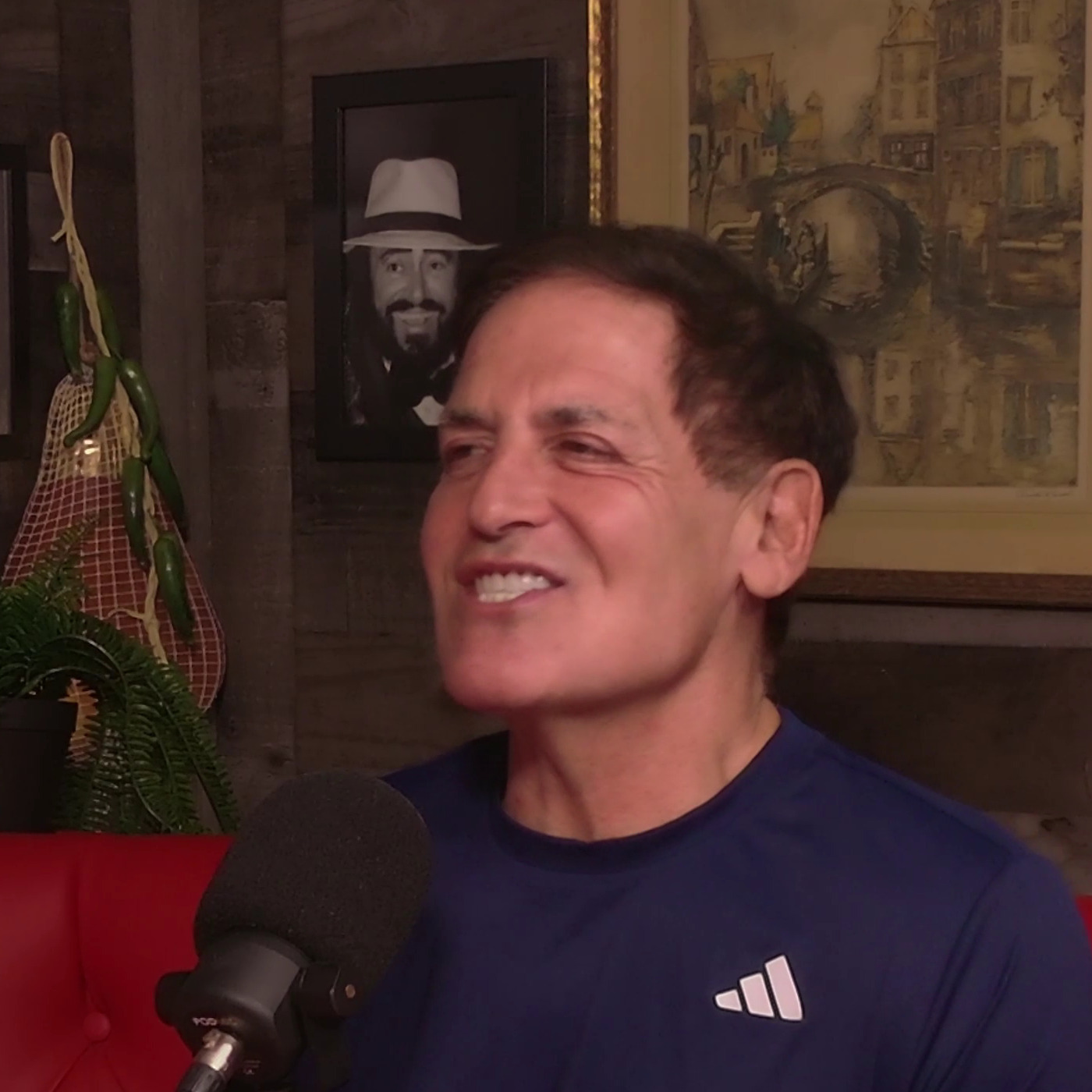 BMark Cuban: Insurance Companies Are Not Your FriendBreaking Bread with Tom Papa · 2026-10-27
 WWhy you need to fail at work with Astro TellerWorklife with Molly Graham · 2026-10-27
 SHow Elon Musk Thinks: The Principles Behind His Success | Eric JorgensonSonia and Simon · 2026-10-25
 TAI Can Write the Code. Can It Run the System? | Grepr CEO Jad NaousThe a16z Show · 2026-10-16TChips, Memory, and Power | Pat GelsingerThe a16z Show · 2026-10-09
 MAstro Teller: Inside Google X's 2,000-Idea Moonshot Factory & How Google Brain Made the T in ChatGPTMoonshots with Peter Diamandis · 2026-10-05
 FCaie Kelley | Lowercarbon CapitalFun Raising · 2026-09-29
 MRapid Response: Stop creating businesses. Buy one instead, with Codie SanchezMasters of Scale · 2026-09-26
 BBreaking the Code: Anne Wojcicki on Genetics, Reinvention, and Rewriting Consumer HealthBreaking Precedent · 2026-09-10TWho Grades the AI Models? | Ben Horowitz & Rayan KrishnanThe a16z Show · 2026-09-09TOpenAI Researchers on the Future of Mathematical ReasoningThe a16z Show · 2026-09-08TDaniel Litt: The Mathematician's Guide to AIThe a16z Show · 2026-09-01TThe Infrastructure Behind the Machine AgeThe a16z Show · 2026-08-28TThe New Economics of AI | Martin Casado & Steven SinofskyThe a16z Show · 2026-08-25TMicrosoft's Deputy CISO on Securing AI AgentsThe a16z Show · 2026-08-21
 TKushner and Iger Buy The Lakers, Grok 4.6 Launch, NVIDIA Nemotron | Darren Rovell, Patrick Whitesell, Harjot Gill, Jeff Huber, Soren Monroe-Anderson & Shaun Maguire, Andrei GeorgescuTBPN · 2026-08-12
 TThe Conversation That Changed Everything: Ben Shapiro, Jordan Peterson, Eric Weinstein & Dave RubinThe Rubin Report · 2026-08-10
 MLeo Polovets: A Different Kind of VC BetMassive Signals · 2026-08-06
 WHe Made 4200% At The World’s TOP Hedge Fund (He’s SOLD EVERYTHING) - Jim RogersWords of Rizdom - Trading Podcast · 2026-08-02
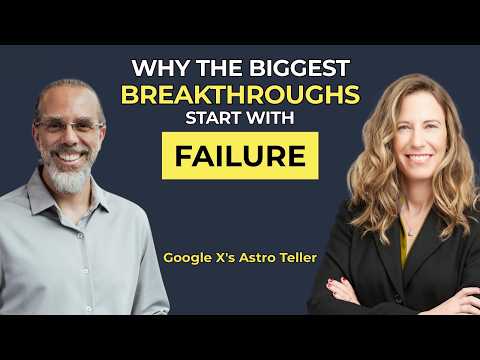 LGoogle X's Astro Teller: Why the Biggest Breakthroughs Start with Failure | EP165Leap Academy with Ilana Golan | Real Career Leaps, and How to Make Yours · 2026-07-28TMarc Andreessen on AI, Technology, and the Future of HumanityThe a16z Show · 2026-06-25
 AIf AI Models Have No Moat, What Are Investors Buying? with Benedict EvansAnalyse Podcast · 2026-06-24
 RBonus: Ruth Porat - “If We Can, We Must.”Ruthie's Table 4 · 2026-06-11TBuilding Search for AI Agents with Exa CEO Will BrykThe a16z Show · 2026-06-06
 ABuilding Search for AI Agents with Exa CEO Will BrykAI + a16z · 2026-06-04
 BWhat Self Leadership Looks Like Today with Susan Fowler and Lucy DannewitzBlanchard LeaderChat · 2026-06-01TBen Horowitz - "Your ONLY job is Right Product, Right Time"The a16z Show · 2026-05-14
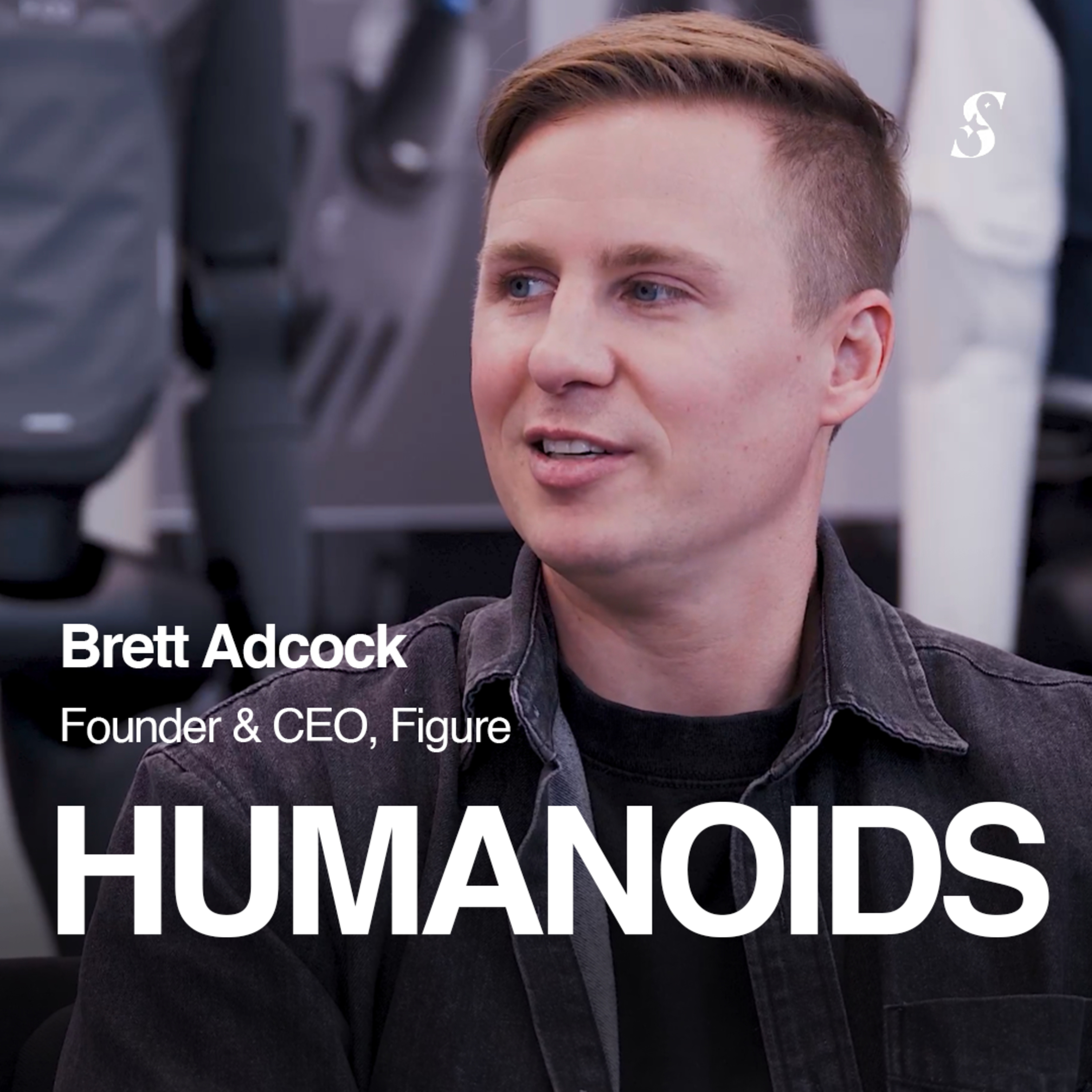 SBrett Adcock, CEO of FigureSourcery · 2026-04-30
 FThe Elon Musk Playbook, Space Mining, and the Next Wave Nobody Sees Yet | Ep. 390 with Eric Jorgenson CEO of Scribe MediaFounder's Story · 2026-04-20
 IScott Nolan - SpaceX, Founders Fund, and Rebuilding American Uranium EnrichmentInvest Like the Best with Patrick O'Shaughnessy · 2026-04-14
 IAlex Blumberg on Turning Buildings into Grid Assets with DaisyChain EnergyInevitable · 2026-04-01
 TDelian Asparouhov | Trailblazers Episode 28!Trailblazers by Erica Wenger · 2026-03-10
 UThe Biggest Competitor to Your Product Might Be Paper | Daniel Burka, Mahima Chandak & Elyce Cole, Hard ProblemsUnmissables with Ariba Jahan · 2026-03-05
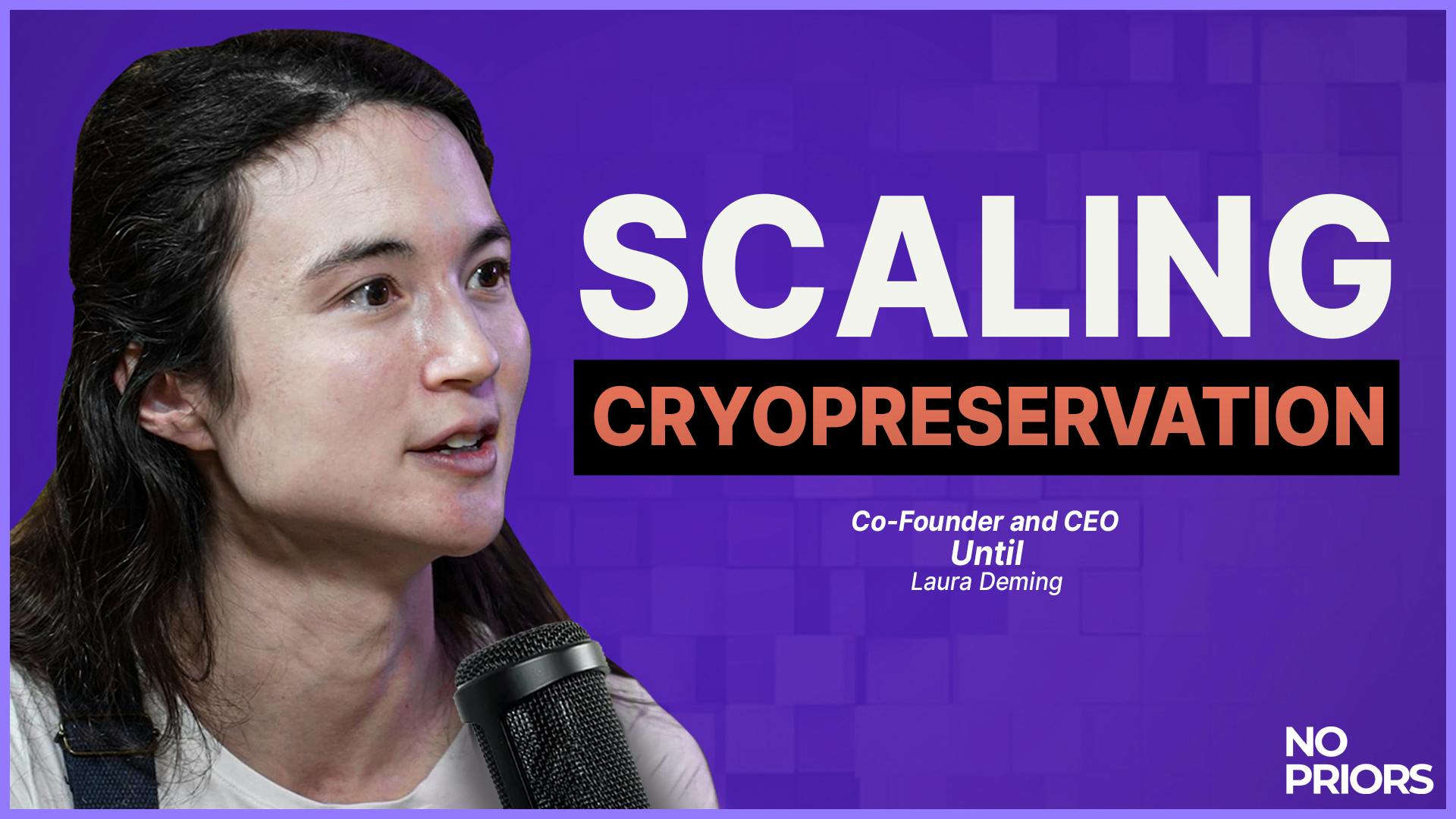 NWhy Cryopreservation is No Longer Science Fiction with Until Co-founder and CEO Laura DemingNo Priors: Artificial Intelligence | Technology | Startups · 2026-01-29TElon vs OpenAI, Ads in ChatGPT, Leaked Tech Emails | Sean Frank, Bill Shufelt, Alex Mashrabov, Sonya Huang & Pat GradyTBPN · 2026-01-16
 IE236 - Inside India’s Secret AI Boom | Manav Garg, Together FundIndian Silicon Valley with Jivraj Singh Sachar · 2025-11-30
 GREPLAY - Pat Grady (Sequoia) - What actually works in AI startupsGet Paid with Manny Medina · 2025-11-14
 RCVS Health: Building Healthcare’s Consumer PlatformRaising Health · 2025-11-10
 T#245 Trae Stephens - Inside Anduril’s AI Superweapons: Eagle Eye Helmet and Autonomous TechThe Shawn Ryan Show · 2025-10-16
 TCodie Sanchez—The Messaging Playbook Behind Building a Thought Leader BrandThe StoryBrand Podcast · 2025-10-13
 TEpisode 038: A Contrarian’s Guide to Venture Capital with Josh WolfeThe Decision Education Podcast · 2025-10-08
 DAstro Teller & Ivo Stivoric: Why moonshots require unlearning everything you knowDesign Better · 2025-09-10
 OCodie Sanchez: This is How You Get Rich off Your Normal Salary! (Use THIS Easy Formula to Build REAL Wealth NOW)On Purpose with Jay Shetty · 2025-09-08
 MJulie Zhuo: Secret Sauce to Success-Teams, Culture and the Future of ManagementMick Unplugged · 2025-09-08
 TAstro Teller on Moonshots, Self-Driving Cars, and the Future of InnovationThe James Altucher Show · 2025-08-27
 RAI Shopping Agents & the Future of Commerce | Alex Rampell, Andreessen HorowitzRetailgentic | Consumer Behavior & Retail Trend · 2025-08-26
 aHow Startups are Fixing Healthcare Frictiona16z Live · 2025-06-25
 B#349: She Built the Female Viagra & Two Billion-Dollar Companies: Cindy Eckert on Bold Moves, Big Dreams & Building for ImpactBehind Her Empire · 2025-06-09
 BThe Power of the Pink Pill: Cindy Eckert on Creating AddyiBeauty Bytes with Dr. Kay: Secrets of a Plastic Surgeon™ · 2025-05-28
 II Choose...To Talk About Sex with Cindy EckertI Choose Me with Jennie Garth · 2025-05-21
 WJim Rogers: I Sold Almost All My Stocks - “I’ve Seen This Party Before”Wealthion - Be Financially Resilient · 2025-05-19
 IBuilding Markets with Jacqueline Novogratz, Founder & CEO of AcumenInvesting in Impact | Impact Investing · 2025-05-14
 DBuilding Markets: The Acumen Journey to Poverty Alleviation - Jacqueline Novogratz, Founder & CEO of AcumenDisruptors for GOOD | Social Entrepreneurs and Social Enterprises · 2025-05-06
 CEscape the Unicorn Chase: Build a Profitable Business You Love with Sahil Lavingia's "Minimalist Entrepreneur"CEO's Library: The 1% Bookshelf · 2025-05-06
 M90% of Startups Fail But This Fixes It | John Zeratsky (Author of Make Time, Sprint, Click)Making Things Click with John Zeratsky · 2025-04-30
 APurpose AND Alleviating Poverty with Jacqueline Novogratz CEO of AcumenAND is the Future - Making Businesses Sustainable AND Profitable · 2025-04-29
 IGarry Tan of Y Combinator: How Innovation Is ChangingInnovation with Mark Peter Davis · 2025-04-10
 I🎮 Reality Is Broken: Why Games Make Us Better and How They Can Change the World - Jane McGonigalInfinitum Leadership: Unlock Your Potential · 2025-04-08
 GS1E7: Agent Talk #7: Pat Grady (Sequoia) - What actually works in AI startupsGet Paid with Manny Medina · 2025-03-26
 TFrom Thesis to Meme to Fund: Building American DynamismThe a16z Show · 2025-03-11
 EJosh Wolfe (Lux Capital) - Investing at the Cutting Edge [ETL Looks Back]Entrepreneurial Thought Leaders (ETL) · 2025-01-22
 KEpisode 2306: Albert Wenger on how to save the Internet, Capitalism and the PlanetKeen On America · 2025-01-17
 MScott Belsky, Building Adobe & the Future of DesignMinus One · 2025-01-15
 TSean Ellis on the Evolution of Growth, PMF, and Testing in the AI EraThe Long Game · 2025-01-15
 N97 - You DON'T Need to Be a FOUNDER to Be SUCCESSFUL (Here's Proof!) with Emily HoldmanNikonomics - The Economics of Small Business · 2024-12-16
 TJon Stewart & Mark Cuban Talk 2024 Politics, Healthcare, Crypto and AI | The Weekly ShowThe Weekly Show with Jon Stewart · 2024-12-12
 TDecart’s Dean Leitersdorf on AI-Generated Video Games and WorldsTraining Data · 2024-11-13
 THealth Care Innovations: The Futurists' GuideThe Future Age · 2024-10-30
 BFrom Barista to Billionaire (Mo Money Same Problems)Beginning Balance · 2024-09-27
 GThe Growth Equation: The Power of Design in Solving Business Problems | Andy BuddGrow the Product · 2024-09-26
 TMetascience 101 - EP2: “Is Science Slowing Down?”The Macroscience Podcast · 2024-09-17
 IE11: The Rapid Rise of AI, Global Startups, and How to Treat Founders with Niki ScevakInvesting in Startups · 2024-09-16
 PHow to Build a Rich Life — ft. Ramit Sethi | Prof G MarketsProf G Markets · 2024-08-15
 RStartmate’s CEO Michael Batko on the Power of Serendipity and Startup SuccessRandom VC · 2024-08-15
 ADemocratizing Generative AI Red TeamsAI + a16z · 2024-08-02
 THow AI Has Generated Trillions in Value Long Before ChatGPT and the Future of AI, with Konstantine Buhler, Partner at Sequoia CapitalThe Next Great Thing · 2024-08-01
 ABeyond Language: Inside a Hundred-Trillion-Token Video ModelAI + a16z · 2024-07-03
 USteps to Transform Your Life | with Tom BilyeuUnbroken Business Support Podcast With Michael Anthony · 2024-06-28
 CEp 134 - Geoffrey Moore - Crossing the Chasm with Customer EducationCELab: The Customer Education Lab · 2024-06-27
 HInvesting in Healthcare, with Daisy WolfHealthy Savings, by milu · 2024-06-20
 OJohn Arnold on Why It's So Hard To Build Things in America | Odd LotsOdd Lots · 2024-06-20
 IFrank Blake - Leading By ExampleInvest Like the Best with Patrick O'Shaughnessy · 2024-06-11
 TA Conversation with Alphabet’s Captain of MoonshotsThe Journal. · 2024-06-04
 GTechnology, Optimism, and Embracing Bold Ideas with Packy McCormickGood Work with Barrett Brooks · 2024-04-30
 GUnlocking Desire: Cindy Eckert on Women's Sexual HealthGenerations M.D. · 2024-04-12
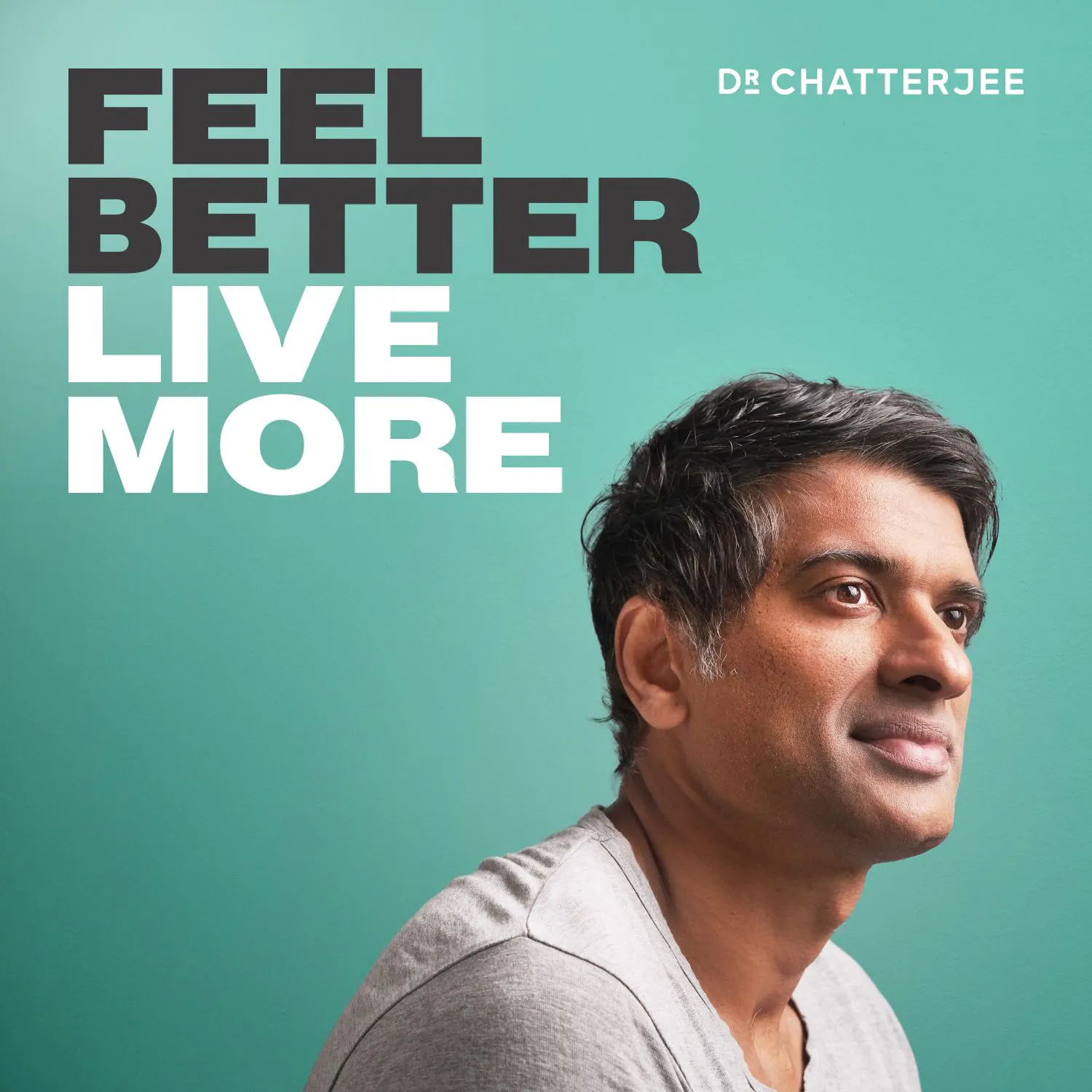 FHow To Live A Happy and Contented Life, Why Wealth Is Nothing To Do With Money & Why Hacks Don’t Work with Morgan Housel #430Feel Better, Live More with Dr Rangan Chatterjee · 2024-02-28
 VKhosla Venture's Samir Kaul on building an iconic, durable firm, and the role of non-consensus decision makingVenture Unlocked: The playbook for venture capital managers · 2024-02-16
 D20: Are startup accelerators worth it? (with Michael Batko)DO AS I SAY · 2024-02-13
 T336: Predicting the Next Economic Recession & Revolutionizing Banking with Decentralized Finance | Campbell HarveyThe Commercial Investing Show · 2024-01-30
 A463: Predicting the Next Economic Recession & Revolutionizing Banking with Decentralized Finance | Campbell HarveyAmerican Monetary Association · 2024-01-29
 H642: Predicting the Next Economic Recession & Revolutionizing Banking with Decentralized Finance | Campbell HarveyHolistic Survival Show - Economic Crisis · 2024-01-20
 CFixing the messy voluntary carbon marketCatalyst with Shayle Kann · 2024-01-04
 HreCAPTCHA and Duolingo: Luis von Ahn (2020)How I Built This with Guy Raz · 2023-12-11
 T71: Predicting the Next Economic Recession & Revolutionizing Banking with Decentralized Finance | Campbell HarveyThe CryptoCast with Jason Hartman · 2023-12-10
 C2084: Predicting the Next Economic Recession & Revolutionizing Banking with Decentralized Finance | Campbell HarveyCreating Wealth Real Estate Investing with Jason Hartman · 2023-11-29
 TOptimizing Brain Health To Maximize Intelligence, Focus, & Memory with Jim KwikThe Liz Moody Podcast · 2023-11-22
 G#162 CEO & Co-Founder Rippling, Parker Conrad w/ Mamoon Hamid: CompoundingGrit · 2023-10-30
 TIs productivity a waste of time? [Nat Eliason]The Examined Life · 2023-10-12
 HRory Sutherland: Why Following Logic is Dangerous For Challenger Brands, Act Foolish To Unlock Opportunities Your Competition Don’t SeeHUNGRY. · 2023-10-02
 A#033 - Emmett Shear on Practice, Agency, Coordination, & Positive Sum GamesAudience of One · 2023-09-06
 OSuper Soul Special: Marie Forleo: Everything is “Figureoutable”Oprah's Super Soul · 2023-08-02
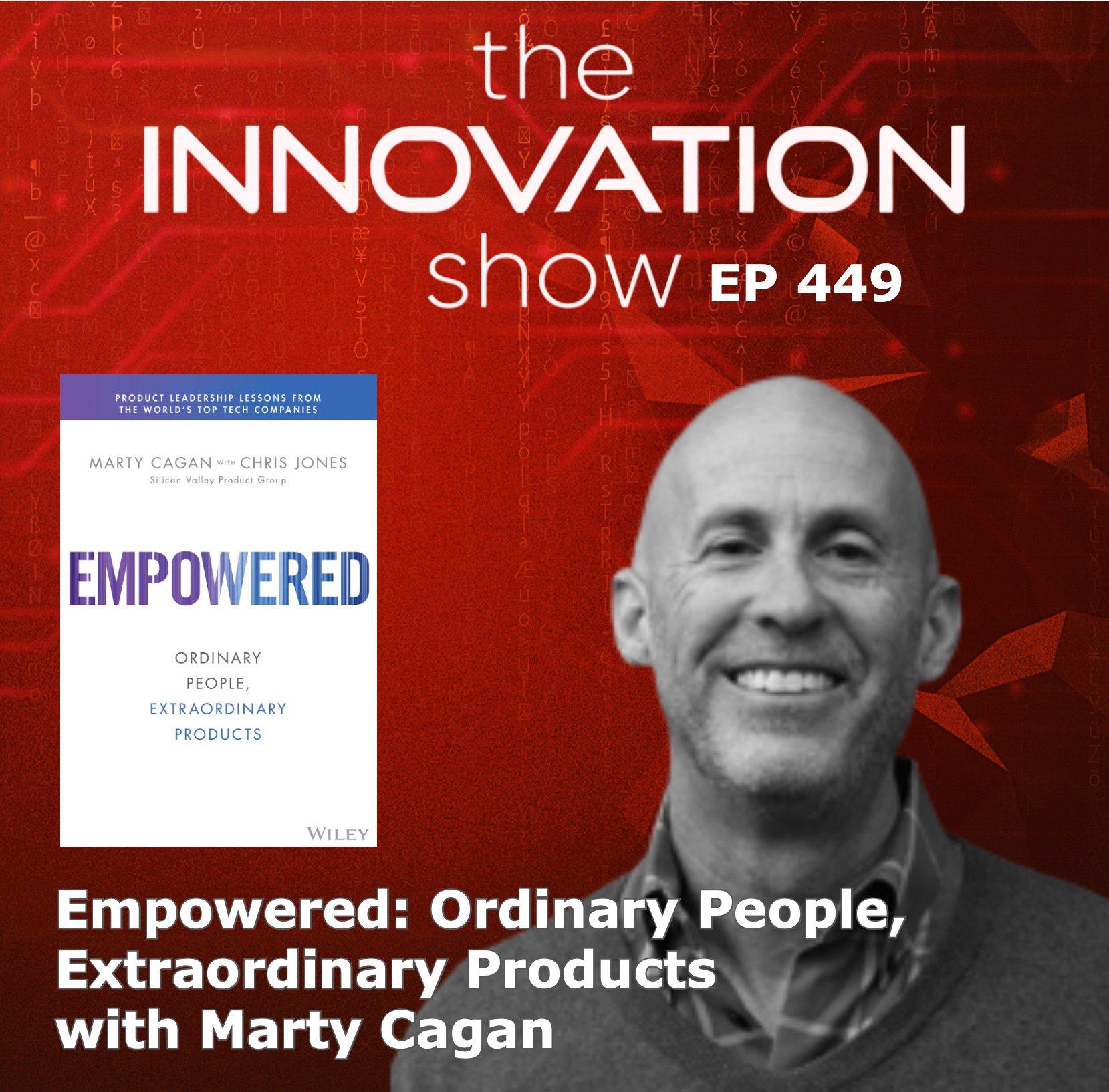 TMarty Cagan - Empowered: Ordinary People, Extraordinary ProductsThe Innovation Show · 2023-05-31
 TEXCELLENT ADVICE: Life Lessons From Wired Co-Founder Kevin KellyThe Next Big Idea · 2023-05-11
 IGillian Tett: Lessons from Anthropology for the Modern EconomistIMF Podcasts · 2023-04-21
 MBNY Mellon's Jolly: Credit crunch will create hard landing but fast recoveryMoney Life with Chuck Jaffe · 2023-04-20
 NJacqueline Novogratz: Moving Beyond Ideology to Solve Real-World ProblemsNext Economy Now: For the Benefit of All Life · 2023-04-18
 SBlackbird Co-founder Niki Scevak on investing in successful Aussie startups | Seed To Harvest Ep58Seed to Harvest · 2023-04-11
 TS2 E6. Woman and Change: Business Leaders with Jacqueline Novogratz, Founder and CEO of AcumenThe Story of Woman · 2023-04-10
 HX's Astro Teller on Managing Moonshot InnovationHBR IdeaCast · 2023-03-28
 SEpisode 38: Daniel Burka and the Simple project, from Resolve to Save LivesSustain Open Source Design · 2023-03-21
 OCoinbase CEO Brian Armstrong on the Two Big Challenges Facing Crypto | Odd LotsOdd Lots · 2023-03-06
 T195. Developing Empowered, Powerful Product Teams, with Marty Cagan - Part 2 | CULTUREThe Innovation Engine Podcast · 2023-02-28
 TEp 31: Larry Swedroe on Cathie Wood's stricken ARK fundThe Evidence-Based Investor · 2023-02-18
 TChanging the World Through Innovation | Fred SchebestaThe CG Show · 2023-02-05
 BTobi Lütke: CEO and Founder, ShopifyBehind The Tech with Kevin Scott · 2023-01-03
 MEP #12 Gaming Will Save The World w/ Jane McGonigalMoonshots with Peter Diamandis · 2022-11-17
 TPalmer Luckey on Elon Musk and John Carmack, selling Oculus for $2B and starting defense tech company AndurilThe Aarthi and Sriram Show · 2022-10-15
 T#79 - Leo Polovets, Founder of Susa Ventures, on Measuring Value & Investing for the FutureThe Next Iteration Podcast · 2022-10-14
 TThe History of Interest & The Next Devastating Crisis | ft. Edward Chancellor | Ideas Lab 6Top Traders Unplugged · 2022-08-10
 TPhil Libin on The Out of Office WorldThe Human Risk Podcast · 2022-08-08
 HAffirm: Max Levchin (Part 2 of 2)How I Built This with Guy Raz · 2022-06-13
 T591: Whitney Tilson, part 1: Acting on intrinsic motivation versus feeling you have to save the worldThis Sustainable Life · 2022-06-08
 UFire: Net-Zero Plasma DiamondsUnseen Upside: Investments Beyond Their Returns · 2022-05-17
 O#46—Richard Rumelt: Finding the Crux of Your StrategyOutthinkers · 2022-04-29
 HBEST OF: Evernote co-founder Phil Libin on the key to making better decisions at workHow I Work · 2022-04-27
 TRobert Greene on the War in UkraineThe Daily Stoic · 2022-04-24
 SEsther Dyson: Using Data to Revolutionize WellnessSummation with Auren Hoffman · 2022-04-14
 BImaginations Shapes The Future with Jane McGonigalBarry Kibrick - Between the Lines · 2022-04-06
 TSequoia Capital explains what crypto founders want from VCsThe Scoop · 2022-04-06
 TEpisode 269 Brant Cooper | Igniting Entrepreneurial ActionThe Business Sphere · 2022-03-31
 HJane McGonigal || Playing Games with the FutureHuman Potential Lab · 2022-03-24
 T3 reasons for optimism in difficult times | Kevin KellyTED Talks Daily · 2022-03-23
 T256. Imagining the Future with Reality Game Designer and Futurist Jane McGonigalThe Michael Shermer Show · 2022-03-22
 HCharles Koch || Believe in PeopleHuman Potential Lab · 2022-03-10
 TJeremy Grantham, GMO – Short-Term Pessimist, Long-Term OptimistThe Meb Faber Show - Better Investing · 2022-03-09
 KWomen in Deep Tech: Deena Shakir, Lux Capital Partner on turning Science Fiction into FactKauffman Fellows Podcast · 2022-03-02
 MEp. 1052: Jane McGonigal Interview with Michael Covel on Trend Following RadioMichael Covel's Trend Following · 2022-02-21
 SDiscover happiness as an entrepreneur: Reshma Sohoni, SeedCampStartup Dads · 2022-02-15
 TJohn Arnold – Why The Greatest Natural Gas Trader Walked Away To Pursue PhilanthropyThe Meb Faber Show - Better Investing · 2022-01-26MRob Arnott: 'Focus on what's still going to matter in 3-5 years'Money Life with Chuck Jaffe · 2022-01-25
 PS03 E01 The Empowered Organization with Marty CaganProduct Fields · 2022-01-05
 TWhy Collaboration Is Overrated with Safi Bahcall (#4)The Non-Obvious Show · 2021-12-15
 Rsophie bakalar & fableRead Receipt · 2021-12-14
 TThe Minimalist Entrepreneur ft. Sahil Lavingia, Founder, GumroadThe Indian Dream · 2021-12-12
 EJames Joaquin (Obvious Ventures) - World Positive InvestingEntrepreneurial Thought Leaders (ETL) · 2021-11-24
 TPhil Libin — The Pros and Pros of Distributed WorkforcesThe Multiplier Effect · 2021-11-19HEvernote co-founder Phil Libin on the key to making better decisions at workHow I Work · 2021-11-17
 B13.1: Focus on your strengths — Reshma SohoniBuild your Superpower · 2021-11-09
 B13.2: Superpowers and happiness — Reshma SohoniBuild your Superpower · 2021-11-09
 DEP 117: Muna AbuSulayman, Saudi Arabian Entrepreneur and Media IconDisruptive CEO Nation · 2021-11-03
 RInspiring Health at the Community Level - Esther Dyson, Executive Founder of WellvilleRaise the Line · 2021-10-19
 TAntonio Garcia Martinez on Choosing Judaism as an Antidote to Secular ModernityThe Tikvah Podcast · 2021-10-14
 TRichard Thaler: Is a nudge enough to change our behaviour?The Interview · 2021-10-07
 DDesigning Solutions in Global Health | Daniel BurkaDesign Lab with Bon Ku · 2021-09-09
 CJosh Mitchell: Inside the Student Loan Debt TrapCommonwealth Club of California Podcast · 2021-08-20
 EVitalik Buterin: Ethereum - Can It Go Beyond DeFi?Epicenter - Learn about Crypto, Blockchain, Ethereum, Bitcoin and Distributed Technologies · 2021-07-29
 TKim-Mai Cutler on the growth of venture capital and supporting great ideasTechnori Podcast · 2021-07-21
 PGetting Leadership Up to Speed with Marty CaganProduct Thinking · 2021-07-14
 DBooks Driving Change: Jacqueline Novogratz and Manifesto for a Moral RevolutionDriving Change · 2021-06-28
 TCharles Koch & Brian Hooks—How to Become the Best Version of YourselfThe StoryBrand Podcast · 2021-05-24
 TManifesto for a Moral Revolution with Jacqueline NovogratzThinkers & Ideas · 2021-05-18
 RRookie Reply: Stop Making Excuses in Business & How to Develop a “Scout Mindset”Real Estate Rookie · 2021-04-10
 EWhy Empowered Teams Make the Best Products with Marty CaganEntreLeadership · 2021-04-05
 HEpisode 129 - Seeing the Value in Everything with Saam MotamediHacker Valley Studio · 2021-04-01
 RThe Role of Venture Capital in Solving Healthcare Problems – Deena Shakir, Partner at Lux CapitalRaise the Line · 2021-03-17
 PCultivating the Entrepreneurial Spirit, with Cindy Eckert and Dean Frank BucklessPoole Podcast · 2021-02-11
 IChamath Palihapitiya – The Major Problems Facing the WorldInvest Like the Best with Patrick O'Shaughnessy · 2021-02-02
 T#101 Jane McGonigal: The Psychology of GamingThe Knowledge Project · 2021-01-19
 TDevelopers as CreativesThe a16z Show · 2021-01-13
 IEp. 137: Josh Felser, Angel investor and Co-Founder of Freestyle VCInevitable · 2020-12-28
 TEpisode 4: Melanie Perkins, co-founder and CEO of Canva, and Rachel Carlson, co-founder and CEO of Guild EducationThis Is Series A · 2020-11-17
 BJacqueline Novogratz: Marshalling a Moral RevolutionBurn the Boats · 2020-11-11
 TJoel Greenblatt, Gotham Asset Management -Nine Out Of Ten Families In The Top Fifth Of The...The Meb Faber Show - Better Investing · 2020-10-28
 IJacqueline Novogratz – Investing in Dignity and CharacterInvest Like the Best with Patrick O'Shaughnessy · 2020-10-13
 MEvernote Founder Wants to Save Us from Boring Video CallsMostly Human with Laurie Segall · 2020-10-06
 H#15: Part 2: Jamie Dimon, JP Morgan Chase Chairman & CEO—Always Have a Plan to Deal With ProblemsHow Leaders Lead with David Novak · 2020-10-01
 TSeed funding: past, present and future with Reshma Sohoni, SeedcampThe SaaS Revolution Show · 2020-10-01
 H#14: Part 1: Jamie Dimon, JP Morgan Chase Chairman & CEO—Always Have a Plan to Deal With ProblemsHow Leaders Lead with David Novak · 2020-09-29
 T#460: Maria Popova on Writing, Workflow, and Workarounds (Repost)The Tim Ferriss Show · 2020-09-06
 T1668: Learning the Craft of Entrepreneurialism with Brant Cooper Co-Founder and Owner of Moves The NeedleThe Entrepreneur Way · 2020-08-27
 E#1 Michael Batko - STARTMATEEverything & Anything · 2020-08-02
 TJim Rogers: Gold, Silver, and the US Dollar Amid the COVID-19 PandemicTrading Global Markets Decoded · 2020-06-24
 DJacqueline Novogratz - Revolutionary For a Better WorldDon't Stop Us Now AI Edition · 2020-05-19
 DEpisode 20: Adam Gazzaley on the Distracted Mind During a CrisisDistributed, with Matt Mullenweg · 2020-04-29
 TTechnology, Leadership, & Opportunity with Max Levchin, former CTO @ PayPal & Ben Jun, CEO @ HVF Labs #9The Engineering Leadership Podcast · 2020-04-28
 AInside Alphabet’s X: Nurturing Radical CreativityAzeem Azhar's Exponential View · 2020-04-08
 #Geoffrey Moore: Sales Strategies That Work In An Economic Downturn, Provocation-Based Selling#DreamitLive · 2020-04-02
 PEnchantment: Interview with Guy KawasakiPunk CX: Customer Experience Insights with Adrian Swinscoe · 2020-01-24
 S#31: Rob Arnott On Engineering A Better IndexSuperinvestors and the Art of Worldly Wisdom · 2019-12-04
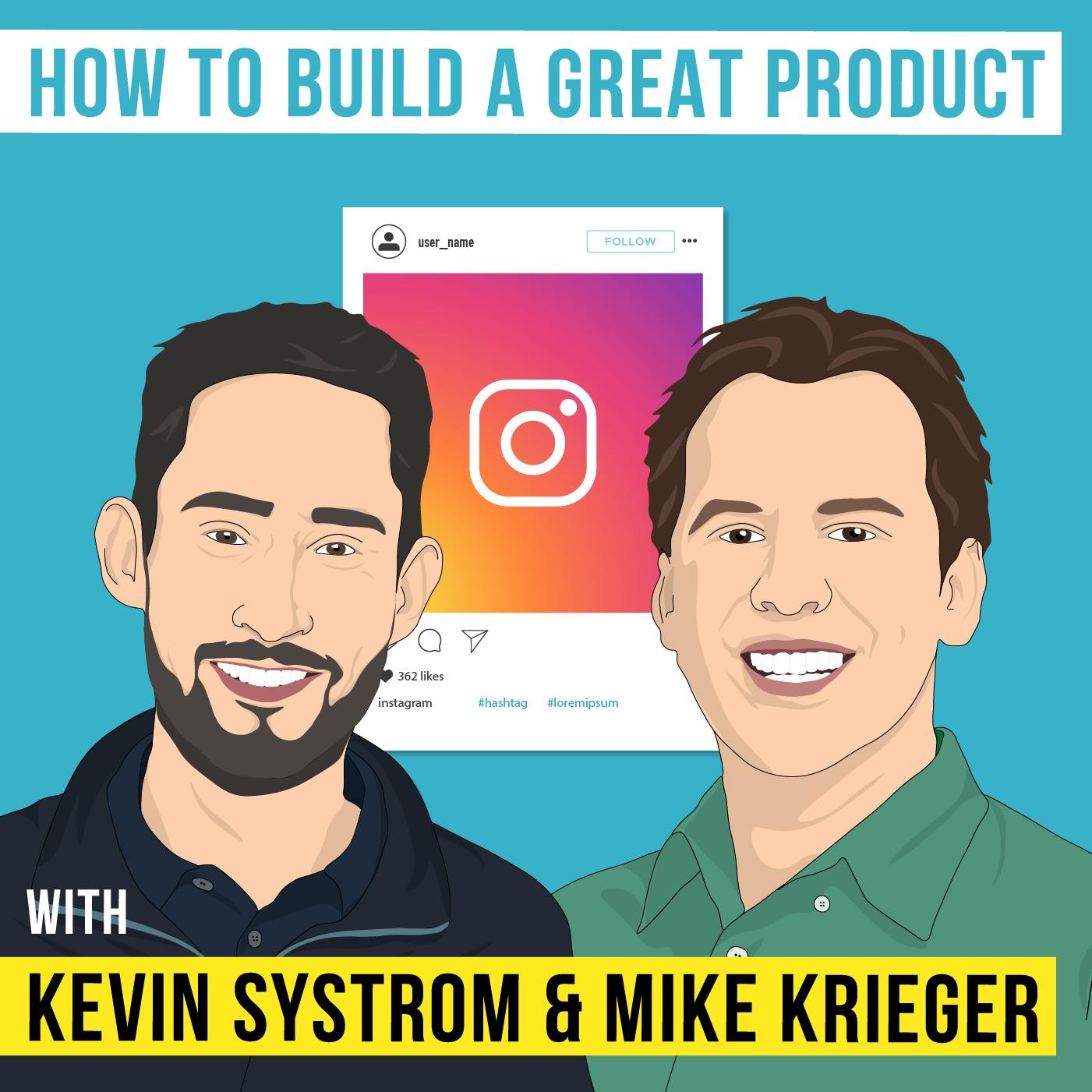 IKevin Systrom and Mike Krieger – How to Build a Great ProductInvest Like the Best with Patrick O'Shaughnessy · 2019-11-19
 TManaging Career Transitions Part 1: Facing Childhood DemonsThe Anxious Achiever · 2019-11-04
 WCynthia Johnson - Personal Branding Expert, Co-Founder of Bell + IvyWild Business Growth · 2019-10-23
 HRory Sutherland - How to Be Less Rational (and More Brilliant)How To Academy Podcast · 2019-10-14
 RRR 428: Arming the Rebels with Rails 6 Featuring David Heinemeier HanssonRuby Rogues · 2019-09-03
 IJane McGonigal – How Games Make Life BetterInvest Like the Best with Patrick O'Shaughnessy · 2019-07-16
 OMarie Forleo: Everything is “Figureoutable”Oprah's Super Soul · 2019-05-22
 TStartup Playbook: Pitching InvestorsThe All Turtles Podcast · 2019-03-27
 IFrom hypervirality to sustainable growth - with Zack Onisko(CEO at Dribbble)Intelligent Artifice, formerly the Mobile User Acquisition Show · 2019-03-04
 8Julia Galef and Rob Wiblin on an updated view of the best ways to help humanity80,000 Hours Podcast · 2019-02-17
 "Ep. 85: Solving for Shared Experiences in XR—with Anjney Midha CEO of Ubiquity6"Can't Be Done" · 2019-01-17
 F286. Interviews: Howard Marks, Co-Founder, Activison and StartEngineFintech Insider Podcast by 11:FS · 2019-01-11
 TDavid Cancel - CEO at Drift - 0-150K Customers: The Drift Playbook for HypergrowthThe Growth Hub Podcast · 2019-01-10
 BBehind The Idea #43: Picking Apart Value Investing's Slump With Whitney TilsonBehind The Idea · 2018-11-16
 RJack Dorsey speaks: CNN's full interview with Twitter's CEOReliable Sources · 2018-08-19
 TIs San Francisco Really All That Great? (Guest: Antonio García Martínez - NYT Bestselling Author of 'Chaos Monkeys')This is Your Life in Silicon Valley · 2018-07-12
 C63 - 4/16 - Zooko Wilcox, Founder of ZcashColorado = Security Podcast · 2018-04-15
 TZack Onisko, CEO at DribbbleThe Ticket: Discover the Future of Customer Service, Support, and Experience, with Intercom · 2018-04-12
 CEp 17 Codie Sanchez, Championing Diversity and Encouraging Investment in Latin AmericaCrossing Borders with Nathan Lustig · 2017-08-10
 PSeason 2 - Looking Back at the Asian Financial Crisis: Gillian Tett on Trust and Contagion During the Asian Financial CrisisPacific Exchanges · 2017-08-07
 TDavid Heinemeier Hansson - Falling In Love With Your Work & The Future Of Work: ReWorkThe Learning Leader Show With Ryan Hawk · 2017-05-21
 TDaniel Burka, Design Partner at GVThe Ticket: Discover the Future of Customer Service, Support, and Experience, with Intercom · 2016-12-08
 EJulie Zhuo: How a Facebook Designer Thinks [Entire Talk]Entrepreneurial Thought Leaders (ETL) · 2016-11-23
 SJoseph Stiglitz - The Real Issues Of The Eurozone And How To Solve ThemSocial Europe Podcast · 2016-09-07
 ADon and Alex Tapscott | Leading a Revolution in BlockchainAQ's Blog & Grill · 2016-05-30
 TAgency Leadership with Andy Budd of ClearleftThe Businessology Show · 2016-04-24
 DRecode Decode: Max Levchin, Affirm CEODecoder with Nilay Patel · 2016-01-17
 A112: How to Position Yourself As Global Bestselling Author with Tucker MaxAs Told By Nomads · 2015-12-17
 ETim O'Reilly: Create More Value Than You Capture [Entire Talk]Entrepreneurial Thought Leaders (ETL) · 2013-03-06
 EDrew Houston: Finding Your Way as an Entrepreneur [Entire Talk]Entrepreneurial Thought Leaders (ETL) · 2012-05-30
 EDaniel Ek: A Playlist for Entrepreneurs [Entire Talk]Entrepreneurial Thought Leaders (ETL) · 2012-05-16
 EKevin Systrom: From Stanford to Startup [Entire Talk]Entrepreneurial Thought Leaders (ETL) · 2011-05-11
 RJeff Atwood Has A Server Fault!RunAs Radio · 2009-05-13
 IVinod Khosla - Moving from "Greenwashing" to Truly GreenInside Social Innovation · 2009-01-19
 EVinod Khosla (Khosla Ventures) - The Black Swans of Energy InventionEntrepreneurial Thought Leaders (ETL) · 2008-10-22
 ERobert Shiller on Housing and Bubbles 09/15/2008EconTalk · 2008-09-15
 RGovernment can’t be trusted to fix any problems | John Arnold | The Reason InterviewReasonTV