Forecasting and Decision Making Under Uncertainty

What is actually knowable about the future, how badly experts do, and how to make decisions anyway.

136 books · 27 people behind it · 1 reading lists

Start here

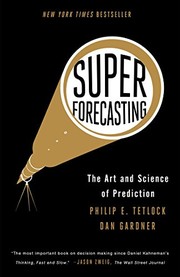
  1. SuperforecastingPhilip E. Tetlock, Dan Gardner, 2015
  2. Thinking, Fast and SlowDaniel Kahneman, 2011
  3. The Black SwanNassim Nicholas Taleb, 2007
  4. Against the GodsPeter L. Bernstein, 1996

The people behind it 27

Each person holds a book in this entry or names it in their own tags.

Investors 7
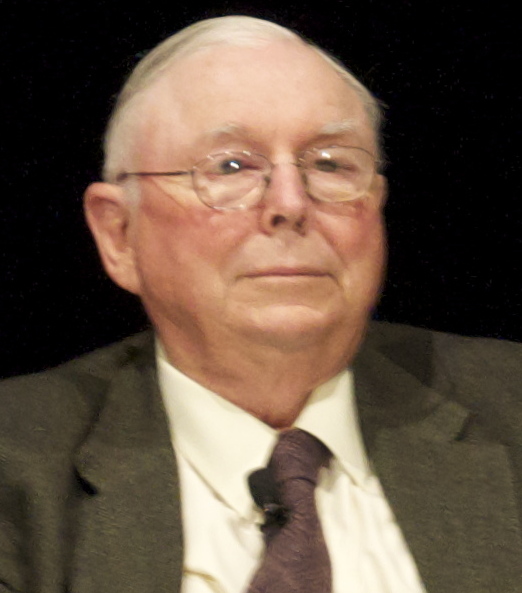
Charlie Munger3 books here
RG
Robert G. Hagstrom3 books here
Howard Marks1 book here
PL
Peter L. Bernstein1 book here
Ray Dalio1 book here
MM
Michael Mauboussinnamed in their tags
BM
Bill Millernamed in their tags

Academics 8

Nassim Nicholas Taleb9 books hereDaniel Kahneman4 books here
AT
Amos Tversky2 books here
Richard H. Thaler1 book here
AG
Adam Grant1 book here
DA
Dan Ariely1 book here
FP
Frank Partnoy1 book here
MM
Michael Mauboussinnamed in their tags

Strategists 2

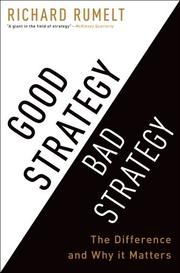
Richard Rumelt1 book here
MM
Michael Mauboussinnamed in their tags

Journalists 10

RG
Robert G. Hagstrom3 books here
DG
Dan Gardner3 books here
PB
Peter Bevelin3 books here
Michael Lewis2 books here
WP
William Poundstone2 books here
SP
Shane Parrish2 books here
PL
Peter L. Bernstein1 book here
AG
Adam Grant1 book here
FP
Frank Partnoy1 book here
MH
Morgan Housel1 book here

Reading list — The best books on decision making · Superbook

12 books, in the order the list argues for

This list traces an arc through three distinct traditions that have converged on the same problem. The cognitive-science foundation begins with Kahneman and Tversky's demonstration that human judgment is systematically biased — not randomly wrong, but wrong in predictable, documentable ways. Thinking Fast and Slow is the canonical text, but Noise (with Sibony and Sunstein) extends the argument to a largely overlooke

Sources: Annie Duke — Thinking in Bets (official site) · Howard Marks Memos — Oaktree Capital · Kahneman, Sibony, Sunstein — Noise (Farrar, Straus and Giroux) · Farnam Street — The Great Mental Models

Books 136

Carl von Clausewitz · 1835 · Friction, fog and the limits of planning; the classic on strategy
Avinash K. Dixit, Barry J. Nalebuff · 1991
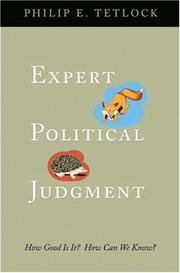
Philip E. Tetlock · 2005 · The twenty-year study showing expert prediction barely beats chance.
Herbert A. Simon · 1991 · Memoir by the Nobel laureate who founded bounded rationality
Avinash K. Dixit, Barry J. Nalebuff · 2008
Robert G. Hagstrom · 2013 · Investing read through physics, biology, sociology and literature
Christopher Clark · 2013 · How Europe stumbled into 1914; decisions under uncertainty and momentum
John Kay, Mervyn King · 2020 · The case against forcing non-probabilistic problems into probability.
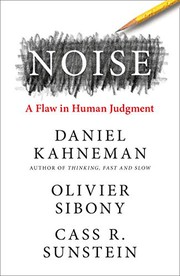
Daniel Kahneman, Olivier Sibony, Cass R. Sunstein · 2021 · Unwanted variability in judgment, distinct from bias.
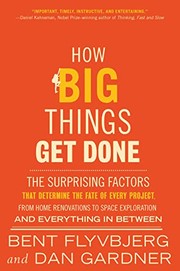
Bent Flyvbjerg, Dan Gardner · 2023 · Why megaprojects overrun, and the reference-class forecasting correction.
Douglas W. Hubbard · 2007 · Calibration and the value of information applied to intangibles.
Peter Bevelin · 2016 · Dialogue form; Munger's inversion habit worked through systematically.
Brian Christian, Tom Griffiths · Brian Christian and Tom Griffiths translate classical computer science results — optimal stopping, explore/exploit tradeoffs, scheduling — into guidance for human decisions. The 37% rule for when to stop searching and commit is the most cited single insight.
Nassim Nicholas Taleb · Taleb's first book makes the case that we systematically underestimate the role of luck in outcomes we attribute to skill. The argument is less rigorous than what follows but more readable — a good entry point into his critique of standard probability intuitions.
Richard H. Thaler · Richard Thaler's memoir of behavioral economics: how the field was built against the resistance of standard economics, and what the key experiments actually showed. Complements Kahneman by focusing on institutional and policy implications rather than individual psychology.
Daniel Kahneman, Olivier Sibony, Cass R. Sunstein · The overlooked twin of bias. Where Thinking Fast and Slow focuses on directional errors, this 2021 book examines variability: the fact that the same judge, doctor, or underwriter will give different answers to the same case on different days. Introduces 'decision hygiene' as a practical corrective.
Charlie Munger · Munger's concept of the latticework of mental models is the best practitioner framework for decision quality. The Almanack collects his speeches and letters into a single volume. His approach — build a large repertoire, then invert — covers the ground that formal decision theory misses.
Nassim Nicholas Taleb · Taleb's most practical book. The central claim is that decision quality degrades when the decision-maker doesn't bear the consequences — and that most institutional advice fails this test. The asymmetry argument reframes accountability as an epistemic problem.
Rolf Dobelli · A working catalogue of 99 cognitive errors, organized so you can actually use it. Less academic than Kahneman, more encyclopedic than Duke. The format — one bias per short chapter — makes it useful as a pre-mortem checklist before consequential decisions.
Nassim Nicholas Taleb · Extends the randomness argument to tail risks: the events that don't appear in historical data but dominate outcomes. The epistemology (what we can and cannot know) is more important than the popular-culture version of the book, which got reduced to 'bad things happen.'
Howard Marks · Howard Marks on second-order thinking: the question is never 'is this good?' but 'is this better than what the market already believes?' His memos, distilled here, are a masterclass in calibrating confidence against the crowd — directly applicable beyond investing.
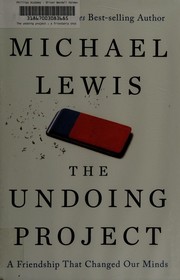
Michael Lewis · Michael Lewis's account of the Kahneman-Tversky collaboration reads like a novel but carries the ideas. Useful for understanding which insights were contested within the field, and where the program's limits are. The friendship story illuminates how the work was actually done.
Annie Duke · Annie Duke's best insight is definitional: a good decision is not one that produced a good outcome. Poker forces this distinction because the feedback loop is fast and the randomness is visible. Most other domains let you confuse luck and skill for years.
James H. Austin · 1978 · A neurologist on the varieties of luck in scientific discovery
Paul Slovic, Amos Tversky · 1982 · Edited volume; Open Library lists first publication 1981.
John S. Hammond, Ralph L. Keeney, Howard Raiffa · 1998
Amos Tversky · 2000 · Edited volume; Open Library lists first publication 1985.
Lars Tvede · 2010 · Long-horizon view of the trends reshaping economies and markets.
Michael Shearn · 2011 · Seventy questions to ask before buying any business.
T4 Wait
Frank Partnoy · 2012
Christopher Mayer · 2018 · Subtitled A Guide to Clear Thinking About Wall Street, Investing, and Life.
Michael Mauboussin · 2026 · Open Library lists the title as "Investing Mind".
Randomness by Nassim Nicholas Taleb
Daniel Kahneman, Paul Slovic, Amos Tversky
Donald Sull