Counterpoint Global, Morgan Stanley
Managed by Michael Mauboussin
48 letters, 2020 to 2026
| Bayes and Base Rates 2.0: How History Can Guide Our Assessment of the Future | 2026 | |||
| Bayes and Base Rates: How History Can Guide Our Assessment of the Future | 2026 | |||
| Competitive Advantage Period: The Neglected Value Driver | 2026 | |||
| Opportunities and Expectations: The Present Value of Growth Opportunities in Valuation | 2026 | |||
| The Wisdom of Crowds in Markets: Crowd Behavior in Prediction, Betting, and Stock Markets | 2026 | |||
| Who Is On the Other Side? A Framework for Understanding Market (In)Efficiency | 2026 | |||
| Capital Allocation: Results, Analysis, and Assessment (Updated) | 2025 | |||
| Cash Holdings: Data, Theory, and Alternatives | 2025 | |||
| Drawdowns and Recoveries: Base Rates for Bottoms and Bounces | 2025 | |||
| Probabilities and Payoffs: The Practicalities and Psychology of Expected Value | 2025 | |||
| Valuation Multiples: What They Miss, Why They Differ, and the Link to Fundamentals | Michael Mauboussin explains what valuation multiples miss, why they differ across companies, and how they link to growth, return on capital and risk. | 2024 | 2024-04-23 | |
| Cost of Capital and Capital Allocation: Investment in the Era of "Easy Money" | Michael Mauboussin examines how U.S. companies allocated capital during the era of easy money, when financial capital was cheap and abundant. | 2024 | 2024-02-28 | |
| Increasing Returns: Identifying Forms of Increasing Returns and What Drives Them | Michael Mauboussin identifies forms of increasing returns, from Adam Smith's division of labour to network effects, and what drives them. | 2024 | 2024-01-30 | |
| Charts From the Vault: Pictures to Ponder | 2024 | |||
| Measuring the Moat: Assessing the Magnitude and Sustainability of Value Creation | 2024 | |||
| Stock Market Concentration: How Much Is Too Much? | 2024 | |||
| Which One Is It?: Equity Issuance and Retirement | 2024 | |||
| Pattern Recognition: Opportunities and Limits | Michael Mauboussin examines the opportunities and limits of pattern recognition in investing, starting from ConAgra's 1990 purchase of Beatrice's food business. | 2023 | 2023-12-13 | |
| Total Shareholder Return: Linking The Drivers of Total Returns to Fundamentals | Michael Mauboussin breaks total shareholder return into its drivers and links each to a company's fundamentals and changing expectations. | 2023 | 2023-10-24 | |
| Trading Stages in the Company Life Cycle | Michael Mauboussin shows how a company's life-cycle stage shapes its capital allocation, financing cost, governance and valuation. | 2023 | 2023-09-26 | |
| Birth, Death, and Wealth Creation: Why Investors Need to Understand Corporate Demographics | Michael Mauboussin argues investors should understand corporate births and deaths, since valuations usually assume companies live forever. | 2023 | 2023-07-25 | |
| ROIC and the Investment Process: ROICs, How They Change, and Shareholder Returns | Michael Mauboussin explains return on invested capital, how it changes, and how those changes relate to shareholder returns. | 2023 | 2023-06-06 | |
| Stock-Based Compensation: Unpacking the Issues | Michael Mauboussin unpacks the accounting and economics of stock-based compensation and how investors should treat it. | 2023 | 2023-04-18 | |
| Confidence: Methods to Assess Confidence Under Uncertainty | Michael Mauboussin describes methods for judging confidence under uncertainty, since investing means finding gaps between expected value and price. | 2023 | 2023-03-22 | |
| Cost of Capital: A Practical Guide to Measuring Opportunity Cost | Michael Mauboussin offers a practical guide to measuring the cost of capital as the opportunity cost of investing. | 2023 | 2023-02-15 | |
| Capital Allocation: Results, Analysis, and Assessment | Michael Mauboussin explains how to assess a company's capital allocation, how it raises and spends money, as the central driver of long-term value creation. | 2022 | 2022-12-15 | |
| ROIC and Intangible Assets: A Look at How Adjustments for Intangibles Affect ROIC | Michael Mauboussin shows how treating intangible investments as assets rather than expenses changes measured return on invested capital. | 2022 | 2022-11-09 | |
| Return on Invested Capital: How to Calculate ROIC and Handle Common Issues | Michael Mauboussin explains how to calculate return on invested capital and handle common issues such as leases, goodwill and cash. | 2022 | 2022-10-06 | |
| Market Share: Understanding Competitive Advantage Through Market Power | Michael Mauboussin examines market share as a measure of market power and competitive advantage, since competition pushes returns toward the cost of capital. | 2022 | 2022-09-15 | |
| Good Losses, Bad Losses: All Losses Are Not Created Equal | Michael Mauboussin distinguishes good losses, from investments in intangibles that build value, from bad losses that destroy it. | 2022 | 2022-07-20 | |
| New Business Boom and Bust: How Capitalism Experiments | Michael Mauboussin examines booms and busts in new business formation as the way capitalism experiments. | 2022 | 2022-06-15 | |
| Wealth Transfers: Redistribution of Value via Capital Allocation | Michael Mauboussin shows how buybacks, issuance and M&A transfer wealth between groups of shareholders. | 2022 | 2022-05-10 | |
| Intangibles and Earnings: Improving the Usefulness of Financial Statements | Michael Mauboussin argues that expensing intangible investments distorts earnings, and shows how to adjust financial statements to make them more useful. | 2022 | 2022-04-12 | |
| Feedback: Information as a Basis for Improvement | Michael Mauboussin explains how feedback on process, not just outcomes, helps investors improve when luck clouds short-term results. | 2022 | 2022-03-16 | |
| Underestimating the Red Queen: Measuring Growth and Maintenance Investments | Michael Mauboussin shows how to split a company's investment into maintenance and growth spending, drawing on Geoffrey West's work on scaling. | 2022 | 2022-01-27 | |
| Categorizing for Clarity: Cash Flow Statement Adjsutments to Improve Insight | Michael Mauboussin shows how to reclassify cash flow statement items to separate operating, investing and financing activity for clearer insight. | 2021 | 2021-10-06 | |
| Turn and Face the Strange: Overcoming Barriers to Change in Sports and Investing | Michael Mauboussin examines why sports teams and investment firms resist changes that would help them succeed, and how to overcome those barriers. | 2021 | 2021-09-08 | |
| Everything Is a DCF Model: A Mantra for Valuing Cash-Generating Assets | Michael Mauboussin argues that every valuation of a cash-generating asset is a discounted cash flow model, whatever shortcut is used. | 2021 | 2021-08-03 | |
| The Impact of Intangibles on Base Rates | Michael Mauboussin examines how the rise of intangible investment changes base rates for sales growth and returns, starting from the Economist's 2017 Amazon cover. | 2021 | 2021-06-23 | |
| The Economics of Customer Businesses: Calculating Customer-Based Corporate Valuation | Michael Mauboussin explains customer-based corporate valuation, valuing a business from the economics of each customer. | 2021 | 2021-05-19 | |
| Market-Expected Return on Investment: Bridging Accounting and Valuation | Michael Mauboussin bridges accounting and valuation by calculating the return on investment the market expects from a company's stock price. | 2021 | 2021-04-14 | |
| WACC and Vol: Valuatoin for Companies with Real Options | Michael Mauboussin shows how volatility and real options raise the value of some companies beyond what a WACC-based DCF captures. | 2020 | 2020-12-21 | |
| One Job: Expectations and the Role of Intangible Investments | Michael Mauboussin argues the investor's one job is to judge expectations, and shows how intangible investment makes current earnings mislead. | 2020 | 2020-09-15 | |
| Public to Private Equity in the United States: A Long-Term Look | Michael Mauboussin traces the shift of U.S. equity from public markets to buyout and venture capital firms over the past quarter century. | 2020 | 2020-08-04 | |
| The Math of Value and Growth: Growth, Return on Capital, and the Discount Rate | Michael Mauboussin sets out the math linking value to growth, return on capital and the discount rate. | 2020 | 2020-06-09 | |
| Myth Busting, Popular Delusions, and the Variant Perception | Michael Mauboussin's Greenwich Roundtable talk on myths, popular delusions and the variant perception that lets skilled investors profit. | 2020 | 2020-05-20 | |
| Dispersion & Alpha Conversion: How Dispersion Creates the Opportunity to Express Skill | Michael Mauboussin argues that dispersion of returns creates the opportunity for skilled investors to convert skill into alpha. | 2020 | 2020-04-14 | |
| BIN There, Done That: How to Reduce the Sources of Forecasting Error | Michael Mauboussin explains how to reduce forecasting error by tackling bias, information and noise, since beating the market means anticipating revisions in expectations. | 2020 | 2020-03-19 |

More 13

How to read financial statements sceptically and value bonds and stocks.
“Benjamin Graham and David Dodd, Security Analysis, Second Edition (New York: McGraw-Hill, 1940), 79” — Michael Mauboussin
Source: Everything Is a DCF Model: A Mantra for Valuing Cash-Generating Assets, page 10
Also recommended by: Bill Miller, Christopher Bloomstran and 17 others
How Jim Simons's Renaissance used maths and data to earn the best returns on record.
“Gregory Zuckerman, The Man Who Solved the Market: How Jim Simons Launched the Quant Revolution (New York: Portfolio/Penguin, 2019), 108” — Michael Mauboussin
Source: Dispersion & Alpha Conversion: How Dispersion Creates the Opportunity to Express Skill, page 13
Also recommended by: Andrew Wilkinson, Bill Ackman, Seth Klarman

Buffett's life to 2008, written with full access to his files and his friends.
“Alice Schroeder, The Snowball: Warren Buffett and the Business of Life (New York: Bantam Books, 2008)” — Michael Mauboussin
Source: Cash Holdings: Data, Theory, and Alternatives
Also recommended by: Andrew Wilkinson, Austen Allred, Guy Spier and 7 others
How multi-sided platforms such as card networks get both sides on board at once.
“David S. Evans and Richard Schmalensee, Matchmakers: The New Economics of Multisided Platforms (Boston, MA: Harvard Business Review Press, 2016)” — Michael Mauboussin
Source: Measuring the Moat: Assessing the Magnitude and Sustainability of Value Creation

The decentralised structure and financial controls that ran General Motors.
“Alfred P. Sloan Jr., My Years With General Motors (New York: Doubleday & Company, 1964)” — Michael Mauboussin
Source: Market-Expected Return on Investment: Bridging Accounting and Valuation, page 19
Also recommended by: Mohnish Pabrai, Patrick Collison and 1 other
Why well-run firms lose to cheaper, worse products that enter at the market's bottom.
“Clayton M. Christensen, The Innovator’s Dilemma: When New Technologies Cause Great Companies to Fail (Boston, MA: Harvard Business School Press, 1997)” — Michael Mauboussin
Source: New Business Boom and Bust: How Capitalism Experiments, page 8
Also recommended by: Bill Gurley, Drew Houston, Jim Collins and 28 others

Books One to Three: division of labour, money, prices, wages, profit and capital.
“Adam Smith, An Inquiry into the Nature and Causes of the Wealth of Nations (London: W. Strahan and T. Cadell, 1776)” — Michael Mauboussin
Source: Increasing Returns: Identifying Forms of Increasing Returns and What Drives Them, page 15
Also recommended by: Mohnish Pabrai, William J. Bernstein
Why firms exist: transaction costs decide when to own rather than contract.
“Oliver E. Williamson, The Economic Institutions of Capitalism: Firms, Markets, Relational Contracting (New York: Free Press, 1985)” — Michael Mauboussin
Source: Measuring the Moat: Assessing the Magnitude and Sustainability of Value Creation

A 20-year test of 28,000 expert forecasts: foxes with many models beat hedgehogs.
“Philip E. Tetlock, Expert Political Judgment: How Good Is It? How Can We Know? (Princeton, NJ: Princeton University Press, 2005) and Don A” — Michael Mauboussin
Source: Confidence: Methods to Assess Confidence Under Uncertainty, page 7
Also recommended by: Marc Andreessen, Patrick Collison and 1 other
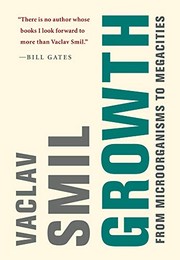
How organisms, populations, machines, economies and civilisations grow, and stop.
“and Vaclav Smil, Growth: From Microorganisms to Megacities (Cambridge, MA: MIT Press, 2019)” — Michael Mauboussin
Source: Underestimating the Red Queen: Measuring Growth and Maintenance Investments, page 18
Also recommended by: Bill Gates
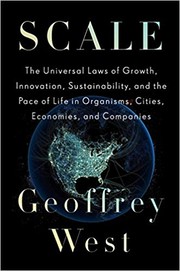
Why organisms, cities and companies follow power laws set by their supply networks.
“Geoffrey West, Scale: The Universal Laws of Growth, Innovation, Sustainability, and the Pace of Life in Organisms, Cities, Economies, and Companies (New York: Penguin Press, 2017), 26” — Michael Mauboussin
Source: Underestimating the Red Queen: Measuring Growth and Maintenance Investments, page 18
Also recommended by: Nat Eliason, Stewart Brand, Vinod Khosla and 2 others

The 1988 bidding war for RJR Nabisco, the largest leveraged buyout to that date.
“Bryan Burroughs and John Helyar, Barbarians at the Gate: The Fall of RJR Nabisco (New York: Harper & Row, 1990), 133-138 and George Anders, Merchants o” — Michael Mauboussin
Source: Public to Private Equity in the United States: A Long-Term Look, page 62
Also recommended by: Jim Collins, Mohnish Pabrai and 1 other
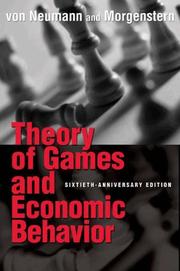
The founding of game theory: expected utility and strategy among interacting players.
“John von Neumann and Oskar Morgenstern, Theory of Games and Economic Behavior (Princeton, NJ: Princeton University Press, 1944)” — Michael Mauboussin
Source: Competitive Advantage Period: The Neglected Value Driver

Evidence on how brands grow: reach light buyers and be easy to recall and buy.
“See Byron Sharp, How Brands Grow: What Marketers Don't Know (Oxford: Oxford University Press, 2010), 16-27” — Michael Mauboussin
Source: The Economics of Customer Businesses: Calculating Customer-Based Corporate Valuation, page 32
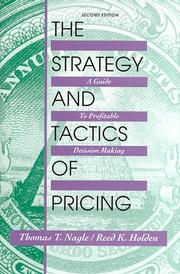
Set prices from the value customers get, not from cost or rivals' prices.
“For more on pricing strategy, see Thomas T. Nagle and Georg Müller, The Strategy and Tactics of Pricing: A Guide to Growing More Profitably, Sixth Edition (New York: Routledge, 2018) and Alan S” — Michael Mauboussin
Source: The Economics of Customer Businesses: Calculating Customer-Based Corporate Valuation, page 35
Lessons from 25 years of interviews with investors from Templeton to Munger.
“See William Green, Richer, Wiser, Happier: How the World’s Greatest Investors Win in Markets and Life (New York: Scribner, 2021)” — Michael Mauboussin
Source: Birth, Death, and Wealth Creation: Why Investors Need to Understand Corporate Demographics, page 24
Also recommended by: Nick Sleep
Value is discounted future cash flow, not earnings per share or return on equity.
“Alfred Rappaport, a professor emeritus at the Kellogg School of Management at Northwestern University, made this point clearly in his seminal book, Creating Shareholder Value.” — Michael Mauboussin
Source: Market Share: Understanding Competitive Advantage Through Market Power, page 1
Also recommended by: Mohnish Pabrai
Why firms are moving from selling units to selling ongoing subscriptions, and how.
“See www.zuora.com/resource/ subscription-economy-index/ and Tien Tzuo and Gabe Weisert, Subscribed: Why the Subscription Model Will Be Your Company's Future–and What to Do About It (New York: Portfolio/Penguin, 2018)” — Michael Mauboussin
Source: The Economics of Customer Businesses: Calculating Customer-Based Corporate Valuation, page 31
Innovation platforms and transaction platforms, and what each needs to succeed.
“See Michael A. Cusumano, Annabelle Gawer, and David B. Yoffie, The Business of Platforms: Strategy in the Age of Digital Competition, Innovation, and Power (New York: Harper Business, 2019), 107-138” — Michael Mauboussin
Source: Market Share: Understanding Competitive Advantage Through Market Power, page 42
Living standards rise through learning, and how policy can make economies learn.
“For a wonderful book that builds on Arrow’s research, see Joseph E. Stiglitz and Bruce C. Greenwald, Creating A Learning Society: A New Approach to Growth, Development, and Social Progress (New York: Columbia University Press, 2014)” — Michael Mauboussin
Source: Increasing Returns: Identifying Forms of Increasing Returns and What Drives Them, page 16
How antitrust shrank to a consumer price test, and the case for breaking up giants.
“Gustavo Grullon, Yelena Larkin, and Roni Michaely, “Are U.S. Industries Becoming More Concentrated?” Review of Finance, Vol. 23, No. 4, July 2019, 697-743 and Tim Wu, The Curse of Bigness: Antitrust in the New Gilded Age (New York: Columbia Global Reports, 2018)” — Michael Mauboussin
Source: Public to Private Equity in the United States: A Long-Term Look, page 60
Also recommended by: Jeff Jordan
Prosperity grows as trade and specialisation let ideas meet and combine.
“Matt Ridley, The Rational Optimist: How Prosperity Evolves (New York: HarperCollins, 2010)” — Michael Mauboussin
Source: One Job: Expectations and the Role of Intangible Investments, page 21
Also recommended by: Andrew Wilkinson, Bill Gates, Frank Martin and 11 others
How bankers used depositors' money to control industry, from the Pujo inquiry.
“See Louis D. Brandeis, Other People’s Money and How The Bankers Use It (New York: Frederick A. Stokes Company, 1914), 92” — Michael Mauboussin
Source: Public to Private Equity in the United States: A Long-Term Look, page 64
Also recommended by: John C. Bogle
Why acquirers overpay: the premium is a promise of gains most never deliver.
“Mark L. Sirower, The Synergy Trap: How Companies Lose the Acquisition Game (New York: Free Press, 1997)” — Michael Mauboussin
Source: Cost of Capital and Capital Allocation: Investment in the Era of "Easy Money", page 15
McKinsey's guide to discounted cash flow valuation and managing for value.
“For an excellent discussion of valuing banks, see Koller, Goedhart, and Wessels, Valuation, 733-758.” — Michael Mauboussin
Source: Return on Invested Capital: How to Calculate ROIC and Handle Common Issues, page 38
Also recommended by: Mohnish Pabrai and 1 other
Innovation is gradual, collective and bottom-up, not the work of lone inventors.
“Matt Ridley, How Innovation Works: And Why It Flourishes in Freedom (New York: Harper, 2020)” — Michael Mauboussin
Source: Increasing Returns: Identifying Forms of Increasing Returns and What Drives Them, page 17
Also recommended by: Balaji S. Srinivasan, Naval Ravikant

Language as a human instinct, and what science knows of grammar and learning.
“Steven Pinker, The Language Instinct: How the Mind Creates Language (New York: HarperCollins, 1994), 150- 151” — Michael Mauboussin
Source: New Business Boom and Bust: How Capitalism Experiments, page 8
Also recommended by: Charlie Munger, Mohnish Pabrai and 2 others
Blackstone from its 1985 founding through its 2007 public offering and the crisis.
“Carey, David and John E. Morris, King of Capital: The Remarkable Rise, Fall, and Rise Again of Steve Schwartzman and Blackstone (New York: Currency, 2010)” — Michael Mauboussin
Source: Public to Private Equity in the United States: A Long-Term Look, page 67
Also recommended by: Brad Feld, Mohnish Pabrai
KKR from 1976 through the RJR Nabisco buyout, and what debt did to its companies.
“Anders, George, Merchants of Debt: KKR and the Mortgaging of American Business (New York: Basic Books, 1992)” — Michael Mauboussin
Source: Public to Private Equity in the United States: A Long-Term Look, page 67
Why China may match the US in AI now that applying it matters more than research.
“Kai-Fu Lee, AI Superpowers: China, Silicon Valley, and the New World Order (Boston: Houghton Mifflin Harcourt Publishing, 2018), 22-26” — Michael Mauboussin
Source: One Job: Expectations and the Role of Intangible Investments, page 21
Also recommended by: Balaji S. Srinivasan, Alfred Lin and 2 others
Georges Doriot, who showed that investing in small, risky firms could pay.
“For a biography of Georges Doriot, see Spencer E. Ante, Creative Capital: Georges Doriot and the Birth of Venture Capital (Boston, MA: Harvard Business Press, 2008)” — Michael Mauboussin
Source: Public to Private Equity in the United States: A Long-Term Look, page 63
Also recommended by: Patrick Collison

A political history of American monopoly and of the tradition that fought it.
“Matt Stoller, Goliath: The 100-Year War Between Monopoly Power and Democracy (New York: Simon & Schuster, 2019)” — Michael Mauboussin
Source: Market Share: Understanding Competitive Advantage Through Market Power, page 46
Also recommended by: David Heinemeier Hansson
Interviews with fifteen hedge fund managers with strong long-term records.
“Ed Thorp interview in Jack D. Schwager, Hedge Fund Market Wizards: How Winning Traders Win (Hoboken, NJ: John Wiley & Sons, 2012), 217” — Michael Mauboussin
Source: Feedback: Information as a Basis for Improvement, page 18
Also recommended by: Bill Nygren
The key papers on the Kelly criterion for sizing bets, for and against.
“Leonard C. MacLean, Edward O. Thorp, and William T. Ziemba, eds., The Kelly Capital Growth Investment Criterion: Theory and Practice (Hackensack, NJ: World Scientific, 2011), 823” — Michael Mauboussin
Source: Probabilities and Payoffs: The Practicalities and Psychology of Expected Value
Also recommended by: Nassim Nicholas Taleb

The classic on markets as a game of psychology and identity
“Adam Smith, The Money Game (New York: Random House, 1967), 48” — Michael Mauboussin
Source: The Wisdom of Crowds in Markets: Crowd Behavior in Prediction, Betting, and Stock Markets
Also recommended by: Barton Biggs, Howard Marks, Jason Zweig and 5 others
How trend-following traders such as John W. Henry made their fortunes.
“Michael W. Covel, Trend Following: How to Make Money in Bull, Bear, and Black Swan Markets, Revised and Extended Fifth Edition (Hoboken, NJ: John Wiley & Sons, 2017)” — Michael Mauboussin
Source: Dispersion & Alpha Conversion: How Dispersion Creates the Opportunity to Express Skill, page 13
Columbia's value investing method: a valuation in three stages, most reliable first.
“Bruce C. N. Greenwald, Judd Kahn, Paul D. Sonkin, and Michael van Biema, Value Investing: From Graham to Buffett and Beyond (New York: John Wiley & Sons, 2001), 71-74” — Michael Mauboussin
Source: The Math of Value and Growth: Growth, Return on Capital, and the Discount Rate, page 10
Also recommended by: Martin J. Whitman, Mohnish Pabrai and 4 others
Economic moat ratings applied to companies sector by sector.
“Michael J. Mauboussin, Dan Callahan, and Darius Majd, “Measuring the Moat: Assessing the Magnitude and Sustainability of Value Creation,” Credit Suisse Global Financial Strategies, November 1, 2016 and Heather Brilliant and Elizabeth Collins, Why Moats Matter: The Morningstar Approach to Stock Investing (Hoboken, NJ: John Wiley & Sons, 2014)” — Michael Mauboussin
Source: Market Share: Understanding Competitive Advantage Through Market Power, page 39
Why barriers to entry are the one force that matters in business strategy.
“Bruce Greenwald and Judd Kahn, Competition Demystified: A Radically Simplified Approach to Business Strategy (New York: Portfolio, 2005), 52-76” — Michael Mauboussin
Source: New Business Boom and Bust: How Capitalism Experiments, page 9
Also recommended by: Li Lu, Mohnish Pabrai
What 16,000 projects show about why big ones overrun, and how to plan them.
“Bent Flyvbjerg and Dan Gardner, How Big Things Get Done: The Surprising Factors That Determine the Fate of Every Project, from Home Renovations to Space Exploration and Everything In Between (New York: Crown Currency, 2023)” — Michael Mauboussin
Source: Pattern Recognition: Opportunities and Limits, page 14
How platform businesses connecting users differ from firms that make products.
“Alex Moazed and Nicholas L. Johnson, Modern Monopolies: What It Takes to Dominate in the 21st Century (New York: St. Martin’s Press, 2016)” — Michael Mauboussin
Source: Measuring the Moat: Assessing the Magnitude and Sustainability of Value Creation

Why American executive pay is not set by arm's-length bargaining for shareholders.
“For the negative case see Lucian A. Bebchuk and Jesse M. Fried, Pay Without Performance: The Unfulfilled Promise of Executive Compensation (Cambridge, MA: Harvard University Press, 2004) and Lucian A” — Michael Mauboussin
Source: Capital Allocation: Results, Analysis, and Assessment, page 65
Porter's frameworks on competition and strategy, restated with misuses corrected.
“Joan Magretta, Understanding Michael Porter: The Essential Guide to Competition and Strategy (Boston, MA: Harvard Business Review Press, 2012), 114-115” — Michael Mauboussin
Source: ROIC and the Investment Process: ROICs, How They Change, and Shareholder Returns, page 28
Also recommended by: Mohnish Pabrai
An empirical defence of the high-yield bond market after the fall of Drexel.
“Glenn Yago, Junk Bonds: How High Yield Securities Restructured Corporate America (Oxford: Oxford University Press, 1991), 148” — Michael Mauboussin
Source: Pattern Recognition: Opportunities and Limits, page 11
Why anything a manager cares about can be measured, and how to measure it.
“Hubbard, Douglas, How to Measure Anything: Finding the Value of Intangibles in Business (Hoboken, NJ: John Wiley & Sons, 2007)” — Michael Mauboussin
Source: The Wisdom of Crowds in Markets: Crowd Behavior in Prediction, Betting, and Stock Markets
Also recommended by: Julia Galef, Nick Ganju
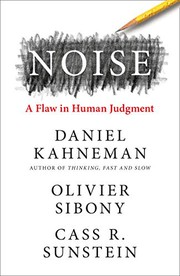
Unwanted variation in judgements that should match, and why organisations ignore it.
“Daniel Kahneman, Olivier Sibony, and Cass R. Sunstein, Noise: A Flaw in Human Judgment (New York: Little, Brown Spark, 2021), 156-158” — Michael Mauboussin
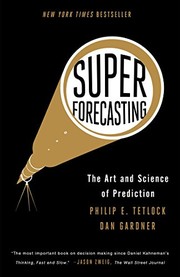
What a four-year forecasting tournament showed about the best forecasters' habits.
“Tetlock and Dan Gardner, his co-author of the book Superforecasting, write, “Beliefs are hypotheses to be tested, not treasures to be protected.” — Michael Mauboussin
Source: Feedback: Information as a Basis for Improvement, page 3
Also recommended by: Bill Nygren, Mark Leonard, Patrick Collison and 9 others
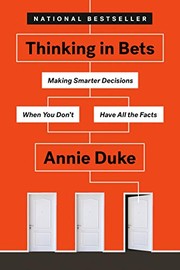
Judge decisions by their reasoning, not their outcomes, and think in odds.
“See Gigerenzer, Calculated Risks, 28-29. 14 For a book that treats this topic and more, see Annie Duke, Thinking in Bets: Making Smarter Decisions When You Don't Have All the Facts (New York: Portfolio/Penguin, 2018). 15 For a good discussion of Bayes’ Theorem, see Nate Silver, The Signal and the Noise: Why So Many Predictions Fail—But Some Don’t (New York, The Penguin Press, 2012), 232-261.” — Michael Mauboussin
Source: Confidence: Methods to Assess Confidence Under Uncertainty, page 7
Also recommended by: Bill Nygren, Derek Sivers, Ev Williams and 7 others

John Malone, TCI and the building of the American cable industry.
“Mark Robichaux, Cable Cowboy: John Malone and the Rise of the Modern Cable Business (Hoboken, N.J: John Wiley & Sons, 2002)” — Michael Mauboussin
Source: Competitive Advantage Period: The Neglected Value Driver
Also recommended by: Mohnish Pabrai
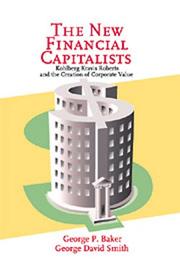
KKR as an organisational innovation, and the governance case for the buyout.
“See George P. Baker and George David Smith, The New Financial Capitalists: Kohlberg Kravis Roberts and the Creation of Corporate Value (Cambridge, UK: Cambridge University Press, 1998), 207-208” — Michael Mauboussin
Source: Public to Private Equity in the United States: A Long-Term Look, page 58
Also recommended by: Mohnish Pabrai
How index funds went from academic idea to owning much of the world's shares.
“Wigglesworth, Robin, Trillions: How a Band of Wall Street Renegades Invested the Index Fund and Changed Finance Forever (New York: Portfolio/Penguin, 2021)” — Michael Mauboussin
Source: Who Is On the Other Side? A Framework for Understanding Market (In)Efficiency
What it is like to write films for Hollywood, from a screenwriter's own career.
“William Goldman, Adventures in the Screen Trade: A Personal View of Hollywood and Screenwriting (New York: Warner Books, 1983), 39” — Michael Mauboussin
Source: Who Is On the Other Side? A Framework for Understanding Market (In)Efficiency
Also recommended by: Tim Ferriss
“For a broader discussion of the history of accounting, see Gary John Previts and Barbara Dubis Merino, A History of Accountancy in the United States: The Cultural Significance of Accounting (Columbus, OH: Ohio State University Pres, 1998)” — Michael Mauboussin
Source: Categorizing for Clarity: Cash Flow Statement Adjsutments to Improve Insight, page 12
“Mark Rubinstein, A History of the Theory of Investments: My Annotated Bibliography (Hoboken, NJ: John Wiley & Sons, 2006), 3-97” — Michael Mauboussin
Source: Competitive Advantage Period: The Neglected Value Driver
“For the case against capitalizing intangible investments, see Stephen Penman, Accounting for Value (New York: Columbia Business School Publishing, 2011)” — Michael Mauboussin
Source: Categorizing for Clarity: Cash Flow Statement Adjsutments to Improve Insight, page 13
“Holland described the framework that became genetic algorithms in John H. Holland, Adaptation in Natural and Artificial Systems (Ann Arbor, MI: University of Michigan Press, 1975)” — Michael Mauboussin
Source: Increasing Returns: Identifying Forms of Increasing Returns and What Drives Them, page 17
“Holland, John H., Adaptation in Natural and Artificial Systems (Ann Arbor, MI: University of Michigan Press, 1975)” — Michael Mauboussin
Source: Increasing Returns: Identifying Forms of Increasing Returns and What Drives Them, page 20
“Baker, H. Kent, John R. Nofsinger, and Victor Ricciardi, Advanced Introduction to Behavioral Finance (Cheltenham, UK: Edward Elgar Publishing, 2023)” — Michael Mauboussin
Source: Who Is On the Other Side? A Framework for Understanding Market (In)Efficiency
“Gompers, Paul A., and Steven N. Kaplan, Advanced Introduction to Private Equity (Cheltenham, UK: Edward Elgar, 2022)” — Michael Mauboussin
Source: Probabilities and Payoffs: The Practicalities and Psychology of Expected Value
“Paleologo, Giuseppe A., Advanced Portfolio Management: A Quant’s Guide for Fundamental Investors (Hoboken, NJ: John Wiley & Sons, 2021)” — Michael Mauboussin
Source: Probabilities and Payoffs: The Practicalities and Psychology of Expected Value
“David A. Holland and Bryant A. Matthews, Beyond Earnings: Applying the HOLT CFROI and Economic Profit Framework (Hoboken, NJ: John Wiley & Sons, 2018)” — Michael Mauboussin
Source: Competitive Advantage Period: The Neglected Value Driver
“Mulgan, Geoff, Big Mind: How Collective Intelligence Can Change Our World (Princeton, NJ: Princeton University Press, 2018)” — Michael Mauboussin
Source: The Wisdom of Crowds in Markets: Crowd Behavior in Prediction, Betting, and Stock Markets
“Byrne Hobart and Tobias Huber, Boom: Bubbles and the End of Stagnation (San Francisco: Stripe Press, 2024)” — Michael Mauboussin
Source: Who Is On the Other Side? A Framework for Understanding Market (In)Efficiency
“John Malone, Born to Be Wired: Lessons From a Lifetime Transforming Television, Wiring America for the Internet, and Growing Formula One, Discovery, SiriusXM, and the Atlanta Braves (New York: Simon & Schuster, 2025), 7” — Michael Mauboussin
Source: Competitive Advantage Period: The Neglected Value Driver
“Edmund P. Learned, C. Roland Christensen, Kenneth R. Andrews, and William D. Guth, Business Policy: Text and Cases (Homewood, IL: Richard D. Irwin, 1965)” — Michael Mauboussin
Source: Competitive Advantage Period: The Neglected Value Driver
“Gerd Gigerenzer, Calculated Risks: How to Know When Numbers Deceive You (New York: Simon & Schuster, 2002), 26-28 and Friedman, War and Chance, 52” — Michael Mauboussin
Source: Confidence: Methods to Assess Confidence Under Uncertainty, page 7
“Jacobs, Bruce I., Capital Ideas and Market Realities: Option Replication, Investor Behavior, and Stock Market Crashes (Malden, MA: Blackwell Publishers, 1999)” — Michael Mauboussin
Source: Who Is On the Other Side? A Framework for Understanding Market (In)Efficiency
“George J. Stigler, Capital and Rates of Return in Manufacturing Industries (Princeton, NJ: Princeton University Press, 1963), 54” — Michael Mauboussin
Source: Increasing Returns: Identifying Forms of Increasing Returns and What Drives Them, page 15
“For a good discussion on how to reconcile APV with traditional calculations of the weighted average cost of capital, see Nick Antill, Kenneth Lee, and Deborah Taylor, Company Valuation Under IFRS: Interpreting and Forecasting Accounts Using International Financial Reporting Standards, 3rd Edition (Petersfield, UK: Harriman House, 2020), 35-48” — Michael Mauboussin
Source: Cost of Capital: A Practical Guide to Measuring Opportunity Cost, page 47
“Mitchell, Melanie, Complexity: A Guided Tour (Oxford: Oxford University Press, 2009)” — Michael Mauboussin
Source: Increasing Returns: Identifying Forms of Increasing Returns and What Drives Them, page 21
Also recommended by: Derek Sivers
“and Philip Bromiley, Corporate Capital Investment: A Behavioral Approach (Cambridge, UK: Cambridge University Press, 1986)” — Michael Mauboussin
Source: Cost of Capital and Capital Allocation: Investment in the Era of "Easy Money", page 15
“Scheffer, Marten, Critical Transitions in Nature and Society (Princeton, NJ: Princeton University Press, 2009)” — Michael Mauboussin
Source: The Wisdom of Crowds in Markets: Crowd Behavior in Prediction, Betting, and Stock Markets
“See Peter Fader, Customer Centricity: Focus on the Right Customers for Strategic Advantage (Philadelphia, PA: Wharton School Press, 2020)” — Michael Mauboussin
Source: The Economics of Customer Businesses: Calculating Customer-Based Corporate Valuation, page 31
“Anu Bradford, Digital Empires: The Global Battle to Regulate Technology (Oxford: Oxford University Press, 2023)” — Michael Mauboussin
Source: Measuring the Moat: Assessing the Magnitude and Sustainability of Value Creation
“Baker, H. Kent, ed., Dividends and Dividend Policy (Hoboken, NJ: John Wiley & Sons, 2009)” — Michael Mauboussin
Source: Capital Allocation: Results, Analysis, and Assessment, page 76
“Constance E. Helfat, Sydney Finkelstein, Will Mitchell, Margaret A. Peteraf, Harbir Singh, David J. Teece, and Sidney G. Winter, Dynamic Capabilities: Understanding Strategic Change in Organizations (Malden, MA: Blackwell Publishing, 2007), 4” — Michael Mauboussin
“David Besanko, David Dranove, Mark Shanley, and Scott Schaefer, Economics of Strategy, 7th Edition (Hoboken, NJ: John Wiley & Company, 2017), 55-56” — Michael Mauboussin
Source: Increasing Returns: Identifying Forms of Increasing Returns and What Drives Them, page 15
“Robin M. Hogarth, Educating Intuition (Chicago: University of Chicago Press, 2001) and Robin M” — Michael Mauboussin
Source: Pattern Recognition: Opportunities and Limits, page 12
“Donald B. Hausch, Victor S.Y. Lo, and William T. Ziemba, Efficiency of Racetrack Betting Markets (San Diego: Academic Press, 1994)” — Michael Mauboussin
Source: The Wisdom of Crowds in Markets: Crowd Behavior in Prediction, Betting, and Stock Markets
“Funt, Danny, Everybody Loses: The Tumultuous Rise of American Sports Gambling (New York: Gallery Books, 2026)” — Michael Mauboussin
Source: The Wisdom of Crowds in Markets: Crowd Behavior in Prediction, Betting, and Stock Markets
“Maurice Allais and Ole Hagen, eds., Expected Utility Hypotheses and the Allais Paradox (Dordrecht, Holland: Springer Science + Business, 1979), 25-145” — Michael Mauboussin
Source: Probabilities and Payoffs: The Practicalities and Psychology of Expected Value
“Steven Klepper, Experimental Capitalism: The Nanoeconomics of American High-Tech Industries (Princeton, NJ: Princeton University Press, 2016)” — Michael Mauboussin
Source: New Business Boom and Bust: How Capitalism Experiments, page 8
“As Hardin writes, the essential question with ecolate analysis is, “And then what?” See Garrett Hardin, Filters Against Folly: How to Survive Despite Economists, Ecologists, and the Merely Eloquent (New York: Penguin Books, 1985)” — Michael Mauboussin
Source: Confidence: Methods to Assess Confidence Under Uncertainty, page 8
Also recommended by: Charlie Munger
“For a good illustration of this regularity for the U.S. automobile industry, see Mariana Mazzucato, Firm Size, Innovation and Market Structure: The Evolution of Industry Concentration and Instability (Cheltenham, UK: Edward Elgar Publishing, 2000), 28-29” — Michael Mauboussin
Source: New Business Boom and Bust: How Capitalism Experiments, page 8
“Cook, Arthur G., Forecasting for the Pharmaceutical Industry: Models for New Product and In-Market Forecasting and How to Use Them (Burlington, VT: Gower Publishing Company, 2006)” — Michael Mauboussin
Source: Total Shareholder Return: Linking The Drivers of Total Returns to Fundamentals, page 27
“Billy Walters, Gambler: Secrets from a Life at Risk (New York: Avid Reader Press, 2023), 170-172” — Michael Mauboussin
Source: The Wisdom of Crowds in Markets: Crowd Behavior in Prediction, Betting, and Stock Markets
“William T. Ziemba, Great Investment Ideas (Hackensack, NJ: World Scientific, 2017), 175-212” — Michael Mauboussin
Source: Probabilities and Payoffs: The Practicalities and Psychology of Expected Value
“Edmans, Alex, Grow the Pie: How Great Companies Deliver Both Purpose and Profit (Cambridge, UK: Cambridge University Press, 2020)” — Michael Mauboussin
Source: Capital Allocation: Results, Analysis, and Assessment, page 80
“Susan Chaplinsky and Swasti Gupta-Mukherjee, “The Decline in Venture-backed IPOs: Implications for Capital Recovery,” in Mario Levis and Silvio Vismara, eds., Handbook of Research on IPOs (Cheltenham, UK: Edward Elgar, 2013), 35-56” — Michael Mauboussin
Source: Public to Private Equity in the United States: A Long-Term Look, page 64
“Charles M.C. Lee, “Market Efficiency with Costly Information,” in Weili Ge, Allison Koester, Sarah McVay, eds., Handbook on the Financial Reporting Environment (Cheltenham: UK, Edward Elgar Publishing, 2025)” — Michael Mauboussin
Source: Who Is On the Other Side? A Framework for Understanding Market (In)Efficiency
“Thomas D. Seeley, Honeybee Democracy (Princeton, NJ: Princeton University Press, 2010), 11” — Michael Mauboussin
Source: The Wisdom of Crowds in Markets: Crowd Behavior in Prediction, Betting, and Stock Markets
“For a more general discussion of R&D, see Anne Marie Knott, How Innovation Really Works: Using the Trillion-Dollar R&D Fix to Drive Growth (New York: McGraw Hill, 2017)” — Michael Mauboussin
Source: One Job: Expectations and the Role of Intangible Investments, page 20
“Nicholas Mangee, How Novelty and Narratives Drive the Stock Market: Black Swans, Animal Spirits, and Scapegoats (Cambridge: Cambridge University Press, 2021)” — Michael Mauboussin
Source: The Wisdom of Crowds in Markets: Crowd Behavior in Prediction, Betting, and Stock Markets
“George Kingsley Zipf, Human Behavior and the Principle of Least Effort (Cambridge, MA: Addison-Wesley Press, 1949)” — Michael Mauboussin
“Lincoln, James F., Incentive Management (Cleveland, OH: Lincoln Electric Company, 1951)” — Michael Mauboussin
Source: Capital Allocation: Results, Analysis, and Assessment, page 81
“Joe S. Bain, Industrial Organization (New York: John Wiley & Sons, 1959)” — Michael Mauboussin
Source: Competitive Advantage Period: The Neglected Value Driver
“Dedre Gentner and Francisco Maravilla, “Analogical Reasoning,” in Linden J. Ball and Valerie A. Thompson, eds., International Handbook of Thinking and Reasoning (New York: Psychology Press, 2018), 186-203” — Michael Mauboussin
Source: The Wisdom of Crowds in Markets: Crowd Behavior in Prediction, Betting, and Stock Markets
“Jones, Charles I., Introduction to Economic Growth, 2nd Edition (New York: W.W. Norton & Company, 2002)” — Michael Mauboussin
Source: Increasing Returns: Identifying Forms of Increasing Returns and What Drives Them, page 20
“A. Bettencourt, Introduction to Urban Science: Evidence and Theory of Cities as Complex Systems (Cambridge, MA: MIT Press, 2021) and Vaclav Smil, Growth: From Microorga” — Michael Mauboussin
Source: Underestimating the Red Queen: Measuring Growth and Maintenance Investments, page 18
“Gary Klein, Intuition at Work: Why Developing Your Gut Instincts Will Make You Better at What You Do (New York: Currency, 2003), 88-91” — Michael Mauboussin
Source: BIN There, Done That: How to Reduce the Sources of Forecasting Error, page 15
“Grant, Michael, and Fredrik Nilsson, Intuitive Expertise and Financial Decision-Making (Abingdon, UK: Routledge, 2023)” — Michael Mauboussin
Source: Pattern Recognition: Opportunities and Limits, page 16
The story of the new growth theory and how economists came to explain growth.
“Increasing returns is a deep topic that is the subject of dozens of academic papers and books. 8 One of those books, Knowledge and the Wealth of Nations by David Warsh, a journalist, provides the framework for much of this discussion.” — Michael Mauboussin
Source: Increasing Returns: Identifying Forms of Increasing Returns and What Drives Them, page 2
“Sunil Gupta and Donald R. Lehman, Managing Customers as Investments: The Strategic Value of Customers in the Long Run (Philadelphia, PA: Wharton School Press, 2005)” — Michael Mauboussin
Source: The Economics of Customer Businesses: Calculating Customer-Based Corporate Valuation, page 31
“A. Geroski, Market Dynamics and Entry (Oxford: Basil Blackwell, 1991) and Paul Geroski, The Evolution of New” — Michael Mauboussin
Source: New Business Boom and Bust: How Capitalism Experiments, page 9
“Cooper, Lee G., and Masao Nakanishi, Market-Share Analysis: Evaluating Competitive Marketing Effectiveness (Norwell, MA: Kluwer Academic Publishers, 1988)” — Michael Mauboussin
Source: Market Share: Understanding Competitive Advantage Through Market Power, page 47
How innovation transforms industries, from typewriters to personal computers.
“In his book, Mastering the Dynamics of Innovation, James Utterback, an emeritus professor of management at MIT, describes three phases in this recurring pattern.13 The first is the fluid phase where there is a lot of experimentation with product design and the nature of the business model.” — Michael Mauboussin
Source: New Business Boom and Bust: How Capitalism Experiments, page 3
“Measuring Capital in the New Economy (Chicago: University of Chicago Press, 2005)” — Michael Mauboussin
Source: Intangibles and Earnings: Improving the Usefulness of Financial Statements, page 10
“Carol A. Corrado and Charles R. Hulten, “Innovation Accounting,” in Dale W. Jorgenson, J. Steven Landefeld, and Paul Schreyer, eds., Measuring Economic Sustainability and Progress (Chicago: University of Chicago Press, 2014), 614” — Michael Mauboussin
Source: Intangibles and Earnings: Improving the Usefulness of Financial Statements, page 10
“Mark J. Roe, Missing the Target: Why Stock-Market Short-Termism Is Not the Problem (Oxford, UK: Oxford University Press, 2022)” — Michael Mauboussin
Source: Capital Allocation: Results, Analysis, and Assessment, page 66
“For a history of the accounting for intangibles, see Thomas A. King, More Than a Numbers Game: A Brief History of Accounting (Hoboken, NJ: John Wiley & Sons, 2006), 131-143” — Michael Mauboussin
Source: Capital Allocation: Results, Analysis, and Assessment, page 60
“Bockino, David, Over/Under: The Unexpected History of Sports Betting (New York: Pegasus Books, 2026)” — Michael Mauboussin
Source: The Wisdom of Crowds in Markets: Crowd Behavior in Prediction, Betting, and Stock Markets
“Nihat Aktas, Christian Andres, and Ali Ozdakak, “The Interplay of IPO and M&A Markets: The Many Ways One Affects the Other,” in Douglas Cumming and Sofia A. Johan, eds., Oxford Handbook of IPOs (Oxford: Oxford University Press, 2018), 201-232 and Christopher W” — Michael Mauboussin
Source: Birth, Death, and Wealth Creation: Why Investors Need to Understand Corporate Demographics, page 23
“and Victoria Ivashina and Josh Lerner, Patient Capital: The Challenges and Promises of Long-Term Investing (Princeton, NJ: Princeton University Press, 2019), 48-50” — Michael Mauboussin
Source: Market-Expected Return on Investment: Bridging Accounting and Valuation, page 19
“and Don A. Moore, Perfectly Confident: How to Calibrate Your Decisions Wisely (New York: Harper Business, 2020)” — Michael Mauboussin
Source: Confidence: Methods to Assess Confidence Under Uncertainty, page 7
“Ibbotson, Roger G., Thomas M. Idzorek, Paul D. Kaplan, and James X. Xiong, Popularity: A Bridge Between Classical and Behavioral Finance (Charlottesville, VA: CFA Institute Research Foundation, 2018)” — Michael Mauboussin
Source: Who Is On the Other Side? A Framework for Understanding Market (In)Efficiency
“George Calhoun, Price and Value: A Guide to Equity Market Valuation Metrics (Jersey City, NJ: Apress, 2020)” — Michael Mauboussin
Source: Valuation Multiples: What They Miss, Why They Differ, and the Link to Fundamentals, page 21
“Sanjit Dhami, Principles of Behavioral Economics: Microeconomics & Human Behavior (Cambridge, UK: Cambridge University Press, 2025), 418-419” — Michael Mauboussin
Source: Probabilities and Payoffs: The Practicalities and Psychology of Expected Value
“Marshall, Alfred, Principles of Economics (London: Macmillan and Co., 1890)” — Michael Mauboussin
Source: Increasing Returns: Identifying Forms of Increasing Returns and What Drives Them, page 21
“Lawrence A. Cunningham, Quality Shareholders: How the Best Managers Attract and Keep Them (New York: Columbia Business School Publishing, 2020)” — Michael Mauboussin
Source: Capital Allocation: Results, Analysis, and Assessment, page 66
“Steven Pinker, Rationality: What It Is, Why It Seems Scarce, Why It Matters (New York: Viking, 2021), 7” — Michael Mauboussin
Source: Feedback: Information as a Basis for Improvement, page 17
“Martha Amram and Nalin Kulatilaka, Real Options: Managing Strategic Investment in an Uncertain World (Boston, MA: Harvard Business School Press, 1999)” — Michael Mauboussin
Source: WACC and Vol: Valuatoin for Companies with Real Options, page 9
“Micah Zenko, Red Team: How to Succeed By Thinking Like the Enemy (New York: Basic Books, 2015)” — Michael Mauboussin
Source: BIN There, Done That: How to Reduce the Sources of Forecasting Error, page 15
“Elliott Jaques, Requisite Organization: A Total System for Effective Managerial Organization and Managerial Leadership for the 21st Century (Fleming Island, FL: Cason Hall & Co, 2006)” — Michael Mauboussin
Source: Turn and Face the Strange: Overcoming Barriers to Change in Sports and Investing, page 20
“Schindler, Mark, Rumors in Financial Markets: Insights Into Behavioral Finance (Chichester, England: John Wiley & Sons, 2007)” — Michael Mauboussin
Source: Who Is On the Other Side? A Framework for Understanding Market (In)Efficiency
“Rachel E.S. Ziemba and William T. Ziemba, Scenarios for Risk Management and Global Investment Strategies (Chichester, UK: John Wiley & Sons, 2007), 95-122” — Michael Mauboussin
Source: Probabilities and Payoffs: The Practicalities and Psychology of Expected Value
“Tobias J. Moskowitz and L. Jon Wertheim, Scorecasting: The Hidden Influences Behind How Sports Are Played and Games Are Won (New York: Crown Archetype, 2011), 47-51” — Michael Mauboussin
Source: Turn and Face the Strange: Overcoming Barriers to Change in Sports and Investing, page 20
“Oliver Roeder, Seven Games: A Human History (New York: W.W. Norton & Company, 2022), 91-92” — Michael Mauboussin
Source: Feedback: Information as a Basis for Improvement, page 20
“and John H. Holland, Signals and Boundaries: Building Blocks for Complex Adaptive Systems (Cambridge, MA: MIT Press, 2012)” — Michael Mauboussin
Source: One Job: Expectations and the Role of Intangible Investments, page 21
“Kirk Goldsberry, Sprawlball: A Visual Tour of the New Era in the NBA (New York: Houghton Mifflin Harcourt, 2019)” — Michael Mauboussin
Source: Turn and Face the Strange: Overcoming Barriers to Change in Sports and Investing, page 19
“Ziemba, William T., Sebastien Lleo, and Mikhail Zhilukhin, Stock Market Crashes: Predictable and Unpredictable and What To Do About Them (Hackensack, NJ: World Scientific Publishing, 2018)” — Michael Mauboussin
Source: The Wisdom of Crowds in Markets: Crowd Behavior in Prediction, Betting, and Stock Markets
“Kathryn Rudie Harrigan, Strategies for Declining Businesses (Lexington, MA: Lexington Books, 1980)” — Michael Mauboussin
“Sutton, John, Sunk Costs and Market Structure: Price Competition, Advertising, and the Evolution of Concentration (Cambridge, MA: MIT Press, 2007)” — Michael Mauboussin
Source: Market Share: Understanding Competitive Advantage Through Market Power, page 48
“Baker, Jonathan B., The Antitrust Paradigm: Restoring a Competitive Economy (Cambridge, MA: Harvard University Press, 2019)” — Michael Mauboussin
Source: Market Share: Understanding Competitive Advantage Through Market Power, page 47
“David Spiegelhalter, The Art of Uncertainty: How to Navigate Chance, Ignorance, Risk and Luck (Dublin: Penguin Random House, 2024), 31-56” — Michael Mauboussin
Source: Probabilities and Payoffs: The Practicalities and Psychology of Expected Value
“Keith E. Stanovich, The Bias That Divides Us: The Science and Politics of Myside Thinking (Cambridge, MA: MIT Press, 2021), 55” — Michael Mauboussin
Source: Feedback: Information as a Basis for Improvement, page 17
“Endsley, Mica R., “Expertise and Situational Awareness,” in The Cambridge Handbook of Expertise and Expert Performance, K. Anders Ericsson, Neil Charness, Paul J. Feltovich, and Robert R. Hoffman, eds. (Cambridge, UK: Cambridge University Press, 2006), 633-651” — Michael Mauboussin
Source: Pattern Recognition: Opportunities and Limits, page 16
“Chincarini, Ludwig B., The Crisis of Crowding: Quant Copycats, Ugly Models, and the New Crash Normal (Hoboken, NJ: John Wiley & Sons, 2012)” — Michael Mauboussin
Source: The Wisdom of Crowds in Markets: Crowd Behavior in Prediction, Betting, and Stock Markets
“Peter Fader and Sarah Toms, The Customer Centricity Playbook: Implement a Winning Strategy Driven by Customer Lifetime Value (Philadelphia, PA: Wharton School Press, 2018)” — Michael Mauboussin
Source: The Economics of Customer Businesses: Calculating Customer-Based Corporate Valuation, page 33
“Carroll, Glenn R., and Michael T. Hannan, The Demography of Corporations and Industries (Princeton, NJ: Princeton University Press, 2000)” — Michael Mauboussin
Source: Birth, Death, and Wealth Creation: Why Investors Need to Understand Corporate Demographics, page 27
“Scott E. Page, The Diversity Bonus: How Great Teams Pay Off in the Knowledge Economy (Princeton, NJ: Princeton University Press, 2017)” — Michael Mauboussin
Source: The Wisdom of Crowds in Markets: Crowd Behavior in Prediction, Betting, and Stock Markets
“Deborah M. Gordon, The Ecology of Collective Behavior (Princeton, NJ: Princeton University Press, 2023)” — Michael Mauboussin
Source: The Wisdom of Crowds in Markets: Crowd Behavior in Prediction, Betting, and Stock Markets
“Arthur Mellen Wellington, The Economic Theory of the Location of Railways: An Analysis of the Conditions Controlling the Laying Out of Railroads to Effect the Most Judicious Expenditure of Capital—Revised and Enlarged Edition (New York: J. Wiley & Sons, 1887)” — Michael Mauboussin
Source: Competitive Advantage Period: The Neglected Value Driver
Why financial reports no longer serve investors, and an evidence-based alternative.
“The magnitude of investment can be paired with a thoughtful assessment of return on investment to assess future earnings. 51 In their book, The End of Accounting, Feng Gu and Baruch Lev provide a framework, the “Strategic Resources and Consequences Report,” to understand the crucial drivers of value by industry.” — Michael Mauboussin
Source: One Job: Expectations and the Role of Intangible Investments, page 17
“and Paul Geroski, The Evolution of New Markets (Oxford: Oxford University Press, 2003)” — Michael Mauboussin
Source: New Business Boom and Bust: How Capitalism Experiments, page 9
“Fruhan, Jr., William E., The Fight for Competitive Advantage: A Study of the United States Domestic Trunk Air Carriers (Boston, MA: Harvard Business School, 1972)” — Michael Mauboussin
Source: Market Share: Understanding Competitive Advantage Through Market Power, page 47
“and Thomas Philippon, The Great Reversal: How America Gave Up on Free Markets (Cambridge, MA: Belknap Press, 2019)” — Michael Mauboussin
Source: ROIC and the Investment Process: ROICs, How They Change, and Shareholder Returns, page 28
“Alex Coad, The Growth of Firms: A Survey of Theories and Empirical Evidence (Cheltenham, UK: Edward Elgar, 2009), 40-43” — Michael Mauboussin
Source: Underestimating the Red Queen: Measuring Growth and Maintenance Investments, page 19
“Alex Edmans, Xavier Gabaix, and Dirk Jenter, “Executive Compensation: A Survey of Theory and Evidence,” in Benjamin Hermalin and Michael Weisbach, eds., The Handbook of the Economics of Corporate Governance (Amsterdam: North-Holland, 2017), 383-539 and Eisfeldt, Falato, and Xiao” — Michael Mauboussin
Source: Stock-Based Compensation: Unpacking the Issues, page 23
“Martin, Stephen, “Globalization and the Natural Limits of Competition,” in The International Handbook of Competition–Second Edition, Manfred Neumann and Jürgen Weigand, eds. (Cheltenham, UK: Edward Elgar, 2013), 4-56” — Michael Mauboussin
Source: Market Share: Understanding Competitive Advantage Through Market Power, page 53
“Wild Randomness: Focusing on Those Risks That Matter,” in The Known, the Unknown, and the Unknowable in Financial Risk Management: Measurement and Theory Advancing Practice, Francis X. Diebold, Neil A. Doherty, and Richard J. Herring, eds., (Princeton, NJ: Princeton University Press, 2010), 47-58” — Michael Mauboussin
Source: Probabilities and Payoffs: The Practicalities and Psychology of Expected Value
“Pepper, Gordon, with Michael J. Oliver, The Liquidity Theory of Asset Prices (Chichester, England: John Wiley & Sons, 2006)” — Michael Mauboussin
Source: Who Is On the Other Side? A Framework for Understanding Market (In)Efficiency
“Ben Lindbergh and Travis Sawchik, The MVP Machine: How Baseball’s New Nonconformists Are Using Data to Build Better Players (New York: Basic Books, 2019), 178” — Michael Mauboussin
Source: Turn and Face the Strange: Overcoming Barriers to Change in Sports and Investing, page 19
“and Alan S. Cleland and Albert V. Bruno, The Market Value Process: Bridging Customer and Shareholder Value (San Francisco: Jossey-Bass Publishers, 1996), 92-104” — Michael Mauboussin
Source: The Economics of Customer Businesses: Calculating Customer-Based Corporate Valuation, page 35
“Rigney, Daniel, The Matthew Effect: How Advantage Begets Further Advantage (New York: Columbia University Press, 2010)” — Michael Mauboussin
Source: Increasing Returns: Identifying Forms of Increasing Returns and What Drives Them, page 21
“Haghani, Victor, and James White, The Missing Billionaires: A Guide to Better Financial Decisions (Hoboken, NJ: John Wiley & Sons, 2023)” — Michael Mauboussin
Source: Probabilities and Payoffs: The Practicalities and Psychology of Expected Value
“Paul A. Gompers and Josh Lerner, The Money of Invention: How Venture Capital Creates New Wealth (Boston, MA: Harvard Business School Press, 2001), 67” — Michael Mauboussin
Source: Public to Private Equity in the United States: A Long-Term Look, page 63
“W. Brian Arthur, The Nature of Technology: What It Is and How It Evolves (New York: Free Press, 2009)” — Michael Mauboussin
Source: One Job: Expectations and the Role of Intangible Investments, page 21
“Bessen, James, The New Goliaths: How Corporations Use Software to Dominate Industries, Kill Innovation, and Undermine Regulation (New Haven, CT: Yale University Press, 2022)” — Michael Mauboussin
Source: Birth, Death, and Wealth Creation: Why Investors Need to Understand Corporate Demographics, page 27
“See Chris Anderson and David Sally, The Numbers Game: Why Everything You Know About Soccer Is Wrong (New York: Penguin Books, 2013), 197-222” — Michael Mauboussin
Source: Turn and Face the Strange: Overcoming Barriers to Change in Sports and Investing, page 19
“Paper, September 2021. Baldwin, Carliss, “Return on Invested Capital,” in Mie Augier and David J. Teece, eds., The Palgrave Encyclopedia of Strategic Management (London: Palgrave Macmillan, 2020)” — Michael Mauboussin
Source: Return on Invested Capital: How to Calculate ROIC and Handle Common Issues, page 39
“Knee, Jonathan A., The Platform Delusion: Who Wins and Who Loses in the Age of Tech Titans (New York: Portfolio/Penguin, 2021)” — Michael Mauboussin
Source: Market Share: Understanding Competitive Advantage Through Market Power, page 47
“Eeckhout, Jan, The Profit Paradox: How Thriving Firms Threaten the Future of Work (Princeton, NJ: Princeton University Press, 2021)” — Michael Mauboussin
Source: Increasing Returns: Identifying Forms of Increasing Returns and What Drives Them, page 20
“Also see Harborne W. Stuart, Jr., The Profitability Test: Does Your Strategy Make Sense? (Cambridge, MA: MIT Press, 2016)” — Michael Mauboussin
Source: Measuring the Moat: Assessing the Magnitude and Sustainability of Value Creation
“Harper, Henry Howard, The Psychology of Speculation (Burlington, VT: Fraser Publishing Company, 1966)” — Michael Mauboussin
Source: The Wisdom of Crowds in Markets: Crowd Behavior in Prediction, Betting, and Stock Markets
“Cootner, Paul H., ed., The Random Character of Stock Market Prices (Cambridge, MA: MIT Press, 1964)” — Michael Mauboussin
Source: Who Is On the Other Side? A Framework for Understanding Market (In)Efficiency
“Keith E. Stanovich, Richard F. West, and Maggie E. Toplak, The Rationality Quotient: Toward a Test of Rational Thinking (Cambridge, MA: MIT Press, 2016), 141-175” — Michael Mauboussin
Source: BIN There, Done That: How to Reduce the Sources of Forecasting Error, page 13
“Mark Sirower and Jeff Weirens, The Synergy Solution: How Companies Win the Mergers and Acquisitions Game (Boston, MA: Harvard Business Review Press, 2022)” — Michael Mauboussin
Source: Cost of Capital and Capital Allocation: Investment in the Era of "Easy Money", page 15
“Edgar O. Edwards and Philip W. Bell, The Theory and Measurement of Business Income (Berkeley, CA: University of California Press, 1961)” — Michael Mauboussin
Source: Competitive Advantage Period: The Neglected Value Driver
“Tirole, Jean, The Theory of Industrial Organization (Cambridge, MA: MIT Press, 1988)” — Michael Mauboussin
Source: Market Share: Understanding Competitive Advantage Through Market Power, page 48
Interest as set by impatience to spend income and the opportunity to invest it.
“Irving Fisher, The Theory of Interest: As Determined by Impatience to Spend Income and Opportunity to Invest It (New York: The Macmillan Company, 1930)” — Michael Mauboussin
Source: Competitive Advantage Period: The Neglected Value Driver
Also recommended by: William J. Bernstein
“See Michael E. Raynor and Mumtaz Ahmed, The Three Rules: How Exceptional Companies Think (New York: Portfolio, 2013)” — Michael Mauboussin
Source: The Economics of Customer Businesses: Calculating Customer-Based Corporate Valuation, page 34
“John Richards, The Gentleman’s Steward and Tenants of Manors Instructed: Containing Rational, Easy, and Familiar Rules and Tables for Finding the Value of Estates of Freehold, Copyhold, or Leasehold, as Well on Lives as for Years Absolute, &c. (London: Printed for John Senex and William Innys, 1730)” — Michael Mauboussin
Source: Competitive Advantage Period: The Neglected Value Driver
“Lewis Carroll and John Tenniel, Through the Looking-Glass and What Alice Found There (London: Macmillan and Co., 1872), 42” — Michael Mauboussin
Source: Underestimating the Red Queen: Measuring Growth and Maintenance Investments, page 18
“Indeed, the size of the ratio compelled Sunstein to call it a “superendowment effect.” See Cass R. Sunstein, Too Much Information: Understanding What You Don’t Want to Know (Cambridge, MA: MIT Press, 2020), 138-141” — Michael Mauboussin
Source: The Economics of Customer Businesses: Calculating Customer-Based Corporate Valuation, page 34
“Richard E. Ottoo, Valuation of Corporate Growth Opportunities: A Real Options Approach (New York: Garland Publishing, 2000)” — Michael Mauboussin
Source: Opportunities and Expectations: The Present Value of Growth Opportunities in Valuation
“For a breakdown of steady state versus future growth for 24 companies from early 2020, see Bartley J. Madden, Value Creation Principles: The Pragmatic Theory of the Firm Begins with Purpose and Ends with Sustainable Capitalism (Hoboken, NJ: John Wiley & Sons, 2020), 101” — Michael Mauboussin
Source: Market-Expected Return on Investment: Bridging Accounting and Valuation, page 18
“Bygrave, William D., and Jeffrey A. Timmons, Venture Capital at the Crossroads (Boston, MA: Harvard Business School Press, 1992)” — Michael Mauboussin
Source: Public to Private Equity in the United States: A Long-Term Look, page 67
“Friedman, Jeffrey A., War and Chance: Assessing Uncertainty in International Politics (Oxford, UK: Oxford University Press, 2019)” — Michael Mauboussin
Source: Probabilities and Payoffs: The Practicalities and Psychology of Expected Value
The study that first showed stocks beat bonds over long periods.
“Edgar Lawrence Smith, Common Stocks as Long Term Investments (New York: The Macmillan Company, 1924)” — Michael Mauboussin
Source: Competitive Advantage Period: The Neglected Value Driver
Also recommended by: Warren Buffett
only 'Summary of Antti Ilmanen's Investing amid Low Expected Returns' by Irb Media, a study guide
“For an excellent discussion of the equity risk premium, see Antti Ilmanen, Investing Amid Low Expected Returns: Making the Most of When Markets Offer the Least (Hoboken, NJ: John Wiley & Sons, 2022), 55-69.” — Michael Mauboussin
Source: Cost of Capital: A Practical Guide to Measuring Opportunity Cost, page 45
Also recommended by: Clifford Asness
A long-run, chart-driven history of the American stock market.
“Faber, Meb, Investing In America: The Rise of a 250-Year Bull Market (El Segundo, CA: The Idea Farm, 2026)” — Michael Mauboussin
Source: The Wisdom of Crowds in Markets: Crowd Behavior in Prediction, Betting, and Stock Markets
Why a valuation needs both a business story and numbers, and how to join them.
“Aswath Damodaran, Narrative and Numbers: The Value of Stories in Business (New York: Columbia Business School Publishing, 2017)” — Michael Mauboussin
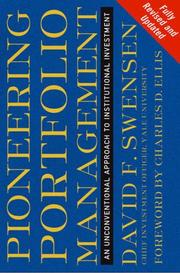
How the Yale endowment invests, and how institutions can build portfolios like it.
“Finally, there is the role of the “institutional imperative,” which Warren Buffett, chairman and chief executive officer of Berkshire Hathaway, describes as “the tendency of executives to mindlessly imitate the behavior of their peers, no matter how foolish it may be to do so.”5 David Swensen wrote a very influential book called Pioneering Portfolio Management.” — Michael Mauboussin
Source: Public to Private Equity in the United States: A Long-Term Look, page 4
Also recommended by: Howard Marks, John C. Bogle, Marc Andreessen and 2 others
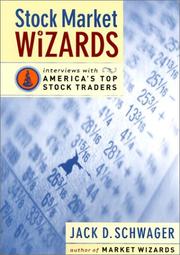
Interviews with stock traders who beat the market in the 1990s.
“Jack D. Schwager, Stock Market Wizards: Interviews with America’s Top Traders—Revised and Updated (New York: Harper Business, 2003), 257” — Michael Mauboussin
Source: Who Is On the Other Side? A Framework for Understanding Market (In)Efficiency
How a company's life-cycle stage decides how to read, value and manage it.
“Habib and Mostafa Monzur Hasan, “Corporate Life Cycle Research in Accounting, Finance and Corporate Governance: A Survey, and Directions for Future Research,” International Review of Financial Analysis, Vol. 61, January 2019, 188-201 and Aswath Damodaran, The Corporate Life Cycle: Business, Investment, and Management Implications (New York: Portfolio, 2024)” — Michael Mauboussin
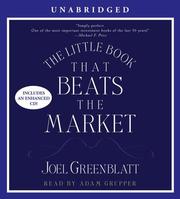
A 'magic formula' for buying good companies at bargain prices.
“Greenblatt, Joel, The Little Book That Beats the Market (Hoboken, NJ: John Wiley & Sons, 2006)” — Michael Mauboussin
Source: Return on Invested Capital: How to Calculate ROIC and Handle Common Issues, page 40
Also recommended by: Mohnish Pabrai
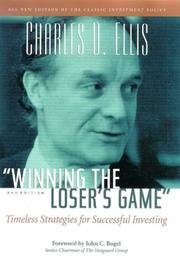
Why active investing became a loser's game, decided by errors, not by skill.
“Charles D. Ellis, Winning the Loser’s Game: Timeless Strategies for Successful Investing, Eighth Edition (New York: McGraw Hill, 2021), 43-44” — Michael Mauboussin
Source: Everything Is a DCF Model: A Mantra for Valuing Cash-Generating Assets, page 9
Also recommended by: Bill Miller, Mohnish Pabrai, Howard Marks
How the economy changes when intangible assets replace physical capital.
“For a more thorough review of the characteristics of intangible assets, see Jonathan Haskel and Stian Westlake, Capitalism Without Capital: The Rise of the Intangible Economy (Princeton, NJ: Princeton University Press, 2017), 56-88” — Michael Mauboussin
Source: The Impact of Intangibles on Base Rates, page 10
Also recommended by: Bill Gates
How popular stories spread like epidemics and drive economic events.
“Robert J. Shiller, Narrative Economics: How Stories Go Viral and Drive Major Economic Events (Princeton, NJ: Princeton University Press, 2019)” — Michael Mauboussin
Source: Who Is On the Other Side? A Framework for Understanding Market (In)Efficiency
Also recommended by: Jackie Vullinghs
Why certain countries become home to world-leading firms in certain industries.
“Porter, Michael E., The Competitive Advantage of Nations (New York: Free Press, 1990)” — Michael Mauboussin
Source: Public to Private Equity in the United States: A Long-Term Look, page 67

Ownership of big US firms had split from control, which passed to managers.
“Adolf A. Berle and Gardiner C. Means, The Modern Corporation and Private Property (New York: Macmillan, 1932)” — Michael Mauboussin
Source: Who Is On the Other Side? A Framework for Understanding Market (In)Efficiency
Also recommended by: John C. Bogle
What decentralised finance is, and the case for its potential.
“Campbell R. Harvey, Ashwin Ramachandran, and Joey Santoro, DeFi and the Future of Finance (Hoboken, NJ: John Wiley & Sons, 2021), 1-21” — Michael Mauboussin
Source: New Business Boom and Bust: How Capitalism Experiments, page 9

Financial engineering applied to funding biomedical research and drug development.
“Paper, September 2016. Lo, Andrew W., and Shomesh E. Chaudhuri, Healthcare Finance: Modern Financial Analysis for Accelerating Biomedical Innovation (Princeton, NJ: Princeton University Press, 2023)” — Michael Mauboussin
Source: Cost of Capital and Capital Allocation: Investment in the Era of "Easy Money", page 18
A formal model of markets whose efficiency shifts as participants adapt.
“Andrew W. Lo and Ruixun Zhang, The Adaptive Markets Hypothesis: An Evolutionary Approach to Understanding Financial System Dynamics (Oxford: Oxford University Press, 2024)” — Michael Mauboussin
Source: Who Is On the Other Side? A Framework for Understanding Market (In)Efficiency

How venture funds raise, invest and exit, and what the data show about their returns.
“Gompers, Paul, and Josh Lerner, The Venture Capital Cycle, Second Edition (Cambridge, MA: MIT Press, 2004)” — Michael Mauboussin
Source: Public to Private Equity in the United States: A Long-Term Look, page 67
Red teaming, a contrarian method from the military, applied to business planning.
“For a good summary of techniques, see Bryce G. Hoffman, Red Teaming: How Your Business Can Conquer the Competition by Challenging Everything (New York: Crown Business, 2017)” — Michael Mauboussin
Source: BIN There, Done That: How to Reduce the Sources of Forecasting Error, page 15
Also recommended by: Alfred Lin

How natural selection changes humanity's view of its place in the universe.
“For example, see Daniel C. Dennett, Darwin’s Dangerous Idea: Evolution and The Meanings of Life (New York: Simon & Schuster, 1995)” — Michael Mauboussin
Source: New Business Boom and Bust: How Capitalism Experiments, page 8
Also recommended by: Nat Eliason

A neurobiologist's case that free will does not exist, and what follows for morality.
“See Robert M. Sapolsky, Determined: A Science of Life Without Free Will (New York: Penguin Press, 2023), 154-202” — Michael Mauboussin
Source: Pattern Recognition: Opportunities and Limits, page 12
Also recommended by: Andrew Wilkinson
Whether clinical judgement or statistical formulas predict better in psychology.
“Paul E. Meehl, Clinical versus Statistical Prediction: A Theoretical Analysis and a Review of the Evidence (Minneapolis, MN: University of Minnesota Press, 1954)” — Michael Mauboussin
Source: BIN There, Done That: How to Reduce the Sources of Forecasting Error, page 14
Also recommended by: Daniel Kahneman

Why people stick too long with failing projects and careers, and how to quit well.
“Annie Duke, Quit: The Power of Knowing When to Walk Away (New York: Portfolio, 2022)” — Michael Mauboussin
Source: Capital Allocation: Results, Analysis, and Assessment, page 66
Also recommended by: Ev Williams
Five centuries of financial and religious manias, and why people go mad in groups.
“Bernstein, William J., The Delusions of Crowds: Why People Go Mad in Groups (New York: Atlantic Monthly Press, 2021)” — Michael Mauboussin
Source: Who Is On the Other Side? A Framework for Understanding Market (In)Efficiency
Also recommended by: Jeremy Grantham
How talent is grown, not born, through a brain mechanism training can tap.
“Also, Daniel Coyle, The Talent Code: Greatness Isn’t Born. It’s Grown. Here’s How. (New York: Bantam, 2009)” — Michael Mauboussin
Source: Feedback: Information as a Basis for Improvement, page 18
Also recommended by: Derek Sivers, Mohnish Pabrai, Nat Eliason and 3 others
The neuroscience and psychology of investment decisions.
“Jason Zweig, Your Money and Your Brain: How the New Science of Neuroeconomics Can Help Make You Rich (New York: Simon & Schuster, 2007), 57-61” — Michael Mauboussin
Source: New Business Boom and Bust: How Capitalism Experiments, page 9
Also recommended by: Mohnish Pabrai

Five technological revolutions since 1771, and why each brings a financial bubble.
“Perhaps the best book on the topic is Carlota Perez, Technological Revolutions and Financial Capital: The Dynamics of Bubbles and Golden Ages (Cheltenham, UK: Edward Elgar Publishing, 2002)” — Michael Mauboussin
Source: New Business Boom and Bust: How Capitalism Experiments, page 8
Also recommended by: Howard Marks, Patrick Collison
The rise and fall of the efficient market theory and the modern finance it built.
“Fox, Justin, The Myth of the Rational Market: A History of Risk, Reward, and Delusion on Wall Street (New York: HarperCollins, 2009)” — Michael Mauboussin
Source: Who Is On the Other Side? A Framework for Understanding Market (In)Efficiency
Also recommended by: Mohnish Pabrai
A history of interest, and what suppressing it does to capital allocation.
“Edward Chancellor, The Price of Time: The Real Story of Interest (New York: Atlantic Monthly Press, 2022)” — Michael Mauboussin
Source: Cost of Capital and Capital Allocation: Investment in the Era of "Easy Money", page 15
Also recommended by: Howard Marks
About thirty formal models: what each explains and where each fails.
“Scott E. Page, The Model Thinker: What You Need to Know to Make Data Work for You (New York: Basic Books, 2018), 27-42” — Michael Mauboussin
Source: BIN There, Done That: How to Reduce the Sources of Forecasting Error, page 14
Also recommended by: Keith Rabois
Why some forecasts succeed and most fail, from weather to earthquakes and economics.
“See Gigerenzer, Calculated Risks, 28-29. 14 For a book that treats this topic and more, see Annie Duke, Thinking in Bets: Making Smarter Decisions When You Don't Have All the Facts (New York: Portfolio/Penguin, 2018). 15 For a good discussion of Bayes’ Theorem, see Nate Silver, The Signal and the Noise: Why So Many Predictions Fail—But Some Don’t (New York, The Penguin Press, 2012), 232-261.” — Michael Mauboussin
Source: Confidence: Methods to Assess Confidence Under Uncertainty, page 7
Also recommended by: Bill Gates, Mohnish Pabrai, Sophie Bakalar

The theory and practice of designing statistical graphics, charts and tables.
“The classic text is Edward R. Tufte, The Visual Display of Quantitative Information, 2nd Ed. (Cheshire, CT: Graphics Press, 2001)” — Michael Mauboussin
Source: Feedback: Information as a Basis for Improvement, page 18
Also recommended by: Jeff Atwood, Jim Collins, Patrick Collison and 2 others

Letters on how to live, a course in Stoic philosophy written to a friend.
“Seneca, translated by Robin Campbell, Letters from a Stoic (London: Penguin House, 1969), 178” — Michael Mauboussin
Source: Probabilities and Payoffs: The Practicalities and Psychology of Expected Value
Also recommended by: Mohnish Pabrai, Nat Eliason, Ryan Holiday and 3 others
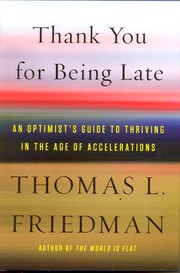
Technology, globalization and climate change, all accelerating at once.
“See Chapter 2, “What the Hell Happened in 2007?” in Thomas L. Friedman, Thank You for Being Late: An Optimist's Guide to Thriving in the Age of Accelerations (New York: Farrar, Straus and Giroux, 2016)” — Michael Mauboussin
Source: One Job: Expectations and the Role of Intangible Investments, page 19
Also recommended by: Alfred Lin