
Legg Mason
Baltimore investment manager founded in 1899; held $730.8 billion in assets at the end of 2019 and was acquired by Franklin Templeton in July 2020. Bill Miller's Value Trust was its best-known fund.
Managed by Bill Miller · Michael Mauboussin
35 letters, 2004 to 2013
| 2013 Q4 Market Commentary | Bill Miller says, as a contrarian, the biggest surprise of 2014 might be that the bullish consensus proves correct. | Q4 2013 | ||
| The Importance of Expectations: The Question that Bears Repeating: What’s Priced in? | Michael Mauboussin argues investors must keep asking what expectations are priced into a stock. | 2012 | 2012-08-21 | |
| Share Repurchase from All Angles: Assessing Buybacks, No Matter Where You Sit | Michael Mauboussin assesses share buybacks from the view of companies, selling shareholders and continuing holders. | 2012 | 2012-06-11 | |
| Seeking Portfolio Manager Skill: Active Share and Tracking Error as a Means to Anticipate Alpha | Michael Mauboussin examines whether active share and tracking error can help investors find skilled managers and anticipate alpha. | 2012 | 2012-02-24 | |
| The Coffee Can Approach: Why Doing Less Can Leave You with More | Michael Mauboussin explains the coffee-can approach: buying stocks and leaving them alone can leave investors with more. | 2011 | 2011-03-25 | |
| Blaming the Rat: Incentives, Motivation, and How They Interact | Michael Mauboussin examines how incentives and motivation interact, and the unintended consequences incentives cause. | 2011 | 2011-01-12 | |
| Untangling Skill and Luck: How to Think About Outcomes - Past, Present, and Future | Michael Mauboussin explains how to separate skill from luck in outcomes past, present and future, to improve decisions. | 2010 | 2010-07-15 | |
| It's All about Managing for Value | Michael Mauboussin tells a CFO summit that managing for value and communicating with shareholders is what matters. | 2010 | 2010-06-11 | |
| The Colonel Blotto Game: Transitivity and How to Win When You’re an Underdog | Michael Mauboussin uses the Colonel Blotto game to show why crowning a best team is often impossible and how underdogs can win. | 2010 | 2010-05-05 | |
| Surge in the Urge to Merge: M&A: Trends and Analysis | Michael Mauboussin reviews M&A trends and evidence that acquirers moving early in an industry's acquisition wave outperform later ones. | 2010 | 2010-01-12 | |
| Long-Term Investing: How I Learned to Stop Worrying and Ignore Volatility | Michael Mauboussin tells the Greenwich Roundtable in December 2008 how long-term investors should stop worrying and ignore volatility. | 2008 | 2008-12-15 | |
| ROIC Patterns and Shareholder Returns: Sorting Fundamentals and Expectations | Michael Mauboussin sorts fundamentals from expectations, showing that obvious growth does not mean obvious profits for investors. | 2008 | 2008-01-18 | |
| Fat Tails and Nonlinearity: Diversity Breakdowns and Invisible Vulnerability | Michael Mauboussin explains how breakdowns in diversity create fat tails and invisible vulnerability in markets. | 2007 | 2007-12-20 | |
| Death, Taxes, and Reversion to the Mean: ROIC Patterns: Luck, Persistence, and What to Do About It | Michael Mauboussin examines ROIC patterns: how luck and persistence shape reversion to the mean. | 2007 | 2007-12-14 | |
| Was Harry Potter Inevitable? Cumulative Advantage, Counterfactuals, and the Halo Effect | Michael Mauboussin asks whether Harry Potter's success was inevitable, exploring cumulative advantage and the halo effect. | 2007 | 2007-09-07 | |
| Turtles in Omaha: The Mindset of Great Investors | Michael Mauboussin examines the mindset of great investors, using the Turtles and Omaha as examples. | 2007 | 2007-05-23 | |
| Explaining the Wisdom of Crowds: Applying the Logic of Diversity | Michael Mauboussin explains the wisdom of crowds through the logic of diversity. | 2007 | 2007-03-20 | |
| Importance of Diverse Thinking: Why the Santa Fe Institute Can Make You a Better Investor | Michael Mauboussin argues that the Santa Fe Institute's diverse thinking can make you a better investor. | 2007 | 2007-01-16 | |
| Interdisciplinary Perspectives on Risk | Michael Mauboussin offers interdisciplinary perspectives on risk to the Greenwich Roundtable. | 2006 | 2006-08-15 | |
| Long-Term Investing in a Short-Term World: How Psychology and Incentives Shape the Investment Industry | Michael Mauboussin examines how psychology and incentives push the investment industry toward the short term. | 2006 | 2006-05-18 | |
| Common Errors in DCF Models: Do You Use Economically Sound & Transparent Models? | Michael Mauboussin lists common errors in DCF models and how to build sound, transparent ones. | 2006 | 2006-03-16 | |
| Size Matters: The Kelly Criterion and the Importance of Money Management | Michael Mauboussin explains the Kelly criterion and why position sizing matters. | 2006 | 2006-02-01 | |
| Clear Thinking about Share Repurchase: Capital Allocation, Dividends & Share Repurchase | Michael Mauboussin offers clear thinking about share repurchases, dividends and capital allocation. | 2006 | 2006-01-10 | |
| Are You an Expert? Experts and Markets | Michael Mauboussin examines evidence that experts add little in markets. | 2005 | 2005-10-28 | |
| Aver and Aversion: What Two Recent Experiments Mean for Investors | Michael Mauboussin draws lessons for investors from two experiments on conformity and loss aversion. | 2005 | 2005-08-09 | |
| The Ecosystem Edge | Michael Mauboussin argues competition now happens between ecosystems of firms rather than individual companies. | 2005 | 2005-07-27 | |
| Capital Ideas Revisited - Part 2: Thoughts on Beating a Mostly-Efficient Stock Market | Michael Mauboussin offers thoughts on beating a mostly efficient stock market. | 2005 | 2005-05-20 | |
| Capital Ideas Revisited: The Prime Directive, Sharks, and The Wisdom of Crowds | Michael Mauboussin revisits market efficiency through the prime directive, sharks and the wisdom of crowds. | 2005 | 2005-03-30 | |
| Contrarian Investing: The Psychology of Going Against the Crowd | Michael Mauboussin explains the psychology of contrarian investing to the Greenwich Roundtable. | 2005 | 2005-03-08 | |
| M&M on Valuation | Michael Mauboussin revisits Modigliani and Miller's insights on valuation. | 2005 | 2005-01-14 | |
| The Economics of Customer Businesses | Michael Mauboussin explains the economics of customer businesses and why few firms can measure customer lifetime value. | 2004 | 2004-12-09 | |
| Exploring Network Economics | Michael Mauboussin explores network economics, which drive the information economy as scale drove the industrial one. | 2004 | 2004-10-11 | |
| Employee Stock Options: Theory and Practice | Michael Mauboussin examines the theory and practice of employee stock options. | 2004 | 2004-09-07 | |
| The Life of Game: Sports, Stats, and the Lessons they Teach Us | Michael Mauboussin draws lessons from sports statistics about uncertainty and skill. | 2004 | 2004-08-05 | |
| Decision-Making for Investors: Theory, Practice, and Pitfalls | Michael Mauboussin examines the theory, practice and pitfalls of investors' decision-making. | 2004 | 2004-05-24 |

 Bill Miller IVnamed it in 2 interviews“Prior his work with Miller Value Partners, Bill and his partner, Ernie Kiehne, founded Legg Mason Capital Management and served as portfolio managers of the Legg Mason Capital Management Value Trust from its inception in 1982.” — Bill Miller on the Classical Value Portfolio (Podcast) (Masters in Business, 2020)
 Jason Zweignamed it in 1 article
| Episode 9: Michael Mauboussin - Head of Consilient Research at Counterpoint Global | Michael Mauboussin | Generating Alpha Podcast | 2025-02-24 | 45 min | Today, we had the privilege of speaking with Michael Mauboussin, one of the most respected minds in value investing. With a career spanning decades in finance, Michael has been at the forefront of applying behavioral science, probability, and market efficiency to investment strategy. Michael began his career after earning his degree from Georgetown University, later becoming a longtime Chief Investment Strategist at Legg Mason Capital Management. He has since held senior roles at Credit Suisse and Morgan Stanley, where he has shaped investment thinking with his deep research into expected value, skill vs. luck, and the psychology of markets. Beyond his professional work, Michael is a prolific author, having written several essential books, including The Success Equation and More Than You Know, which explore how to make better decisions in uncertain environments. He also serves as an adjunct professor at Columbia Business School, where he teaches and mentors the next generation of investors. In this episode, we dive into Michael’s journey, his perspectives, and his advice for investors at every level. Whether you’re a professional or just starting out, this conversation is packed with insights that will change how you approach investing. We hope you enjoy! |
| Michael Mauboussin — How Great Investors Make Decisions | The Tim Ferriss Podcast | Michael Mauboussin | The Tim Ferriss Show | 2023-03-03 | 2:04 | Brought to you by Athletic Greens’s AG1 all-in-one nutritional supplement, House of Macadamias delicious and nutritious nuts, and Shopify global commerce platform providing tools to start, grow, market, and manage a retail business. Michael Mauboussin (@mjmauboussin) is Head of Consilient Research on Counterpoint Global at Morgan Stanley Investment Management. Prior to joining Counterpoint Global, Michael was Director of Research at BlueMountain Capital, Head of Global Financial Strategies at Credit Suisse, and Chief Investment Strategist at Legg Mason Capital Management. Michael originally joined Credit Suisse in 1992 as a packaged food industry analyst and was named Chief U.S. Investment Strategist in 1999. Michael is the author of The Success Equation: Untangling Skill and Luck in Business, Sports, and Investing, Think Twice: Harnessing the Power of Counterintuition, and More Than You Know: Finding Financial Wisdom in Unconventional Places. More Than You Know was named one of "The 100 Best Business Books of All Time" by 800-CEO-READ, one of the best business books by BusinessWeek (2006), and best economics book by Strategy+Business (2006). Michael is also co-author, with Alfred Rappaport, of Expectations Investing: Reading Stock Prices for Better Returns. Michael has been an adjunct professor of finance at Columbia Business School since 1993 and is on the faculty of the Heilbrunn Center for Graham and Dodd Investing. |
| Frameworks For Better Decision Making, Learning & Investing | Michael Mauboussin | Michael Mauboussin | What Got You There with Sean DeLaney | 2022-07-17 | 1:15 | Michael Mauboussin is the author of The Success Equation: Untangling Skill and Luck in Business, Sports, and Investing, Think Twice: Harnessing the Power of Counterintuition , and More Than You Know: Finding Financial Wisdom in Unconventional Places . Michael is currently Head of Consilient Research at Counterpoint Global. Michael has also held roles as Director of Research at BlueMountain Capital Management, he was a Managing Director and Head of Global Financial Strategies at Credit Suisse, and he was Chief Investment Strategist at Legg Mason Capital Management. Mr. Mauboussin has been an adjunct professor of finance at Columbia Business School since 1993 and currently is Chairman of the Board of Trustees for the Sante Fe Institute. Checkout the Show Notes from Michael's Episode & Reading List Transcript Watch on YouTube Watch my Persistent Patterns of Greatness Master Class You Unleashed Course 50% off You Unleashed is an online personal development course created by Sean DeLaney after spending years working with an interviewing high achievers.The online course that helps you 'Unleash your potential'! You Unleashed teaches you the MINDSETS, ROUTINES and BEHAVIORS you need to unleash your potential and discover what you're capable of. You know you're capable of more and want to bring out that untapped potential inside of you. We teach you how. Enroll Today & Receive 50% off by using code "WGYT"- Click Here Subscribe to my Momentum Monday Newsletter Connect with us! |
| Michael Mauboussin: Finding Easy Games | Michael Mauboussin | The Long View | 2022-01-25 | 55 min | Our guest this week is Michael Mauboussin. Michael is the head of consilient research at Counterpoint Global. Before joining Counterpoint Global in January 2020, Michael was director of research at BlueMountain Capital Management and prior to that held research leadership roles at Credit Suisse and Legg Mason Capital Management. Michael is the author of three books including The Success Equation: Untangling Skill and Luck in Business, Sports, and Investing and is also coauthor with Alfred Rappaport of Expectations Investing: Reading Stock Prices for Better Returns. He has been an adjunct professor of finance at Columbia Business School since 1993 and is on the faculty of the Heilbrunn Center for Graham & Dodd Investing. Michael is also chairman emeritus of the board of trustees of the Santa Fe Institute. He received his bachelor's degree from Georgetown University. Background Bio The Success Equation: Untangling Skill and Luck in Business, Sports, and Investing , by Michael Mauboussin Expectations Investing: Reading Stock Prices for Better Returns , by Michael Mauboussin and Alfred Rappaport More Than You Know: Finding Financial Wisdom in Unconventional Places , by Michael Mauboussin Consilience Consilience: The Unity of Knowledge , by Edward O. Wilson “ Charlie Munger’s System of Mental Models: How to Think Your Way to Success ,” by Andrew McVagh, mymentalmodels.info.com, Aug. 7, 2018. “ Increasing Returns and the New World of Business ,” by W. |
| Michael Mauboussin on How to Read Stock Prices (Podcast) | Michael Mauboussin | Masters in Business | 2021-12-17 | 1:30 | Bloomberg Opinion columnist Barry Ritholtz speaks with Michael Mauboussin, who is head of consilient research at Morgan Stanley Investment Management's Counterpoint Global and co-author of the recently revised and updated book "Expectations Investing: Reading Stock Prices for Better Returns." Mauboussin joined Morgan Stanley in 2020 and has more than three decades of experience. He previously served as director of research at BlueMountain Capital Management, head of global financial strategies at Credit Suisse, and chief investment strategist at Legg Mason Capital Management. He is also an adjunct professor of finance at Columbia Business School and chairman of the board of trustees at the Santa Fe Institute. See omnystudio.com/listener for privacy information. |
| Michael Mauboussin- Untangling Skill and Luck in Business, Sports, and Investing | Michael Mauboussin | What Got You There with Sean DeLaney | 2020-07-19 | 1:12 | Michael Mauboussin is the author of The Success Equation: Untangling Skill and Luck in Business, Sports, and Investing, Think Twice: Harnessing the Power of Counterintuition , and More Than You Know: Finding Financial Wisdom in Unconventional Places . Michael is currently Head of Consilient Research at Counterpoint Global. Michael has also held roles as Director of Research at BlueMountain Capital Management, he was a Managing Director and Head of Global Financial Strategies at Credit Suisse, and he was Chief Investment Strategist at Legg Mason Capital Management. Mr. Mauboussin has been an adjunct professor of finance at Columbia Business School since 1993 and currently is Chairman of the Board of Trustees for the Sante Fe Institute. Michael's Episode Notes Checkout my Newsletter Connect with us! Whatgotyouthere MCTco Collagen Protein Bars www.mctco.com 20% off with code "WGYT" http://michaelmauboussin.com/ Michael's Books The Success Equation: Untangling Skill and Luck in Business, Sports, and Investing More Than You Know: Finding Financial Wisdom in Unconventional Places Think Twice: Harnessing the Power of Counterintuition Michael's Investing Essay's |
| Bill Miller on the Classical Value Portfolio (Podcast) | Bill Miller, Bill Miller IV | Masters in Business | 2020-07-10 | 1:16 | Bloomberg Opinion columnist Barry Ritholtz speaks with Bill Miller, founder of Miller Value Partners. Miller serves as the firm's chairman and chief investment officer, and is also co-portfolio manager for opportunity equity and income strategy. Prior his work with Miller Value Partners, Bill and his partner, Ernie Kiehne, founded Legg Mason Capital Management and served as portfolio managers of the Legg Mason Capital Management Value Trust from its inception in 1982. Bill took over as sole manager in December 1990 and served in this role for the next 20 years. See omnystudio.com/listener for privacy information. |
| Michael Mauboussin – Investing in times of (the Coronavirus) Crisis | Michael Mauboussin | Value Investing with Legends | 2020-03-23 | 53 min | Today's conversation is with Michael Mauboussin, Head of Consilient Research at Counterpoint Global. Before joining Counterpoint Global, Michael was the Director of Research at BlueMountain Capital Management in New York and previously the Head of Global Financial Strategies at Credit Suisse and Chief Investment Strategist at Legg Mason Capital Management. Michael has also authored several books and has been an adjunct professor of finance at Columbia Business School since 1993, where he is on the faculty of the Heilbrunn Center for Graham and Dodd Investing. As of this recording, the university campus is quiet and empty, with classes moving online for the spring semester. Of course, this is due to the coronavirus global pandemic which hit the world quite suddenly and has required extreme public health measures. The markets have responded as expected to the crisis and the economy is in a tailspin. In light of all of this, I wanted to take a slightly different approach to today's episode and have a discussion about not only how to think about markets, but also the psychological stress caused by the crisis. For that, I couldn't think of anyone better than our first repeat guest, Michael Mauboussin. |
| TIP180: Legendary Investor Bill Miller on Stocks, Commodities, & Bitcoin | Bill Miller, Bill Miller IV | The Investor's Podcast (We Study Billionaires) - The Investor’s Podcast Network | 2018-03-04 | 49 min | Mr. Miller was the former Chairman and Chief Investment Officer for Legg Mason Capital Management where he managed over 75 billion dollars. Today, Miller owns and operates Miller Value Partners. Through the years, Mr. Miller has been called “The Greatest Money Manager of the Decade” by Morningstar, a member of the “Power 30” by SmartMoney, and a member of the “All-Century Investment Team” by Barron’s. During the discussion, Mr. Miller talks about the current market conditions, bond rates, commodities, and cryptocurrencies. IN THIS EPISODE, YOU’LL LEARN: If the change in US fiscal policy will affect bond yields. How and why Bill Miller is using moving day average to time his investment decisions. Why Bill invested in Bitcoin and if he still has a position. The most important cognitive biases for new investors to be aware off. Ask The Investors: Which impact will babyboomers’ retirement have on the stock market . BOOKS AND RESOURCES Join the exclusive TIP Mastermind Community to engage in meaningful stock investing discussions with Stig, Clay, and the other community members. Bill Miller’s Company: Miller Value Partners . Preston and Stig’s discussion of one of Bill Miller’s favorite books, Thinking Fast and Slow . Preston and Stig’s interview with Edward Thorp about his book, A Man For All Markets . Every single cognitive bias in one chart . NEW TO THE SHOW? Check out our We Study Billionaires Starter Packs . Browse through all our episodes (complete with transcripts) here . |
| Michael Mauboussin – Active Challenges, Rational Decisions and Team Dynamics (Capital... | Michael Mauboussin | Capital Allocators – Inside the Institutional Investment Industry | 2018-01-08 | 1:11 | Michael Mauboussin currently is the Director of Research at BlueMountain Capital, a multi-billion dollar hedge fund and asset manager. He spent the majority of his professional career thinking and writing about decision making, behavior and complex systems, with long stints at Credit Suisse and nearly a decade alongside Bill Miller at Legg Mason. Michael has been an Adjust Professor at Columbia Business School for 24 years. Our conversation covers Michael's early career, the paradox of skill, academic research more favorable to active management, decision-making, optimal size and composition of teams, unsettling features in the market, data analysis in sports, career risk, the Santa Fe Institute, and Michael's new research on the horizon. Every time I speak to Michael I come away thinking better and feeling smarter, and this time was no exception. |
| Barry Ritholtz's Masters in Business: Bill Miller Interview | Bill Miller | Masters in Business | 2016-11-04 | 1:20 | Nov. 4 (Bloomberg) -- Bloomberg View columnist Barry Ritholtz interviews Bill Miller, the longtime investor at Legg Mason Capital Management. Miller famously beat the Standard & Poor’s 500 Index for 15 consecutive years. They discuss Miller's approach to investing. This interview aired on Bloomberg Radio. See omnystudio.com/listener for privacy information. |
 GEpisode 9: Michael Mauboussin - Head of Consilient Research at Counterpoint GlobalGenerating Alpha Podcast · 2025-02-24
 TMichael Mauboussin — How Great Investors Make Decisions | The Tim Ferriss PodcastThe Tim Ferriss Show · 2023-03-03
 WFrameworks For Better Decision Making, Learning & Investing | Michael MauboussinWhat Got You There with Sean DeLaney · 2022-07-17
 TMichael Mauboussin: Finding Easy GamesThe Long View · 2022-01-25
 MMichael Mauboussin on How to Read Stock Prices (Podcast)Masters in Business · 2021-12-17
 WMichael Mauboussin- Untangling Skill and Luck in Business, Sports, and InvestingWhat Got You There with Sean DeLaney · 2020-07-19MBill Miller on the Classical Value Portfolio (Podcast)Masters in Business · 2020-07-10
 VMichael Mauboussin – Investing in times of (the Coronavirus) CrisisValue Investing with Legends · 2020-03-23
 TTIP180: Legendary Investor Bill Miller on Stocks, Commodities, & BitcoinThe Investor's Podcast (We Study Billionaires) - The Investor’s Podcast Network · 2018-03-04
 CMichael Mauboussin – Active Challenges, Rational Decisions and Team Dynamics (Capital...Capital Allocators – Inside the Institutional Investment Industry · 2018-01-08MBarry Ritholtz's Masters in Business: Bill Miller InterviewMasters in Business · 2016-11-04
More 12
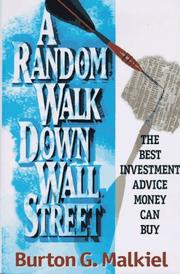
Stock prices follow a random walk, so a low-cost index fund beats stock picking.
“Burton G. Malkiel, A Random Walk Down Wall Street, 6th ed. (New York: W.W. Norton & Company, 1996), 192” — Michael Mauboussin
Source: Are You an Expert? Experts and Markets, page 9
Also recommended by: Jason Zweig, John C. Bogle, Nat Eliason and 3 others
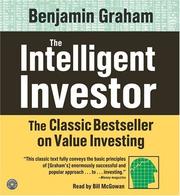
Treat stocks as parts of businesses and buy only with a margin of safety.
“Benjamin Graham, The Intelligent Investor, 4th ed. (New York: Harper & Row, 1973), 277-287” — Michael Mauboussin
Source: Long-Term Investing: How I Learned to Stop Worrying and Ignore Volatility, page 6
Also recommended by: Benjamin Graham, Christopher Bloomstran and 31 others
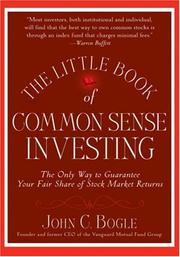
After costs, most investors trail the market, so hold a low-cost index fund.
“Bogle, John C., The Little Book of Common Sense Investing: The Only Way to Guarantee Your Fair Share of Stock Market Returns (Hoboken, NJ: John Wiley & Sons, 2007)” — Michael Mauboussin
Source: Untangling Skill and Luck: How to Think About Outcomes - Past, Present, and Future, page 33
Also recommended by: Mohnish Pabrai, The Barefoot Investor and 5 others
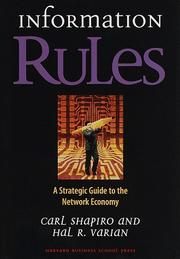
Economics for information goods: pricing, versioning, lock-in and network effects.
“Carl Shapiro and Hal R. Varian, Information Rules (Boston, MA: Harvard Business School Press, 1999), 174” — Michael Mauboussin
Source: The Ecosystem Edge, page 10
Also recommended by: Mohnish Pabrai, Tim O’Reilly
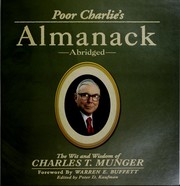
Speeches making the case for a latticework of mental models from many fields.
“Kaufman, Peter D., ed., Poor Charlie’s Almanack (Virginia Beach, VA: Donning Company, 2005)” — Michael Mauboussin
Source: Importance of Diverse Thinking: Why the Santa Fe Institute Can Make You a Better Investor, page 11
Also recommended by: Andrew Wilkinson, Charlie Munger and 25 others
Computer tournaments of the prisoner's dilemma show why tit-for-tat wins.
“Robert Axelrod, The Evolution of Cooperation (New York: Basic Books, 1984)” — Michael Mauboussin
Source: The Colonel Blotto Game: Transitivity and How to Win When You’re an Underdog, page 8
Also recommended by: Mark Leonard, Patrick Collison and 1 other
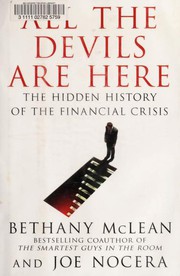
The 2008 crisis traced back 25 years to mortgage bonds, Fannie Mae and subprime.
“Bethany McLean and Joe Nocera, All the Devils Are Here: The Hidden History of the Financial Crisis (New York: Portfolio, 2010), 128-134” — Michael Mauboussin
Source: Blaming the Rat: Incentives, Motivation, and How They Interact, page 14
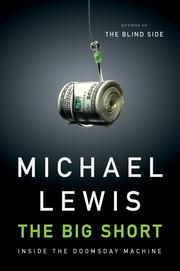
The few investors who saw subprime mortgage bonds would fail, and bet against them.
“Lewis, Michael, The Big Short: Inside the Doomsday Machine (New York: W.W. Norton & Company, 2010)” — Michael Mauboussin
Source: Blaming the Rat: Incentives, Motivation, and How They Interact, page 15
Also recommended by: Jim Collins, Mohnish Pabrai and 6 others
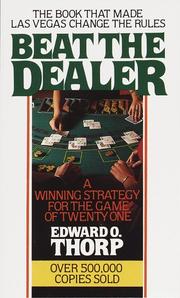
The first proven way to beat blackjack, by counting the cards left in the deck.
“In his classic Beat the Dealer, Ed Thorp describes a proper betting strategy under ideal playing conditions (head-to-head with the dealer, counting cards, single deck, etc.).” — Michael Mauboussin
Source: Decision-Making for Investors: Theory, Practice, and Pitfalls, page 4
Also recommended by: Howard Marks
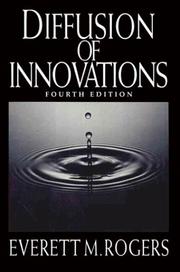
An academic study of how new ideas spread.
“Rogers first published his classic book, Diffusion of Innovations, in” — Michael Mauboussin
Source: Exploring Network Economics, page 10
Also recommended by: Jim Collins, Patrick O'Shaughnessy
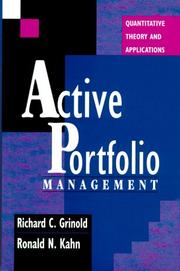
The quantitative method for building active portfolios against a benchmark.
“Richard C. Grinold and Ronald N. Kahn, Active Portfolio Management: A Quantitative Approach for Producing Superior Returns and Controlling Risk, Second Edition (New York: McGraw-Hill, 2000), 480” — Michael Mauboussin
Source: The Coffee Can Approach: Why Doing Less Can Leave You with More, page 9
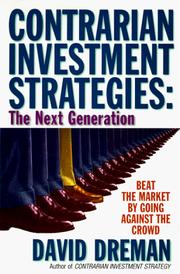
Data showing that low-expectation stocks beat popular ones over the long run.
“David Dreman, “Heuristics in Investor Decision Making, adopted from Contrarian Investment Strategies: The Next Generation (New York: Simon and Schuster, 1998)” — Michael Mauboussin
Source: Decision-Making for Investors: Theory, Practice, and Pitfalls, page 18
Also recommended by: Joel Greenblatt, Mohnish Pabrai and 1 other
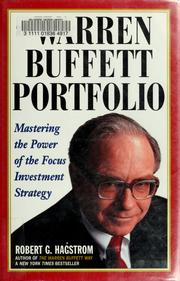
The case for focus investing: ten to fifteen stocks held for a long time.
“For a very approachable discussion of Bayesian analysis, see Robert G. Hagstrom, The Warren Buffett Portfolio (New York: John Wiley & Sons, 1999), 115-117” — Michael Mauboussin
Source: Decision-Making for Investors: Theory, Practice, and Pitfalls, page 17
Also recommended by: Charlie Munger, Mohnish Pabrai and 2 others
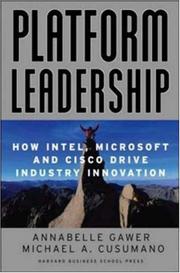
How Intel and others became and stayed leaders of technology platforms.
“Annabelle Gawer and Michael A. Cusumano, Platform Leadership (Boston, MA: Harvard Business School Press, 2002)” — Michael Mauboussin
Source: The Ecosystem Edge, page 10

Without shelf limits, sales of many niche products add up to rival the hits.
“also Chris Anderson, The Long Tail: Why the Future of Business Is Selling Less of More (New York: Hyperion, 2006), 121” — Michael Mauboussin
Source: Was Harry Potter Inevitable? Cumulative Advantage, Counterfactuals, and the Halo Effect, page 10
Also recommended by: Jim Collins, Ev Williams, Jack Ma and 1 other
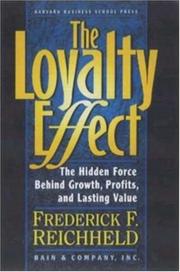
Keeping customers, employees and investors is what drives profit and growth.
“In his seminal book, The Loyalty Effect, Fred Reichheld shows that a 5 percentage point improvement in retention rate (a reduction in churn) increases customer NPVs more than 75 percent for a host of industries including advertising agencies, auto insurance, credit cards, life 12 insurance, and publishing.” — Michael Mauboussin
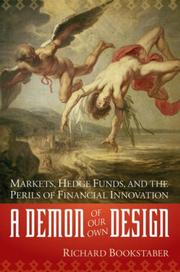
How financial innovation made markets more crisis-prone, from a risk manager.
“Also, Richard Bookstaber, A Demon of Our Own Design: Markets, Hedge Funds, and the Perils of Financial Innovation (New York: John Wiley & Sons, 2007)” — Michael Mauboussin
Source: Fat Tails and Nonlinearity: Diversity Breakdowns and Invisible Vulnerability, page 7
Also recommended by: Howard Marks, Jeremy Grantham
How the chase for short-term share prices corrupted shareholder value, and fixes.
“Alfred Rappaport, Saving Capitalism from Short-Termism: How to Build Long-Term Value and Take Back Our Financial Future (New York: McGraw Hill, 2011), 69-88” — Michael Mauboussin
Source: The Importance of Expectations: The Question that Bears Repeating: What’s Priced in?, page 14
Also recommended by: Patrick O'Shaughnessy
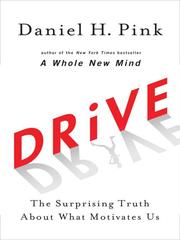
Rewards work for routine tasks; creative work runs on autonomy, mastery and purpose.
“In his excellent book, Drive, Dan Pink distinguishes between algorithmic tasks and heuristic tasks. 3 With an algorithmic task, there is a recipe that you can follow to attain the goal.” — Michael Mauboussin
Source: Blaming the Rat: Incentives, Motivation, and How They Interact, page 2
Also recommended by: Derek Sivers, Mohnish Pabrai, Alfred Lin and 2 others

People have no fixed sense of value, so context and anchors set the prices they pay.
“For a good popular treatment of this topic, see William Poundstone, Priceless: The Myth of Fair Value (and How to Take Advantage of It) (New York: Hill and Wang” — Michael Mauboussin
Source: Blaming the Rat: Incentives, Motivation, and How They Interact, page 14
Also recommended by: Mohnish Pabrai, Patrick O'Shaughnessy

Von Neumann, game theory and the prisoner's dilemma in nuclear strategy.
“For international relations, see William Poundstone, Prisoner’s Dilemma (New York: Doubleday, 1992)” — Michael Mauboussin
Source: The Colonel Blotto Game: Transitivity and How to Win When You’re an Underdog, page 8

Chronic stress and how it affects the quality of decisions.
“Robert M. Sapolsky, Why Zebras Don’t Get Ulcers: Un Updated Guide to Stress, Stress-Related Disease, and Coping (New York: W.H. Freeman and Company, 1994)” — Michael Mauboussin
Source: Long-Term Investing: How I Learned to Stop Worrying and Ignore Volatility, page 6
Also recommended by: Jim Collins
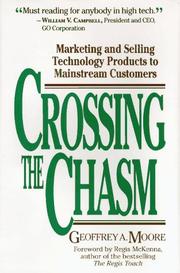
Why tech products stall between early adopters and the mainstream, and how to cross.
“Geoffrey A. Moore, Crossing the Chasm: Marketing and Selling Technology Products to Mainstream Customers (New York: HarperCollins, 1991)” — Michael Mauboussin
Source: Interdisciplinary Perspectives on Risk, page 5
Also recommended by: Andrew Chen, Andrew Wilkinson, Bill Gurley and 13 others
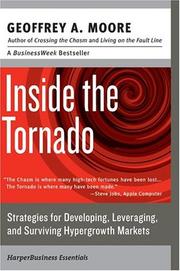
How to move a tech product past early adopters into a fast-growing mass market.
“Moore, Geoffrey A., Inside the Tornado (New York: HarperBusiness, 1995)” — Michael Mauboussin
Source: Exploring Network Economics, page 15
Also recommended by: Mohnish Pabrai
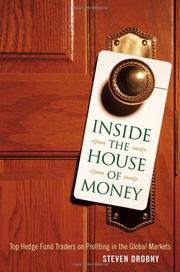
Interviews with global macro traders on how they find and build trades.
“Steven Drobny, Inside the House of Money: Top Hedge Fund Traders on Profiting in the Global Markets (New York: John Wiley & Sons, 2006), 278” — Michael Mauboussin
Source: Turtles in Omaha: The Mindset of Great Investors, page 7
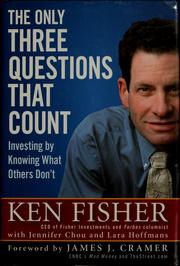
Three questions that let an investor know what the market does not.
“Ken Fisher, The Only Three Questions That Count: Investing by Knowing What Others Don’t (New York: John Wiley & Sons, 2006)” — Michael Mauboussin
Source: Importance of Diverse Thinking: Why the Santa Fe Institute Can Make You a Better Investor, page 9
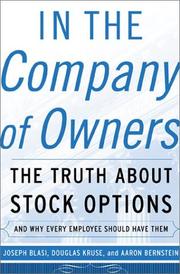
Why companies do better granting stock options to all staff, not just executives.
“Joseph Blasi, Douglas Kruse, and Aaron Bernstein, In the Company of Owners: The Truth About Stock Options (New York: Basic Books, 2003), 88” — Michael Mauboussin
Source: Employee Stock Options: Theory and Practice, page 10

Why the line between work and free time should go, from Semco's practice.
“Semler, Ricardo, The Seven-Day Weekend: Changing the Way Work Works (New York: Portfolio, 2004)” — Michael Mauboussin
Source: Blaming the Rat: Incentives, Motivation, and How They Interact, page 16
Also recommended by: Ev Williams
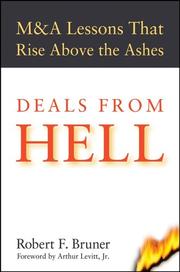
Post-mortems on value-destroying mergers, from AOL Time Warner to Quaker and Snapple.
“Robert F. Bruner, Deals from Hell: M&A Lessons That Rise Above the Ashes (Hoboken, N.J.: John Wiley & Sons, 2005)” — Michael Mauboussin
Source: Share Repurchase from All Angles: Assessing Buybacks, No Matter Where You Sit, page 14
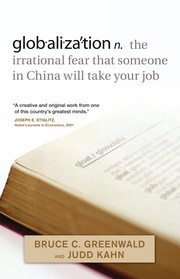
Why globalisation matters less than the shift from manufacturing to services.
“A terrific resource for this argument is Bruce C. Greenwald and Judd Kahn, Globalization: The Irrational Fear That Someone in China Will Take Your Job (Hoboken, NJ: John Wiley & Sons, 2008)” — Michael Mauboussin
Source: Blaming the Rat: Incentives, Motivation, and How They Interact, page 13

Why people are bad at predicting what will make them happy, and how the errors arise.
“Daniel Gilbert, Stumbling on Happiness (New York: Alfred A. Knopf, 2006)” — Michael Mauboussin
Source: Was Harry Potter Inevitable? Cumulative Advantage, Counterfactuals, and the Halo Effect, page 10
Also recommended by: Andrew Wilkinson, Derek Sivers, Jim Collins and 3 others

Why body size matters in living things.
“John Tyler Bonner, Why Size Matters (Princeton, NJ: Princeton University Press, 2006)” — Michael Mauboussin
Source: Importance of Diverse Thinking: Why the Santa Fe Institute Can Make You a Better Investor, page 10

How a honeybee colony allocates its foragers, as a decentralised system.
“As Thomas Seeley writes in his delightful book, The Wisdom of the Hive: 22 The most thought-provoking feature of a honey bee colony is its ability to achieve coordinated activity among tens of thousands of bees without central control.” — Michael Mauboussin
Source: Capital Ideas Revisited: The Prime Directive, Sharks, and The Wisdom of Crowds, page 7
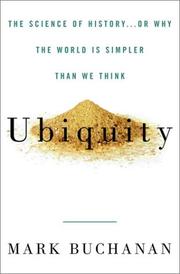
Self-organised criticality: why earthquakes and crashes come in all sizes.
“Mark Buchanan, Ubiquity: The Science of History . . . Or Why the World is Simpler Than We Think (New York: Crown Publishers, 2000)” — Michael Mauboussin
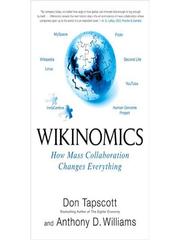
How cheap coordination lets crowds outside a firm do work firms once did.
“Don Tapscott and Anthony Williams, Wikinomics: How Mass Collaboration Changes Everything (New York: Portfolio, 2006)” — Michael Mauboussin
Source: Explaining the Wisdom of Crowds: Applying the Logic of Diversity, page 14
Also recommended by: Derek Sivers, Ryan Holiday
“Dean Oliver, Basketball on Paper (Washington, D.C: Brassey’s, Inc., 2004), 63” — Michael Mauboussin
Source: The Life of Game: Sports, Stats, and the Lessons they Teach Us, page 10
“Deyan Sudjic, ed., Blade of Light: The Story of London’s Millennium Bridge (London: Penguin Books, Ltd, 2001)” — Michael Mauboussin
Source: Fat Tails and Nonlinearity: Diversity Breakdowns and Invisible Vulnerability, page 7
“Joyner, KC, Blindsided: Why the Left Tackle is Overrated and Other Contrarian Football Thoughts (Hoboken, NJ: John Wiley & Sons, 2008)” — Michael Mauboussin
Source: Untangling Skill and Luck: How to Think About Outcomes - Past, Present, and Future, page 36
“Palepu, Krishna G., Paul M. Healy and Victor L. Bernard, Business Analysis and Valuation (Cincinnati, OH: Southwestern College Publishing, 2000)” — Michael Mauboussin
Source: Importance of Diverse Thinking: Why the Santa Fe Institute Can Make You a Better Investor, page 11
“Ormerod, Paul, Butterfly Economics: A New General Theory of Social and Economic Behavior (New York: Pantheon Books, 2000)” — Michael Mauboussin
“Groysberg, Boris, Chasing Stars: The Myth of Talent and the Portability of Performance (Princeton, NJ: Princeton University Press, 2010)” — Michael Mauboussin
“Pankaj Ghemawat, Commitment: The Dynamic of Strategy (New York: Free Press, 1991), 82” — Michael Mauboussin
Source: Common Errors in DCF Models: Do You Use Economically Sound & Transparent Models?, page 11
“Ichak Adizes, Corporate Lifecycles: How and Why Corporations Grow and Die and What to Do About It (Englewood Cliffs, NJ: Prentice Hall, 1988)” — Michael Mauboussin
“Lewis, David, Counterfactuals (Cambridge, MA: Harvard University Press, 1973)” — Michael Mauboussin
Source: Was Harry Potter Inevitable? Cumulative Advantage, Counterfactuals, and the Halo Effect, page 12
“Ball, Philip, Critical Mass: How One Things Leads to Another (New York: Farrar, Straus and Giroux, 2004)” — Michael Mauboussin
Source: Capital Ideas Revisited: The Prime Directive, Sharks, and The Wisdom of Crowds, page 16
“Griffin, Jill, Customer Loyalty (New York: Jossey-Bass, 2002)” — Michael Mauboussin
“Gitomer, Jeffrey, Customer Satisfaction Is Worthless, Customer Loyalty Is Priceless (Austin, TX: Bard Press, 1998)” — Michael Mauboussin
“Glimcher, Paul W., Decisions, Uncertainty, and the Brain (Cambridge, MA: MIT Press, 2003)” — Michael Mauboussin
Source: Capital Ideas Revisited: The Prime Directive, Sharks, and The Wisdom of Crowds, page 16
“Treacy, Michael, Double-Digit Growth: How Great Companies Achieve It-No Matter What (New York: Portfolio, 2003) Websites http://www” — Michael Mauboussin
“Rust, Roland T., Valarie A. Zeithaml, and Katherine N. Lemon, Driving Customer Equity (New York: Free Press, 2000)” — Michael Mauboussin
“Friedman, Milton, Essays in Positive Economics (Chicago, IL: University of Chicago Press, 1953)” — Michael Mauboussin
Source: Capital Ideas Revisited: The Prime Directive, Sharks, and The Wisdom of Crowds, page 16
“Merton H. Miller, Financial Innovations and Market Volatility (Cambridge, MA: Blackwell, 1991), 100-102” — Michael Mauboussin
Source: Capital Ideas Revisited: The Prime Directive, Sharks, and The Wisdom of Crowds, page 15
“For a similar analysis conducted nearly thirty years ago, see William E. Fruhan, Jr., Financial Strategy: Studies in the Creation, Transfer, and Destruction of Shareholder Value (Homewood, IL: Richard D. Irwin, 1979), 52-53” — Michael Mauboussin
Source: ROIC Patterns and Shareholder Returns: Sorting Fundamentals and Expectations, page 10
“Sklansky, David, Getting the Best of It, 2nd ed. (Henderson, NV: Two Plus Two Publishing, 1997)” — Michael Mauboussin
Source: Size Matters: The Kelly Criterion and the Importance of Money Management, page 12
“Farrell, Winslow, How Hits Happen, (New York: HarperBusiness, 1998)” — Michael Mauboussin
“Neal Roese, If Only: How to Turn Regret into Opportunity (New York: Broadway Books, 2005), 4044” — Michael Mauboussin
Source: Was Harry Potter Inevitable? Cumulative Advantage, Counterfactuals, and the Halo Effect, page 10
“Johnson, Michael D., and Anders Gustafsson, Improving Customer Satisfaction, Loyalty, and Profit (New York: John Wiley & Sons, 2000)” — Michael Mauboussin
“Whitfield, John, In the Beat of a Heart: Life, Energy, and the Unity of Nature (New York: Joseph Henry Press, 2006)” — Michael Mauboussin
Source: Importance of Diverse Thinking: Why the Santa Fe Institute Can Make You a Better Investor, page 11
“Leighton Vaughan Williams, “Semi-strong and strong form information efficiency in betting markets,” in Information Efficiency in Financial and Betting Markets, Leighton Vaughan Williams, ed. (Cambridge, UK: Cambridge University Press, 2005), 123-155” — Michael Mauboussin
Source: Untangling Skill and Luck: How to Think About Outcomes - Past, Present, and Future, page 29
“Sunstein, Cass R., Infotopia: How Many Minds Produce Knowledge (Oxford: Oxford University Press, 2006)” — Michael Mauboussin
Source: Explaining the Wisdom of Crowds: Applying the Logic of Diversity, page 16
“Also, Bob Metcalfe, Internet Collapses and Other InfoWorld Punditry (Foster City, CA: IDG Books Worldwide, 2000), 252-253” — Michael Mauboussin
“See Robert L. Hagin, Investment Management: Portfolio Diversification, Risk, and Timing—Fact and Fiction (New York: John Wiley & Sons, 2004), 75-80” — Michael Mauboussin
Source: ROIC Patterns and Shareholder Returns: Sorting Fundamentals and Expectations, page 10
“See also Robert Skidelsky, John Maynard Keynes: The Economist as Savior 1920-1937 (New York: Penguin Group, 1992), 80” — Michael Mauboussin
Source: Decision-Making for Investors: Theory, Practice, and Pitfalls, page 17
“Reichheld, Frederick F., Loyalty Rules! (Boston, MA: Harvard Business School Press, 2001)” — Michael Mauboussin
“Newell, Frederick, Loyalty.com (New York: McGraw Hill, 2000)” — Michael Mauboussin
“Peppers, Don, and Martha Rogers, Managing Customer Relationships: A Strategic Framework (New York: John Wiley & Sons, 2004)” — Michael Mauboussin
“Wayne L. Winston, Mathletics: How Gamblers, Managers, and Sports Enthusiasts Use Mathematics in Baseball, Basketball, and Football (Princeton, NJ: Princeton University Press, 2009), 229-232” — Michael Mauboussin
Source: Untangling Skill and Luck: How to Think About Outcomes - Past, Present, and Future, page 31
“Francis Galton, Natural Inheritance (London: MacMillan, 1889)” — Michael Mauboussin
“For a treatment on the link between nature and economics, see Geerat J. Vermeij, Nature: An Economic History (Princeton, NJ: Princeton University Press, 2004)” — Michael Mauboussin
Source: The Ecosystem Edge, page 10
“Ross, Stephen A., Neoclassical Finance (Princeton, NJ: Princeton University Press, 2004)” — Michael Mauboussin
Source: Capital Ideas Revisited: The Prime Directive, Sharks, and The Wisdom of Crowds, page 16
“Buchanan, Mark, Nexus: Small Worlds and the Groundbreaking Science of Networks (New York: W.W. Norton & Company, 2002)” — Michael Mauboussin
“Smith, Vernon L., “Markets as Economizers of Information: Experimental Examination of the ‘Hayek Hypothesis’”, in Papers in Experimental Economics (Cambridge, UK: Cambridge University Press, 1991), 221-235” — Michael Mauboussin
Source: Capital Ideas Revisited: The Prime Directive, Sharks, and The Wisdom of Crowds, page 19
“Miller, Ross M., Paving Wall Street: Experimental Economics & the Quest for the Perfect Market (New York: John Wiley & Sons, 2002)” — Michael Mauboussin
Source: Capital Ideas Revisited: The Prime Directive, Sharks, and The Wisdom of Crowds, page 16
“Gillies, Donald, Philosophical Theories of Probability (London: Routledge, 2000)” — Michael Mauboussin
Source: Decision-Making for Investors: Theory, Practice, and Pitfalls, page 19
“A. Alvarez, Poker: Bets, Bluffs, and Bad Beats (San Francisco, CA: Chronicle Books, 2001), 62” — Michael Mauboussin
Source: Blaming the Rat: Incentives, Motivation, and How They Interact, page 14
“Pierson, Paul, Politics in Time: History, Institutions, and Social Analysis (Princeton, N.J: Princeton University Press, 2004)” — Michael Mauboussin
Source: Was Harry Potter Inevitable? Cumulative Advantage, Counterfactuals, and the Halo Effect, page 12
“Schwartz, Barry, and Kenneth Sharpe, Practical Wisdom: The Right Way to Do the Right Thing (New York: Riverhead Books, 2010)” — Michael Mauboussin
Source: Blaming the Rat: Incentives, Motivation, and How They Interact, page 16
“Modis, Theodore, Predictions (New York: Simon & Schuster, 1992)” — Michael Mauboussin
“Richard A. Brealey and Stewart C. Myers, Principles of Corporate Finance, 6th edition (New York: McGraw Hill, 2000), 500-510” — Michael Mauboussin
Source: Clear Thinking about Share Repurchase: Capital Allocation, Dividends & Share Repurchase, page 26
“Armstrong, J. Scott, ed., Principles of Forecasting (New York: Springer, 2001)” — Michael Mauboussin
Source: Explaining the Wisdom of Crowds: Applying the Logic of Diversity, page 16
“Also, see Dennis C. Mueller, Profits in the Long Run (Cambridge, UK: Cambridge University Press, 1986), 17-27” — Michael Mauboussin
Source: M&M on Valuation, page 13
“Smith, Vernon L., Rationality in Economics: Constructivist and Ecological Forms (Cambridge, UK: Cambridge University Press, 2008), 157” — Michael Mauboussin
“Cost to acquire share Exhibit 8: Network Effects and Declining Acquisition Costs Market Share Source: Jeffrey Williams, Renewable Advantage (New York: Free Press, 1999), 94” — Michael Mauboussin
“Steve Kerr, Reward Systems: Does Yours Measure Up? (Boston, MA: Harvard Business Press, 2009), 6-9” — Michael Mauboussin
Source: Blaming the Rat: Incentives, Motivation, and How They Interact, page 14
Perfect competition, and imperfect competition through risk and uncertainty.
“In his 1921 classic book Risk, Uncertainty, and Profit, economist Frank Knight argued that with risk, we don’t know the outcome but we do know what the underlying distribution looks like.” — Michael Mauboussin
Source: Decision-Making for Investors: Theory, Practice, and Pitfalls, page 6
“and Jeffrey Kluger, Simplexity: Why Simple Things Become Complex (and How Complex Things Can Be Made Simple) (New York: Hyperion, 2008), 183-185” — Michael Mauboussin
Source: The Colonel Blotto Game: Transitivity and How to Win When You’re an Underdog, page 8
The evolutionary origins of belief, and why almost everyone thinks magically.
“Lewis Wolpert, Six Impossible Things Before Breakfast: The Evolutionary Origins of Belief (New York: W.W. Norton, 2007)” — Michael Mauboussin
Source: Turtles in Omaha: The Mindset of Great Investors, page 7
Also recommended by: Bill Miller
“Howard Rheingold, Smart Mobs: The Next Social Revolution (Cambridge, MA: Perseus Press, 2002)” — Michael Mauboussin
Source: Explaining the Wisdom of Crowds: Applying the Logic of Diversity, page 14
“Pankaj Ghemawat, Strategy and the Business Landscape, 2nd ed. (Upper Saddle River, NJ: Pearson Prentice Hall, 2006), 95-123” — Michael Mauboussin
“Michael Seidel, Streak: Joe DiMaggio and the Summer of ’41 (New York: McGraw-Hill, 1988)” — Michael Mauboussin
Source: Untangling Skill and Luck: How to Think About Outcomes - Past, Present, and Future, page 29
“David J. Berri and Martin B. Schmidt, Stumbling on Wins: Two Economists Expose the Pitfalls on the Road to Victory in Professional Sports (Upper Saddle River, NJ: FT Press, 2010), 33-39” — Michael Mauboussin
Source: Untangling Skill and Luck: How to Think About Outcomes - Past, Present, and Future, page 29
“Steven Strogatz, Sync: The Emerging Science of Spontaneous Order (New York: Hyperion Books, 2003)” — Michael Mauboussin
“Weiss, Michael J., The Clustered World, (New York: Little Brown & Company, 2000)” — Michael Mauboussin
“Donald Moggridge, ed., The Collected Writings of John Maynard Keynes (New York: Cambridge University Press, 1983)” — Michael Mauboussin
Source: Size Matters: The Kelly Criterion and the Importance of Money Management, page 11
“Axelrod, Robert, The Complexity of Cooperation: Agent-Based Models of Competition and Collaboration (Princeton, NJ: Princeton University Press, 1997)” — Michael Mauboussin
“Robert Alter, The David Story (New York: W.W. Norton & Company, 1999)” — Michael Mauboussin
Source: The Colonel Blotto Game: Transitivity and How to Win When You’re an Underdog, page 8
“Moore, James F., The Death of Competition (New York: HarperBusiness, 1997)” — Michael Mauboussin
How diversity in the way people think helps groups find better solutions.
“Scott Page's new book, The Difference, provides a framework for the logic of diversity.” — Michael Mauboussin
Source: Explaining the Wisdom of Crowds: Applying the Logic of Diversity, page 1
“Mirowski, Philip, The Effortless Economy of Science? (Durham, NC: Duke University Press, 2004)” — Michael Mauboussin
Source: Capital Ideas Revisited: The Prime Directive, Sharks, and The Wisdom of Crowds, page 16
“Also, Bradford Cornell, The Equity Risk Premium: The Long-Run Future of the Stock Market (New York: John Wiley & Sons, 1999), 36-39” — Michael Mauboussin
Source: Common Errors in DCF Models: Do You Use Economically Sound & Transparent Models?, page 11
“Gregory Baer and Gary Gensler, The Great Mutual Fund Trap (New York: Broadway Books, 2002), 16-17” — Michael Mauboussin
Source: Decision-Making for Investors: Theory, Practice, and Pitfalls, page 17
“Grossman, Sanford, The Informational Role of Prices (Cambridge, MA: MIT Press, 1989)” — Michael Mauboussin
Source: Capital Ideas Revisited - Part 2: Thoughts on Beating a Mostly-Efficient Stock Market, page 10
“Myron J. Gordon, The Investment, Financing, and Valuation of the Corporation (Homewood, IL: Irwin, 1962)” — Michael Mauboussin
Source: M&M on Valuation, page 13
“Christopher Chabris and Daniel Simons, The Invisible Gorilla: And Other Ways Our Intuitions Deceive Us (New York: Crown, 2010)” — Michael Mauboussin
Source: Blaming the Rat: Incentives, Motivation, and How They Interact, page 14
“Marco Iansiti and Roy Levien, The Keystone Advantage: What the New Dynamics of Business Ecosystems Mean for Strategy, Innovation, and Sustainability (Boston, MA: Harvard Business School Press, 2004), 11” — Michael Mauboussin
Source: The Ecosystem Edge, page 10
“Gaddis, John Lewis, The Landscape of History: How Historians Map the Past (Oxford: Oxford University Press, 2002)” — Michael Mauboussin
Source: Was Harry Potter Inevitable? Cumulative Advantage, Counterfactuals, and the Halo Effect, page 12
“Michelene T. H. Chi, Robert Glaser, and Marshall Farr, eds., The Nature of Expertise (Hillsdale, NJ: Lawrence Erlbaum Associates, 1988), xvii-xx” — Michael Mauboussin
“Ralph Vince, The New Money Management: A Framework for Asset Allocation (New York: John Wiley & Sons, 1995), 14-16” — Michael Mauboussin
Source: Size Matters: The Kelly Criterion and the Importance of Money Management, page 11
“Reichheld, Frederick F., ed., The Quest for Loyalty (Boston, MA: Harvard Business Review, 1996)” — Michael Mauboussin
“Stewart, G. Bennett, The Quest for Value (New York: HarperBusiness, 1991)” — Michael Mauboussin
Source: M&M on Valuation, page 15
“Herbert A. Simon, The Sciences of the Artificial, 3rd ed. (Cambridge, MA: MIT Press, 1996), 33-34” — Michael Mauboussin
Source: Capital Ideas Revisited: The Prime Directive, Sharks, and The Wisdom of Crowds, page 14
“Krugman, Paul, The Self-Organizing Economy (Oxford: Blackwell Publishers, 1996)” — Michael Mauboussin
Source: Capital Ideas Revisited: The Prime Directive, Sharks, and The Wisdom of Crowds, page 16
The concepts behind every form of poker, from the Fundamental Theorem of Poker on.
“In the introduction to his book The Theory of Poker, professional poker player David Sklansky has this to say: 5 Any time you make a bet with the best of it, where the odds are in your favor, you have earned something whether you actually win or lose the bet.” — Michael Mauboussin
Source: Decision-Making for Investors: Theory, Practice, and Pitfalls, page 3
The evidence that the crowd is almost always wrong at market extremes.
“Ned Davis’s book, The Triumph of Contrarian Investing, offers a host of indicators that help identify sentiment extremes, or diversity breakdowns.” — Michael Mauboussin
Source: Contrarian Investing: The Psychology of Going Against the Crowd, page 4
“Horace Secrist, The Triumph of Mediocrity in Business (Evanston, IL: Bureau of Business Research, Northwestern University, 1933)” — Michael Mauboussin
“Dan Ariely, The Upside of Irrationality: The Unexpected Benefits of Defying Logic at Work and at Home (New York: Harper, 2010), 66-72” — Michael Mauboussin
Source: Blaming the Rat: Incentives, Motivation, and How They Interact, page 14
Also recommended by: Derek Sivers
“In David J. Berri, Martin B. Schmidt, and Stacey L. Brook, The Wages of Wins: Taking Measure of the Many Myths in Modern Sport (Stanford, CA: Stanford University Books, 2006) the authors refer to this approach as t” — Michael Mauboussin
Source: Untangling Skill and Luck: How to Think About Outcomes - Past, Present, and Future, page 29
“Kenneth Waltz, Theory of International Politics (New York: McGraw Hill, 1979)” — Michael Mauboussin
Source: The Colonel Blotto Game: Transitivity and How to Win When You’re an Underdog, page 8
“Reeves, Byron, and J. Leighton Read, Total Engagement: Using Games and Virtual Worlds to Change the Way People Work and Businesses Compete (Boston, MA: Harvard Business Press, 2009)” — Michael Mauboussin
Source: Blaming the Rat: Incentives, Motivation, and How They Interact, page 15
“Ericsson, K. Anders, and Jacqui Smith, eds., Toward a General Theory of Expertise: Prospects and Limits (Cambridge, UK: Cambridge University Press, 1991)” — Michael Mauboussin
“Philip E. Tetlock, Richard Ned Lebow, and Geoffrey Parker, eds., Unmaking the West: “What-If?” Scenarios That Rewrite World History (Ann Arbor, MI: University of Michigan Press, 2006)” — Michael Mauboussin
Source: Was Harry Potter Inevitable? Cumulative Advantage, Counterfactuals, and the Halo Effect, page 10
“Ferguson, Niall, ed., Virtual History (New York: Basic Books, 1999)” — Michael Mauboussin
Source: Was Harry Potter Inevitable? Cumulative Advantage, Counterfactuals, and the Halo Effect, page 12
“Brodie, Richard, Virus of the Mind: The New Science of the Meme (Seattle, WA: Integral Press, 1996)” — Michael Mauboussin
Source: Was Harry Potter Inevitable? Cumulative Advantage, Counterfactuals, and the Halo Effect, page 12
“Chase, William G., and Herbert A. Simon, Visual Information Processing (New York: Academic Press, 1973)” — Michael Mauboussin
“Neal J. Roese and James M. Olsen, eds., What Might Have Been: The Social Psychology of Counterfactual Thinking (Hillsdale, NJ: Erlbaum, 1995)” — Michael Mauboussin
Source: Was Harry Potter Inevitable? Cumulative Advantage, Counterfactuals, and the Halo Effect, page 10
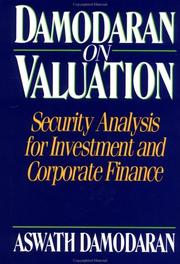
Advanced valuation for the cases where the standard methods break down.
“We adapted this from Aswath Damodaran, Damodaran on Valuation (New York: John Wiley & Sons, 1994), 56-58” — Michael Mauboussin
Source: M&M on Valuation, page 13
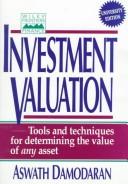
Tools and techniques for valuing any asset, with real-world examples.
“Aswath Damodaran, Investment Valuation: Tools and Techniques for Determining the Value of Any Asset, 2nd ed. (New York: John Wiley & Sons, 2002), 161-162” — Michael Mauboussin
Source: Common Errors in DCF Models: Do You Use Economically Sound & Transparent Models?, page 11

An asset's risk depends on how it moves with the rest of the portfolio.
“Markowitz, Harry M., Portfolio Selection: Efficient Diversification of Investment (New Haven, CT: Yale University Press, 1959)” — Michael Mauboussin
Source: Size Matters: The Kelly Criterion and the Importance of Money Management, page 12
Also recommended by: William J. Bernstein
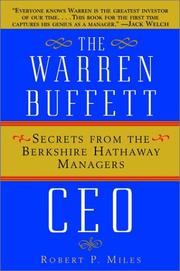
How Berkshire's subsidiary heads run their businesses, in their own words.
“Miles, Robert P., The Warren Buffett CEO: Secrets from the Berkshire Hathaway Managers (New York: John Wiley & Sons, 2002)” — Michael Mauboussin
Source: Are You an Expert? Experts and Markets, page 10
Also recommended by: Brad Feld, Francois Rochon, Mohnish Pabrai
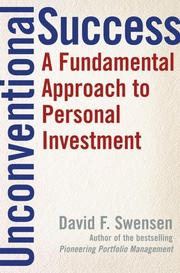
Why individuals cannot copy the endowment model, and a simpler approach for them.
“Swensen, David F., Unconventional Success: A Fundamental Approach to Personal Investment (New York: Free Press, 2005)” — Michael Mauboussin
Also recommended by: John C. Bogle, Marc Andreessen and 2 others
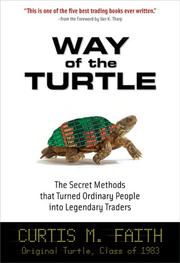
A Turtle trader's account of the rules taught to novices, and why most failed.
“Curtis M. Faith, Way of the Turtle: The Secret Methods that Turned Ordinary People into Legendary Traders (New York: McGraw-Hill, 2007), 44” — Michael Mauboussin
Source: Turtles in Omaha: The Mindset of Great Investors, page 7
Also recommended by: Mohnish Pabrai
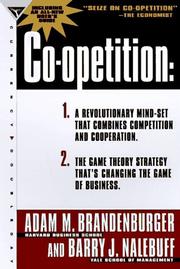
Game theory applied to business, which is cooperative and competitive at once.
“Adam M. Brandenburger and Barry J. Nalebuff, Co-opetition (New York: Currency Doubleday, 1996)” — Michael Mauboussin
Source: The Ecosystem Edge, page 10
Also recommended by: Mohnish Pabrai
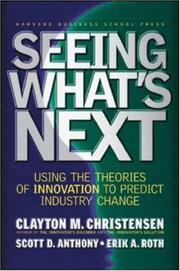
Disruption theory used to forecast how industries will change.
“also Clayton M. Christensen, Scott D. Anthony, and Erik A. Roth, Seeing What’s Next: Using the Theories of Innovation to Predict Industry Change (Boston, MA: Harvard Business School Press, 2004)” — Michael Mauboussin
Source: Untangling Skill and Luck: How to Think About Outcomes - Past, Present, and Future, page 31
Also recommended by: Ev Williams
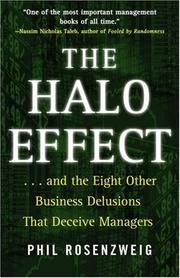
How judging firms by their results corrupts most business research and advice.
“Phil Rosenzweig’s must-read book, The Halo Effect, shows this idea is alive and well in the business world.” — Michael Mauboussin
Source: Was Harry Potter Inevitable? Cumulative Advantage, Counterfactuals, and the Halo Effect, page 7
Also recommended by: Ev Williams, Matt Mullenweg
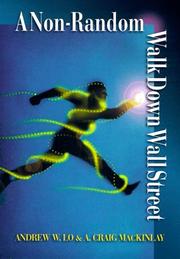
Research papers showing that stock prices do not follow a random walk.
“Andrew W. Lo and A. Craig MacKinlay, A Non-Random Walk Down Wall Street (Princeton, NJ: Princeton University Press, 1999), 4-5” — Michael Mauboussin
Source: Capital Ideas Revisited - Part 2: Thoughts on Beating a Mostly-Efficient Stock Market, page 9
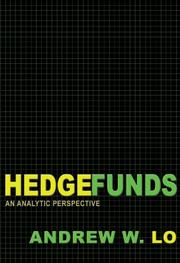
Research on how hedge fund returns and risks behave, and how to measure them.
“Andrew W. Lo, Hedge Funds: An Analytic Perspective (Princeton, NJ: Princeton University Press, 2008), 255-302” — Michael Mauboussin
Source: Long-Term Investing: How I Learned to Stop Worrying and Ignore Volatility, page 6
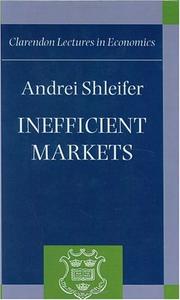
Behavioural finance as a research programme, and why arbitrage has limits.
“The Rules of the Game In his excellent book, Inefficient Markets, Harvard professor Andrei Shleifer summarizes the three arguments that underpin the efficient market hypothesis (EMH): 5 1.” — Michael Mauboussin
Source: Contrarian Investing: The Psychology of Going Against the Crowd, page 2
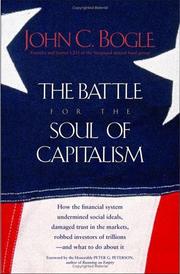
How managers and middlemen took value from the owners of American companies.
“Bogle, John C., The Battle for the Soul of Capitalism (New Haven: Yale University Press, 2005)” — Michael Mauboussin
Also recommended by: Mohnish Pabrai, Mr. Money Mustache
The statistical tools of empirical finance and the questions they test.
“Campbell, John Y., Andrew W. Lo, and A. Craig MacKinley, The Econometrics of Financial Markets (Princeton, NJ: Princeton University Press, 1996)” — Michael Mauboussin
Source: Capital Ideas Revisited: The Prime Directive, Sharks, and The Wisdom of Crowds, page 16
Also recommended by: William J. Bernstein
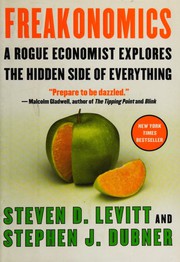
Incentives and data applied to cheating teachers, sumo wrestlers and other puzzles.
“Also, see the story of cheating in the Chicago Public School system in Steven D. Levitt and Stephen J. Dubner, Freakonomics: A Rogue Economist Explores the Hidden Side of Everything (New York: Harper Perennial, 2009), 23-35” — Michael Mauboussin
Source: Blaming the Rat: Incentives, Motivation, and How They Interact, page 14
Also recommended by: Mohnish Pabrai, Andrew Lokenauth and 6 others
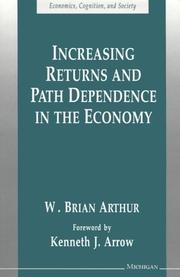
Papers showing positive feedback and lock-in govern parts of the economy.
“Arthur, W. Brian, Increasing Returns and Path Dependence in the Economy (Ann Arbor, MI: University of Michigan Press, 1994)” — Michael Mauboussin
Source: Importance of Diverse Thinking: Why the Santa Fe Institute Can Make You a Better Investor, page 11

How economics copied the maths of 19th-century physics, and what that cost it.
“Mirowski, Philip, More Heat than Light: Economics as Social Physics, Physics as Nature’s Economics (Cambridge: Cambridge University Press, 1989)” — Michael Mauboussin
Source: Size Matters: The Kelly Criterion and the Importance of Money Management, page 12
Also recommended by: Eric Weinstein
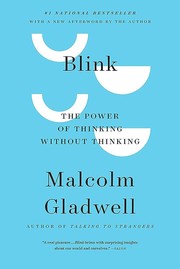
How snap judgments work, when to trust them and when they mislead.
“Malcolm Gladwell, Blink: The Power of Thinking Without Thinking (New York: Little, Brown and Company, 2005)” — Michael Mauboussin
Source: Are You an Expert? Experts and Markets, page 9
Also recommended by: Mohnish Pabrai, Ev Williams, Packy McCormick
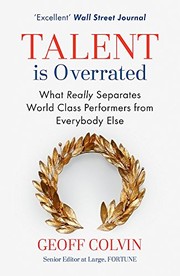
Deliberate practice, not innate talent, explains world-class performance.
“Colvin, Geoff, Talent is Overrated: What Really Separates World-Class Performers from Everybody Else (New York: Portfolio, 2008)” — Michael Mauboussin
Source: Untangling Skill and Luck: How to Think About Outcomes - Past, Present, and Future, page 33
Also recommended by: Derek Sivers, Mohnish Pabrai, Alfred Lin and 1 other

The Anomalies columns: systematic departures from standard economic theory.
“Richard H. Thaler, The Winner’s Curse: Paradoxes and Anomalies of Economic Life (Princeton, NJ: Princeton University Press, 1992, 157-158” — Michael Mauboussin
Source: Capital Ideas Revisited - Part 2: Thoughts on Beating a Mostly-Efficient Stock Market, page 9
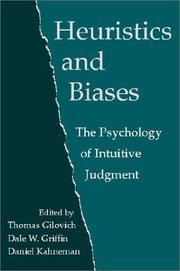
The research on intuitive judgement and its biases, collected.
“Paul Slovic, Melissa Finucane, Ellen Peters, and Donald G. MacGregor, “The Affect Heuristic,” in Heuristics and Biases: The Psychology of Intuitive Judgment, ed. Thomas Gilovich, Dale Griffin, and Daniel Kahneman (Cambridge: Cambridge University Press, 2002), 397-420” — Michael Mauboussin
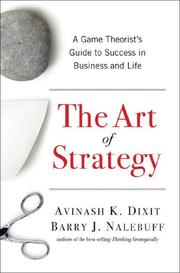
Game theory without maths, with new examples: commitment, signals, bargaining.
“for business, see Avinash K. Dixit and Barry J. Nalebuff, The Art of Strategy (New York: W.W. Norton & Company, 2008)” — Michael Mauboussin
Source: The Colonel Blotto Game: Transitivity and How to Win When You’re an Underdog, page 8
Also recommended by: Marc Andreessen
Rare, unforeseen, high-impact events drive history, explained only after the fact.
“Nassim Taleb’s latest book, The Black Swan, is a treatise on the improbable events Buffett has in mind. 5 The term black swan comes from philosopher Karl Popper’s criticism of induction: We get closer to truth if we focus on falsification instead of verification.” — Michael Mauboussin
Source: Turtles in Omaha: The Mindset of Great Investors, page 2
Also recommended by: David Perell, Howard Marks, Marc Andreessen and 19 others
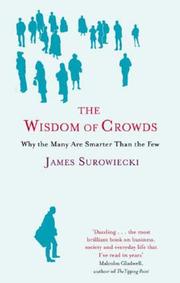
When groups judge better than experts, and the four conditions that make it work.
“Incentives Jim Surowiecki deftly articulated this line of thinking in his delightful book, The Wisdom of Crowds.” — Michael Mauboussin
Source: Contrarian Investing: The Psychology of Going Against the Crowd, page 3
Also recommended by: Derek Sivers, Jim Collins, Mohnish Pabrai and 3 others
A text on human judgment, decision making and rationality.
“Baron, Jonathan, Thinking and Deciding, 3rd ed. (Cambridge, UK: Cambridge University Press, 2000)” — Michael Mauboussin
Source: Decision-Making for Investors: Theory, Practice, and Pitfalls, page 19
Also recommended by: Mohnish Pabrai, Nassim Nicholas Taleb
How randomness shapes our lives, the history of probability, and why we misread it.
“Leonard Mlodinow, The Drunkard’s Walk: How Randomness Rules Our Lives (New York: Pantheon Books, 2008), 180-181” — Michael Mauboussin
Source: Untangling Skill and Luck: How to Think About Outcomes - Past, Present, and Future, page 30
Also recommended by: Derek Sivers, Patrick Collison
The mathematics of baccarat, backgammon, blackjack and other games of chance.
“In his book, The Mathematics of Gambling, Thorp explains the Kelly system’s attractive features:12 1.” — Michael Mauboussin
Source: Size Matters: The Kelly Criterion and the Importance of Money Management, page 4

A financier and statesman's own account of his life in markets and politics.
“Lev, Baruch, Intangibles (Washington, D.C: Brookings Institution Press, 2001)” — Michael Mauboussin
Source: The Economics of Customer Businesses, page 19
Also recommended by: Mohnish Pabrai, Seth Klarman

A Treasury secretary's account of economic and fiscal policy in the Clinton years.
“Rubin, Robert E. and Jacob Weisberg, In an Uncertain World: Tough Choices from Wall Street to Washington (New York: Random House, 2004)” — Michael Mauboussin
Also recommended by: Mohnish Pabrai, Warren Buffett
The life of a hedge fund manager with one of the century's best records.
“Michael Steinhardt, No Bull: My Life In and Out of Markets (New York: John Wiley & Sons, 2001), 129” — Michael Mauboussin
Source: Contrarian Investing: The Psychology of Going Against the Crowd, page 6
Also recommended by: Mohnish Pabrai, Nassim Nicholas Taleb
How Markowitz, Sharpe, Fama, Black and Scholes built the theory of modern finance.
“In his famous book The Structure of Scientific Revolutions, Thomas Kuhn wrote, “Anomaly appears only against the background provided by the paradigm.” 3 The construction of modern finance theory, which Peter Bernstein’s Capital Ideas documents beautifully, plays a crucial role in how we frame the market efficiency debate today.” — Michael Mauboussin
Source: Capital Ideas Revisited: The Prime Directive, Sharks, and The Wisdom of Crowds, page 3
Also recommended by: John C. Bogle

True cases showing the power and the limits of medicine as it is practised.
“Gawande, Atul, Complications: A Surgeon’s Notes on an Imperfect Science (New York: Picador, 2002)” — Michael Mauboussin
Source: Are You an Expert? Experts and Markets, page 10
Also recommended by: Mohnish Pabrai, Patrick Collison
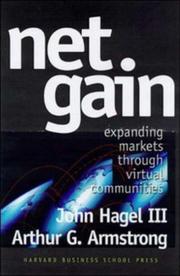
How firms can build value and competitive advantage from online virtual communities.
“Hagel, John, and Arthur G. Armstrong, Net Gain: Expanding Markets through Virtual Communities (Boston: Harvard Business School Press, 1997)” — Michael Mauboussin
Source: Exploring Network Economics, page 15
Also recommended by: Mohnish Pabrai
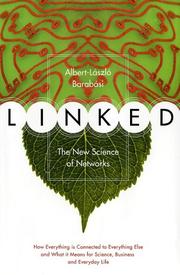
The science of networks, and why social networks, companies and organisms are alike.
“Barabasi, Albert-Laszlo, Linked: How Everything is Connected to Everything Else and What It Means (New York: Perseus Books, 2002)” — Michael Mauboussin
Source: Exploring Network Economics, page 15
Also recommended by: Mohnish Pabrai
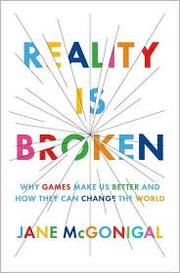
How the problem-solving and teamwork of games could solve real-world problems.
“While this book was not out at the time of this writing, this is likely another useful resource: Jane McGonigal, Reality is Broken: Why Games Make Us Better and How They Can Change the World (New York: Penguin Press, 2011).” — Michael Mauboussin
Source: Blaming the Rat: Incentives, Motivation, and How They Interact, page 14
Also recommended by: Mohnish Pabrai
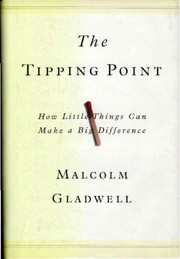
How ideas and behaviour spread like epidemics, and the three factors that tip them.
“Malcolm Gladwell, The Tipping Point: How Little Things Can Make a Big Difference (New York: Little, Brown, 2000)” — Michael Mauboussin
Source: Interdisciplinary Perspectives on Risk, page 5
Also recommended by: Christopher Browne, Jim Collins and 5 others
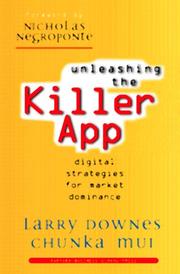
Digital strategies for using information technology to dominate a market.
“Downes, Larry, and Chunka Mui, Unleashing the Killer App: Digital Strategies for Market Dominance (Boston: Harvard Business School Press, 1998)” — Michael Mauboussin
Source: Exploring Network Economics, page 15
Also recommended by: Mohnish Pabrai

Captain Ahab drives his whaling crew to hunt the white whale that maimed him.
“Melville, Herman, Moby-Dick (New York: Harper & Brothers, 1851)” — Michael Mauboussin
Source: Capital Ideas Revisited: The Prime Directive, Sharks, and The Wisdom of Crowds, page 16
Also recommended by: Jim Collins, Steve Jobs