Management and Organisational Design

How large organisations are actually held together, and why structure and culture show up in the numbers.

688 books · 63 people behind it · 3 reading lists

Start here

  1. High Output ManagementAndrew S. Grove, 1983
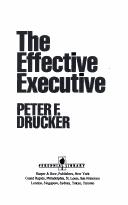
  2. The Effective ExecutivePeter F. Drucker, 1967
  3. The Practice of ManagementPeter F. Drucker, 1954

The people behind it 63

Each person holds a book in this entry or names it in their own tags.

Investors 6

Warren Buffett3 books hereJohn C. Bogle2 books hereRay Dalio1 book here
HH
Hamilton Helmer1 book here
JD
John Doerr1 book here
PD
Pat Dorsey1 book here

Founders 8

Reid Hoffman4 books hereBen Horowitz3 books here
GK
Guy Kawasaki3 books here
John C. Bogle2 books herePeter Thiel2 books here
EC
Ed Catmull2 books here
DH
David Heinemeier Hansson2 books here
SB
Safi Bahcall1 book here

Executives 5

AS
Andrew S. Grove2 books here
John C. Bogle2 books here
EC
Ed Catmull2 books here
ES
Eric Schmidt2 books here
RS
Ricardo Semler2 books here

Academics 9

LA
Lawrence A. Cunningham4 books here
AD
Alfred D. Chandler Jr.3 books here
AR
Alfred Rappaport3 books here
JK
Judd Kahn2 books here
BG
Bruce Greenwald1 book here
JK
John Kenneth Galbraith1 book here
AG
Adam Grant1 book here
DA
Dan Ariely1 book here
TC
Tyler Cowen1 book here

Strategists 15

JC
Jim Collins8 books here
EM
Eliyahu M. Goldratt5 books here
Peter F. Drucker4 books here
PL
Patrick Lencioni4 books here
TP
Tom Peters4 books here
SG
Seth Godin3 books here
SC
Stephen Covey3 books here
DT
Don Tapscott3 books here
SS
Simon Sinek3 books here
Michael E. Porter2 books here
AR
Al Ries2 books here
Richard Rumelt1 book here
GA
Geoffrey A. Moore1 book here
HH
Hamilton Helmer1 book here
SB
Safi Bahcall1 book here

Journalists 20

LA
Lawrence A. Cunningham4 books here
PL
Patrick Lencioni4 books here
TP
Tom Peters4 books here
SG
Seth Godin3 books here
SC
Stephen Covey3 books here
DT
Don Tapscott3 books here
SS
Simon Sinek3 books here
Michael Lewis2 books here
AR
Al Ries2 books here
JB
John Brooks2 books here
JK
John Kenneth Galbraith1 book here
AG
Adam Grant1 book here
CA
Chris Anderson1 book here
GT
Gillian Tett1 book here
TC
Tyler Cowen1 book here
WP
William Poundstone1 book here
CR
Charles R. Morris1 book here
DG
Dan Gardner1 book here
JL
Janet Lowe1 book here
RH
Ryan Holiday1 book here

Reading list — Essential product management reading list · Superbook

12 books, in the order the list argues for

The books on this list form a rough argument with each other. Start with Cagan's Inspired, which establishes what great product work looks like and why most companies fall short. Then Torres's Continuous Discovery Habits offers the operational discipline to actually run that kind of work week to week. Fitzpatrick's The Mom Test is the sharpest short corrective available for the specific failure mode of talking yourse

Sources: Lenny's Podcast — Marty Cagan on product management · Teresa Torres — Continuous Discovery blog · Basecamp — Shape Up (free online) · Lenny's Newsletter — product management reading list

Reading list — The best books on Leadership · Superbook

12 books, in the order the list argues for

The books on this list trace an argument across several decades of research and practice. It begins with the hard operational reality Grove captured in High Output Management: leadership is about maximizing the output of those you're responsible for, not your own output. From there the list moves to the structural side — Lencioni's Five Dysfunctions names the failure modes that kill teams regardless of individual tal

Sources: HBR: What Makes a Leader? (Goleman) · Brené Brown on leadership and vulnerability (TED) · Simon Sinek: How great leaders inspire action (TED) · The Knowledge Project: Leadership and management (Farnam Street)

Reading list — The best books on strategic thinking · Superbook

10 books, in the order the list argues for

The books on this list form an argument about strategy as an evolving practice. Sun Tzu's compact aphorisms establish the foundations: know the enemy, know yourself, avoid direct confrontation where indirect means will serve. Clausewitz then complicates the picture — war is not a clean formula but a continuation of politics, saturated with friction and fog. Liddell Hart's indirect approach reads Clausewitz critically

Sources: Richard Rumelt — Good Strategy / Bad Strategy (author site) · Michael Porter — What Is Strategy? (Harvard Business Review) · John Boyd, OODA and the Art of War — Coram biography publisher page · B. H. Liddell Hart Centre for Military Archives
Books 688

Chester I. Barnard · 1938 · Insider theory from a working AT&T executive; the origin of authority-as-acceptance.
Peter F. Drucker · 1954 · The book that defined management as a discipline.
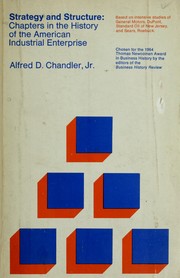
Alfred D. Chandler Jr. · 1962 · Sears is one of Chandler's four case studies in the multidivisional firm.
Irving L. Janis · 1972 · The original study of how cohesive groups suppress dissent
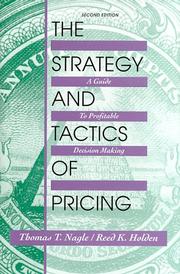
Thomas T. Nagle, Reed K. Holden · 1987 · The standard text on value-based pricing.
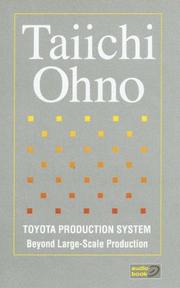
Taiichi Ohno · 1988 · Insider account: the system's architect explains it himself.
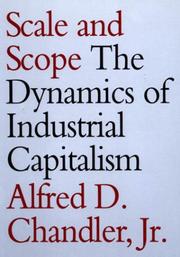
Alfred D. Chandler Jr. · 1990 · Comparative history of managerial capitalism in three countries.
James P. Womack, Daniel T. Jones, Daniel Roos · 1990 · MIT study that named lean production and made Toyota the benchmark.
Jack Stack, Bo Burlingham · 1992 · Open-book management at SRC; the founding text of employee ownership practice.
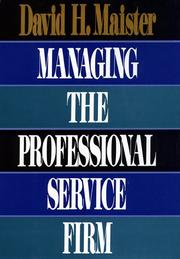
David H. Maister · 1993 · Leverage, utilisation and the partnership arithmetic. Still the core text.
Kelin E. Gersick, John A. Davis, Marion McCollom Hampton, Ivan Lansberg · 1997 · The three-circle model; the founding text of family-business study.
Robert A. Caro · 2002 · Caro on Johnson's mastery of an institution's levers and incentives
David S. Evans, Richard Schmalensee · 2016 · The economics of multi-sided markets, from village markets to card networks.
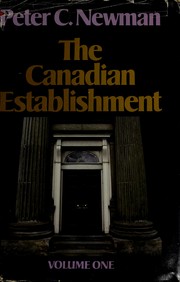
Peter C. Newman · 1975 · The founding map of who owns Canadian business.
Norman R. Augustine · 1983 · Insider satire-with-data on defence programme cost growth.
Edgar H. Schein · 1985 · The standard academic model of how culture is formed and changed.
Masaaki Imai · 1986 · The book that introduced continuous improvement to Western managers.
John L. Ward · 1987 · Growth, succession and ownership planning; the field's first practical manual.
Herbert A. Simon · 1991 · Memoir by the Nobel laureate who founded bounded rationality
David A. Aaker · 1996 · Brand equity as an asset with a measurable return.
Hermann Simon · 1996 · Mittelstand niche leaders: narrow markets, deep moats, patient owners.
Kevin Freiberg, Jackie Freiberg · 1996 · The best-known account of the Kelleher-era culture.
John Elkington · 1997 · Where the triple bottom line comes from.
Eliyahu M. Goldratt · 1997
Ken Iverson · 1997 · Nucor's chief executive on flat structure, incentive pay and minimills
David H. Maister · 1997 · The follow-on: what sustains a firm whose assets go home at night.
Charles H. Fine · 1998 · When to integrate and when to outsource, framed as an oscillating cycle.
Carliss Y. Baldwin, Kim B. Clark · 1999 · The modularity theory that makes contract manufacturing possible at all.
Kevin G. Rivette, David Kline · 1999 · The book that turned dormant patent portfolios into a revenue line.
Jack Stack, Bo Burlingham · 2002 · The follow-on on building an ownership culture, not just an ESOP.
Larry Bossidy, Ram Charan · 2002 · Operating discipline linking people, strategy and operations into one process
Annabelle Gawer, Michael A. Cusumano · 2002 · Intel, Microsoft, Cisco and the levers a platform owner pulls on its ecosystem.
Jeremy Hope, Robin Fraser · 2003 · The case against the annual budget as a control device.
Bent Flyvbjerg, Nils Bruzelius, Werner Rothengatter · 2003 · The evidence that traffic forecasts and costs are systematically wrong.
Doris Kearns Goodwin · 2003 · Lincoln's cabinet of opponents; a study in managing rivals
John L. Ward · 2004 · Fifty lessons from long-lived family firms.
Jeffrey K. Liker · 2004 · The most widely used codification of Toyota's management principles.
Edward Jay Epstein · 2005 · Where studio money actually comes from, line by line.
Yossi Sheffi · 2005 · The trade-off between lean inventory and disruption risk.
David A. Lax, James K. Sebenius · 2006 · Adds setup and deal design to tactics; the dealmaker's version.
Karen Berman, Joe Knight · 2006 · Written for managers who have to read the numbers without an accounting background.
Danny Meyer · 2006 · Restaurateur on hospitality as an operating system for service businesses
Daniel H. Pink · 2009 · Autonomy, mastery and purpose against pay-for-performance assumptions
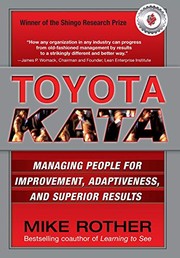
Mike Rother · 2009 · The improvement and coaching routines beneath the visible tools.
R. James Breiding · 2012 · The best single account of how Swiss firms built durable niches.
David Robertson, Bill Breen · 2013 · LEGO's near-bankruptcy and turnaround; the one real Danish business book.
Adam Grant · 2013 · Reciprocity styles, and how givers outperform over long horizons
Gene Kim, Kevin Behr, George Spafford · 2013
Gillian Tett · 2015 · How organisational silos hide risk; an anthropologist inside banks
Madhavan Ramanujam, Georg Tacke · 2016 · Simon-Kucher's argument that price should be designed before the product.
Bharat Anand · 2016 · Strategy framework for the connections business Netflix built.
John Doerr · 2017 · OKRs as Doerr learned them at Intel and spread through venture portfolios
Ajay Agrawal, Joshua Gans, Avi Goldfarb · 2018 · AI as a fall in the cost of prediction; the economist's version of the thesis.
Tien Tzuo · 2018 · Zuora's founder on the shift from unit sales to subscriber accounting.
Risto Siilasmaa · 2018 · Insider account by the chairman who sold handsets to Microsoft.
Tyler Cowen · 2019 · The contrarian defence of corporate scale.
Michael A. Cusumano, Annabelle Gawer, David B. Yoffie · 2019 · Innovation platforms versus transaction platforms, and why most fail.
Thales S. Teixeira, Greg Piechota · 2019 · Decoupling: how entrants steal the profitable step in a customer's chain.
Ulrike Schaede · 2020 · Why Japanese firms retreated into high-margin upstream components.
John Newhouse · 1982 · Classic on the bet-the-company economics of airliner programs.
Mary Kay Ash · 1984 · Founder's own account of recruiting and holding a commissioned sales force.
Gary Jacobson, John Hillkirk · 1986 · The parent company's quality turnaround against Japanese copiers.
Taiichi Ohno · 1988 · Insider account: Ohno's shorter, blunter shop-floor essays.
David T. Kearns, David A. Nadler · 1992 · Insider account by Xerox's CEO of the quality-driven turnaround.
Noel M. Tichy, Stratford Sherman · 1993 · The admiring contemporary account of Welch's restructuring.
Jeffrey Brabec, Todd Brabec · 1994 · The publishing-side reference on royalty streams and licensing income.
Barbara Sturken Peterson, James Glab · 1994
Gita Piramal · 1996 · Profiles of the family houses that still dominate the index.
Jonathan Boston, John Martin, June Pallot, Pat Walsh · 1996 · The state-sector redesign other governments copied; contracts, outputs, accountability.
David Sadtler · 1997 · The case for demerger argued from the parent company's side.
Mark L. Sirower · 1997 · Why acquisition premiums usually destroy value; the discipline test.
Thomas F. O'Boyle · 1998 · The contemporaneous dissent, twenty years ahead of the consensus.
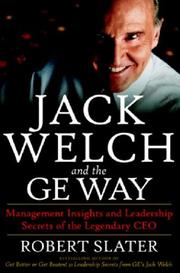
Robert Slater · 1998 · Contemporary admiring account; useful as a record of what people believed.
Michael Backman · 1999 · Written straight after the 1997 crisis on opacity, related-party dealing and family control.
Stuart Slatter, David Lovett · 1999 · The systematic practitioner framework.
Adam Morgan · 1999 · Challenger-brand economics against a dominant incumbent.
Adrian J. Slywotzky · 1999 · How value migrates between business designs in an industry.
Ethan M. Rasiel · 1999 · The delivery method behind the fee.
D. Michael Abrashoff · 2002 · A naval captain on delegating authority to improve performance
Joseph R. Blasi, Douglas L. Kruse, Aaron Bernstein · 2003 · Broad-based stock options and what they did to company performance.
David Harding, Sam Rovit · 2004 · Bain's frequent-acquirer discipline and integration playbook.
Robert F. Bruner · 2005 · Post-mortems on the acquisitions that destroyed the most value.
Corey Rosen, John Case, Martin Staubus · 2005 · The NCEO's evidence on when shared ownership raises performance.
Rigas Doganis · 2005 · The standard academic text on airline economics.
A. G. Lafley, Ram Charan · 2008 · Insider account: Lafley on making innovation a routine process.
Jean-Noël Kapferer, Vincent Bastien · 2008 · The standard analytical text on the LVMH-style brand model.
Steve Miller · 2008 · Insider account from a serial restructuring CEO.
Mark Blaxill, Ralph Eckardt · 2009 · IP as competitive strategy rather than legal housekeeping.
Geoffrey Jones · 2010 · Harvard business historian; sets her brand-building against the whole industry.
Mark W. Johnson · 2010 · Business-model innovation as a discipline, with a profit-formula framework.
Walter Kiechel · 2010 · How BCG, Bain and McKinsey created the market for strategy itself.
Robin Lewis, Michael Dart · 2010 · Preemptive distribution and control of the value chain.
Dan Steinbock · 2010 · Nokia's emerging-market operating model at the turn; Open Library unreachable.
David Erdal · 2011 · An owner who converted his own firm, on employee ownership in practice.
Greg Crabtree, Beverly Herzog · 2011 · Owner-operator economics: labour efficiency and the four keys.
Anders Dahlvig · 2011 · Insider account: the CEO from 1999-2009 on the operating model.
Jeffrey K. Liker, Timothy N. Ogden · 2011 · The recall crisis and tsunami tested against the lean model.
Joe Weinman · 2012 · The maths of pay-per-use versus owned capacity.
Anita Elberse · 2013 · Hit economics that explain Netflix's later spending strategy.
Eric Benjamin Seufert · 2013 · The arithmetic of conversion rates, whales and lifetime value.
Francisco Souza Homem de Mello · 2014 · The Lemann-Telles-Sicupira management system, written for operators.
John Rossman · 2014 · Insider account by the executive who launched Amazon Marketplace.
Zeynep Ton · 2014 · Why Costco, Trader Joe's and QuikTrip pay more and still undercut rivals.
Jaeyong Song, Kyungmook Lee · 2014 · Insider-access management study of Lee Kun-hee's reforms; Open Library unreachable.
Shigetaka Komori · 2015 · Fujifilm CEO memoir; the counterfactual to Kodak. Open Library unreachable.
Sangeet Paul Choudary · 2015 · Designing the interaction that a platform is actually built around.
Stanley McChrystal, Tantum Collins, David Silverman, Chris Fussell · 2015 · Insider account of restructuring JSOC for speed of decision.
Robbie Kellman Baxter · 2015 · Membership as a relationship, not a payment plan.
Yossi Sheffi · 2015 · Deep-tier supply-chain risk, a decade on.
Alex Moazed, Nicholas L. Johnson · 2016 · Practitioner account of how platform businesses capture a transaction.
Michael D. Smith, Rahul Telang · 2016 · Data economics of the shift from studios to streamers.
Chris Zook, James Allen · 2016 · Bain's account of what founder-led companies lose as they scale.
Acha Leke, Mutsa Chironga, Georges Desvaux · 2018 · McKinsey's company-level survey of the largest frontier opportunity set.
Ming Zeng · 2018 · Insider account: Alibaba's chief strategy officer on platform design.
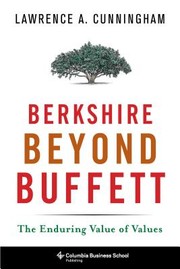
Lawrence A. Cunningham, Stephanie Cuba · 2019 · Berkshire's trust-based management model, examined by Buffett's long-time editor
Brian Dumaine · 2020 · Business-model analysis rather than a life.
John Elkington · 2020 · The author's own recall of the triple bottom line.
Robbie Kellman Baxter · 2020 · Retention, pricing tiers and the mechanics of renewal.
Jeff Immelt, Amy Wallace · 2021 · Insider account: Immelt's defence of his sixteen years as CEO.
Indra Nooyi · 2021 · Insider account: Nooyi's memoir of twelve years as CEO.
Paul Polman, Andrew Winston · 2021 · Insider account: Polman on the Sustainable Living Plan years.
Corey Rosen, John Case · 2022 · Current survey of ESOPs, worker co-ops and employee trusts.
David Gelles · 2022 · Polemic treating Welch's GE as the template for shareholder primacy.
Walt Bogdanich, Michael Forsythe · 2022 · Investigative account of who pays for consulting advice.
Bent Flyvbjerg, Dan Gardner · 2023 · Why megaprojects overrun, and the reference-class forecasting correction.
Robert Kegan, Lisa Laskow Lahey · Kegan and Lahey argue that most organizations are 'second nature' — places where people spend enormous energy managing impressions and hiding weaknesses. Deliberately Developmental Organizations build learning into daily work. A challenging read that sits at the furthest edge of what most organizations are ready for.
Robert Coram · The definitive account of John Boyd and the OODA loop. Boyd's contribution was to show that strategy is fundamentally about time and adaptation: the side that observes, orients, decides, and acts faster keeps the opponent reacting rather than acting. His ideas crossed into business, software, and lean manufacturing.
Tony Fadell · Fadell built the iPod, the iPhone, and Nest. Build is structured as a book of advice organized by career stage and product phase. It is unusually honest about failure, about the texture of executive dysfunction, and about what it actually takes to ship physical products at Apple-level quality. The section on storytelling for products is particularly strong.
Michael E. Porter · Porter's five forces framework gave business strategy an analytical backbone. By mapping supplier power, buyer power, threat of substitutes, barriers to entry, and competitive rivalry, he made industry structure a strategic variable rather than a fixed backdrop.
Teresa Torres · Torres operationalizes what Cagan describes. Weekly customer touchpoints, opportunity-solution trees, assumption testing — this is the most practical account of how discovery actually becomes a habit rather than a quarterly exercise. Pairs directly with Inspired as the how to its what.
Brené Brown · Brown's research on shame and vulnerability turns into a practical leadership argument: armor — the behaviors leaders adopt to avoid discomfort — is the main driver of organizational dysfunction. The book is dense with specific behaviors to practice and avoid, grounded in years of qualitative research.
Marty Cagan, Chris Jones · Cagan's follow-on to Inspired shifts from product craft to organizational conditions. The argument: you cannot have great products without empowered product teams, and empowered teams require managers who coach toward outcomes rather than manage toward outputs. Addresses the question Inspired leaves open — what do you change first?
Melissa Perri · Perri names the organizational failure mode precisely: companies that measure success by shipping features rather than producing outcomes. The book is a diagnosis of product management dysfunction at the company level and a structural argument for why PM must own outcomes, not output, to function at all.
Richard Rumelt · Rumelt's most important contribution is diagnosing what makes strategy bad — fluff, failure to face the challenge, goals masquerading as strategies. His kernel model (diagnosis + guiding policy + coherent actions) is the clearest framework for actually writing strategy, not just talking about it.
Nir Eyal · Eyal's model of trigger, action, variable reward, and investment describes how products build habits at a mechanistic level. Useful for product designers and equally useful for anyone trying to understand when habit formation serves users and when it serves only the product.
Marty Cagan · The foundational text of the modern PM role. Cagan's central argument — that most companies build the wrong things because they treat product as a delivery function rather than a discovery function — reframes everything that follows. The chapter on product discovery versus product delivery is worth the price of the book.
Simon Sinek · Sinek's second major book applies neuroscience — oxytocin, cortisol, dopamine — to explain why some work environments feel safe and others don't, and how leaders establish the Circle of Safety that determines whether teams will take the risks that produce performance. More substantive than Start With Why.
Ronald A. Heifetz, Marty Linsky · Heifetz and Linsky distinguish adaptive challenges — which require people to change their beliefs and behaviors — from technical problems that expertise can solve. Most leadership failures happen when people apply technical solutions to adaptive challenges. This is among the most important distinctions in the field.
Alistair Croll, Benjamin Yoskovitz · The most systematic treatment of metrics for product teams. Croll and Yoskovitz organize analytics by business model type and stage, helping teams identify the one metric that matters most at each phase. Prevents the common failure of tracking everything and learning from nothing.
Liz Wiseman · Wiseman's research finding: some leaders act as Multipliers who bring out two times the intelligence of their teams; others are Diminishers who unintentionally suppress it. The taxonomy of specific behaviors (the Empire Builder, the Tyrant, the Know-It-All vs. their opposites) is precise enough to be self-diagnostic.
Carl von Clausewitz · Clausewitz introduces friction, fog, and the political nature of conflict as irreducible elements of strategy. His insistence that war is a continuation of politics by other means is the foundational challenge to anyone who wants a purely technical theory of winning.
Andrew S. Grove · Andy Grove's concept of the strategic inflection point — the moment when the forces acting on a business fundamentally shift — is one of the most useful constructs in competitive strategy. Written from his experience navigating Intel through the transition from memory chips to microprocessors.
Roger L. Martin, A.G. Lafley · Lafley and Martin's account of strategy at Procter & Gamble frames every strategic decision as a cascade of five choices: winning aspiration, where to play, how to win, capabilities, and management systems. One of the few strategy books built from actual corporate decisions rather than retrospective pattern-matching.
Kim Scott · Scott's two-axis framework — care personally, challenge directly — gives a practical vocabulary for the feedback conversations managers routinely avoid. The quadrant model (Radical Candor, Ruinous Empathy, Obnoxious Aggression, Manipulative Insincerity) is one of the most operationally useful tools in management writing.
Ryan Singer · Singer's alternative to continuous sprints: fixed time, variable scope, with shaping work done in advance to reduce ambiguity before building begins. Whether or not the specific Basecamp process translates, the argument against infinite backlogs and the emphasis on appetite over estimation are worth wrestling with.
Jake Knapp, John Zeratsky, Braden Kowitz · The five-day sprint compresses months of product debate into a week by forcing teams to prototype and test with real users before committing to a build. Knapp's method is deliberately theatrical — that's a feature, not a bug. The value is in the forcing function.
Simon Sinek · Sinek's Golden Circle (Why/How/What) is less empirically grounded than the rest of this list, but its core observation is accurate: people don't follow what you do, they follow why you do it. Useful for understanding how leaders communicate identity externally and why some inspire loyalty while others just manage compliance.
B. H. Liddell Hart · Liddell Hart's historical survey of military campaigns argues that dislocation — attacking an enemy's psychological equilibrium and logistics rather than their strength — is consistently more decisive than frontal assault. A direct critique of Clausewitz's legacy applied to 20th-century warfare.
Sun Tzu · The original text on strategic positioning. Sun Tzu's core insight — that winning without fighting is the highest form of strategy — runs through everything that followed. Short enough to read in an afternoon, dense enough to argue about for a career.
Daniel Coyle · Coyle examines high-performing groups — SEAL teams, Pixar, the San Antonio Spurs — to identify the three skills that build strong cultures: building safety, sharing vulnerability, and establishing purpose. The research is descriptive rather than prescriptive, which makes it more credible than most culture books.
Patrick Lencioni · Lencioni's model — absence of trust, fear of conflict, lack of commitment, avoidance of accountability, inattention to results — is a diagnostic checklist as much as a theory. The fable format makes it fast to read, and the pyramid structure helps teams identify which dysfunction is upstream of the others.
Ben Horowitz · Horowitz writes for leaders who are past the theory stage and into the problems that have no clean solution — when to fire a friend, how to lead through a near-death experience, why most leadership advice is written for easy conditions. The antidote to frameworks that assume stability.
Dan Olsen · Olsen's product-market fit pyramid — target customer, underserved needs, value proposition, feature set, UX — is the clearest structural framework for thinking about fit. Where Ries describes validated learning as a philosophy, Olsen gives it a repeatable shape. Particularly strong on how to prioritize which hypotheses to test first.
Eric Ries · Ries brought validated learning to a mainstream business audience. The build-measure-learn loop and the distinction between vanity metrics and actionable metrics remain the clearest vocabulary for thinking about uncertainty in product development. Slightly dated in its startup-centric framing but foundational.
Rob Fitzpatrick · Short, sharp, and corrective. Fitzpatrick diagnoses why customer interviews so often produce false positives: people are polite and will validate almost any idea you present with sufficient enthusiasm. The fix is asking about past behavior, not hypothetical futures. A genuinely useful retraining of interview instincts.
Niccolò Machiavelli · Machiavelli's handbook on political strategy remains disturbing because it separates effectiveness from morality — a distinction every strategic thinker eventually has to confront. His analysis of how new rulers consolidate power is still the sharpest treatment of legitimacy under conditions of uncertainty.
L. David Marquet · Marquet's account of transforming the USS Santa Fe from the worst-performing submarine in the Navy to the best. The specific mechanism — moving from leader-follower to leader-leader by pushing control down while moving competence and clarity up — is one of the most rigorously documented leadership case studies in print.
Joan Magretta · Joan Magretta's accessible synthesis of Porter's body of work clarifies the distinction between operational effectiveness and strategy proper. Essential for anyone who found Competitive Strategy dense or wants the argument stripped of its academic scaffolding.
Peter F. Drucker · 1946 · Study of General Motors; OL lists as 'The Concept of the Corporation'
Peter F. Drucker · 1973 · OL records first publish year as 1974
Richard Rumelt · 1974 · Harvard Business School doctoral dissertation series; not machine-verified.
Peter F. Drucker · 1977 · Selected essays on management
Peter F. Drucker Foundation for Nonprofit Management · 1979
Michael E. Porter · 1985 · Creating and Sustaining Superior Performance
Timothy Lister, Tom DeMarco · 1987
Jr. George Stalk, Thomas M. Hout · 1990
Stan Davis, Bill Davidson · 1991
Cynthia A. Montgomery · 1991 · Edited HBR reader; OL lists title as 'Strategy'
Stephen J. Frangos, Steven J. Bennett · 1993 · Insider account: a Kodak manager on turning around the film unit.
Keshavan Nair · 1994 · Gandhi's principles restated as a leadership standard for executives
Adam M. Brandenburger, Barry J. Nalebuff · 1996
James P. Womack, Daniel T. Jones · 1996
Frederick F. Reichheld, Thomas Teal · 1996
Isao Nakauchi · 1997 · A dialogue conducted by correspondence
Shona L. Brown, Kathleen M. Eisenhardt · 1998
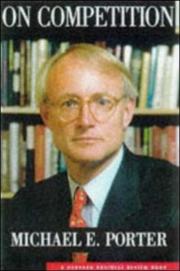
Michael E. Porter · 1998 · Collected HBR articles; expanded edition 2008
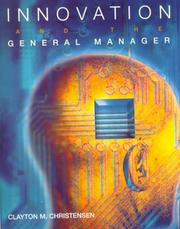
Clayton Christensen · 1999 · Irwin/McGraw-Hill case textbook; Open Library unreachable this run.
John Hagel III, Marc Singer · 1999
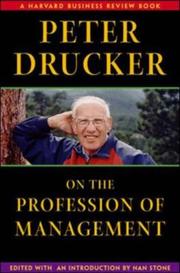
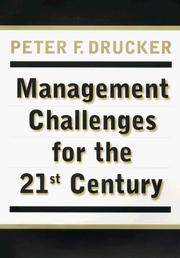
Peter F. Drucker · 2001 · Anthology selected from sixty years of writing
Fred Kofman · 2002 · Values-based management from a coach used across technology companies
Tom DeMarco · 2002
Peter F. Drucker · 2003 · Selections on community and society; not returned by the Open Library author query
William J. O'Neil · 2003 · Compiled from Investor's Business Daily profiles.
Dieter Brandes · 2004 · A former Aldi director on radical simplicity as the cost model.
Joseph A. Maciariello · 2004
Michael F. Corbett · 2004 · Practitioner survey of outsourcing decisions and their economics.
Lorraine Grubbs-West · 2005 · Insider account: former head of people on hiring and retention.
T4 You
Michael M. Lombardo, Robert W. Eichinger, Roger P. Pearman · 2005
Peter F. Drucker · 2006 · Posthumous HBR collection
Elizabeth Olmsted Teisberg · 2006 · Creating Value-Based Competition on Results
Joseph A. Michelli · 2006 · Consultant's distillation of Starbucks service principles.
Don Tapscott, Anthony D. Williams · 2006
George A. Roberts, Robert J. McVicker · 2007
Mo Fathelbab · 2007 · How peer-group forums work; the method used by chief executives
T4 Peak
Chip Conley · 2007
Emi Osono, Norihiko Shimizu, Hirotaka Takeuchi · 2008 · Argues Toyota runs on deliberate internal contradictions.
Peter F. Drucker · 2008 · Revised edition prepared with Joseph A. Maciariello
Jerome H. Grossman, Jason Hwang · 2009 · Open Library unreachable this run; title not machine-verified.
Ken Blanchard, Colleen Barrett · 2010 · Insider management account from Southwest's long-serving president.
Andrew R. Thomas, Timothy J. Wilkinson · 2010 · The case against surrendering the channel to big retail.
Jeff Dyer, Hal Gregersen · 2011 · Open Library unreachable this run; title not machine-verified.
Kevin Werbach, Dan Hunter · 2012
Will Luton · 2013 · Games operator on retention, whales and the shape of monetisation curves.
Alex Ferguson · 2015
Taddy Hall, Karen Dillon, David S. Duncan · 2016 · Open Library unreachable this run; title not machine-verified.
Fred Kofman · 2018 · Leadership treated as the creation of meaning inside organisations
Barry O'Reilly · 2018
Nicolaj Siggelkow, Christian Terwiesch · 2019
David Kidder, Christina Wallace · 2019
Liz Fosslien, Mollie West Duffy · 2019
Jim Collins · 2019 · Monograph companion to Good to Great; not machine-verified.
William C. Lazier · 2020 · Expanded edition of the 1992 book; not machine-verified.
David M. Rubenstein · 2020 · Interviews with founders, CEOs and public figures.
Richard Rumelt · 2022 · Subtitled How Leaders Become Strategists; not machine-verified.
Aswath Damodaran · 2024 · Open Library lists the title as "Corporate Lifecycle", year 2023.
Douglas B. Holt, Douglas Cameron
Matthias Schrader, Volker Martens
Joann S. Lublin
T4 FIRE
Dan Ward
Brent D. Peterson, Gaylan W. Nielson
T4 Fish
Stephen C. Lundin et al.
Dave Gray et al.
Doris Kearns Goodwin
Edward Hess
Scott Davis, Carter Copeland, Rob Wertheimer
Stewart D. Friedman, Alyssa F. Westring
Geoffrey G. Parker, Marshall W. Van Alstyne, Sangeet Paul Choudary
Colins Mayer
Jennifer Dulski
Jerry Colonna
William C. Taylor
Marty Neumeier
Nicholas Lovell
Clayton M. Christensen, Michael E. Raynor
Kevin Maney
Colin Bryar, Bill Carr